
Spain is one of those countries where one week is never enough, and also somehow enough to fall hard for the place.
The trick is accepting that you can’t see everything and choosing a route that matches the kind of trip you actually want.
A week built around art museums and grand palaces looks nothing like a week built around beaches, wine, and long tapas dinners, and Spain has the range to support both and everything in between.
This guide lays out six complete seven day itineraries, each with a different personality, along with the practical details that make a short trip run smoothly.
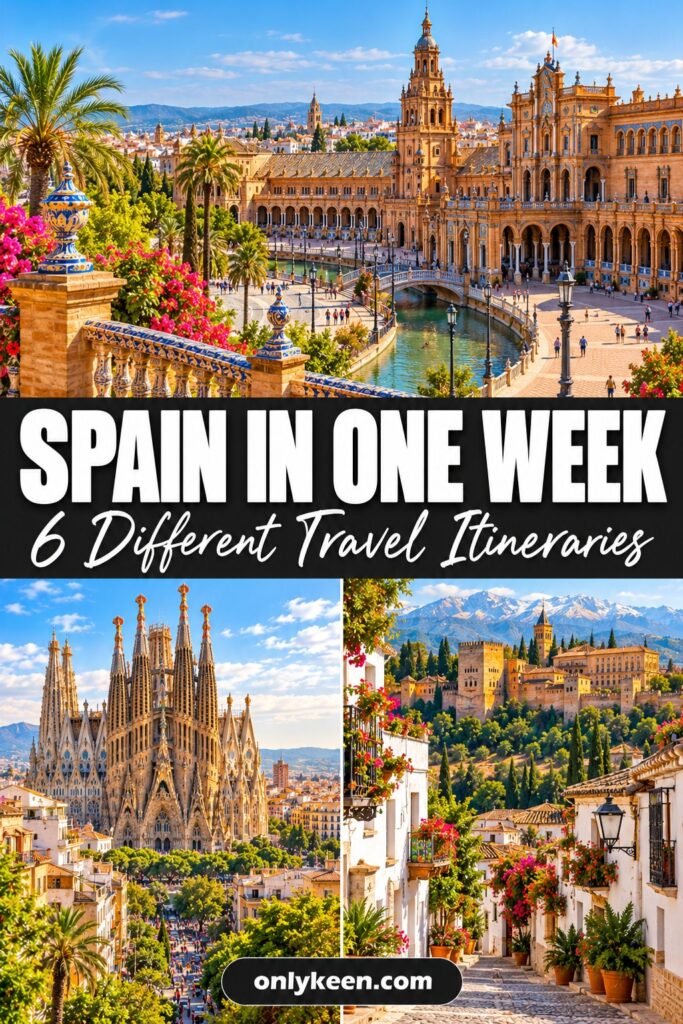
Whether you want the classic cities, the deep south, Catalonia, the green north, a three city rail trip, or a island escape, there’s a route here to start from.
If you’re stretching your trip, my 5 best places to visit in Granada guide and prettiest village in Spain: Frigiliana guide go deeper on two of the most rewarding stops mentioned below, and my airport carry on essentials guide covers the flight side of the trip.
Which Spain Itinerary Is Right for You?
| Itinerary | Best For | Pace | Car Needed |
|---|---|---|---|
| 1. The Classic: Madrid, Toledo, Seville | First time visitors | Moderate | No |
| 2. Andalusia Deep Dive | History, architecture, Moorish Spain | Moderate | No |
| 3. Barcelona and Catalonia | Art, beaches, day trips | Moderate | Optional |
| 4. Northern Spain: Bilbao and San Sebastián | Food, wine, green coastline | Relaxed | Helpful |
| 5. Madrid, Valencia, and Barcelona | Three cities by high speed train | Fast | No |
| 6. Mallorca Island Escape | Beaches, mountains, slow travel | Relaxed | Yes |
Before You Go: Planning Basics for Any Spain Trip
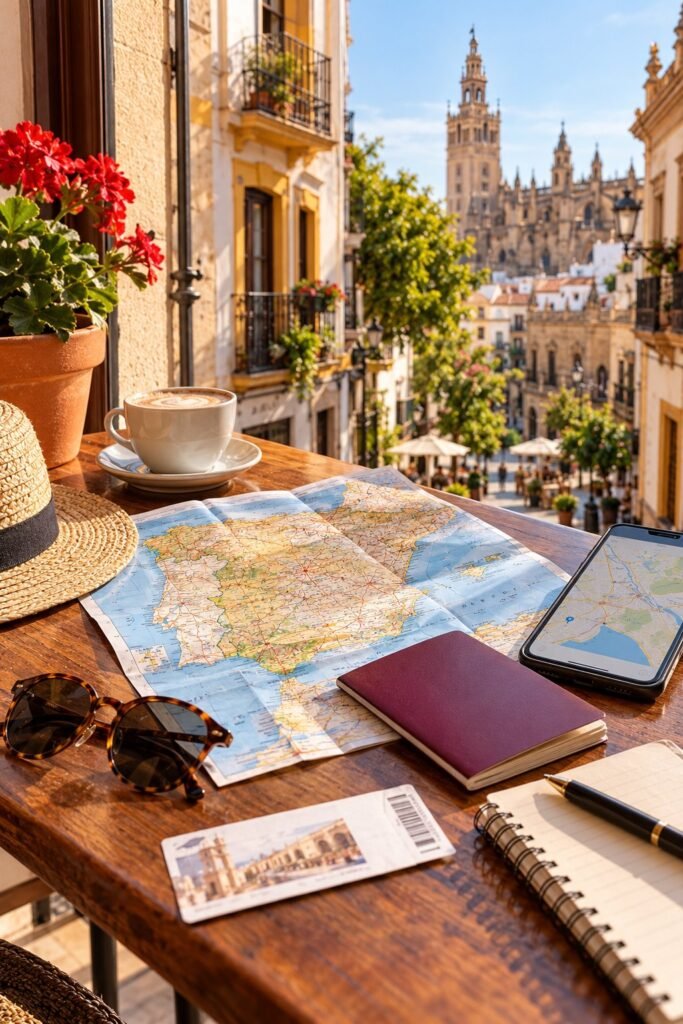
Getting around. Spain’s high speed rail network makes city to city travel fast and comfortable, often quicker door to door than flying once you factor in airport time.
Book trains ahead when you can, since advance fares are usually noticeably cheaper than last minute tickets. For rural stretches, the north, and the islands, a rental car gives you far more freedom.
Eating schedules. Spanish meals run later than many visitors expect. Lunch is typically between 2 and 4 in the afternoon, and dinner often doesn’t start until 9 or later. Many restaurants close between lunch and dinner, so plan your days around the local rhythm rather than fighting it.
Opening hours. Smaller shops sometimes close for a midday break, and some attractions have shorter hours on Sundays and Mondays. Check hours before building a day around one specific stop.
Book timed tickets early. Several of the most popular sights, including the Alhambra in Granada, the Sagrada Familia in Barcelona, and the Real Alcázar in Seville, use timed entry that sells out in busy seasons. Book these as soon as your dates are firm.
Best time to go. Spring and fall offer the most comfortable temperatures for sightseeing, particularly in the south, where July and August can be genuinely punishing. Summer suits the beach focused itineraries better than the inland city ones.
Budget. Spain remains good value compared with much of Western Europe, especially for food. Set lunch menus, called menú del día, are a reliable way to eat well at a fraction of dinner prices.
Itinerary 1: The Classic, Madrid, Toledo, and Seville
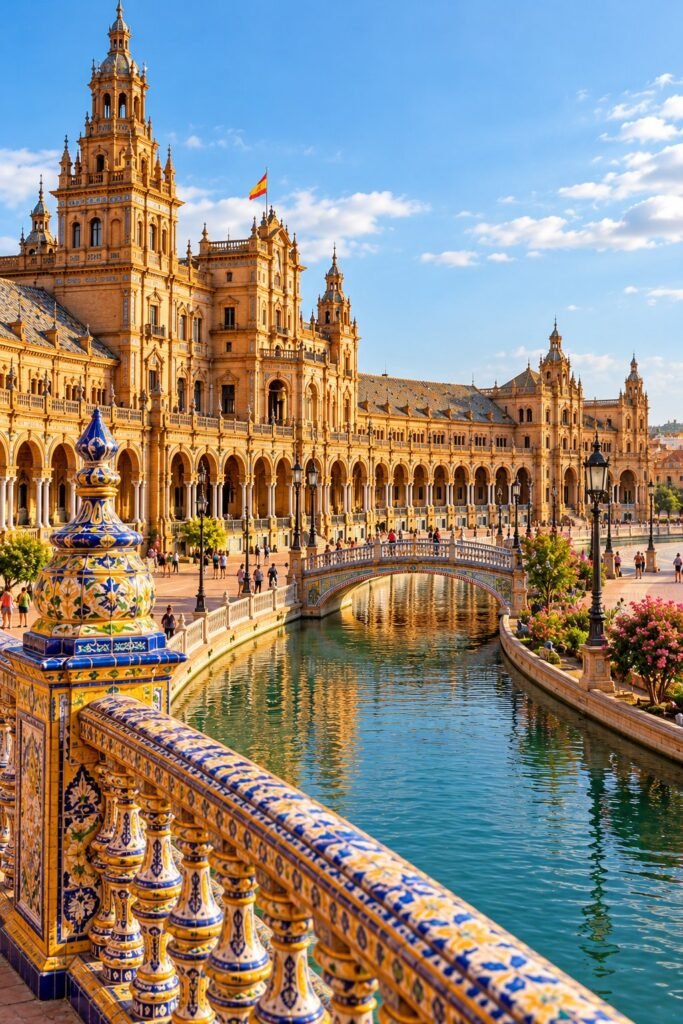
This is the route most first time visitors imagine, grand capital, medieval hill town, and the passionate, romantic south.
Day 1: Arrive in Madrid. Settle in, then take an evening walk through the historic center, Plaza Mayor, and the lively streets around Puerta del Sol, and end with tapas.
Day 2: Madrid art and parks. Spend the morning at the Prado Museum, one of the great art collections of Europe, then walk off lunch in Retiro Park. In the evening, explore the Malasaña or La Latina neighborhoods for tapas bars.
Day 3: Day trip to Toledo. A high speed train covers the distance from Madrid in roughly half an hour. Wander the narrow medieval streets, see the cathedral, and take in the views of the old city perched above the river. Return to Madrid for the evening.
Day 4: Train to Seville. Take a morning high speed train to Seville, a journey of around two and a half hours. In the afternoon, stroll the Santa Cruz neighborhood and settle into the rhythm of the south.
Day 5: Seville’s big sights. Visit the Real Alcázar, a Moorish palace with ornate courtyards and gardens, and the cathedral, one of the largest in the world. Book Alcázar tickets ahead.
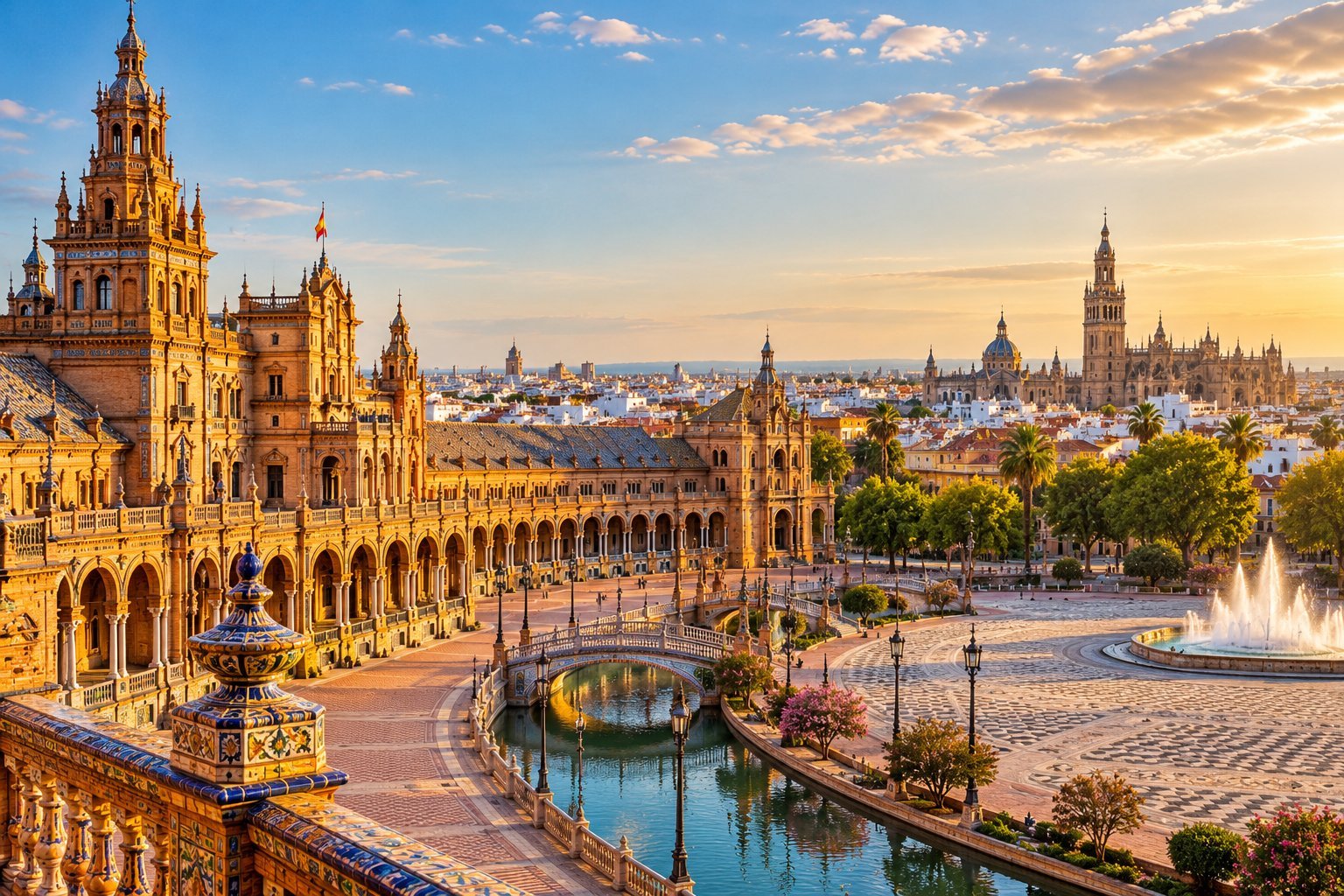
Day 6: Seville at a slower pace. Visit Plaza de España in the morning, cross the river to explore the Triana neighborhood, and catch a flamenco show in the evening.
Day 7: Departure. Fly out from Seville, or take a train back to Madrid for an international flight.
Where to stay. Madrid’s center near Sol or La Latina, and Seville’s Santa Cruz area, both keep you within walking distance of the main sights.
Tip. This route needs no car at all, which keeps it simple and affordable.
Itinerary 2: Andalusia Deep Dive
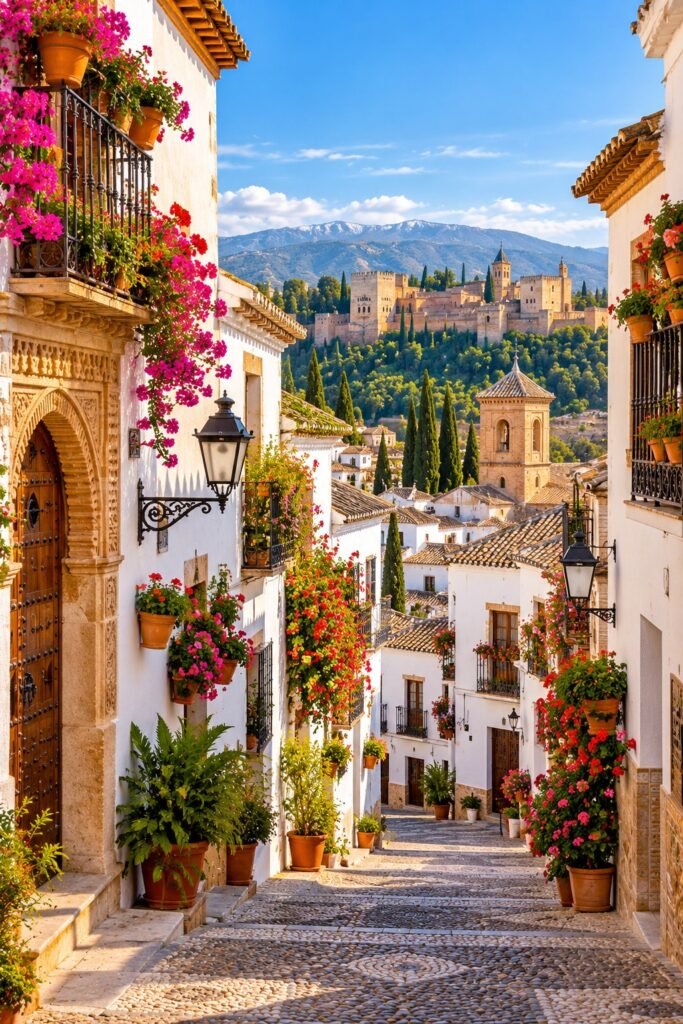
For travelers drawn to Moorish architecture, white villages, and the unmistakable character of southern Spain.
Day 1 and 2: Seville. Spend two days on the Real Alcázar, the cathedral and Giralda tower, Plaza de España, and an evening of tapas and flamenco.
Day 3: Córdoba. Travel to Córdoba, a short high speed train ride from Seville, and visit the Mezquita Cathedral, the Jewish Quarter, and the Roman Bridge. Continue on toward Granada in the late afternoon or stay overnight.
Day 4 and 5: Granada. Visit the Alhambra on one of these days, with advance tickets. Spend the other exploring the Albaicín neighborhood and the viewpoint at Mirador de San Nicolás, and enjoy Granada’s tradition of a free tapa with each drink. My 5 best places to visit in Granada guide goes deeper on these.
Day 6: Frigiliana and Nerja. Head toward the coast, rent a car if you want flexibility, and spend the day in the whitewashed village of Frigiliana, followed by the coastal town of Nerja. My prettiest village in Spain: Frigiliana guide covers what to see.
Day 7: Málaga and departure. Spend a few hours in Málaga, with its Alcazaba fortress and old town, before flying out from Málaga’s airport.
Where to stay. Seville’s Santa Cruz area, Córdoba’s old town, Granada’s Albaicín, and a coastal base near Nerja or Málaga.
Tip. This route is one of the most rewarding for architecture and history, but it involves plenty of travel days, so keep luggage light.
Itinerary 3: Barcelona and Catalonia
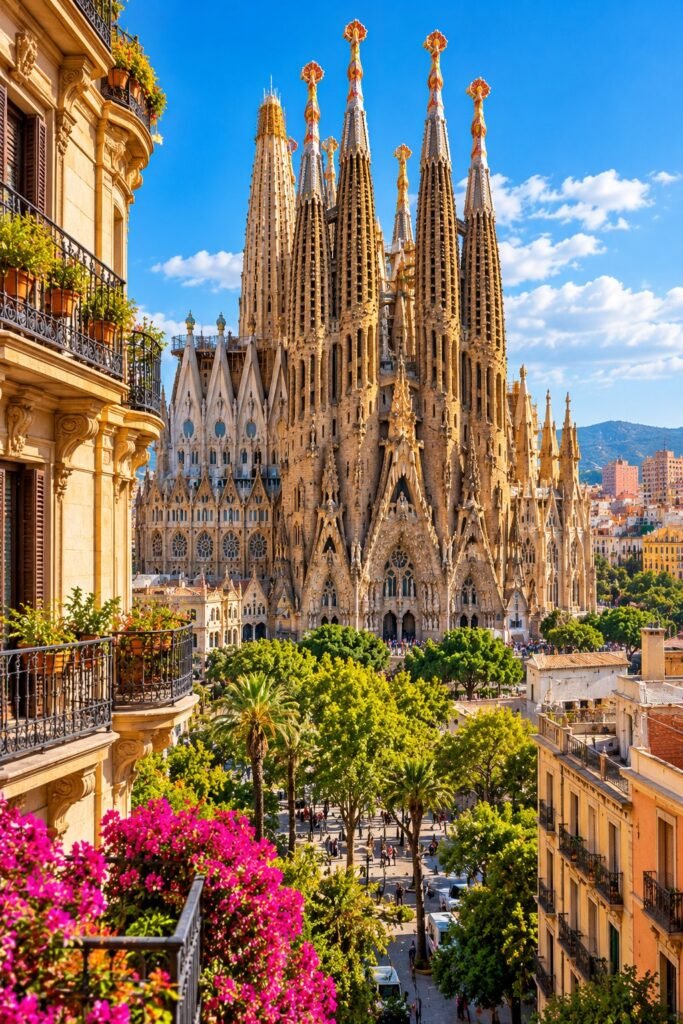
A mix of Gaudí architecture, Mediterranean beaches, and easy day trips into the surrounding region.
Day 1: Arrive in Barcelona. Explore the Gothic Quarter and the Born neighborhood, and enjoy a first evening of tapas.
Day 2: Gaudí’s Barcelona. Visit the Sagrada Familia with a timed ticket, then Park Güell, and in the evening wander Passeig de Gràcia for modernist facades like Casa Batlló.
Day 3: Beaches and markets. Visit La Boqueria market in the morning, explore the Montjuïc area, and spend the late afternoon at Barceloneta Beach.
Day 4: Day trip to Montserrat. Take the train and cable car or rack railway up to the monastery set dramatically among jagged mountain peaks, with walking trails offering sweeping views.
Day 5: Girona. Travel to Girona, a well preserved medieval city with a colorful riverfront, a historic Jewish quarter, and a cathedral approached by a grand staircase.
Day 6: Costa Brava. Spend the day on the rugged Costa Brava coast, with small coves and fishing villages such as Cadaqués or Tossa de Mar. A car makes this much easier.
Day 7: Return and departure. Head back to Barcelona for your flight.
Where to stay. Barcelona’s Gothic Quarter or Eixample neighborhood, and a night or two in Girona or on the coast.
Tip. Catalonia’s human tower tradition, the Castellers, shows up at festivals through the year. My 11 incredible celebration places in Europe guide covers it.
Itinerary 4: Northern Spain, Bilbao and San Sebastián

A green, food focused route through the Basque Country, far from the heat and crowds of the south.
Day 1 and 2: Bilbao. Visit the Guggenheim Museum, the titanium clad landmark that helped transform the city, wander the old town known as Casco Viejo, and eat pintxos, the Basque version of tapas.
Day 3: The Basque coast. Drive or take a bus along the coast, stopping at the fishing village of Getaria, known for grilled fish, and continue to San Sebastián. If you want to visit the dramatic island hermitage of San Juan de Gaztelugatxe, note that access is controlled and often requires advance booking.
Day 4 and 5: San Sebastián. Spend time on La Concha Beach, climb Monte Igueldo or Monte Urgull for views, and spend your evenings bar hopping through the old town’s pintxos bars.
Day 6: Rioja wine country. Take a day trip to the Rioja Alavesa region, where the walled town of Laguardia sits among vineyards and offers winery visits and tastings. A car is helpful here.
Day 7: Return to Bilbao. Head back for your departure.
Where to stay. Bilbao’s old town and San Sebastián’s old town or the area near La Concha.
Tip. Weather in the north is more changeable than in the south, so bring a rain jacket even in summer.
Itinerary 5: Madrid, Valencia, and Barcelona
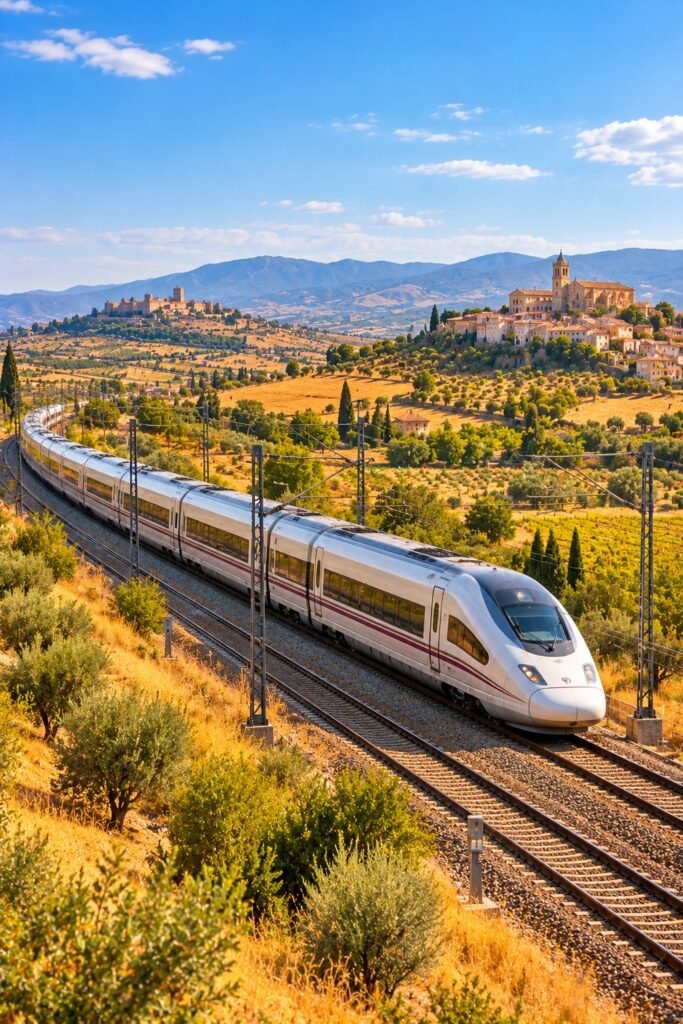
For travelers who want three very different cities and don’t mind moving every couple of days, with high speed rail making it easy.
Day 1 and 2: Madrid. See the Prado, Retiro Park, Plaza Mayor, and the Royal Palace, with evenings in the tapas bars of La Latina.
Day 3: Train to Valencia. The high speed train covers the journey in under two hours. Spend the afternoon at the City of Arts and Sciences, a futuristic architectural complex, and evenings in the old town.
Day 4: Valencia. Walk or cycle through the Turia Gardens, a former riverbed turned long urban park, visit the central market, and eat paella, which originated in this region.
Day 5: Train to Barcelona. Take a train to Barcelona, a journey of a few hours, and spend the afternoon in the Gothic Quarter.
Day 6: Barcelona’s Gaudí highlights. Visit the Sagrada Familia and Park Güell with timed tickets.
Day 7: Last morning and departure. Enjoy a final stroll through La Boqueria or along the beach before heading to the airport.
Where to stay. Central Madrid, Valencia’s old town, and Barcelona’s Gothic Quarter or Eixample.
Tip. Three cities in a week means a lot of packing and unpacking, so travel light and book rail tickets ahead.
Itinerary 6: Mallorca Island Escape
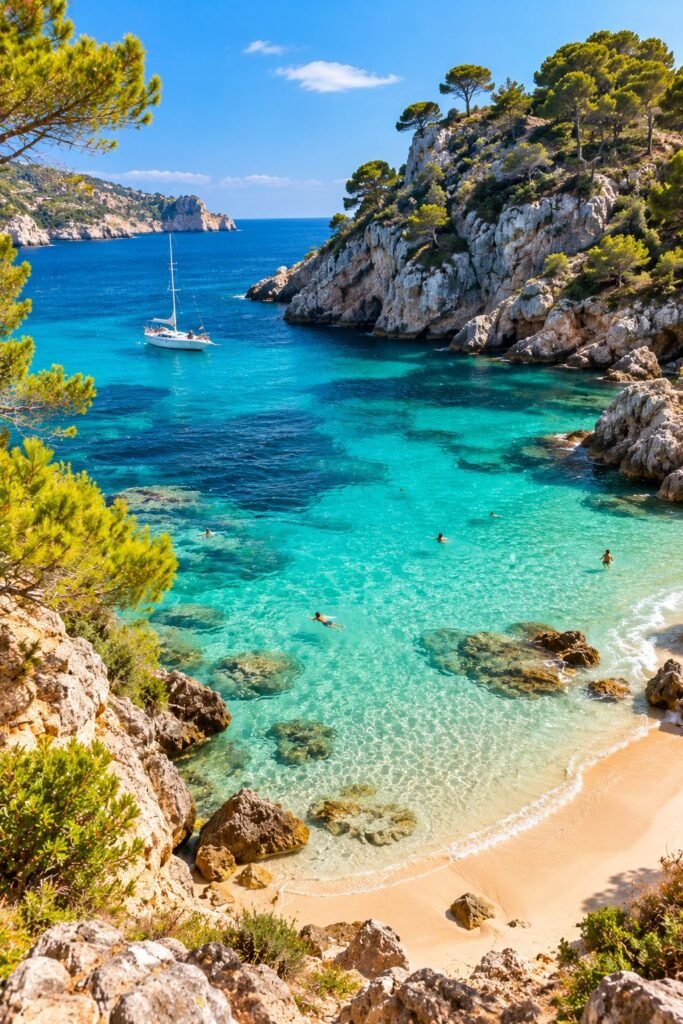
A slower, more relaxed week built around beaches, mountain scenery, and coastal villages.
Day 1: Arrive in Palma. Explore Palma’s old town, its Gothic cathedral facing the sea, and the harborfront, then settle into dinner.
Day 2: Palma at leisure. Visit the Bellver Castle for views over the bay, and spend the afternoon at a nearby beach.
Day 3: Serra de Tramuntana. Drive into the UNESCO listed mountains and visit Valldemossa and Deià, two picturesque villages known for their stone houses and artistic history.
Day 4: Sóller and the coast. Visit the town of Sóller, ride the historic wooden tram to its port, and consider driving the winding road to the dramatic cove of Sa Calobra.
Day 5: East coast beaches. Spend the day among the island’s calm turquoise coves, such as Caló des Moro, remembering that popular beaches fill up early in summer.
Day 6: Alcúdia and Cap de Formentor. Visit the walled town of Alcúdia, then drive to the lighthouse at Formentor for sunset views.
Day 7: Return to Palma and depart.
Where to stay. Palma for a city base, or a mix of Palma and a smaller coastal or mountain village.
Tip. A rental car is essential here, and summer brings heavy traffic and crowded beaches, so spring and fall are the best seasons for this itinerary.
Frequently Asked Questions
Is one week enough for Spain? It’s enough for a satisfying introduction as long as you focus on one region or a short chain of cities rather than trying to cover the whole country.
Do I need a car in Spain? Not for the city focused itineraries, since trains and public transit cover them well, but a car makes the northern, coastal, and island itineraries far more enjoyable.
What’s the best Spain itinerary for a first visit? The classic Madrid, Toledo, and Seville route is a popular starting point, since it needs no car and covers a wide range of what people picture when they think of Spain.
Can I combine two of these itineraries? With a second week, yes, and combinations like Andalusia plus Madrid, or Barcelona plus Valencia, work well.
When is the best time to visit? Spring and fall for most of the country, with summer better suited to beach and island trips than inland cities.
How far in advance should I book? Book timed tickets for major sights and any high speed trains as soon as your dates are firm, and accommodation several months ahead for peak season.
Final Thoughts
Spain rewards a week well spent far more than a week crammed full. Pick the itinerary that matches how you actually like to travel, slow down at least once a day for a long meal, and leave a little room for something unplanned.
If you’re pairing Spain with other European stops, my 15 best places to visit in France guide and cheap Greek islands on a budget guide are both worth a look for what comes next.