
Everyone knows about Oktoberfest in Munich and the running of the bulls in Pamplona.
But Europe’s real festival culture runs far deeper than the handful of celebrations that dominate travel lists, with centuries old traditions scattered across villages and small cities, often unchanged for generations and barely known outside the region that keeps them alive.
These are the kinds of events where a Viking fleet burns in the middle of a Scottish winter, an entire town throws oranges at each other in the name of a medieval legend, and masked figures roam the streets of a Hungarian town in a ritual older than most of the countries around it.

This guide covers eleven of the most distinctive, lesser known celebrations in Europe, along with the practical details of when they happen and how to actually attend one.
If you’re building a trip around any of these, my 10 festive Christmas destinations in Italy guide and 7 best Christmas travel destinations in Germany guide both cover the more widely known winter side of European festivals, and my airport carry on essentials guide is worth a look for the flight itself.
A Quick Note on Dates
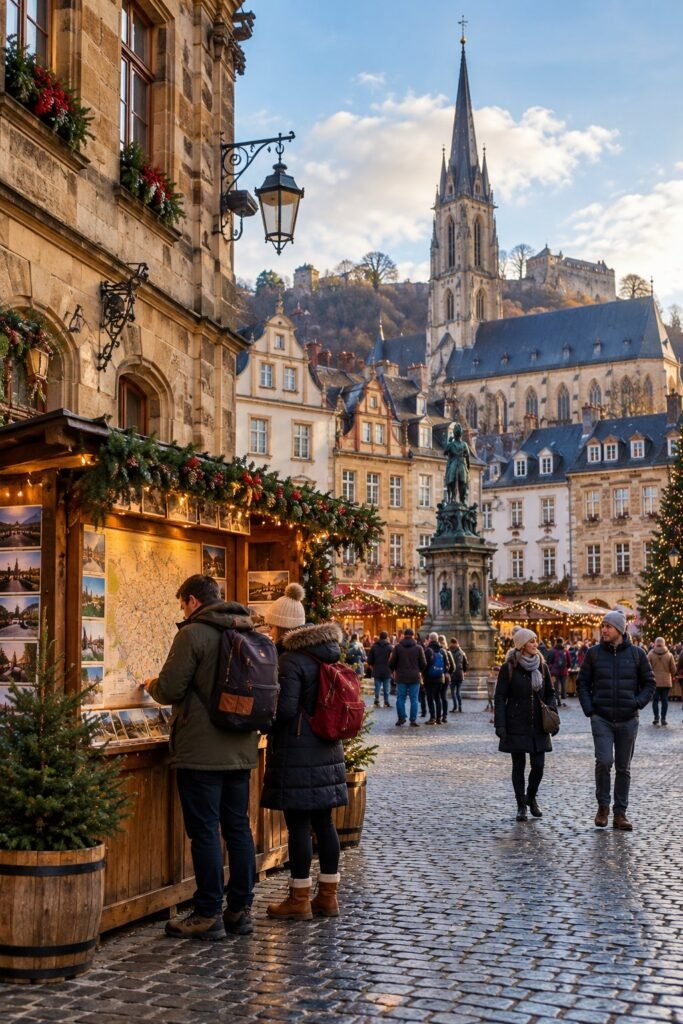
Festival dates often shift from year to year, since many are tied to the lunar calendar, the date of Easter, or specific local traditions, so always confirm current dates directly with the official festival or local tourism board before booking flights and accommodation.
Several of these events also draw far more visitors than the host town has beds for, so book lodging as early as you can.
Quick Guide to These Celebrations
| Celebration | Location | Typical Timing | What It’s Known For |
|---|---|---|---|
| Up Helly Aa | Shetland, Scotland | Late January | Viking fire festival |
| Sa Sartiglia | Oristano, Sardinia, Italy | Carnival season | Medieval masked horse tournament |
| Busójárás | Mohács, Hungary | Carnival season | Masked folk festival |
| Carnival of Binche | Binche, Belgium | Carnival season | Costumed Gilles and orange throwing |
| Fête du Citron | Menton, France | February to March | Lemon and orange sculptures |
| Battle of the Oranges | Ivrea, Italy | Carnival season | Citrus battle |
| Kukeri | Bulgaria | Winter | Masked ritual to scare away evil spirits |
| Fête des Lumières | Lyon, France | Early December | Festival of lights |
| Cooper’s Hill Cheese Rolling | Gloucestershire, England | Late May | Chasing a rolling cheese downhill |
| Castellers | Catalonia, Spain | Various, summer and fall | Human towers |
| Valborg | Uppsala, Sweden | April 30 | Spring bonfires and student celebrations |
1. Up Helly Aa, Shetland, Scotland
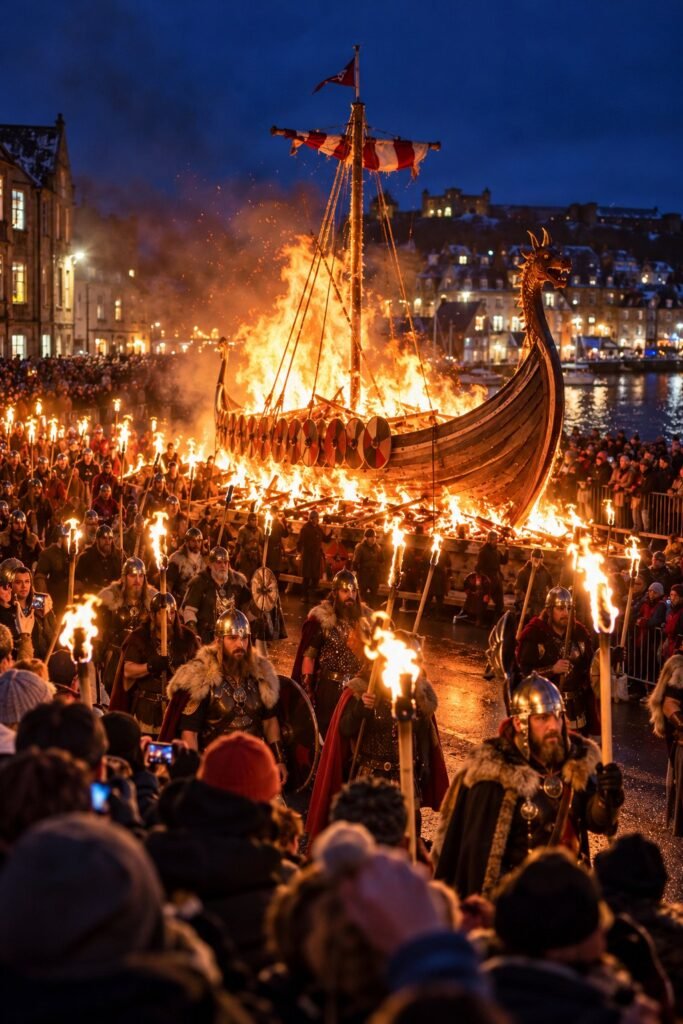
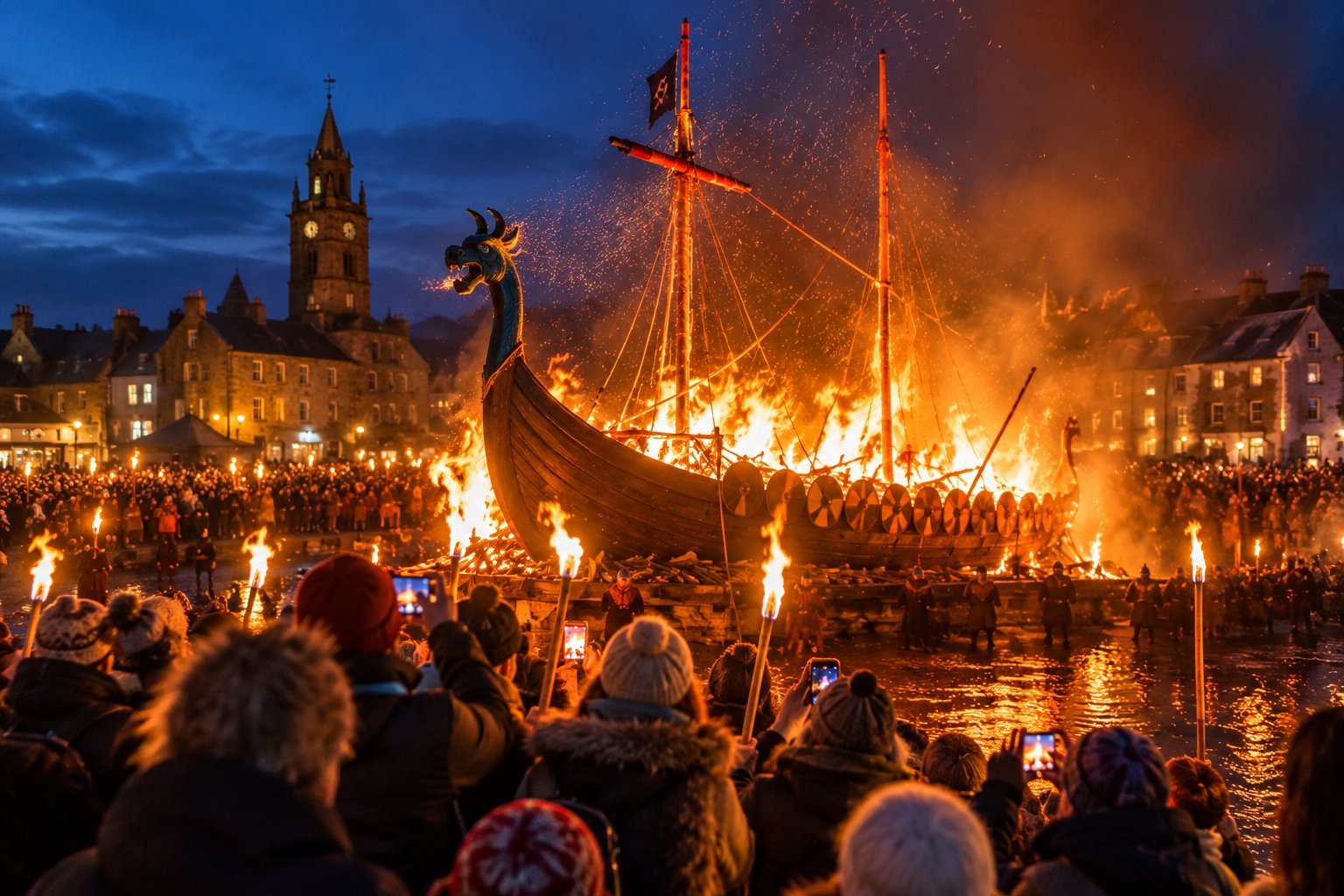
What it is. Held in Lerwick, the capital of the Shetland Islands, this fire festival celebrates the islands’ Norse heritage with a torchlit procession of hundreds of costumed participants, culminating in the burning of a full size replica Viking longship.
Why it’s unique. It’s genuinely a community event rather than a tourist attraction, organized by local residents and steeped in local tradition, which gives it an authenticity many larger festivals have lost.
When it happens. The last Tuesday of January each year.
How to get there. Fly into Sumburgh Airport in Shetland, or take an overnight ferry from Aberdeen.
Where to stay. Lerwick offers guesthouses and small hotels, but they book up early, sometimes a year ahead, so reserve well in advance.
Tips. Dress for cold, wet, windy weather, since it’s January in the North Atlantic, and note that public attendance of the main procession is welcomed though participation itself is traditionally limited to local residents.
2. Sa Sartiglia, Oristano, Sardinia, Italy
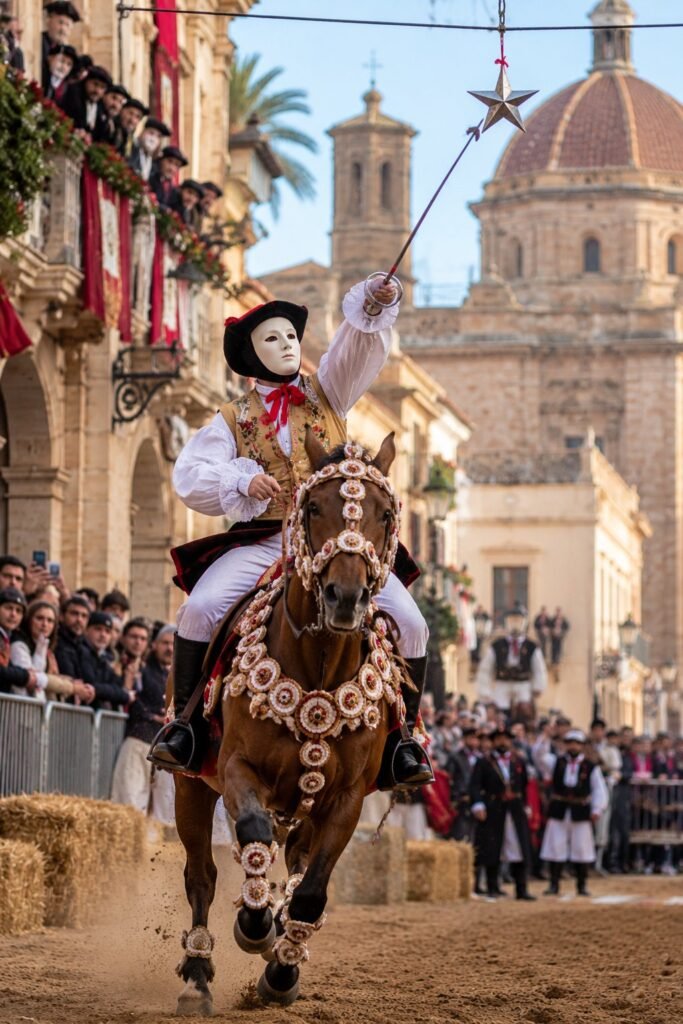
What it is. A centuries old equestrian festival in which masked riders on horseback attempt to spear a hanging star while galloping at full speed, a tradition tied to medieval chivalric tournaments and local Sardinian culture.
Why it’s unique. The central figure, known as Su Componidori, wears an elaborate androgynous mask and is treated with ritual reverence, adding a ceremonial, almost mystical element to what is also an impressive display of horsemanship.
When it happens. Over Carnival Sunday and Shrove Tuesday each year.
How to get there. Fly into Cagliari or Alghero, then drive or take a bus to Oristano, roughly one to two hours depending on your starting point.
Where to stay. Oristano itself has limited lodging that fills quickly during the festival, so book early or consider staying in a nearby coastal town.
Tips. Arrive early to claim a viewing spot along the street, since the best positions fill up well ahead of the main event.
3. Busójárás, Mohács, Hungary
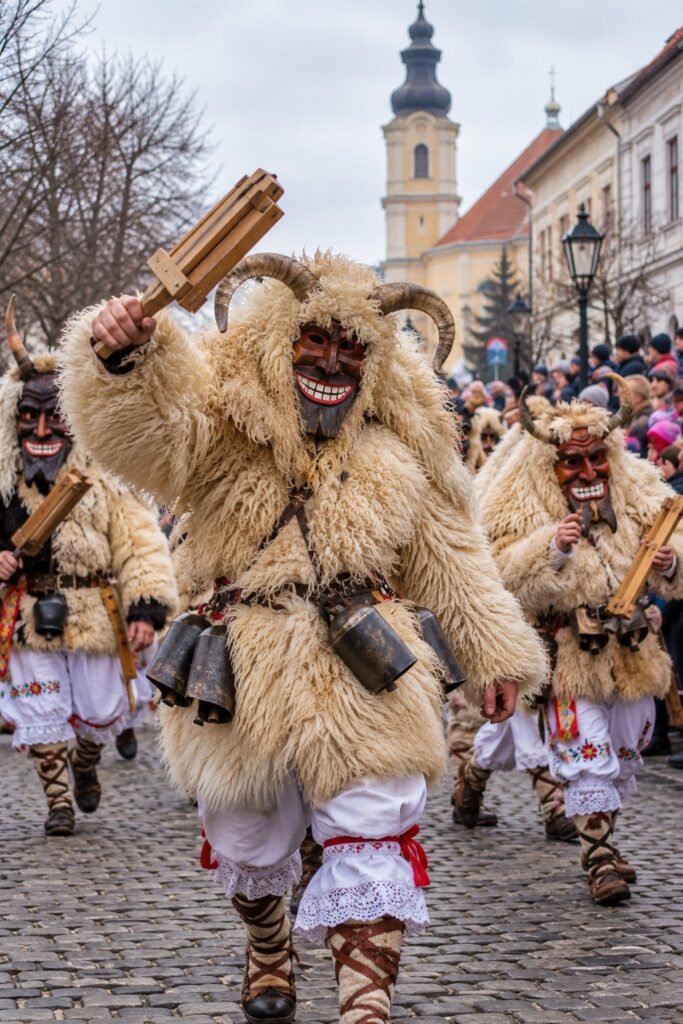
What it is. A UNESCO recognized folk festival in the southern Hungarian town of Mohács, where participants wear fearsome wooden masks and sheepskin costumes while parading through the streets with noisemakers, a tradition said to date back to ancient rituals meant to drive away winter.
Why it’s unique. The masks are genuinely striking, hand carved and often frightening in appearance, and the whole event has a raw, folkloric energy very different from a typical polished carnival.
When it happens. In February, in the lead up to Ash Wednesday.
How to get there. Fly into Budapest, then take a train or bus to Mohács, roughly three hours away.
Where to stay. Mohács itself is small, so many visitors stay in nearby Pécs, a larger city about an hour away with a wider range of lodging.
Tips. Dress warmly, since February in southern Hungary is cold, and be prepared for loud noise and a genuinely boisterous crowd.
4. Carnival of Binche, Belgium
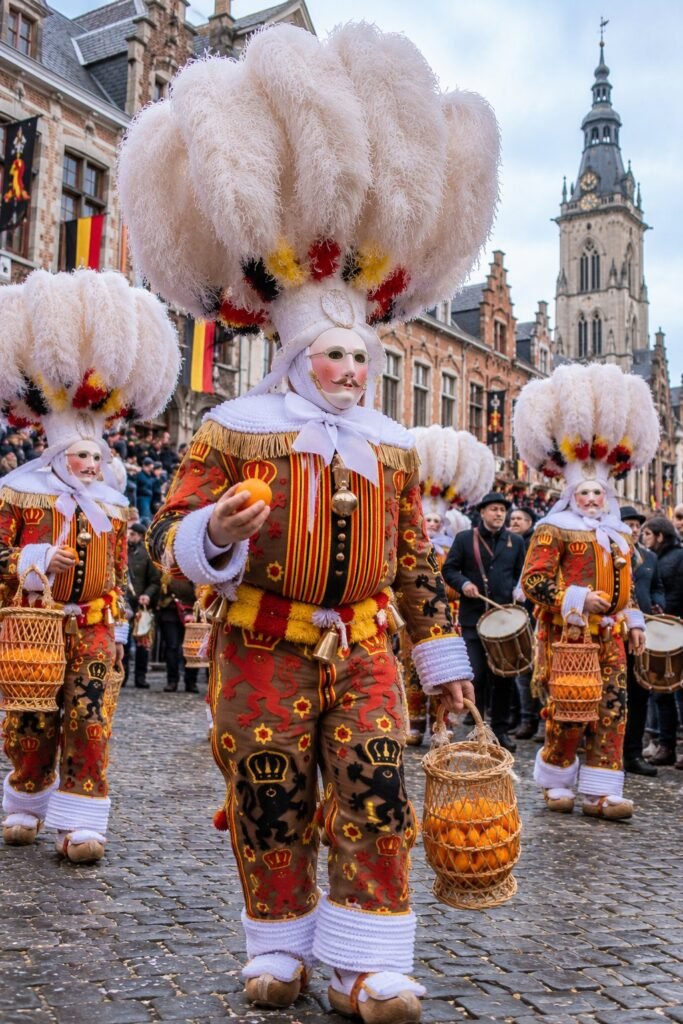
What it is. A UNESCO recognized carnival in the small Belgian town of Binche, centered on the Gilles, costumed figures in elaborate ostrich feather hats who dance through the streets to the beat of drums and, in the afternoon, throw blood oranges into the crowd.
Why it’s unique. The Gilles’ costumes, wax masks, and feathered headdresses are visually unlike any other carnival tradition in Europe, and the drumbeat accompanying them has an almost hypnotic quality.
When it happens. The main event takes place on Shrove Tuesday, with preparatory festivities leading up to it.
How to get there. Take a train from Brussels, roughly one hour.
Where to stay. Binche is small, so many visitors stay in Brussels or nearby Mons and travel in for the day.
Tips. Wear clothes you don’t mind getting hit by an orange, since the thrown fruit is part of the tradition, and arrive early for a good viewing spot.
5. Fête du Citron, Menton, France
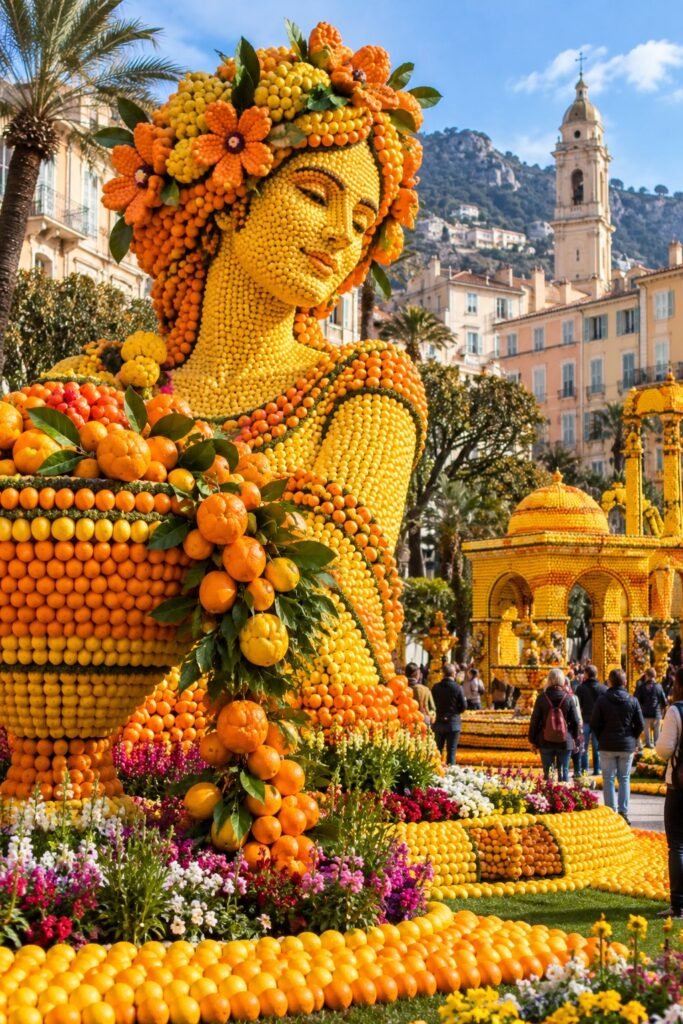
What it is. A lemon and orange festival on the French Riviera, in which enormous sculptures and floats are constructed entirely from citrus fruit, drawing on the region’s historic status as a lemon growing center.
Why it’s unique. The scale and craftsmanship of the fruit sculptures is genuinely impressive, with hundreds of tons of citrus used each year to create elaborate, brightly colored displays.
When it happens. Typically from mid February through early March.
How to get there. Fly into Nice, then take a short train ride along the coast to Menton, roughly thirty minutes.
Where to stay. Menton offers a range of hotels, though they fill up during the festival, with Nice serving as a convenient alternative base.
Tips. Buy tickets for the main parades in advance, since popular seating sells out, and check the schedule, since the parades and garden displays run on different days.
6. Battle of the Oranges, Ivrea, Italy
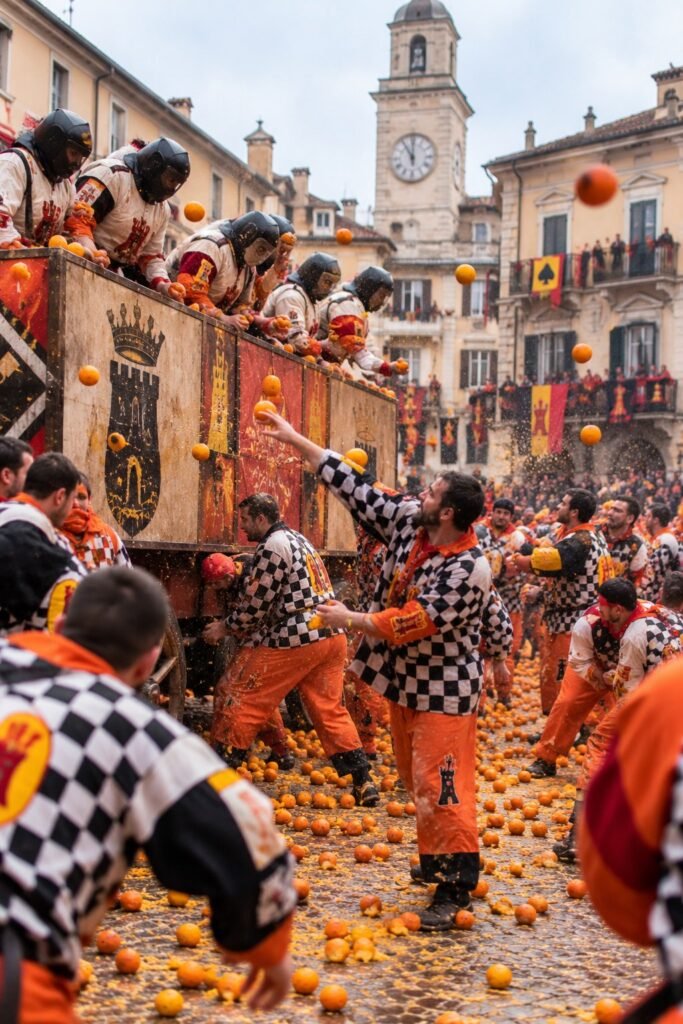
What it is. A massive, organized food fight in the northern Italian town of Ivrea, in which teams on foot battle teams riding in horse drawn carts by throwing oranges at each other, reenacting a historic uprising against a medieval tyrant.
Why it’s unique. It’s genuinely one of the largest food fights in the world, and the tradition has deep local roots rather than being a purely tourist driven spectacle.
When it happens. During the Carnival season, culminating over the final few days leading up to Shrove Tuesday.
How to get there. Take a train from Turin, roughly an hour away.
Where to stay. Ivrea has limited lodging, so many visitors stay in Turin and travel in for the day.
Tips. Buy and wear a red hat, the traditional symbol identifying you as a non combatant spectator, and wear protective gear, since thrown oranges can genuinely hurt.
7. Kukeri, Bulgaria
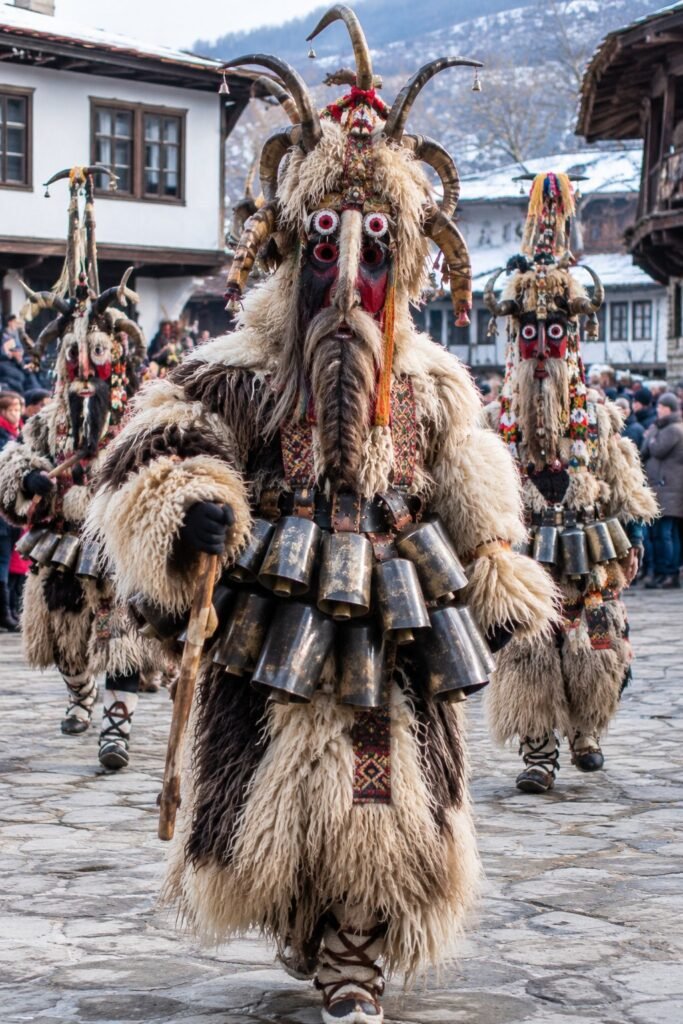
What it is. A traditional Bulgarian ritual in which men dress in elaborate, shaggy costumes covered in bells and wear towering, often fearsome masks, parading through villages to scare away evil spirits and ensure a good harvest in the coming year.
Why it’s unique. The costumes are genuinely striking and the sound of hundreds of bells clanging in unison is memorable, and the tradition remains alive in villages across the country rather than as a single organized event.
When it happens. Timing varies by region, but most celebrations take place from New Year’s through the early spring, with the Surva festival in Pernik in late January being one of the largest.
How to get there. Fly into Sofia, then take a train or bus to Pernik, roughly forty five minutes away.
Where to stay. Sofia offers the widest range of lodging, with Pernik an easy day trip from the capital.
Tips. Check specific regional timing carefully, since smaller village celebrations follow their own local calendars.
8. Fête des Lumières, Lyon, France

What it is. A multi day festival of lights in which Lyon’s buildings, squares, and bridges are illuminated with elaborate, artistic light installations, tied to a historic tradition of residents placing candles in their windows in gratitude to the Virgin Mary.
Why it’s unique. The scale of the installations is spectacular, turning the entire city into an open air, constantly changing light show that draws millions of visitors each year despite remaining relatively under the radar compared to major European festivals.
When it happens. Over four days around December 8th each year.
How to get there. Lyon has its own airport and is a short high speed train ride from Paris, roughly two hours.
Where to stay. Lyon’s center offers a wide range of lodging, though prices spike during the festival, so book early.
Tips. Visit on a weeknight if possible, since weekends draw the heaviest crowds, and dress warmly for long evenings spent walking outdoors.
9. Cooper’s Hill Cheese Rolling, Gloucestershire, England
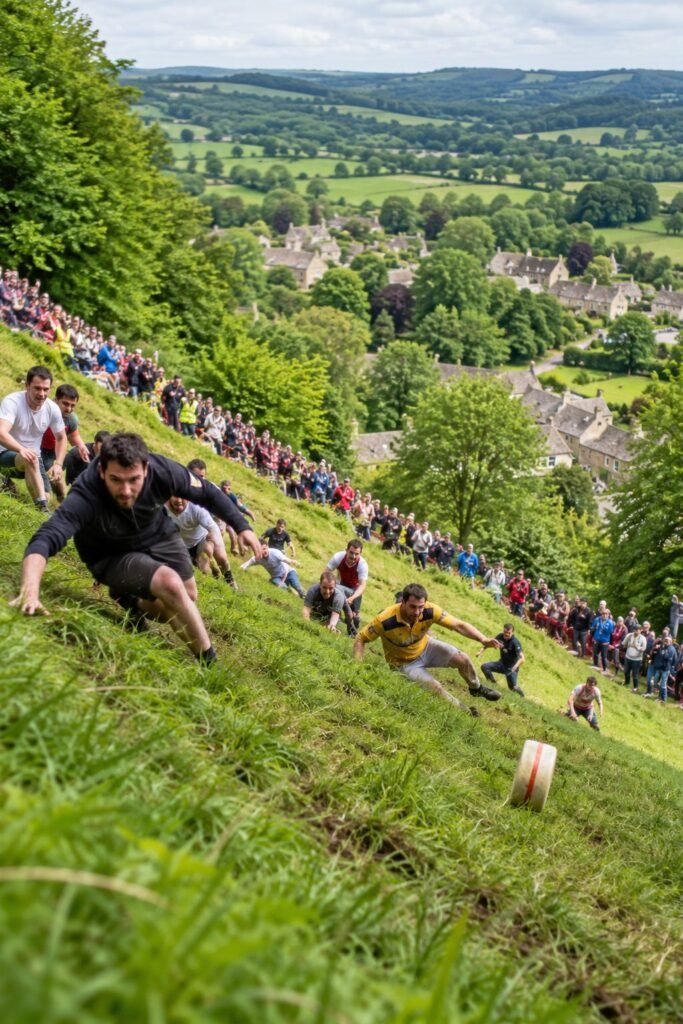
What it is. A famously odd English tradition in which competitors chase a wheel of cheese down an extremely steep hill, with the first person to reach the bottom winning the cheese itself.
Why it’s unique. The event is genuinely chaotic and has been described as one of the strangest competitions in the world, drawing both participants and spectators from around the globe.
When it happens. Traditionally on the late May bank holiday, though the official, organized version of the event was discontinued around 2010 due to safety and crowd concerns, with an unofficial gathering continuing to take place in its place, so confirm current status before planning a trip around it.
How to get there. Fly into Birmingham or Bristol, then drive roughly an hour to the Cooper’s Hill area outside Gloucester.
Where to stay. Gloucester and nearby Cheltenham offer the widest range of lodging.
Tips. Treat any visit as a spectator experience rather than a participatory one, and be aware that the hill is genuinely dangerous, with injuries a regular occurrence among those who do compete.
10. Castellers, Catalonia, Spain
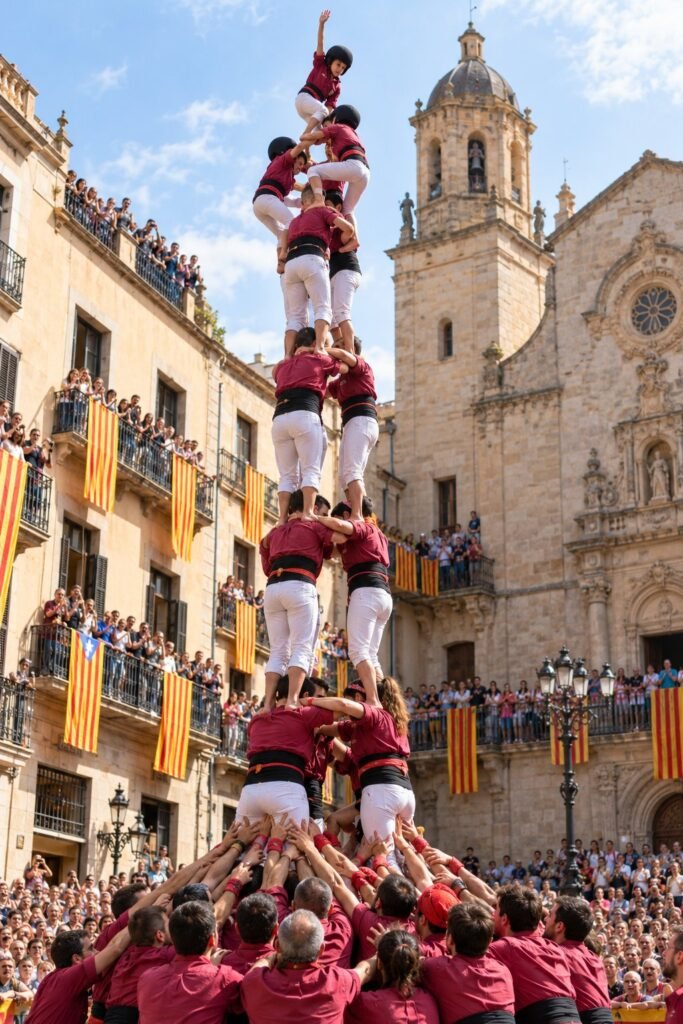
What it is. A UNESCO recognized Catalan tradition in which teams of people climb on each other’s shoulders to build human towers, sometimes reaching ten levels high, with a small child scrambling to the very top to complete the structure.
Why it’s unique. The combination of strength, balance, and trust involved is genuinely extraordinary to watch, and the sense of community around each team is a defining feature of Catalan culture.
When it happens. Throughout the year at local festivals, with some of the largest competitions held in Tarragona, particularly the biennial Concurs de Castells in the fall.
How to get there. Fly into Barcelona, then take a train to Tarragona, roughly an hour away.
Where to stay. Tarragona offers a range of hotels, with Barcelona serving as a convenient alternative base.
Tips. Check local festival calendars, since performances happen throughout the region at various times of year, and arrive early for a good viewing spot, since crowds gather quickly.
11. Valborg, Uppsala, Sweden
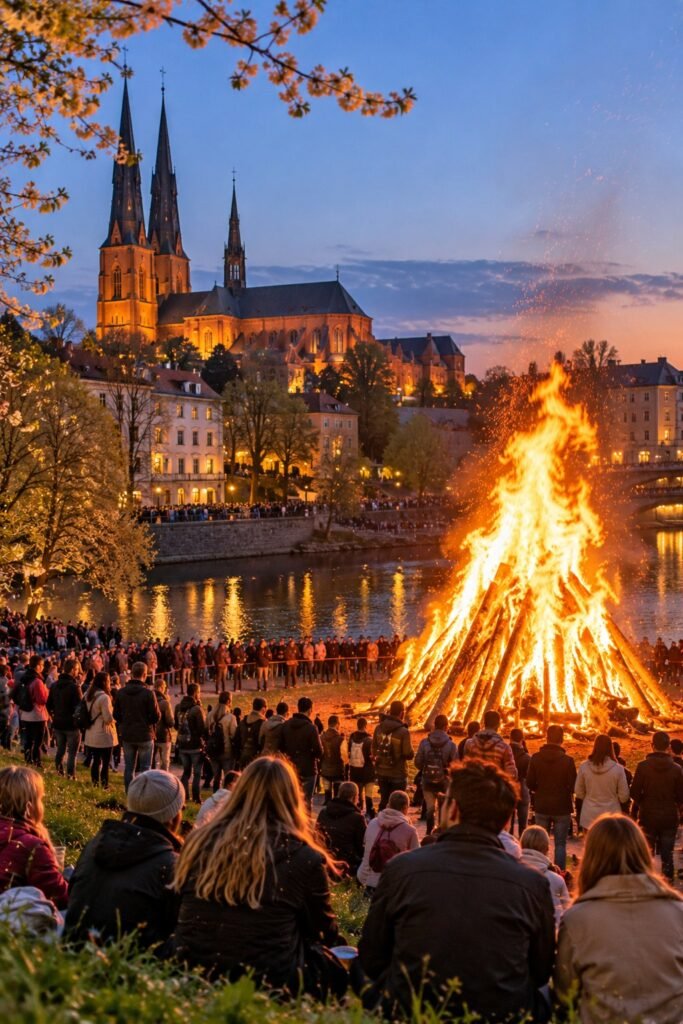
What it is. A celebration of the arrival of spring, held on the last day of April, in which Swedes light bonfires, sing traditional songs, and gather in parks and squares, with Uppsala hosting one of the country’s largest and most spirited versions.
Why it’s unique. The student traditions in Uppsala add a lively, uniquely Swedish spirit to the celebration, including a raft race down the Fyris River that has become a well known local spectacle.
When it happens. April 30th each year.
How to get there. Fly into Stockholm Arlanda Airport, then take a train to Uppsala, roughly forty minutes away.
Where to stay. Uppsala offers a range of hotels, or Stockholm works as an easy base for a day trip.
Tips. Check the weather forecast and dress in layers, since late April in Sweden can swing from sunny to cold and wet within a single day.
How to Plan a Trip Around a European Festival
Book accommodation first and as early as possible, since these events often draw far more visitors than the host town has beds for, and the best options disappear months in advance.
Consider staying in a larger nearby city and traveling in for the day, which often works out both cheaper and more comfortable than staying in the small host town itself.
Confirm exact dates directly with the official source before booking nonrefundable travel, since many festival dates shift from year to year.
And arrive early on the day itself, since the best viewing spots at most of these events fill well before the main action begins.
Frequently Asked Questions
Are these festivals safe for tourists to attend? Generally yes, though several involve large crowds, thrown objects, or physical activity, so following local guidance and taking sensible precautions like wearing protective clothing at events involving thrown fruit is worthwhile.
Which of these festivals is best for a first timer? The Fête des Lumières in Lyon and the Fête du Citron in Menton both offer visually stunning, relatively easy to navigate celebrations with plenty of lodging and transportation infrastructure nearby.
Do I need tickets for these festivals? It varies, with some events, like the Fête du Citron’s main parades, requiring advance tickets, while others, like Up Helly Aa’s public procession, are free to watch.
Which festival is best in winter? Up Helly Aa, the Fête des Lumières, and the Carnival of Binche all take place during the colder months, with Kukeri in Bulgaria also spanning the winter season.
How far in advance should I book travel for these events? Several months at minimum, and for small host towns like Lerwick or Binche, up to a year in advance is genuinely sensible given limited lodging.
Final Thoughts
The most memorable travel experiences often come from showing up somewhere on exactly the right day, when an entire town is united around a tradition older than anyone alive.
These eleven celebrations offer exactly that, a chance to witness something genuinely unlike anything back home, whether that’s a burning longship in the Shetland dark or a street full of orange throwing townspeople in northern Italy.
Pick the one that fits your schedule and appetite for chaos, book early, and be ready for an experience that no standard sightseeing itinerary can replicate.
If you’re building a longer European trip around one of these, my 15 best places to visit in France guide and 5 best places to visit in Granada guide both cover nearby stops worth considering.