
Winter travel rewards you with quiet landscapes, cozy evenings, beautiful snow-covered towns, festive markets, and smaller crowds in many destinations.
However, it also punishes poor preparation. Cold toes, a dead phone battery, an icy windshield, a delayed flight with no snacks, or a wet pair of shoes can quickly turn an exciting trip into an uncomfortable experience.
The good news is that you do not need to fill your suitcase with expensive winter equipment to stay comfortable. You simply need to choose the right essentials for your destination, the activities you have planned, and the weather you are likely to encounter.
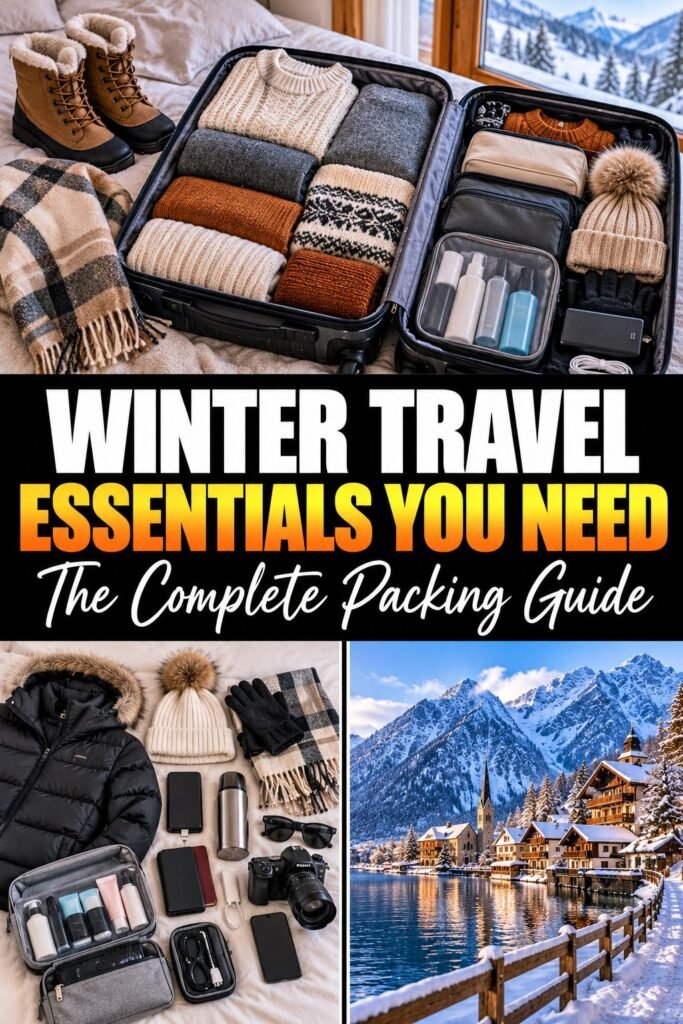
This guide covers the winter travel essentials worth packing, organized by what they do for you: staying warm, staying safe, keeping your tech alive, and keeping your plans on track.
I’ve focused on items that earn their luggage space rather than a bloated checklist. You will also find practical packing advice, money-saving tips, and recommendations for different types of winter trips.
Conditions and rules change, so confirm anything specific to your destination, airline, or route before you go. If you’re planning holiday travel in particular, my how to pack for USA Christmas vacations guide covers regional packing, and my airport carry on essentials guide helps with the flight itself.
Quick Winter Travel Checklist
Before packing individual items, I recommend starting with a simple checklist. This makes it easier to identify what you already own, what you need to buy, and what you can leave at home.
| Category | Winter Travel Essentials |
|---|---|
| Warmth | Thermal base layers, fleece or wool mid layer, insulated jacket, waterproof shell, wool socks |
| Hands, head, and neck | Warm hat, insulated gloves, liner gloves, scarf or neck gaiter |
| Footwear | Waterproof boots, comfortable walking shoes, traction cleats for icy conditions |
| Skin and eyes | Moisturizer, lip balm with SPF, sunscreen, sunglasses |
| Technology | Power bank, charging cables, wall adapter, insulated phone pouch |
| Comfort | Hand warmers, insulated bottle, snacks, compact travel blanket |
| Car travel | Ice scraper, snow brush, emergency blanket, flashlight, jump starter, small shovel |
| Planning | Weather apps, road condition updates, flight alerts, travel insurance, booking confirmations |
| Personal essentials | Identification, medication, travel documents, toiletries, emergency contacts |
| Organization | Packing cubes, waterproof bags, laundry bag, small daypack |
You do not necessarily need every item on this list. Someone spending a weekend in a city with mild winter temperatures will need a different selection from someone driving through snowy mountain passes.
Use the checklist as a starting point, then adjust it to your destination. Check the expected daytime and nighttime temperatures, the chance of rain or snow, and whether you will spend most of your time indoors or outside.
1. A Proper Layering System
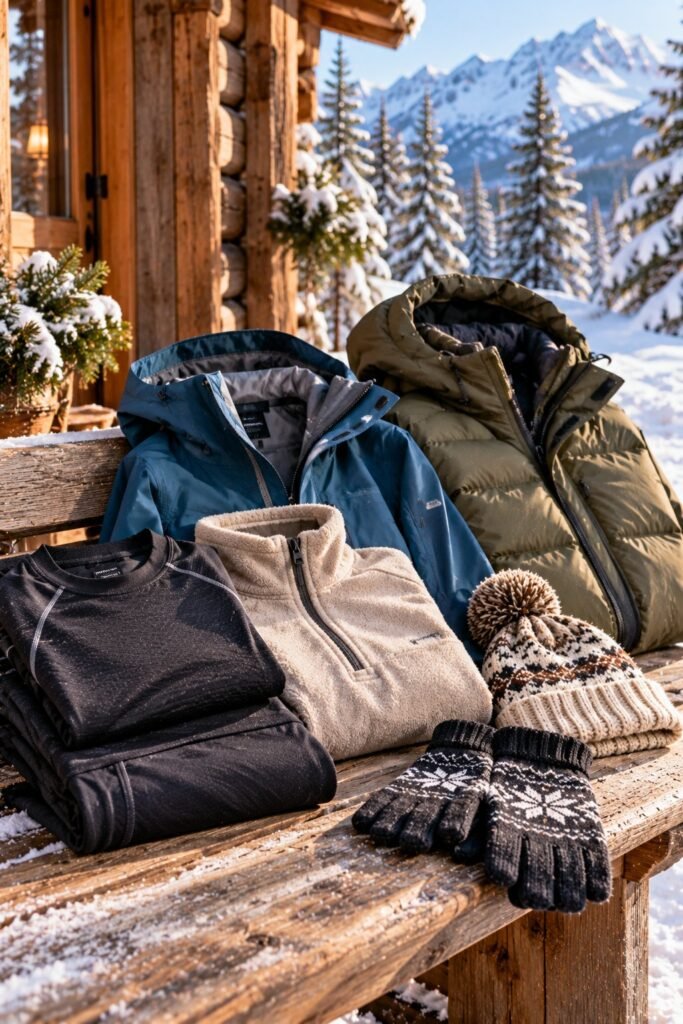
What it is. A winter layering system combines several clothing layers to keep you warm, manage moisture, and protect you from wind and rain. Rather than relying on one extremely thick coat, you wear a base layer, a mid layer, and an outer shell that work together.
Why you need it. Temperatures can change considerably throughout a winter trip. You might leave your hotel on a freezing morning, spend an hour exploring an outdoor attraction, and then enter a heated restaurant or museum. Wearing only a heavy coat can make these transitions uncomfortable.
Layers allow you to remove clothing when you get too warm and put it back on when the temperature drops. They also give you more outfit combinations without requiring you to pack a different bulky coat for every day.
What to look for.
- Base layer: Choose merino wool or synthetic moisture-wicking fabric that helps move sweat away from your skin. Avoid relying on cotton for your main cold-weather base layer because it absorbs moisture and dries slowly.
- Mid layer: Pack a fleece jacket, wool sweater, or lightweight insulated jacket to trap warm air around your body.
- Outer layer: Choose a windproof and waterproof or water-resistant shell appropriate for the forecast. A shell is particularly useful when wind, rain, or wet snow is expected.
- Extra insulation: For very cold destinations, consider a properly insulated winter jacket that provides enough warmth for the conditions.
Fit matters, too. Your layers should work comfortably together without becoming so tight that they restrict movement or compress the insulating material.
Budget tip. Mix and match your existing clothing instead of buying an entirely new wardrobe. Spend more on a reliable outer layer and suitable base layers if your destination is particularly cold, and save on the mid layer by using a sweater or fleece you already own.
Packing tip. Wear your bulkiest jacket and heaviest shoes during the journey when practical. This saves suitcase space and makes it easier to fit smaller essentials into your luggage.
Tip. Avoid packing a single bulky coat as your only warm item. Layers pack smaller and work in more situations. If you expect freezing temperatures, test your complete outfit before traveling so you know whether it provides enough warmth.
2. Warm, Moisture-Wicking Socks
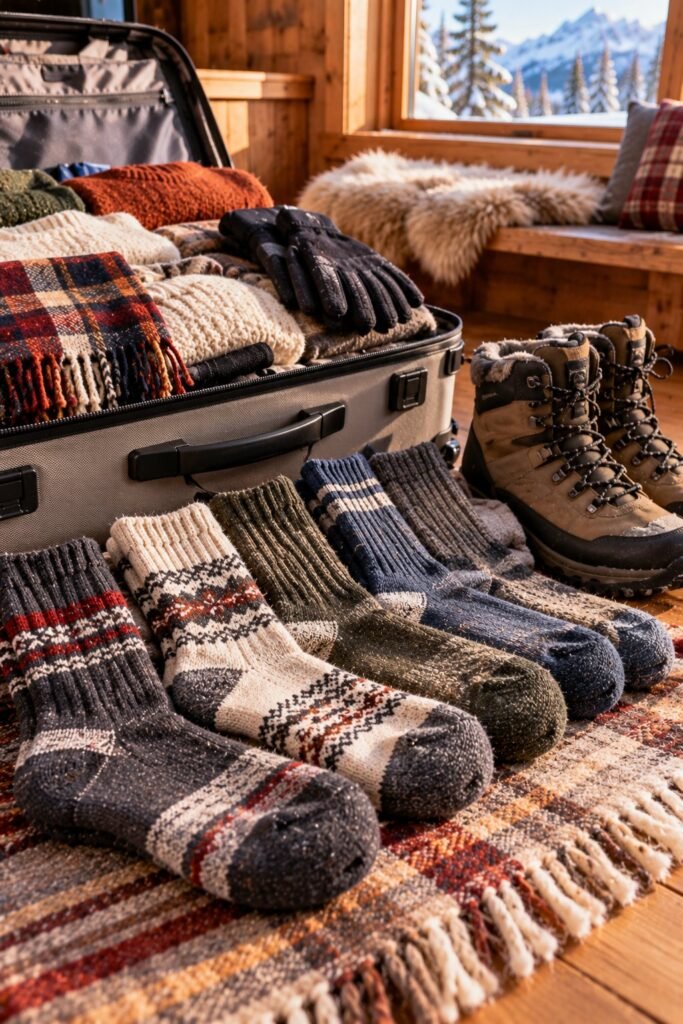
What it is. Wool or synthetic socks designed to keep your feet warm while helping manage moisture.
Why you need it. Cold, damp feet can make sightseeing, shopping, hiking, or waiting for transportation miserable. Even a good pair of winter boots cannot do its job properly if your socks leave your feet wet or fit so tightly that they restrict circulation.
You may spend more time walking than you expect on a winter holiday. Exploring Christmas markets, visiting historic neighborhoods, and walking between restaurants can mean hours on your feet, sometimes in wet or snowy conditions.
What to look for.
- Merino wool or a wool-blend sock for warmth and moisture management.
- A medium-weight sock for everyday sightseeing in cool conditions.
- A thicker winter sock for cold-weather activities, provided your boots have enough room.
- Flat seams and comfortable cushioning to reduce rubbing during long walks.
- A snug but comfortable fit that does not bunch up inside your footwear.
The thickness of your socks should match your boots. Wearing extremely thick socks inside tight boots can make your feet colder by reducing circulation and compressing the insulating space.
Budget tip. Buy a few good pairs rather than filling your suitcase with numerous inexpensive pairs that do not perform well. If your trip lasts several days, plan to rotate your socks and allow damp pairs to dry completely.
Tip. Pack an extra pair in your day bag so you can change if your feet get wet. This small precaution is especially useful when exploring snowy towns or walking through rain and slush.
3. Waterproof Boots With Good Traction
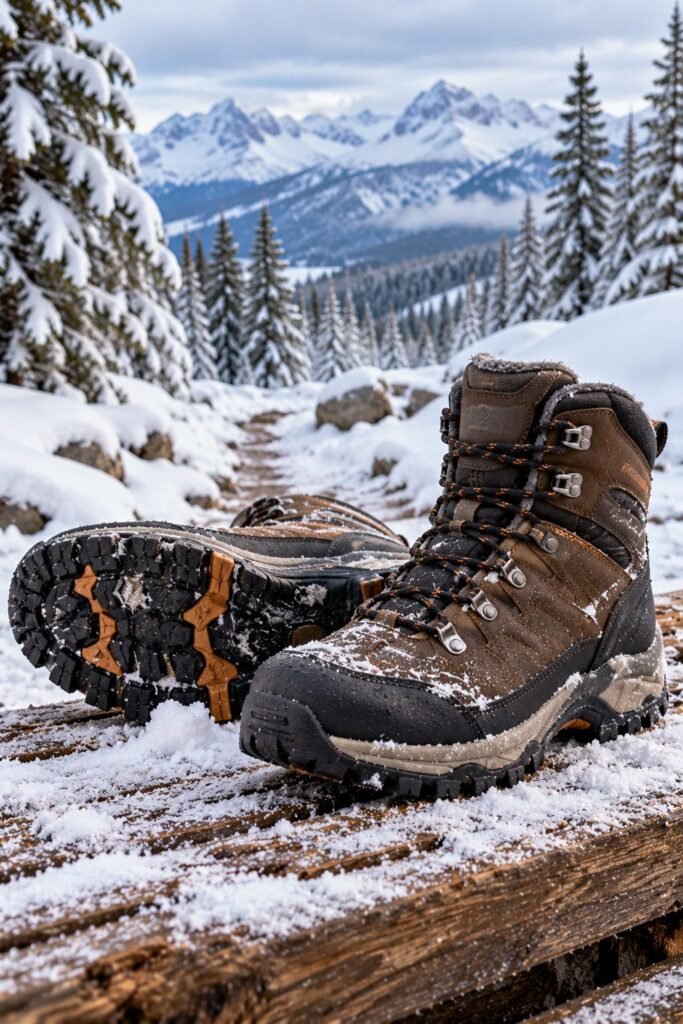
What it is. Winter footwear with a waterproof construction, a suitable level of insulation, and a sole designed to provide grip on the surfaces you expect to encounter.
Why you need it. Snow, slush, and winter rain can soak ordinary shoes, leaving you with cold feet and uncomfortable socks. Poor traction also increases the risk of slipping on icy sidewalks, wet steps, and slippery parking lots.
Good winter boots are particularly valuable when your itinerary involves outdoor sightseeing, countryside walks, snowy towns, or long periods of standing outside.
What to look for.
- Waterproof construction or a reliable waterproof membrane.
- Insulation suited to the expected temperature.
- A supportive fit that leaves enough room for your chosen socks.
- A tread pattern designed for wet or winter conditions.
- Comfortable cushioning for long walking days.
- A shaft height that provides appropriate protection from snow, slush, and water.
Remember that waterproofing and insulation are different features. A waterproof boot helps prevent water from entering, but it might not be warm enough for extreme cold. Similarly, an insulated boot may not keep your feet dry in deep slush.
No ordinary boot guarantees safe walking on every type of ice. If you expect icy conditions, consider additional traction equipment and walk slowly with short steps.
Budget tip. A solid pair of boots is worth the investment if you travel during winter regularly. If you only need them for one trip, compare borrowing, renting, or purchasing a versatile pair you can wear again.
Tip. Break boots in before your trip to avoid blisters. Wear them for several short walks at home and make sure your toes can move comfortably. Pack blister plasters if you expect to spend long days exploring.
4. Traction Cleats for Icy Sidewalks
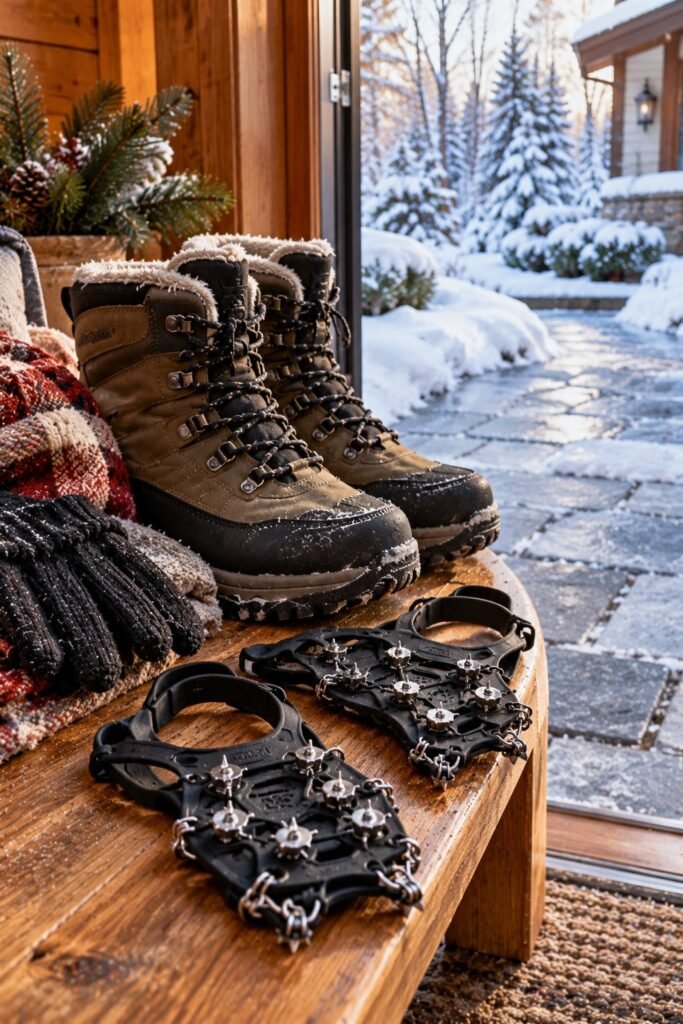
What it is. Slip-on traction devices with spikes, coils, or other gripping elements that fit over compatible shoes or boots.
Why you need it. Even footwear with a good tread can struggle on hard, polished ice. Traction cleats provide additional grip when walking across icy sidewalks, frozen paths, and slippery outdoor areas.
They are especially useful for winter trips where snow melts during the day and freezes again overnight, creating patches of ice that can be difficult to see.
What to look for.
- A size that fits securely over your actual winter footwear.
- Traction elements suited to the surfaces you will encounter.
- A design that is easy to put on and remove.
- Durable materials that can tolerate repeated use.
- A secure fit that will not shift while walking.
Different traction devices are designed for different activities. Lightweight versions may work well for icy sidewalks, while more aggressive designs may be intended for specific outdoor conditions. Choose according to your plans rather than assuming one type is suitable for everything.
Budget tip. A basic pair can be relatively inexpensive and takes little room in your luggage. If you travel somewhere with frequent ice, it may be a worthwhile addition even if you do not need it every day.
Tip. Remove traction cleats before walking on indoor floors, smooth tile, or other surfaces where they may slip, damage flooring, or make walking awkward. Keep them in a small waterproof bag so they do not dirty the rest of your belongings.
5. Hat, Gloves, and a Neck Warmer
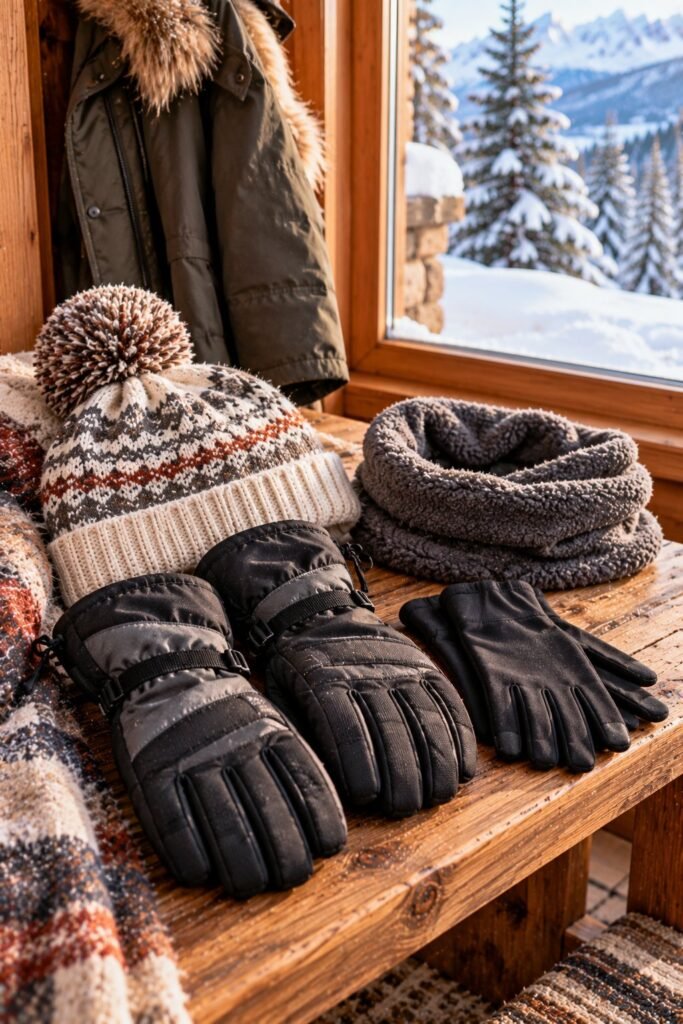
What it is. Winter accessories designed to protect your head, ears, hands, and neck from cold air and wind.
Why you need it. Exposed skin can become uncomfortable quickly in cold weather, especially when wind makes conditions feel colder than the thermometer suggests. Your fingers may also become less nimble, making it harder to use your phone, open luggage, or handle travel documents.
A warm hat, suitable gloves, and a neck warmer can make a significant difference during outdoor sightseeing without taking much space in your bag.
What to look for.
- A hat that covers your ears and fits securely.
- Insulated gloves for everyday outdoor use.
- Mittens for situations where greater warmth matters more than finger movement.
- Thin liner gloves for using your phone or handling small objects.
- A scarf or neck gaiter that protects the neck without restricting breathing.
- Water-resistant outer gloves if you expect snow or wet conditions.
For very cold destinations, look for accessories designed for the actual temperature range. Lightweight fashion gloves may be fine for a mild city winter but insufficient for extended outdoor activities in freezing weather.
Budget tip. You do not need several expensive accessories. One good hat, one suitable pair of gloves, and a versatile scarf or neck gaiter can cover many situations.
Tip. Pack a spare pair of gloves, since one lost glove can ruin a day. Touchscreen-compatible liners let you use your phone without exposing your skin, although you should still minimize unnecessary exposure in extreme cold.
6. Disposable Hand Warmers

What it is. Small heat-producing packets, commonly activated by exposure to air, that provide warmth for a limited period.
Why you need it. Hand warmers can be useful during outdoor winter markets, sightseeing tours, sporting events, and long waits for transportation. They are also convenient when your gloves alone are not enough to keep your fingers comfortable.
They should be treated as an additional comfort item, not a replacement for suitable clothing or proper protection from extreme cold.
What to look for.
- Products intended for hands or feet, depending on your needs.
- A stated operating duration that suits your planned activity.
- Clear instructions for use and disposal.
- Packaging that remains intact in your luggage.
Some warmers are designed to work inside gloves or pockets, while others are intended for placement in footwear. Follow the manufacturer’s directions because the different types may not be interchangeable.
Budget tip. Buying a multipack can reduce the cost per warmer if you expect to use several during your trip. However, do not purchase more than you are likely to need.
Tip. Don’t place them directly against bare skin for long periods, and check airline and security rules for any heated gear you plan to bring. Stop using a warmer if it causes burning, unusual discomfort, or skin irritation.
7. Moisturizer and Lip Balm With SPF
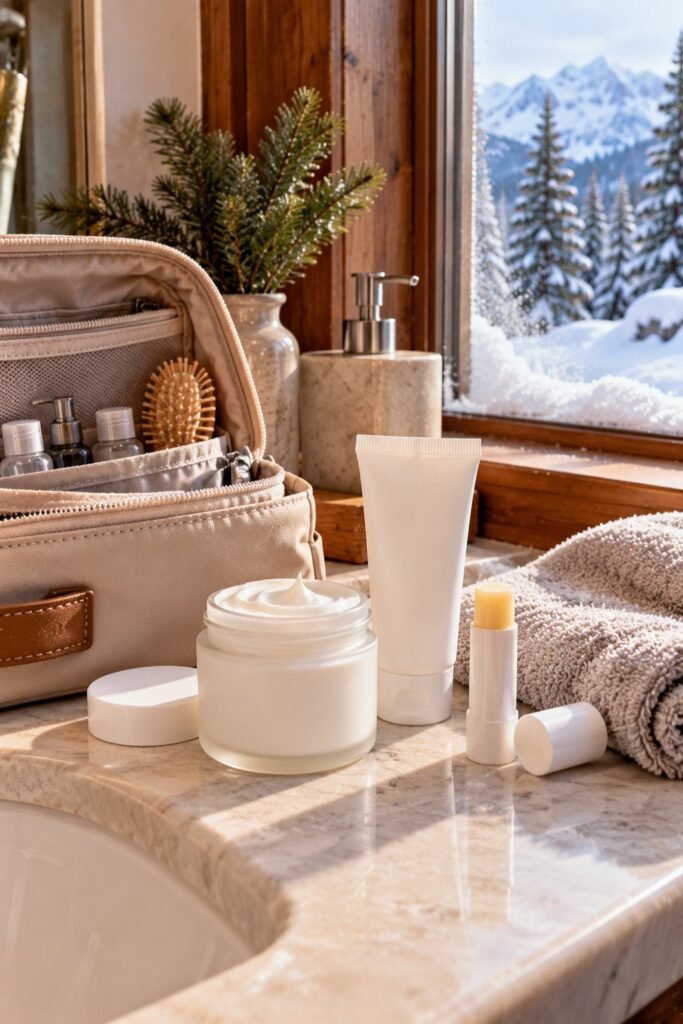
What it is. Basic skincare products that help protect exposed skin and lips from dryness, wind, and ultraviolet radiation.
Why you need it. Winter conditions can be surprisingly drying. Cold air, wind, indoor heating, and frequent transitions between outdoor and heated environments may leave your skin feeling tight or uncomfortable.
Your lips are particularly vulnerable because they can become dry and cracked when exposed to cold air. Snowy destinations also create a risk of sun exposure because snow reflects sunlight.
What to look for.
- A moisturizer suited to your skin type.
- A lip balm with broad-spectrum sun protection when you will be outdoors.
- Sunscreen for exposed skin, especially at higher elevations or in snowy environments.
- Fragrance-free products if your skin is easily irritated.
- Travel-sized containers that fit easily into your toiletry bag.
Apply moisturizer before heading outside if it works well with your skin, and reapply as needed. Lip balm should be reapplied according to its instructions, particularly after eating or drinking.
Budget tip. Travel sizes work well, and many are inexpensive. If you already have skincare products that suit you, transferring them into suitable travel containers may be more economical than purchasing a completely new set.
Tip. Remember liquid limits in your carry-on when packing lotions. Keep skincare products in a sealed toiletry bag to prevent leaks from reaching clothing, electronics, or important documents.
8. Sunglasses

What it is. Eye protection that reduces glare and helps shield your eyes from ultraviolet radiation.
Why you need it. Winter sunlight can feel less intense than summer sunlight, but it can still create considerable glare. Snow reflects sunlight, making it difficult to see comfortably when walking, driving, or spending time outdoors.
Sunglasses can be useful even on cold, clear days when there is no fresh snowfall. At higher elevations, ultraviolet exposure can also be greater, making proper eye protection especially important.
What to look for.
- Lenses that provide 100% UVA and UVB protection or are labeled UV400.
- A comfortable fit that stays secure while walking.
- A durable case to protect the lenses.
- Polarized lenses if reducing reflected glare is a priority, particularly for some driving and outdoor situations.
Polarization can reduce glare, but it does not replace ultraviolet protection. Check the UV rating rather than judging sunglasses by how dark the lenses appear.
Budget tip. A reliable pair doesn’t need to be expensive. If you already own sunglasses with proper UV protection, there is usually no reason to buy another pair specifically for winter travel.
Tip. Pack a case to prevent scratches. Keep your sunglasses somewhere accessible rather than buried beneath clothing, especially when moving between bright outdoor areas and indoor attractions.
9. A Power Bank and Insulated Phone Pouch

What it is. A portable charger that provides extra battery power and a pouch or protective storage solution that helps keep your phone warm.
Why you need it. Cold weather can temporarily reduce a phone battery’s performance and cause the battery percentage to drop more quickly. A phone that shuts down unexpectedly can leave you without navigation, boarding passes, hotel details, digital tickets, or a convenient way to contact someone.
This is particularly inconvenient when you are exploring an unfamiliar city, navigating a snowy road, or waiting outside for transportation.
What to look for.
- A power bank with enough capacity for your typical daily phone use.
- A compatible charging cable.
- A reputable charger with appropriate safety protections.
- A pouch or inner pocket that helps keep your phone close to your body.
- A wall charger compatible with your destination’s electrical outlets.
- A suitable plug adapter when traveling internationally.
For most travelers, a reliable mid-range power bank is sufficient. If you depend on your phone for photography, maps, translation, and digital tickets throughout the day, you may prefer a higher-capacity model.
Budget tip. A mid-range power bank is usually sufficient. Before purchasing another charger, check the condition and capacity of the one you already own.
Tip. Keep spare lithium batteries and power banks in your carry-on rather than checked luggage, and keep devices warm when not in use. My 10 travel accessories that make every trip easier guide covers more tech and organization ideas.
You can also download offline maps, save hotel addresses, take screenshots of important reservations, and store copies of your travel documents before leaving your accommodation. These simple steps reduce your dependence on mobile data and help you access essential information if your battery becomes low.
If your phone becomes extremely cold, allow it to warm gradually to room temperature before charging it. Avoid placing a cold device directly against a heater or another intense heat source.
10. An Insulated Bottle and Snacks
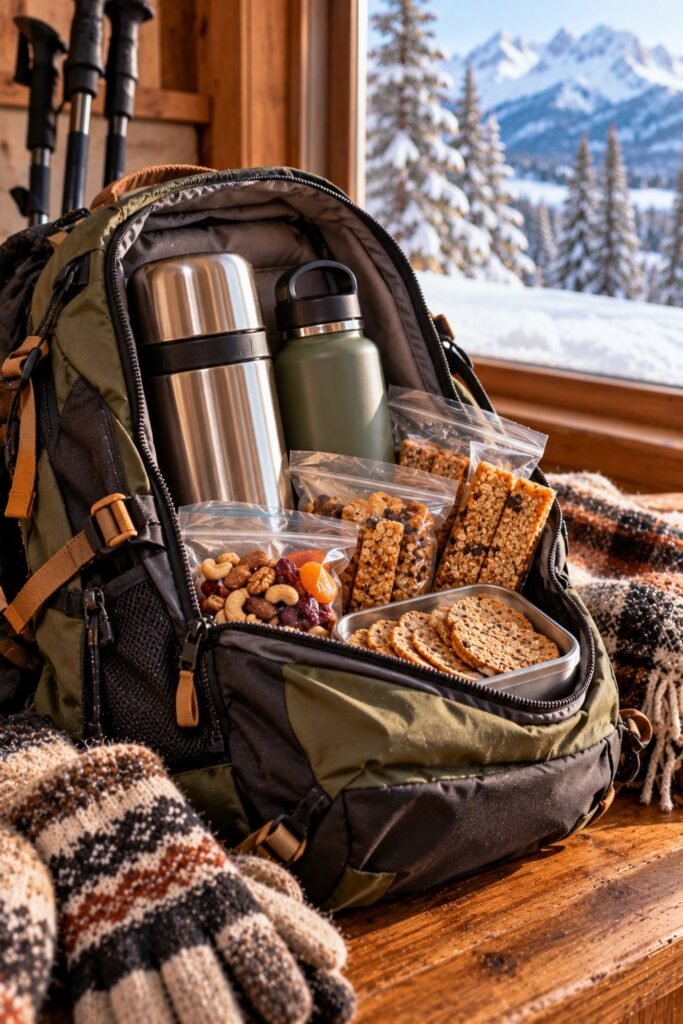
What it is. A leakproof insulated bottle or thermos for carrying drinks, together with snacks that can be stored safely during your journey.
Why you need it. Cold weather can make it tempting to go for long periods without drinking water. You may also find yourself waiting longer than expected for a meal because of transport delays, reduced opening hours, or a packed sightseeing schedule.
An insulated bottle makes it easier to carry a warm drink, while portable snacks provide a convenient source of energy when restaurants and shops are not immediately available.
What to look for.
- A bottle with a secure, leakproof lid.
- Insulation that keeps drinks warm for the duration of your planned outing.
- A size that fits comfortably in your day bag.
- Easy-to-clean construction.
- Non-perishable snacks that suit your dietary needs.
- A small reusable bag for keeping snack wrappers and other waste together.
Good travel snacks include nuts, crackers, dried fruit, granola bars, and other shelf-stable foods. If you are flying internationally, check the rules for bringing food into your destination country, since some products may be restricted.
Budget tip. Refill from home or a cafe instead of buying drinks all day. Purchasing a few snacks at a grocery store before sightseeing can also be cheaper than relying on tourist-area shops.
Tip. Stay hydrated, since cold air can be dry and you may not feel as thirsty. Use an insulated bottle appropriately, and allow very hot drinks to cool to a safe temperature before drinking.
If you are flying, remember that you will generally need to empty your reusable bottle before passing through airport security and refill it afterward where facilities permit.
11. A Winter Car Kit
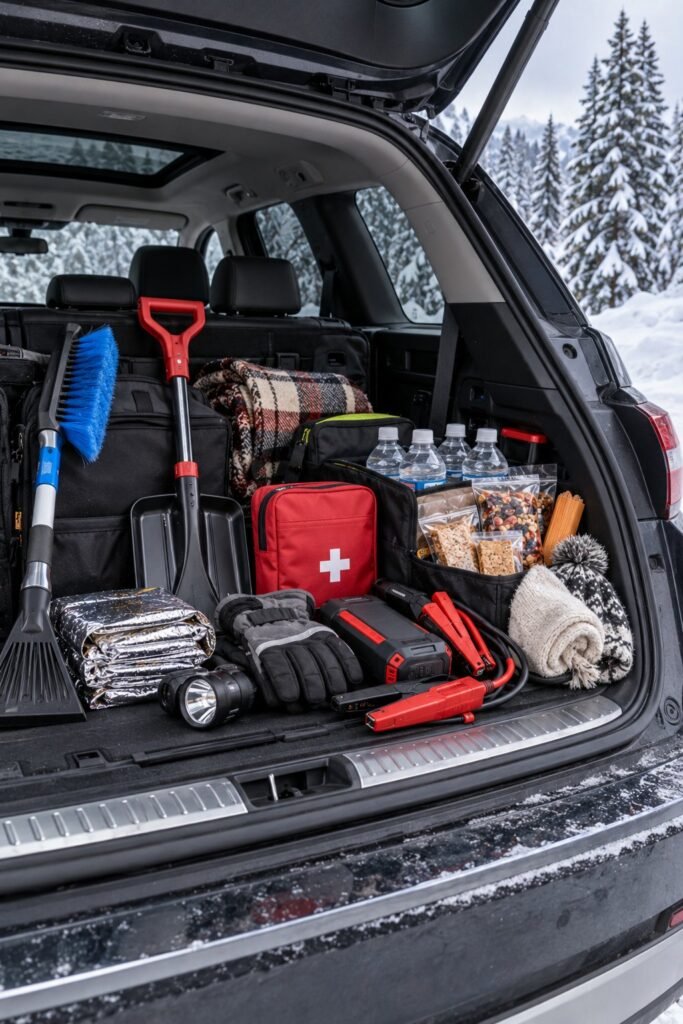
What it is. A collection of emergency supplies and vehicle equipment designed to help you manage cold-weather driving conditions.
Why you need it. Winter road trips can be memorable, but snow, freezing rain, poor visibility, and traffic delays can create unexpected problems. A breakdown that would be inconvenient in mild weather can become dangerous when temperatures drop and help is slow to arrive.
Even if your route looks straightforward, road conditions can change quickly. A winter car kit helps you prepare for delays and minor problems without relying entirely on nearby shops or services.
What to include.
- An ice scraper and snow brush for clearing windows and mirrors.
- A warm blanket or emergency blanket for each traveler.
- A flashlight with spare batteries or a properly charged rechargeable light.
- Drinking water and shelf-stable snacks.
- A phone charger and suitable charging cables.
- A small shovel appropriate for your vehicle and travel conditions.
- Jumper cables or a compatible portable jump starter.
- A first-aid kit and basic emergency supplies.
- Reflective warning equipment, such as a vest or warning triangle where appropriate.
- Gloves suitable for handling cold equipment.
- A bag of sand or suitable traction material if appropriate for the conditions.
- Any vehicle-specific emergency tools recommended by your manufacturer.
Before leaving, inspect your tires, windshield wipers, lights, coolant, and battery. Make sure your vehicle has the correct tires for the expected conditions and that you know how to use any snow chains required or permitted on your route.
Budget tip. Many of these items are inexpensive and can be gathered gradually. Start with the essentials you do not already own, then add equipment according to the climate, vehicle, and distance you plan to travel.
Tip. Keep your gas tank at least half full in winter. My 13 must have tools for van life guide covers jump starters and traction boards in more detail, and my 11 epic USA road trip itineraries guide helps you plan routes.
Keep emergency supplies somewhere accessible rather than buried beneath all your luggage. If you are traveling through remote areas, share your route and estimated arrival time with someone you trust.
If conditions become dangerous, stop somewhere safe and follow local road and emergency guidance. Do not continue driving simply because you have packed emergency equipment. A well-stocked car kit is a backup plan, not a reason to take unnecessary risks.
12. Flexibility and Planning Tools
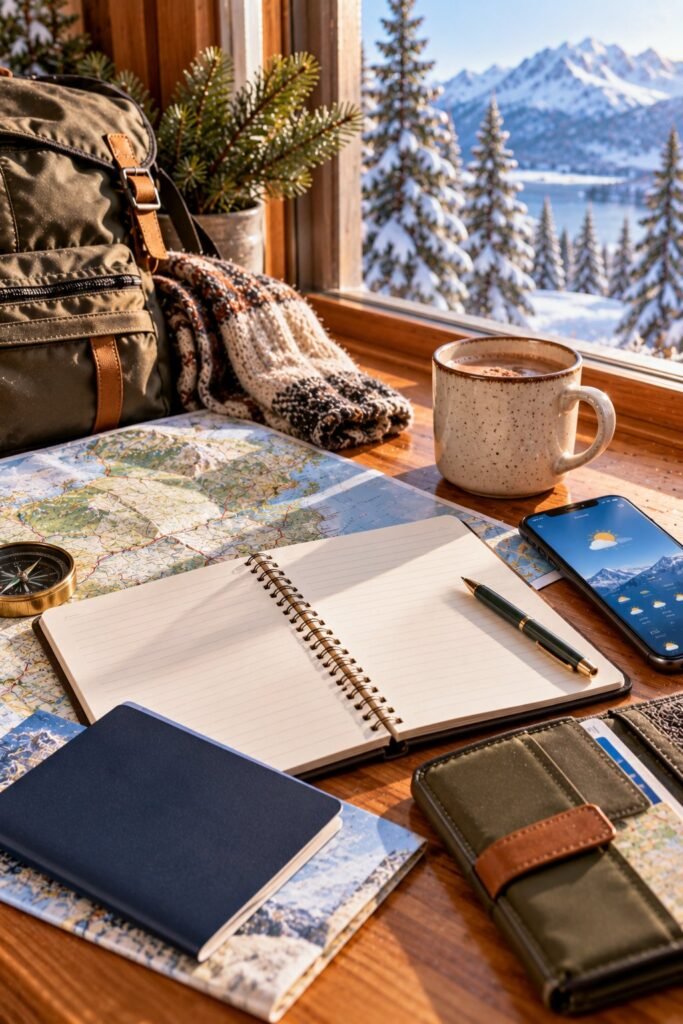
What it is. The apps, documents, booking choices, and practical habits that help you respond to unexpected changes during winter travel.
Why you need it. Winter storms can disrupt flights, delay trains, close roads, and make outdoor activities unavailable. Even a relatively small delay can affect hotel check-in, connecting transportation, or a prepaid excursion.
Planning for these possibilities does not mean expecting your trip to go wrong. It means giving yourself options if something changes.
What to include.
- Weather forecasts for your destination and the places you will pass through.
- Road condition updates for driving trips.
- Flight or train status notifications.
- Offline maps and saved accommodation addresses.
- Copies of important travel documents and booking confirmations.
- Flexible or refundable bookings when practical.
- Travel insurance that specifically covers relevant trip delays, cancellations, or interruptions.
- Emergency contact information.
- A backup plan for important activities that depend on suitable weather.
Budget tip. Flexible fares and insurance can be worth the extra cost for expensive or complex trips. However, read the terms carefully. Travel insurance does not automatically cover every weather-related disruption, and some policies exclude known events or impose specific conditions.
Tip. Leave buffer time in your itinerary, especially if you have connecting flights or must be somewhere on a certain date.
For example, if you have an important event on Saturday morning, arriving on Friday evening may leave you vulnerable to a delayed flight. Arriving earlier, when your budget allows, gives you more time to recover from disruptions.
I also recommend keeping your first day relatively flexible. Instead of scheduling several non-refundable activities immediately after arrival, allow time to collect your luggage, reach your accommodation, eat, and adjust to the weather.
Packing by Trip Type
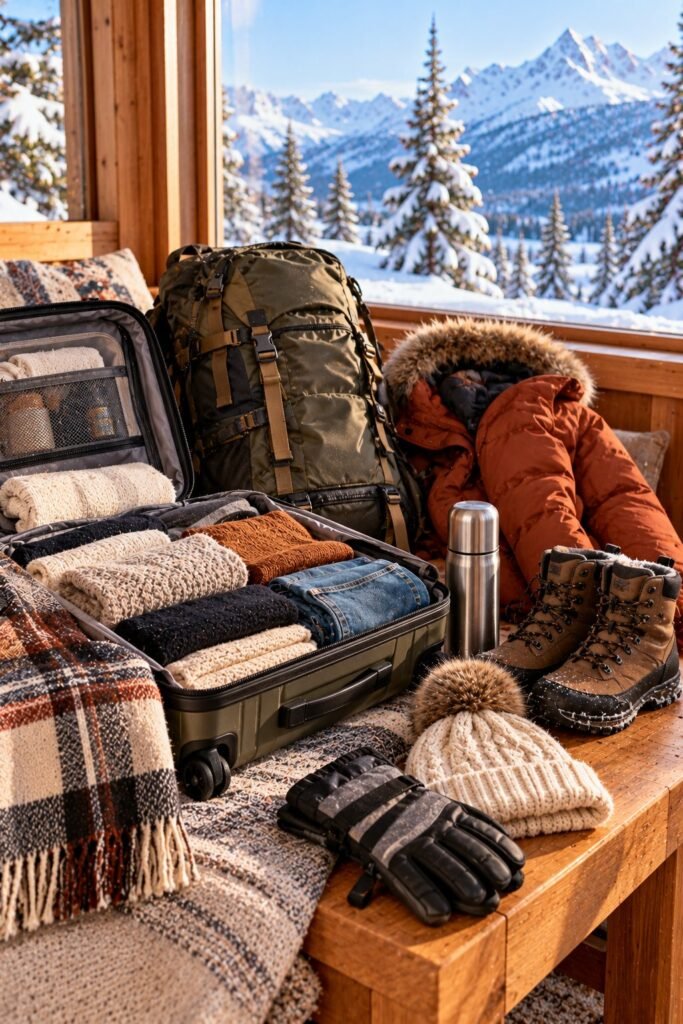
The best winter travel packing list depends on what you will actually be doing. Packing for a city break is different from preparing for a snowy mountain holiday, a long road trip, or a quiet cabin weekend.
Winter City Break
For a city break, focus on comfortable walking shoes or waterproof boots, a warm coat, versatile layers, gloves, and a compact umbrella if rain is expected.
You may spend considerable time moving between outdoor attractions and heated buildings, so clothing that is easy to add or remove will be especially useful.
Pack outfits that work together rather than bringing separate clothes for every activity. A neutral sweater, comfortable trousers, and a warm outer layer can be combined in several ways without filling your suitcase.
Snowy Mountain Getaway
A mountain destination may require more specialized equipment, particularly if you plan to hike, ski, or spend extended periods outdoors.
Consider insulated boots, thermal base layers, a suitable waterproof outer layer, additional gloves, and traction equipment appropriate for your activities. Check whether you need to rent or bring specialized sporting equipment.
Do not assume that the weather at the bottom of a mountain will be the same as the conditions higher up. Check local forecasts and activity-specific safety information before setting out.
Winter Road Trip
For a road trip, prioritize emergency supplies, comfortable clothing, water, snacks, a power bank, and an insulated blanket.
Keep a small bag of frequently needed items within reach so you do not have to unpack your entire vehicle at every stop. Store heavier luggage securely, and make sure emergency equipment is accessible.
Before each driving day, check the forecast, fuel availability, road conditions, and the distance between planned stops. Allow extra travel time instead of assuming that normal summer driving times will apply.
Cozy Cabin Stay
Cabin trips are often about relaxing, cooking, reading, enjoying the scenery, and spending time away from busy schedules. Alongside your regular winter clothing, consider warm indoor socks, slippers, comfortable lounge clothes, pajamas, and any personal items you need for cooking or entertainment.
Confirm what your accommodation already provides before packing extra towels, blankets, kitchen supplies, or toiletries. Some cabins have fully equipped kitchens, while others provide only basic facilities.
For a cabin stay, add slippers and cozy clothes, and my 10 best USA cabin getaways for Christmas guide can help you choose where to go. For couples planning a winter trip, my 6 best winter getaway ideas for couples guide has more ideas.
Winter Holiday or Christmas Market Trip
If your trip includes Christmas markets, seasonal festivals, or holiday shopping, think about comfort and organization as much as warmth.
A crossbody bag or secure daypack, reusable shopping bag, portable charger, gloves, and comfortable footwear can make long days more manageable. If you plan to buy gifts, leave some room in your luggage or consider packing a foldable bag for the return journey.
Check market opening dates and hours before traveling, because seasonal attractions may have limited schedules or close during severe weather.
Common Winter Travel Mistakes
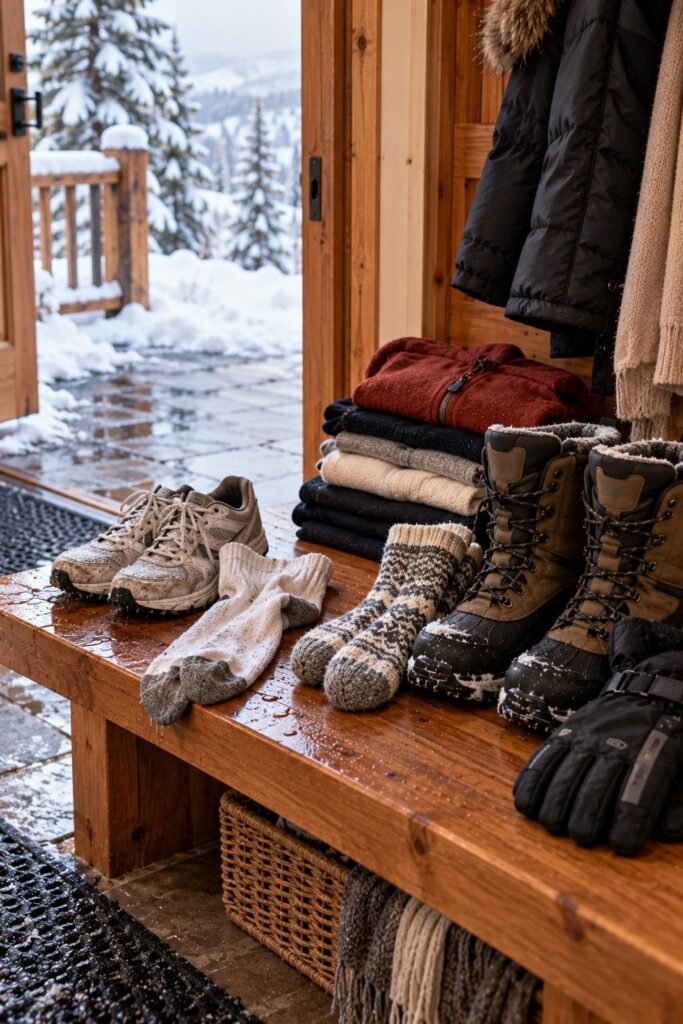
Even travelers who have visited cold destinations before can overlook small details that make a major difference. Here are some common mistakes worth avoiding.
Packing Too Much Cotton
Cotton clothing can hold moisture and dry slowly. If you sweat while walking and then stop in cold conditions, damp clothing may leave you feeling chilled.
Use moisture-wicking base layers for activities where you expect to sweat, and keep a dry change of socks or clothing available when needed.
Choosing Fashion Over Function for Footwear
Stylish shoes may look great in photographs but can become uncomfortable on wet pavement or icy sidewalks.
Choose footwear according to the weather, terrain, and amount of walking you expect. You can still pack attractive outfits while prioritizing shoes that provide suitable comfort and traction.
Bringing Too Few Warm Accessories
Travelers often focus on buying a large winter coat and forget about gloves, hats, and socks.
These smaller items are easier to lose and can be essential for comfort. Keep them together in a dedicated packing cube or compartment so you can find them quickly.
Forgetting About Phone Batteries
Cold temperatures can reduce battery performance, and navigation apps, photographs, and mobile data use power throughout the day.
Charge your devices before leaving your accommodation, carry a power bank, and download important information for offline use.
Underestimating Travel Time
Snow, freezing rain, traffic, and transport disruptions can make short journeys take much longer than expected.
Avoid planning your entire day around tightly spaced reservations. Leave time between activities and have an alternative route or backup plan when practical.
Ignoring Weather Updates
A forecast checked several days before departure is useful, but it may not reflect the conditions on the morning of your trip.
Check local weather and road updates regularly. If officials advise against unnecessary travel, adjust your plans rather than taking risks to keep an itinerary unchanged.
Packing Too Many Unnecessary Items
A large suitcase can become difficult to manage when sidewalks are wet, hotel rooms are small, or you need to move between transportation connections.
Choose clothing that can be worn in different combinations and focus on items that serve a clear purpose. You can often avoid overpacking by planning outfits and checking what your accommodation already provides.
Safety Tips for Winter Travel
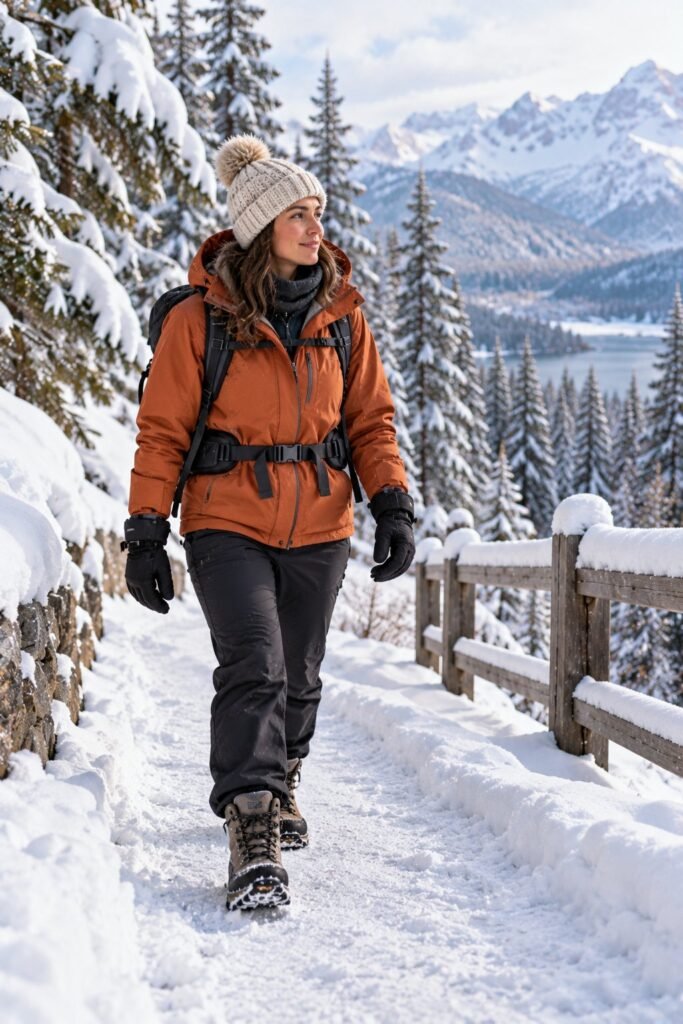
Winter travel is enjoyable when you prepare for the conditions, but safety deserves as much attention as packing.
Recognize the signs of cold-related illness. Uncontrollable shivering, numbness, unusual clumsiness, slurred speech, and confusion can indicate a serious problem. Hypothermia can occur even when temperatures are above freezing if a person becomes wet and chilled.
Frostbite can damage exposed skin in very cold conditions. Move to a warm place and seek urgent medical assistance if you suspect either condition.
Dress for wind and moisture. The temperature alone does not tell the whole story. Wind, rain, wet snow, and the length of time you spend outside all affect how quickly you become cold.
Walk carefully on slippery surfaces. Take short steps, use handrails where available, and avoid rushing across icy paths. Use suitable traction devices when needed, but remember that they do not eliminate every risk.
Drive according to conditions. Check road reports, use appropriate tires, clear all windows before driving, and increase your following distance on slippery roads. If conditions deteriorate, find a safe place to stop rather than continuing into dangerous weather.
Be cautious with heating equipment. Follow the instructions for space heaters and fireplaces at your accommodation. Never use a fuel-burning stove, barbecue, or outdoor heater inside a living space or enclosed tent. Ensure smoke and carbon monoxide detectors are working where applicable.
Protect your devices and important documents. Keep your phone charged, save emergency contact details, and carry the identification or travel documents required for your trip. If traveling internationally, keep copies of important documents separate from the originals.
Prepare for remote travel. Tell someone your plans if you are traveling in isolated or snowy areas. Carry appropriate emergency supplies, check the expected conditions, and understand how to contact local emergency services.
Check local requirements. Some destinations have rules concerning winter tires, snow chains, equipment, or access to certain roads. Verify the requirements before setting off, particularly if you are renting a vehicle.
How to Pack Winter Travel Essentials Without Overpacking
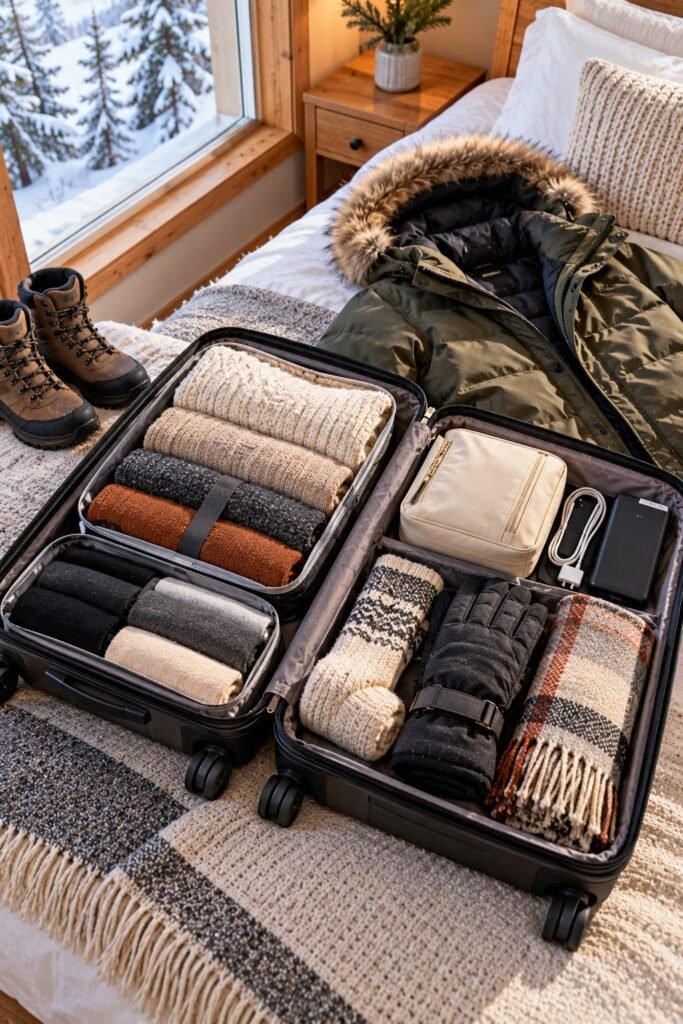
Winter clothing can take up considerable space, but a few practical decisions can make packing easier.
1. Plan outfits before packing. Choose clothing that works together so you can reuse a sweater, jacket, or pair of trousers with several outfits. This reduces the number of items you need.
2. Wear bulky items during transit. If practical, wear your heaviest shoes, sweater, and winter jacket while traveling. You can remove layers once you are comfortably seated.
3. Use packing cubes. Separate base layers, underwear, accessories, and other clothing into small groups. Packing cubes help keep everything organized and make it easier to find what you need without unpacking the entire suitcase.
4. Keep a small essentials bag. Put your phone charger, medications, lip balm, hand sanitizer, travel documents, and other frequently used items somewhere accessible. Keep any required medication with you rather than placing it in checked luggage.
5. Pack for the coldest realistic conditions. Review the forecast and plan for the activities you intend to do. Do not pack only for the warmest afternoon if you will be outside during freezing mornings or evenings.
6. Separate wet items. A waterproof bag can help keep damp socks, gloves, or clothing away from dry belongings. Allow wet items to dry safely as soon as possible.
7. Check airline baggage rules. Weight limits, cabin baggage dimensions, liquid restrictions, and battery regulations vary. Review your airline’s current requirements before leaving home.
The goal is not to bring everything you might possibly need. It is to have the right combination of warmth, comfort, safety, and flexibility without carrying unnecessary weight.
Frequently Asked Questions
What’s the most important winter travel item?
A good layering system is one of the most important winter travel essentials because it helps you stay warm and manage changing conditions. However, the right footwear, accessories, and emergency supplies also matter depending on your destination.
For a city break, comfortable waterproof footwear may be especially important. For a road trip, a suitable emergency kit could be essential.
How many layers should I wear?
A common starting point is three layers: a moisture-wicking base layer, an insulating mid layer, and a protective outer shell.
You can add or remove layers depending on the temperature, wind, precipitation, and activity. For extremely cold destinations, additional insulation may be necessary. Make sure your clothing does not fit so tightly that it restricts movement or compresses insulating layers.
Can I bring hand warmers on a plane?
Rules depend on the type of warmer and the airline or aviation authority. Disposable air-activated warmers and battery-powered heated products may be subject to different requirements.
Check the applicable airline and airport security guidance before packing them, particularly if the product contains batteries or fuel. Never assume that all heating products follow the same rules.
How do I keep my phone from dying in the cold?
Keep your phone in an inside pocket close to your body when you are outdoors, carry a compatible power bank, and avoid leaving the device in a cold vehicle for extended periods.
Download offline maps and save important travel details before you leave. If your phone becomes very cold, let it warm gradually before charging it, and avoid exposing it to direct intense heat.
Should I get travel insurance for winter trips?
Travel insurance can be worthwhile if you have prepaid accommodation, expensive activities, connecting flights, or a trip that could be disrupted by severe weather.
Read the policy carefully to understand its exclusions, limits, and conditions. Coverage varies, and not every weather event or transport delay is automatically covered.
What should I pack for a winter trip with only a carry-on?
Prioritize versatile clothing, a warm jacket, suitable footwear, a few base layers, socks, gloves, a hat, toiletries, chargers, travel documents, and essential medication.
Wear your bulkiest clothing during the journey when practical. Choose items that can be combined into several outfits, and check your airline’s current carry-on rules before departure.
Do I need special shoes for winter travel?
It depends on the destination. A mild winter city break may require only comfortable shoes with good grip and some water resistance. Snowy or icy destinations may require waterproof insulated boots and additional traction equipment.
Choose footwear that matches the weather, terrain, and activities on your itinerary.
How can I save money when buying winter travel essentials?
Start by checking what you already own. You may have a suitable coat, fleece, gloves, reusable bottle, or power bank that works perfectly well.
Borrow or rent specialized equipment for a one-time trip, compare prices before buying, and prioritize items that affect warmth and safety. Avoid purchasing expensive gear simply because it is marketed specifically for winter travel.
When should I start packing for a winter trip?
For a straightforward trip, begin checking your essentials several days before departure. For a longer journey, a remote destination, or a trip requiring specialized equipment, start earlier.
This gives you time to replace unsuitable items, test your boots, confirm baggage rules, check travel documents, and review the weather forecast.
Final Thoughts
Winter travel doesn’t need to be hard. With a good layering system, solid boots, a few small comfort items, and a plan for the unexpected, you can enjoy the season rather than endure it.
The best winter travel essentials are the ones that solve real problems during your trip. Warm socks help keep your feet comfortable during long walks. A reliable power bank makes it easier to stay connected. An insulated bottle and a few snacks help when meals are delayed, while a well-prepared car kit provides additional support during winter road travel.
Before you leave, check the forecast, review your itinerary, confirm your accommodation arrangements, and make sure your most important items are easy to access. You do not have to buy everything on this list. Choose what suits your destination, budget, and planned activities.
Pack smart, stay flexible, and let the cold become part of the charm. If you’re planning your next trip, my 15 holiday packing essentials you shouldn’t forget guide and 10 magical USA Christmas towns guide are good next reads.