

You can have the tent, sleeping bag, cooler, stove, and food all packed, and outdoor cooking can still turn frustrating the moment your cookware is too bulky, too small, difficult to clean, or missing something you actually needed.
I learned this the slow way, buying a set that looked impressive spread across a kitchen table but turned out to be a headache the first time I actually tried to fit it into the car alongside everything else.
Camping cookware is not about having the most pieces. It is about having the right pieces for the meals you actually make.

This guide will help you choose the right cookware size, understand the real differences between aluminum, stainless steel, and titanium, decide between nonstick and traditional surfaces, understand what nesting cookware actually means, choose cookware appropriate for solo trips, couples, or families, avoid unnecessary extra pieces, decide between car camping and backpacking cookware, and figure out which features are genuinely worth paying for.
If you’re also working through the rest of your gear list, this pairs well with my best camping gear under $50 guide, which covers a lot of the smaller accessories that end up living alongside your cookware.
What Makes a Good Camping Cookware Set for Beginners?

Beginners often assume a larger set is automatically the better choice. It isn’t.
A good beginner set should be easy to pack, simple to clean, durable enough for genuine outdoor use, appropriately sized for the number of people you’re cooking for, easy to store between trips, compatible with your specific camping stove, large enough for the meals you normally cook, and small enough that you will actually want to bring it rather than leave it behind.
This is where nesting matters. A nesting cookware set is designed so pots, pans, and other pieces fit inside one another, significantly reducing how much space the whole set takes up in your car or pack.
Once I started thinking about cookware in terms of the meals I actually make, rather than how many pieces came in the box, choosing gear became a lot simpler.
How Many Pieces Do You Actually Need?

This is one of the most useful questions a beginner can ask before buying anything.
For solo camping, a small pot, a lid, and one basic eating utensil is often genuinely enough. You don’t need a full kitchen for one person eating simple meals.
For two people, a medium pot plus a frying pan covers most straightforward breakfasts and dinners without much extra bulk.
For families, a larger pot, a frying pan, matching lids, and enough serving pieces for everyone starts to become genuinely useful rather than excessive.
A twenty piece set for two people is often unnecessary, no matter how good the deal looks on the box. I would rather have five pieces that I use on every single camping trip than fifteen pieces that spend the entire weekend sitting untouched in the storage bin.
Camping Cookware Materials Explained
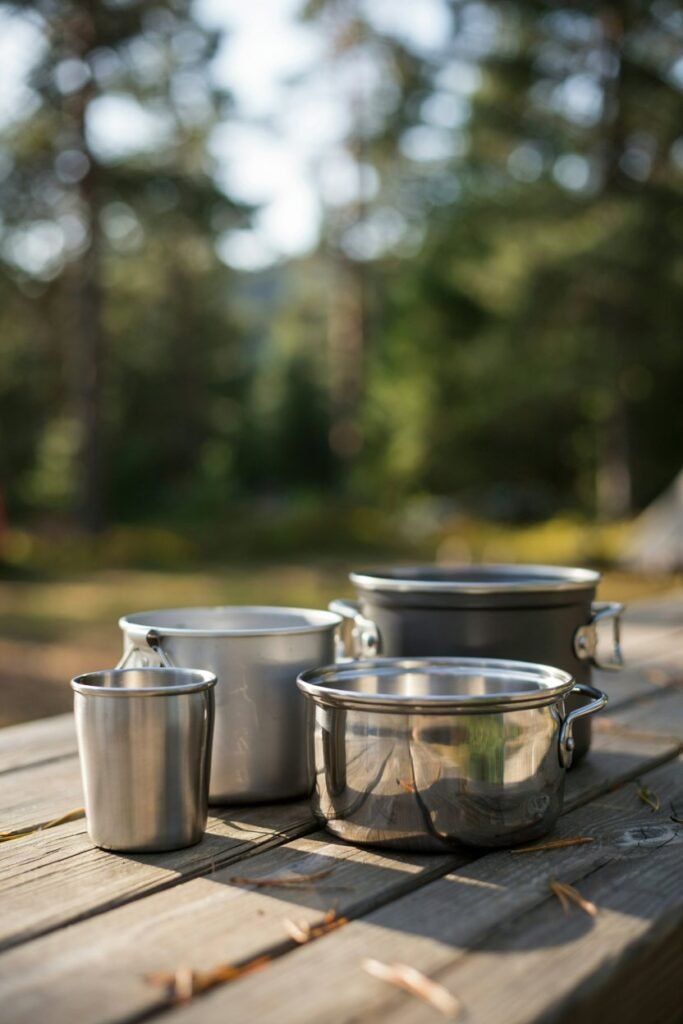
Aluminum
Aluminum is lightweight, heats quickly, and is usually one of the more affordable options available.
It works well for both car camping and backpacking depending on the specific construction, though it can dent more easily than heavier materials.
Hard Anodized Aluminum
Hard anodized aluminum has become popular in outdoor cookware because it offers noticeably better durability than standard aluminum while keeping much of the same lightweight advantage and generally solid cooking performance.
Stainless Steel
Stainless steel is durable and resistant to rust and corrosion, which makes it a strong choice for rugged, repeated camping use. It tends to be heavier than aluminum, and food can stick more easily if your cooking technique or heat control isn’t quite dialed in yet.
Titanium
Titanium is extremely lightweight, which makes it a favorite among backpackers who are counting every ounce.
It is durable relative to its weight, though it tends to be significantly more expensive, and it makes the most sense for campers who genuinely prioritize weight savings above other factors.
Nonstick vs Regular Camping Cookware
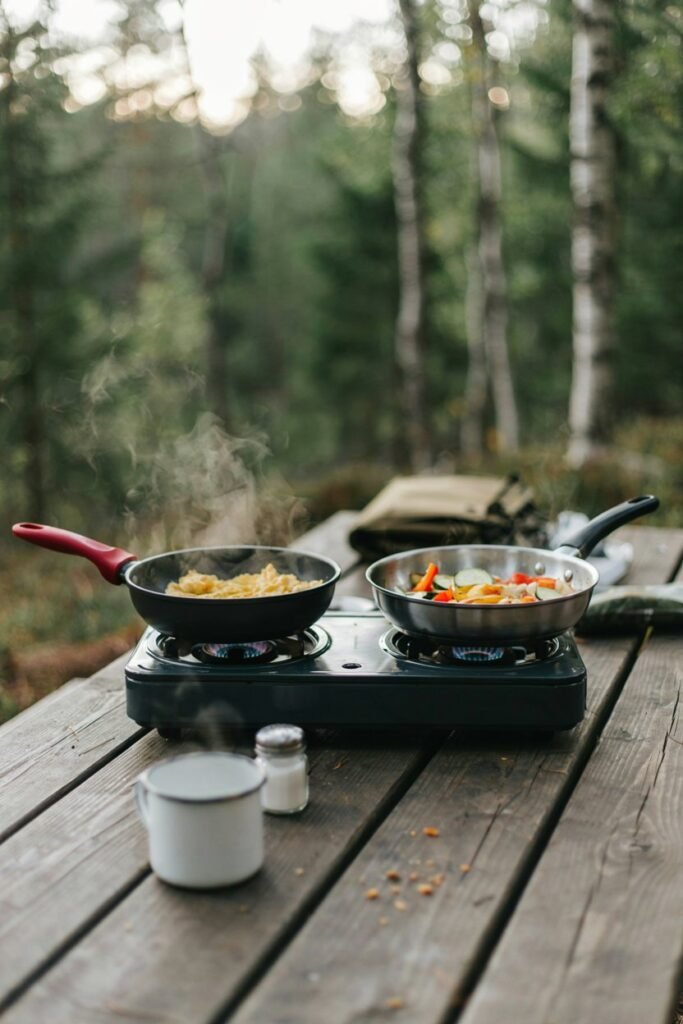
Nonstick cookware offers easier cleanup, less food sticking during cooking, and real convenience for delicate foods like eggs.
On the other hand, nonstick coatings can scratch over time, require a bit more care during use and storage, and are not always ideal for rougher outdoor handling.
Choose nonstick if you prioritize easy cleanup and mostly cook simple, straightforward foods.
Choose stainless steel or uncoated cookware if long term durability and rugged, repeated use matter more to you than convenience during cleanup.
What Should Be Included in a Beginner Camping Cookware Set?
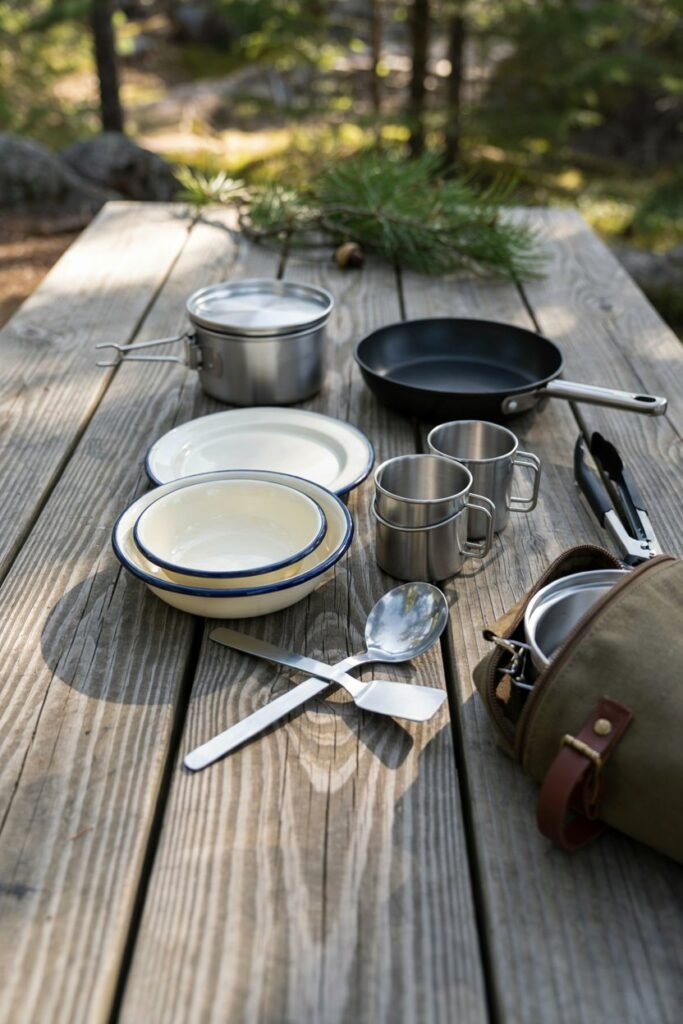
Pot. Useful for soup, pasta, chili, oatmeal, boiling water, and most one pot meals, which honestly covers a huge share of what people actually cook while camping.
Frying pan. Handles eggs, bacon, burgers, vegetables, and grilled sandwiches, essentially covering breakfast and a large share of dinner options.
Lid. More important than most beginners realize, since a lid speeds up boiling significantly and helps keep dirt and debris out of your food at an open campsite.
Plates and bowls. Genuinely useful for car camping, though far less important for minimalist backpacking where every extra item adds weight.
Cups or mugs. Convenient, but not essential if you already own dedicated camping mugs separate from your cookware set.
Utensils. A spatula, a spoon, tongs, or a multipurpose utensil generally covers what you need without requiring a full kitchen drawer’s worth of tools.
Storage bag. Genuinely useful, since it keeps the entire set together and makes packing and unpacking noticeably faster.
Best Camping Cookware Set Size for Different Campers

| Camping Style | What to Prioritize |
|---|---|
| Solo camping | Small, lightweight pot and lid |
| Couple camping | Medium pot plus frying pan |
| Family camping | Larger pot, pan, and serving pieces |
| Car camping | Durability and cooking convenience |
| Backpacking | Weight and compact nesting |
| Campfire cooking | Heat tolerance and rugged construction |
Backpackers generally minimize cookware since they are carrying everything on their back, while car campers have far more freedom to bring a fuller outdoor kitchen setup without worrying about weight.
Best Camping Cookware Sets for Beginners by Use Case
Rather than ranking sets from one to ten, it makes more sense to organize them around the way you actually camp, since the right choice really does depend on your specific situation.
Best overall. The GSI Outdoors Pinnacle Camper is frequently recognized as a strong all around choice for groups of two to four, offering a fairly complete kit with pots, a lid for each one, and included plates and mugs, making it a solid single purchase for someone building a car camping kitchen from scratch.

Best budget. The Stansport Heavy Duty Stainless Steel Set is regularly highlighted as a strong budget option, focusing on the core pieces most beginner campers actually need rather than a long list of extras, with copper bottom construction that helps with heat distribution.
Best for couples. The Stanley Base Camp Cook Set is well regarded for balancing durability, functionality, and everyday usability for two people without excessive bulk.
Best for families. The GSI Outdoors Pinnacle Camper again stands out here, since its capacity and included serving pieces scale reasonably well for a family of three or four.
Best lightweight option. The Snow Peak Ti-Mini Solo Combo 2.0 is a frequently recommended titanium option built specifically around minimizing weight, making it a strong pick for backpackers rather than car campers.

Best stainless steel option. The GSI Outdoors Glacier Stainless Base Camper Cookset is a well known choice among stainless steel sets, valued for its durability and resistance to the wear and tear of repeated outdoor use.

Best nonstick option. The GSI Outdoors Bugaboo Ceramic Base Camper Cookset represents the shift toward ceramic based nonstick coatings in camping cookware, offering easier cleanup without some of the longer term concerns associated with older nonstick technology.

Best for car camping. The Stanley Wildfare Core Frypan 12-Piece Set is a strong option for campers who want a fuller, more complete kitchen setup and have the trunk space to bring it along without worrying about ounces.
I have not personally tested every set listed here, so this is based on how these products are consistently received across dedicated outdoor gear testing and reviews rather than firsthand use of each one myself.
What I Would Look for Before Buying Camping Cookware
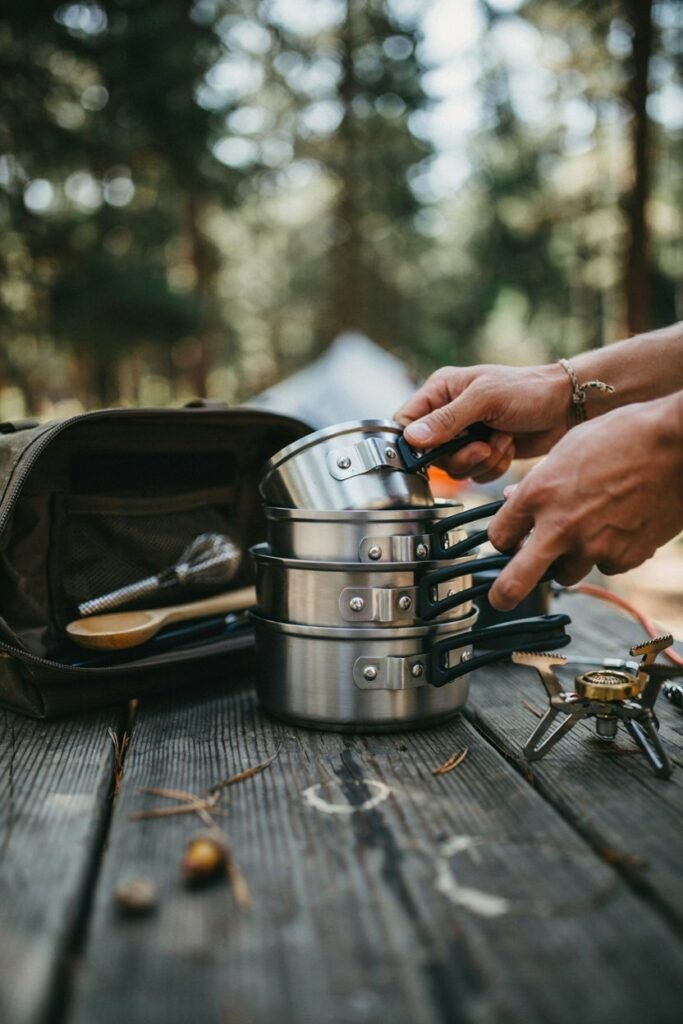
Before purchasing, it helps to run through a short mental checklist. Does everything actually nest together, or does the packaging just make it look compact in photos? How much does the complete set weigh once you account for every piece?
How many people can it realistically cook for on a normal night, not just in a best case scenario? Does the frying pan have a genuinely useful size for the meals you cook? Are the handles secure and comfortable to grip, especially with oven mitts or gloves on a cold morning?
Can the cookware actually be used on your specific camping stove? Is the material appropriate for how you camp, whether that means prioritizing weight or durability? How difficult will cleanup realistically be at a campsite without a proper sink?
Does the set include unnecessary accessories that inflate the price without adding real value? And does it come with a storage bag that keeps everything together?
Common Camping Cookware Mistakes Beginners Make
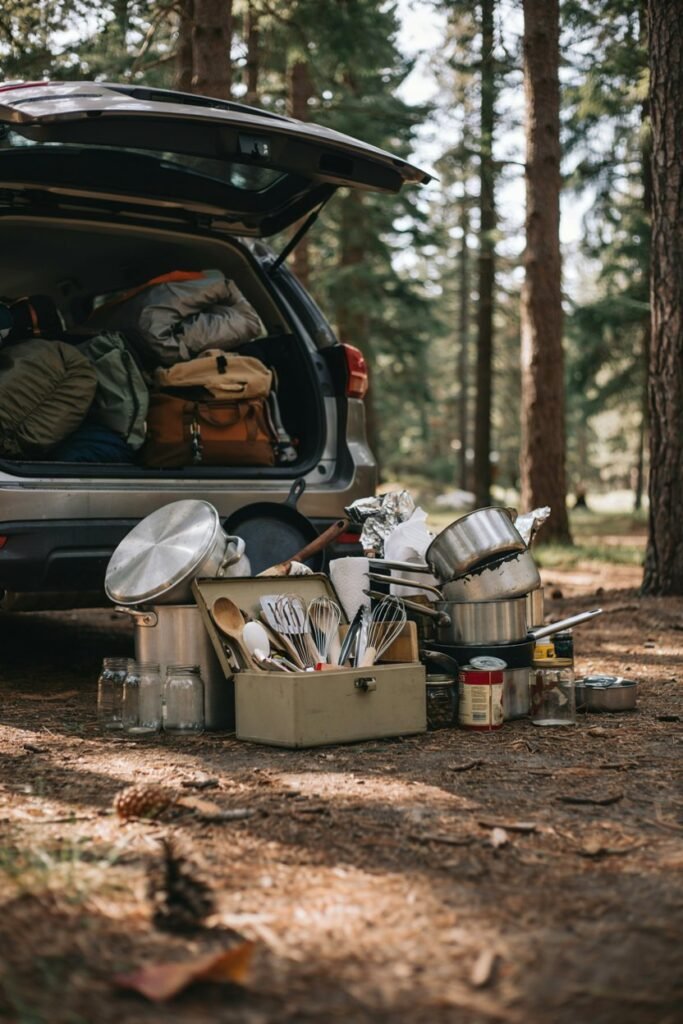
Buying too many pieces. More pieces do not automatically mean better value, and a lot of extra items end up unused trip after trip.
Buying based only on weight. Extremely lightweight cookware often involves tradeoffs that matter enormously to a backpacker but mean very little to a family car camper with plenty of trunk space.
Ignoring cooking capacity. A tiny pot becomes genuinely frustrating the moment you’re trying to cook dinner for four people rather than one.
Forgetting cleanup. A cookware set that cooks beautifully but is miserable to clean at a campsite without running water may not stay your favorite for long.
Bringing regular kitchen cookware. Household pots and pans are often awkward to transport, store, and clean outdoors compared to purpose built camping cookware.
Not checking handle design. Folding handles genuinely matter once you’re trying to fit everything into limited storage space, something that’s easy to overlook while shopping online.
Buying for an imaginary camping style. Don’t buy ultralight backpacking cookware if you mostly drive to a campground and have plenty of room to spare. Buy for the camping you actually do, not the camping you occasionally imagine doing.
How I Pack Camping Cookware

My own packing process has become fairly consistent trip after trip. The largest pot goes on the bottom of the storage bag or bin.
Smaller pots, utensils, and small accessories go inside that largest pot, taking advantage of the nesting design rather than wasting space around it.
The lid or frying pan sits on top. The whole thing then goes into its dedicated storage bag, kept entirely separate from the food storage container.
Keeping cookware together in one dedicated spot, rather than scattered across several bins, means I’m never digging through unrelated gear just to find a spatula or a pot lid at dinner time.
Easy Meals to Make With a Beginner Cookware Set

Beginners don’t need elaborate camp recipes to eat well outdoors.
Scrambled eggs and bacon, a simple pot of pasta, a pot of chili, oatmeal for a quick morning meal, pancakes, campfire nachos, one pot chicken and rice, sausage and vegetables cooked together in a single pan, grilled sandwiches, and a basic soup
all come together easily with just a pot, a pan, and a reliable heat source. A simple, well chosen set of cookware can make plenty of genuinely satisfying meals without requiring any advanced technique.
How to Clean Camping Cookware

Let cookware cool slightly before handling it to avoid burns and to make cleanup easier overall.
Remove larger food residue with a spatula or paper towel before washing to save water.
Use minimal water where possible, especially at sites without an easy water source. Avoid harsh scrubbing on nonstick surfaces, since that’s the fastest way to damage a coating you’re relying on for easy cleanup.
Dry cookware completely before packing it away, since packing anything damp invites both odor and rust depending on the material.
And only store cookware once it’s genuinely clean and dry, rather than assuming you’ll deal with it properly once you get home.
Are Camping Cookware Sets Worth It?
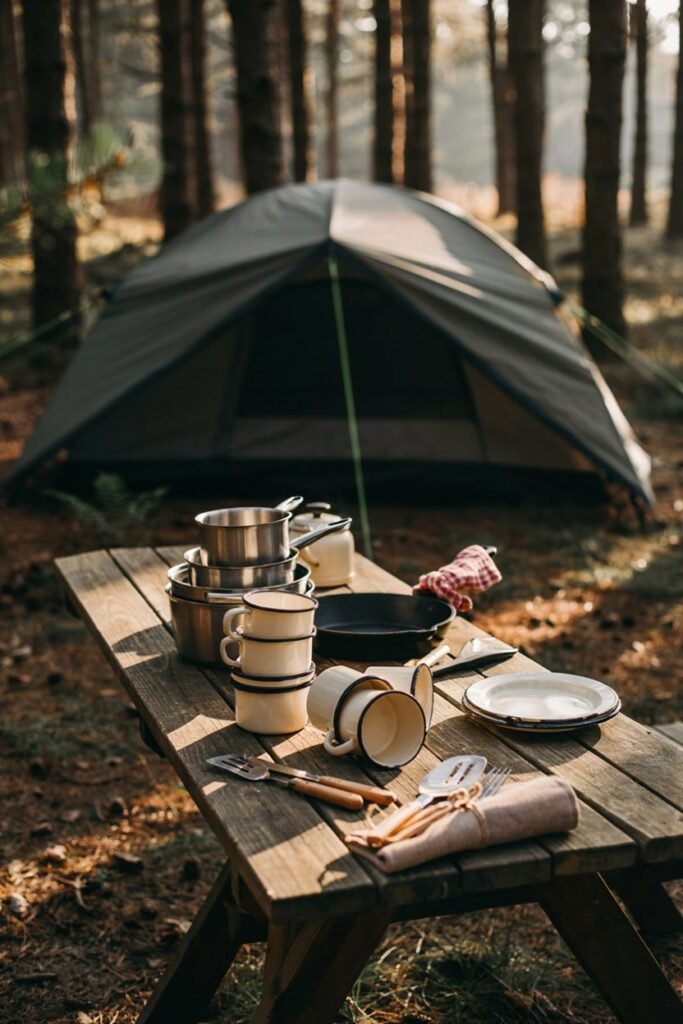
A complete set is especially worth it if you’re starting from scratch, camp regularly enough to justify the investment, want everything organized in one place, value the space savings of nesting storage, or regularly cook for more than one person.
Buying individual pieces instead may make more sense if you already own some camping cookware and just need to fill a gap, only need one specific pot rather than a full kitchen, are an ultralight backpacker building the lightest possible kit, or simply want to customize your setup piece by piece rather than accept whatever combination came in a box.
Frequently Asked Questions
What is the best camping cookware material for beginners? Aluminum or hard anodized aluminum tends to be a practical starting point for beginners, offering a reasonable balance of weight, price, and cooking performance.
Is stainless steel or aluminum better for camping? Stainless steel offers better long term durability and rust resistance, while aluminum is lighter and heats more quickly, so the better choice depends on whether you prioritize durability or weight.
How many pieces of camping cookware do I need? For most solo campers or couples, three to six pieces genuinely covers the majority of meals, while families may reasonably need a few more.
Can camping cookware be used over a campfire? Stainless steel and cast iron generally hold up well over an open flame, while titanium and some aluminum cookware are better suited to a controlled stove flame rather than direct campfire heat.
What size camping pot do I need for four people? A pot in the range of three to four liters generally covers most meals for a family of four without becoming unnecessarily bulky to pack.
Are camping cookware sets worth buying? For most beginners starting from scratch, yes, since a set covers your core needs in one purchase and typically nests together for easier storage than piecing everything together separately.
Is titanium cookware worth the money? For dedicated backpackers who prioritize minimizing pack weight above nearly everything else, yes, though it’s a harder sell for car campers who don’t need to shave every ounce.
What should I look for in a camping cookware set? Nesting design, appropriate size for your group, material suited to how you camp, secure handles, and genuine ease of cleanup are the factors worth prioritizing over sheer piece count.
Can I use regular pots and pans for camping? You can, though household cookware tends to be bulkier, harder to pack efficiently, and less durable for the specific demands of outdoor cooking and storage.
What is the easiest camping cookware to clean? Nonstick or ceramic coated cookware is generally the easiest to clean at a campsite, particularly when water access is limited.
Final Thoughts
One thing I pay much more attention to now is how the cookware actually packs away, not just how it looks spread across a table. A set can look perfect in a store display and still be genuinely annoying to fit into a packed car.
I also stopped judging cookware by the number of pieces included, since some of those extra utensils sound useful while shopping but end up taking up space without doing much for the meals we actually make.
For our regular trips, I would rather have cookware that is easy to pack, easy to clean, and appropriately sized for what we actually eat than something designed mainly to impress on a product page.
If you’re building out the rest of your camp kitchen and gear list, my fall camping packing list for the USA and best camping gear under $50 guides cover a lot of the surrounding gear that pairs naturally with whatever cookware you end up choosing.
And if backpacking is more your speed than car camping, my backpacking essentials for your next trip and backpack essentials for multi day hiking guides go deeper into the lighter weight side of things.
For planning where to actually put all this gear to use, my the most incredible hiking trips in the USA and best road trips in America guides are worth a look next.