
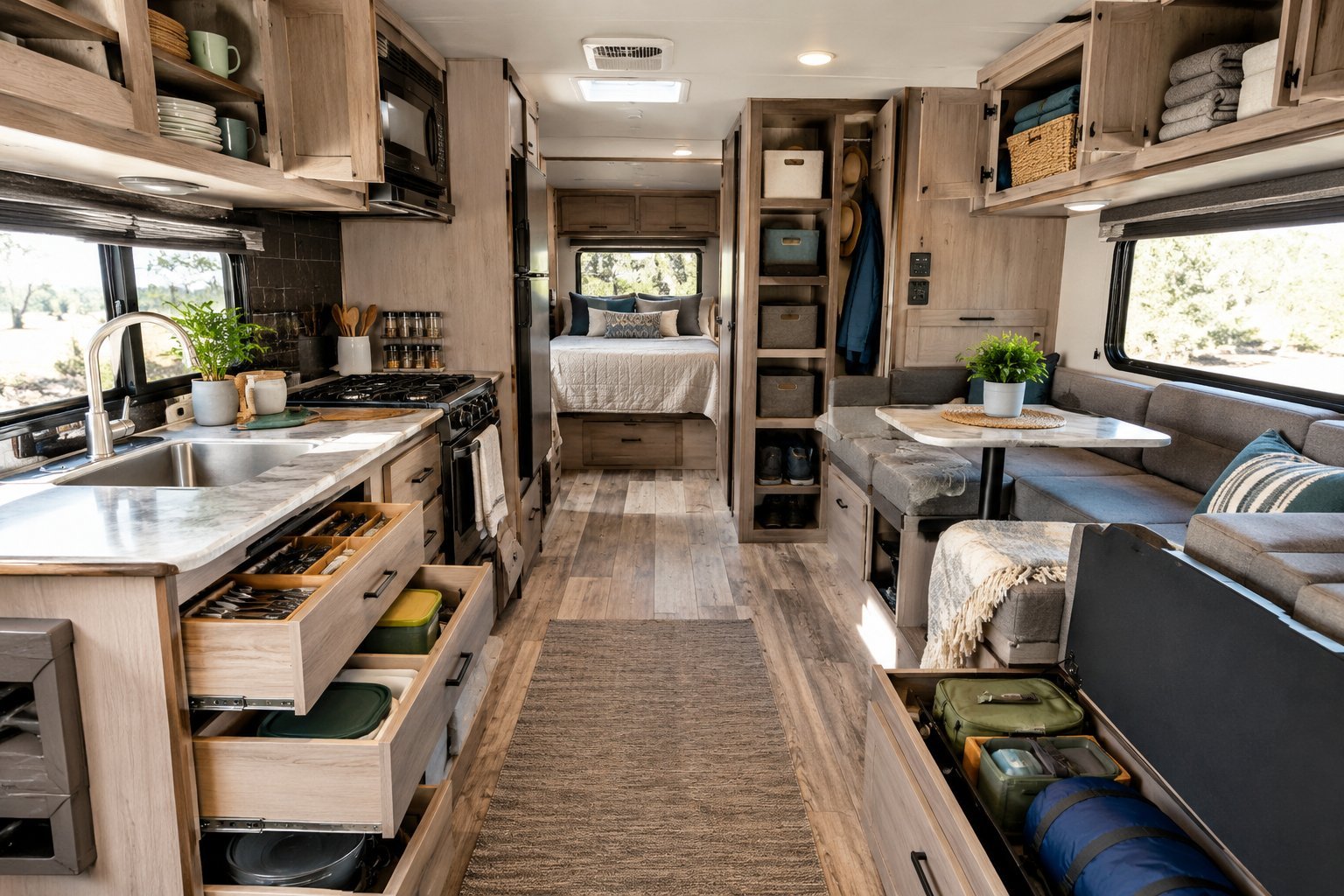
RV storage space is finite in a way that a regular house or apartment just isn’t, and every cabinet, drawer, and nook either works for you or quietly becomes a source of daily frustration.
The good news is that fixing most RV organization problems doesn’t require a renovation.
A handful of cheap, simple accessories, most of them adaptable from regular home organization products rather than anything RV specific, solve the majority of the clutter and shifting gear issues that come with life on the road.
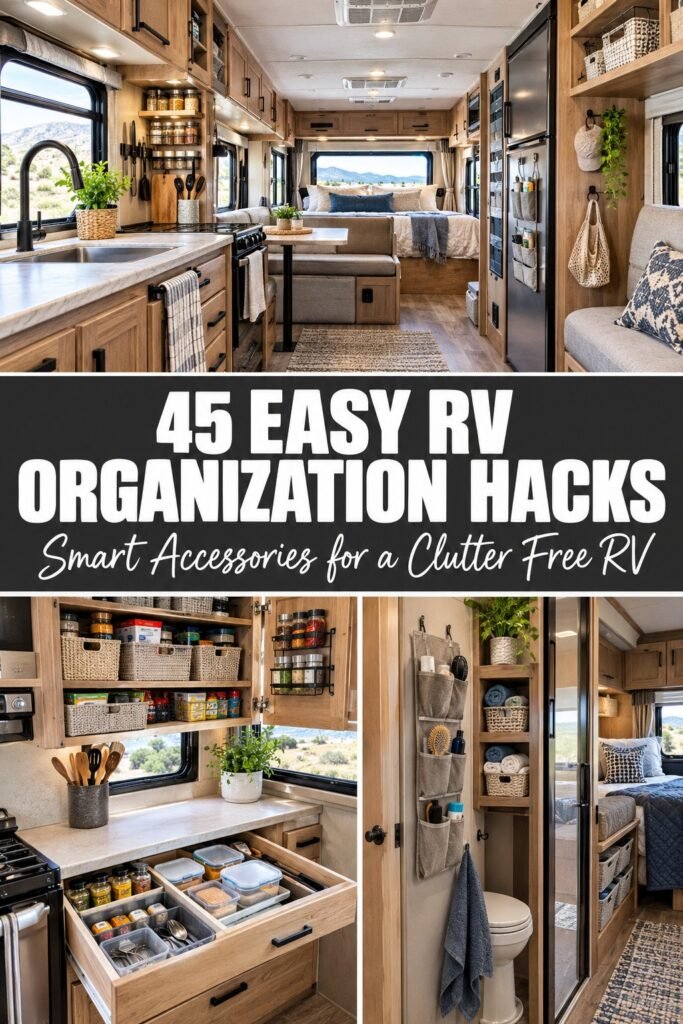
This list covers five of the most genuinely useful RV organization hacks, the ones that actually get used trip after trip rather than abandoned after a single attempt.
If you’re outfitting a rig for the road, my top 15 RV parks in North America guide covers where to actually take it, and my DIY camping hacks guide rounds out a few more general tricks worth knowing alongside these.
Quick Guide to These RV Organization Hacks
| Hack | Solves | Cost |
|---|---|---|
| Tension rods in cabinets | Items sliding and falling while driving | Under $10 |
| Over-the-door hanging organizer | Wasted vertical door space | Under $15 |
| Non-slip drawer liners | Drawer contents shifting in transit | Under $10 |
| Command hooks and adhesive strips | No-drill wall storage | Under $15 |
| Collapsible stackable bins | Wasted cabinet and under-bed space | Under $25 |
1. Tension Rods in Cabinets

The hack. Install a spring loaded tension rod horizontally across the inside of a cabinet, positioned to hold tall or narrow items like cutting boards, baking sheets, or cereal boxes upright and in place.
Why it works. RV cabinets take a real beating from road vibration, and items that would simply sit still in a stationary kitchen tend to slide, tip over, and crash together the moment you hit a bump or take a turn. A tension rod creates a physical barrier that keeps everything upright without needing any permanent hardware.
How to use it. Measure the cabinet width before buying, choose a tension rod sized slightly larger than the gap so it holds firm under pressure, and position it to divide the cabinet into sections that keep similar sized items separated and supported.
Tip. Use two parallel tension rods in a deeper cabinet to create multiple narrow slots rather than one large gap, which keeps smaller items from toppling sideways even with the rod in place.
2. Over-the-Door Hanging Organizer
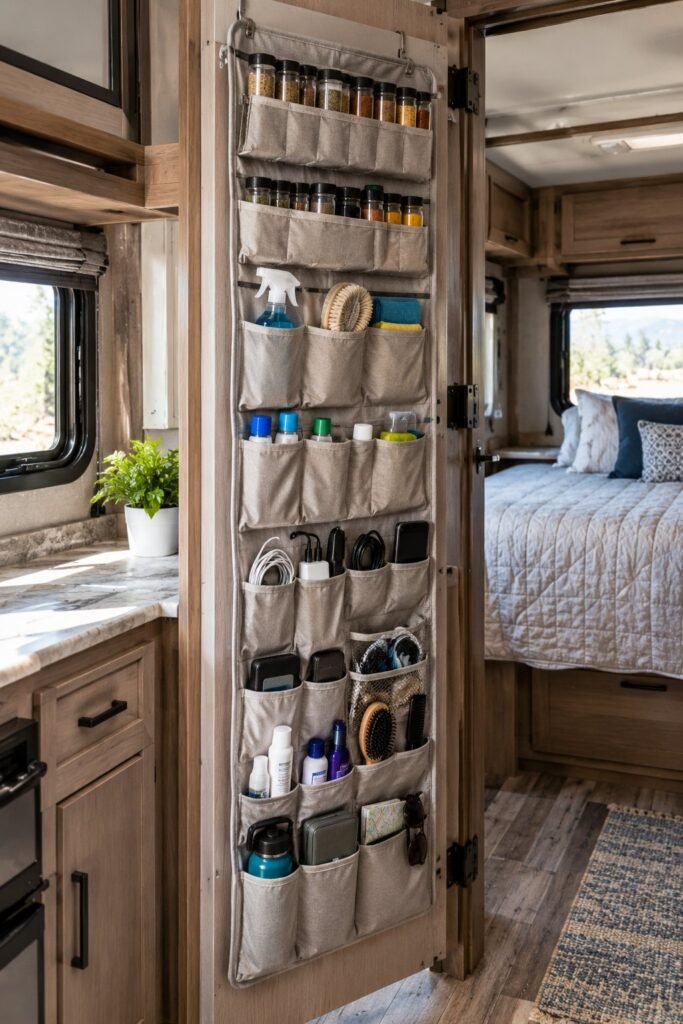
The hack. Hang a fabric shoe organizer, the kind designed to hold pairs of shoes in individual pockets, over the back of a pantry, closet, or cabinet door.
Why it works. RV doors represent genuinely wasted vertical storage space in most layouts, and a hanging organizer takes advantage of that space without requiring any drilling or permanent modification to the door itself.
How to use it. Use the individual pockets for small items that tend to get lost or buried in drawers, spices, cleaning supplies, phone chargers, first aid items, or actual shoes if that’s genuinely what you need the space for.
Tip. Choose a clear pocket version if you can find one, since being able to see the contents at a glance saves time compared to patting down each pocket to figure out what’s inside.
3. Non-Slip Drawer Liners
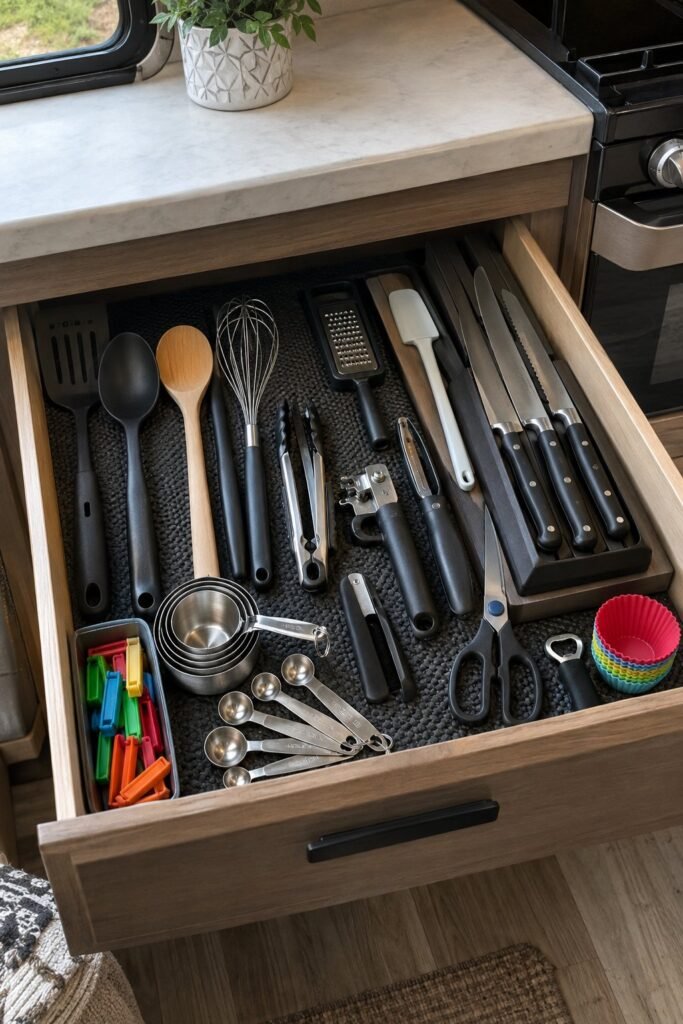
The hack. Line the bottom of every drawer with a rubberized, non-slip shelf liner, the kind commonly sold for kitchen cabinets, cut to fit each specific drawer.
Why it works. Without this, drawer contents genuinely slide around and collide every time the RV moves, which over time leads to broken dishes, tangled utensils, and a surprising amount of noise rattling around while driving.
How to use it. Measure and cut the liner to fit snugly inside each drawer, pressing it flat against the bottom before placing items back inside.
Tip. Choose a liner with some texture or grip on both sides rather than a completely smooth one, since the grip is the entire point and a liner that’s too slick defeats the purpose.
4. Command Hooks and Adhesive Strips
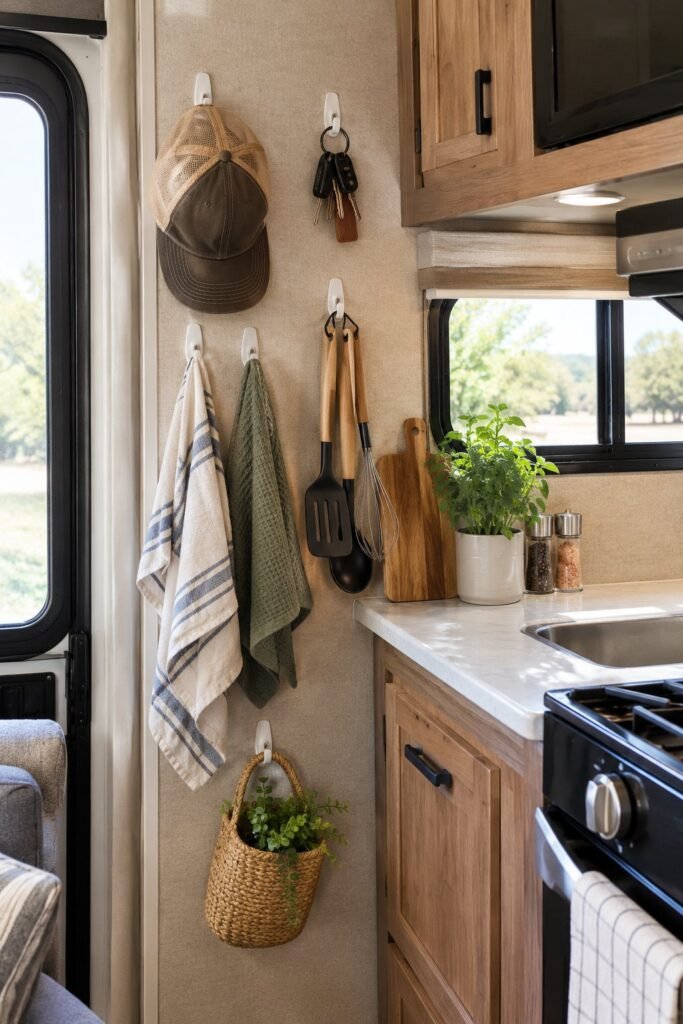
The hack. Use adhesive hooks and strips rated for the appropriate weight to add hanging storage throughout the RV, towels, keys, hats, cooking utensils, without drilling into walls or cabinets.
Why it works. RV walls and cabinetry are often thinner and more delicate than standard home construction, making drilling a genuinely risky option for adding storage, while quality adhesive hooks hold securely and remove cleanly when it’s time to take them down.
How to use it. Choose hooks rated for indoor or outdoor use depending on placement, and always check the stated weight limit before hanging anything heavier than a light towel or set of keys.
Tip. Clean the surface thoroughly with rubbing alcohol before applying any adhesive hook, since RV wall surfaces can have a waxy or oily residue from manufacturing that prevents a secure bond otherwise.
5. Collapsible Stackable Bins
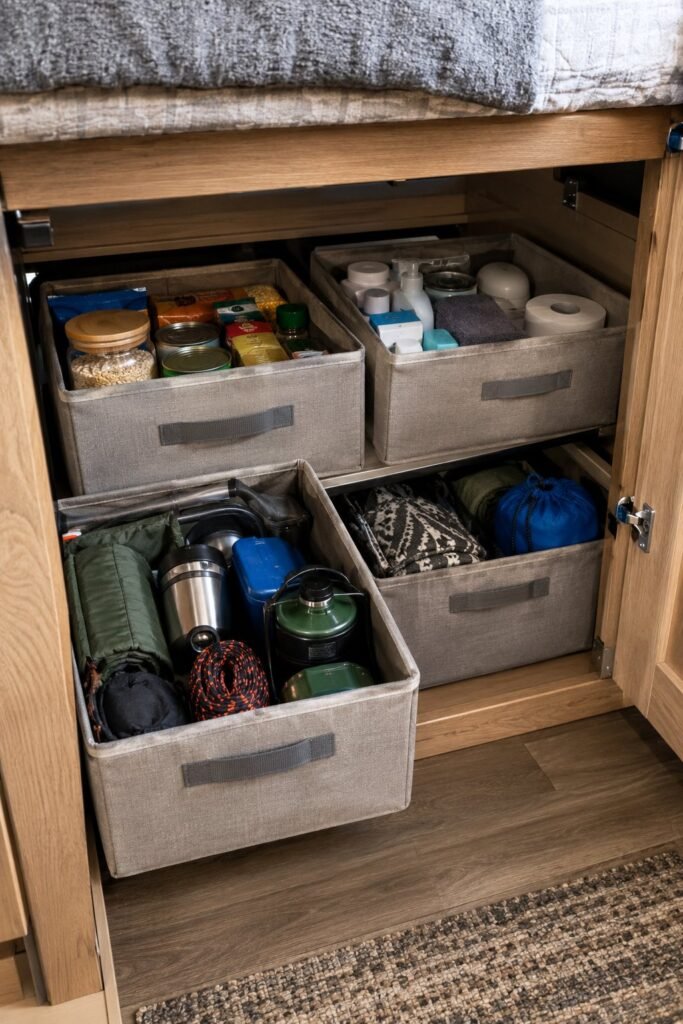
The hack. Use collapsible fabric or silicone bins, the kind that fold flat when empty, to organize cabinets, under-bed storage, and exterior storage bays.
Why it works. Traditional rigid bins take up the same amount of space whether they’re full or empty, while collapsible versions can be flattened and tucked away entirely when not in use, a genuine advantage in a space as limited as an RV.
How to use it. Use different bin sizes for different categories, pantry items, bathroom supplies, tools in an exterior storage bay, and label each one clearly so finding a specific item doesn’t require pulling out every bin to check.
Tip. Choose bins with reinforced or rigid bottoms even in a collapsible design, since a bin that’s too flimsy on the bottom won’t hold its shape well once loaded with heavier items.
A Few General RV Organization Principles
Beyond these five specific hacks, a couple of broader habits make a real difference over time. Store heavier items low and lighter items high, both for safety and to keep the RV’s weight distribution more stable while driving.
Do a quick walk-through before every departure, checking that cabinets are latched and loose items are secured, since even well organized storage can shift if something was left out after your last stop.
And resist the urge to keep every organizational product you try, since an RV’s limited space means every accessory you add should genuinely solve a problem rather than becoming more clutter itself.
Frequently Asked Questions
Will adhesive hooks actually hold up to the vibration of driving? Quality adhesive hooks rated for the appropriate weight generally hold up well, though it’s worth checking them periodically and avoiding placement directly on surfaces exposed to extreme temperature swings, which can weaken the adhesive over time.
Are tension rods strong enough for heavier kitchen items? For most standard kitchen items like cutting boards and baking sheets, yes, though it’s worth choosing a higher quality, properly sized rod rather than the cheapest option if you’re using it to support genuinely heavy items.
Do non-slip drawer liners work in bathroom cabinets too? Yes, the same liners work well in bathroom storage to keep toiletries and supplies from sliding around during transit, not just kitchen drawers.
How do I remove command hooks without damaging RV walls? Most quality adhesive hooks include a specific removal technique, typically pulling the tab straight down and away from the wall at a shallow angle, which releases the adhesive cleanly without pulling paint or finish off the surface.
What’s the biggest mistake people make with RV organization? Buying too many single purpose organizational products rather than a few flexible, genuinely multi-use solutions, which ends up adding clutter rather than reducing it in a space with limited room to spare.
Final Thoughts
RV organization doesn’t require a full interior renovation or an expensive specialty product for every single problem.
These five hacks, tension rods, a hanging organizer, drawer liners, adhesive hooks, and collapsible bins, cover the vast majority of the storage and shifting issues that come up on the road, all for a relatively small total cost.
Start with whichever problem is bothering you most on your current setup, add one hack at a time, and keep only the ones that actually earn their place once you’re back out on the road.
If you’re rounding out the rest of your setup for your next trip, my 11 easy hacks for camping in the rain guide and best camping gear under $50 guide are both worth a look for whatever comes next.