
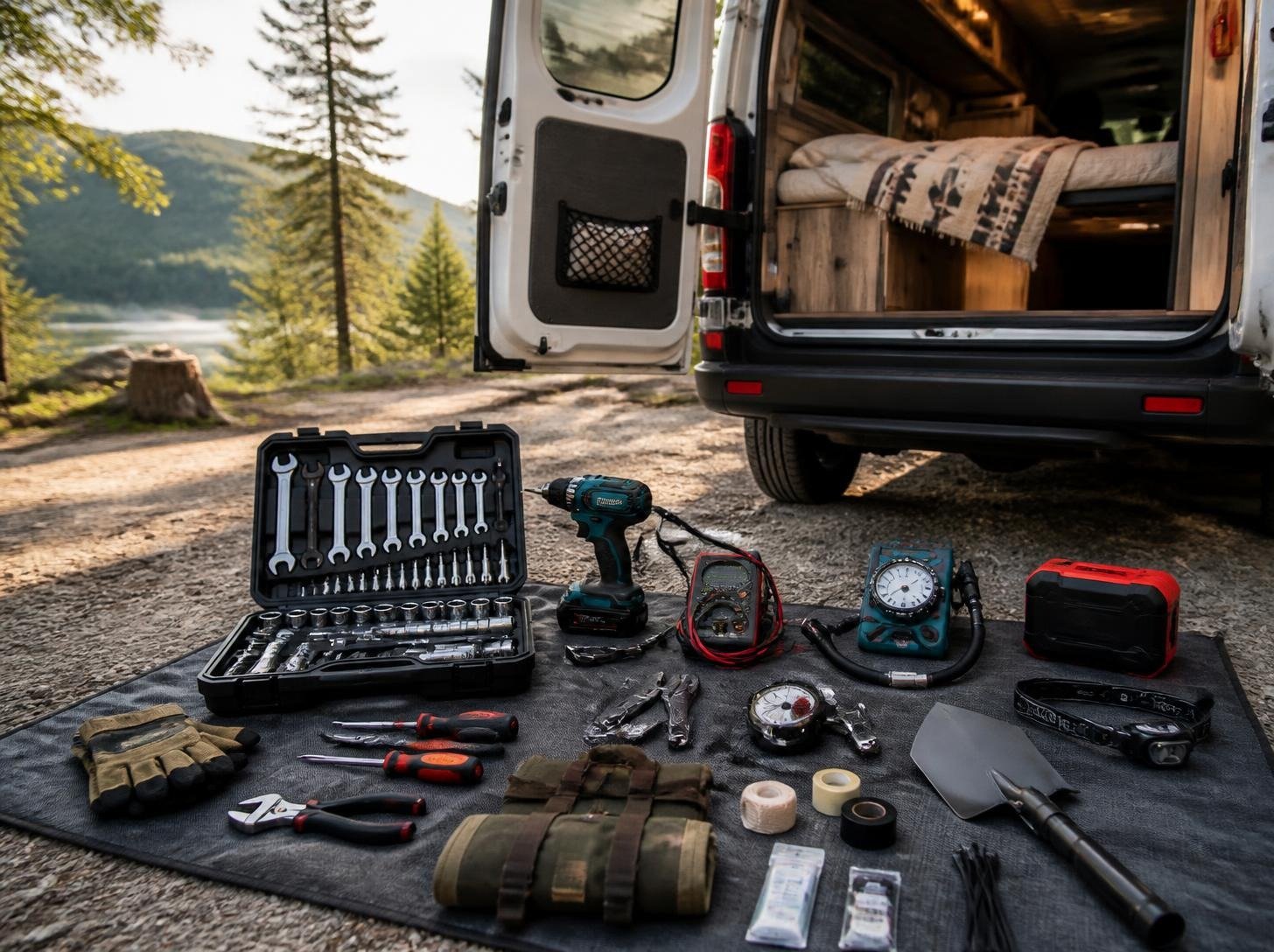
Van life looks effortless in photos, but anyone who has done it for more than a few weeks knows it involves a steady stream of small fixes.
A loose panel rattling on a washboard road, a dead battery at a trailhead, a flat tire miles from a service station, a wiring gremlin that only shows up after dark.
The right tools turn these moments from trip ending emergencies into twenty minute inconveniences.
This guide covers thirteen tools worth carrying in a van, whether you’re building out a conversion, maintaining a vehicle on the road, or simply want to be able to handle the basics.
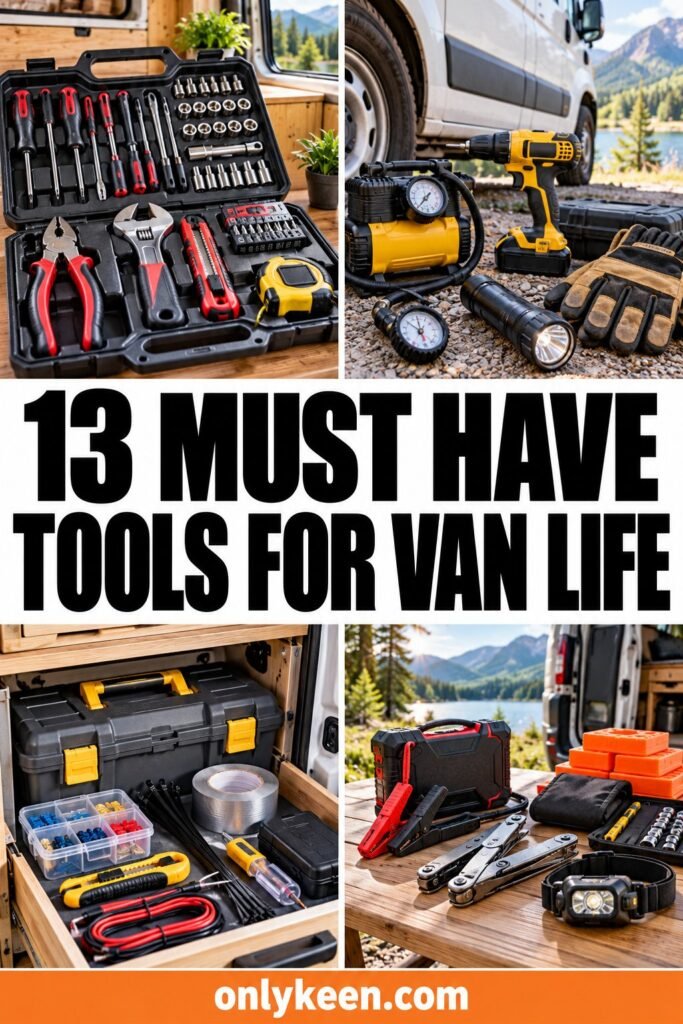
I’ve focused on tools you’ll actually reach for rather than a giant kit that eats up cargo space. Prices vary widely, so I’ve kept the budget advice general.
If you’re also outfitting an RV or camper, my 7 must have items for your RV guide and 11 gadgets every RVer should own guide cover related ground.
Quick Guide to These Van Life Tools
| Tool | What It Helps With |
|---|---|
| Socket and wrench set | General mechanical repairs and bolt checks |
| Screwdriver set with ratcheting bits | Interior panels, fixtures, and fasteners |
| Pliers set with locking pliers | Gripping, bending, and holding parts |
| Cordless drill and driver | Build outs, repairs, and mounting |
| Digital multimeter | Diagnosing 12V electrical problems |
| Wire strippers and crimpers | Safe, solid electrical connections |
| OBD-II scanner | Reading engine warning codes |
| Lithium jump starter | Dead battery recovery |
| Tire pressure gauge and plug kit | Tire checks and temporary repairs |
| Bottle jack and lug wrench | Changing a flat tire |
| Traction boards and folding shovel | Getting unstuck from sand, mud, or snow |
| Rechargeable headlamp and work light | Hands free light for repairs |
| Multi-tool and utility knife | Quick everyday cutting and fixing |
1. Socket and Wrench Set

What it is. A compact set of sockets, a ratchet, and a few combination wrenches in sizes that fit your van, which means checking whether your vehicle uses metric or imperial fasteners, or both.
Why you need it. Vibration loosens bolts over time, and a socket set lets you check and tighten battery terminals, brackets, racks, and interior hardware before small issues become big ones.
What to look for. A set that covers the sizes you actually have on your van, a sturdy case, and a ratchet that feels comfortable and doesn’t slip under load.
Budget tip. A mid range set is usually enough for van use, and it’s smarter to buy a quality compact set than a huge cheap one you’ll rarely open.
Tip. A torque wrench is worth adding if you want to check lug nut tightness according to your vehicle manual, since over or under tightening can cause problems.
2. Screwdriver Set With Ratcheting Bits

What it is. A set of screwdrivers or a single ratcheting handle with interchangeable bits in common head types.
Why you need it. Van interiors rely on lots of small screws, and having the right bit on hand saves you from stripping heads or improvising with the wrong tool.
What to look for. Bits for common head types, magnetic tips that hold screws, and a comfortable grip.
Budget tip. A single ratcheting driver with a bit set takes up less space than a full set of separate screwdrivers.
Tip. Keep spare screws and bits in a labeled container, because they’re easy to lose and hard to replace on the road.
3. Pliers Set With Locking Pliers
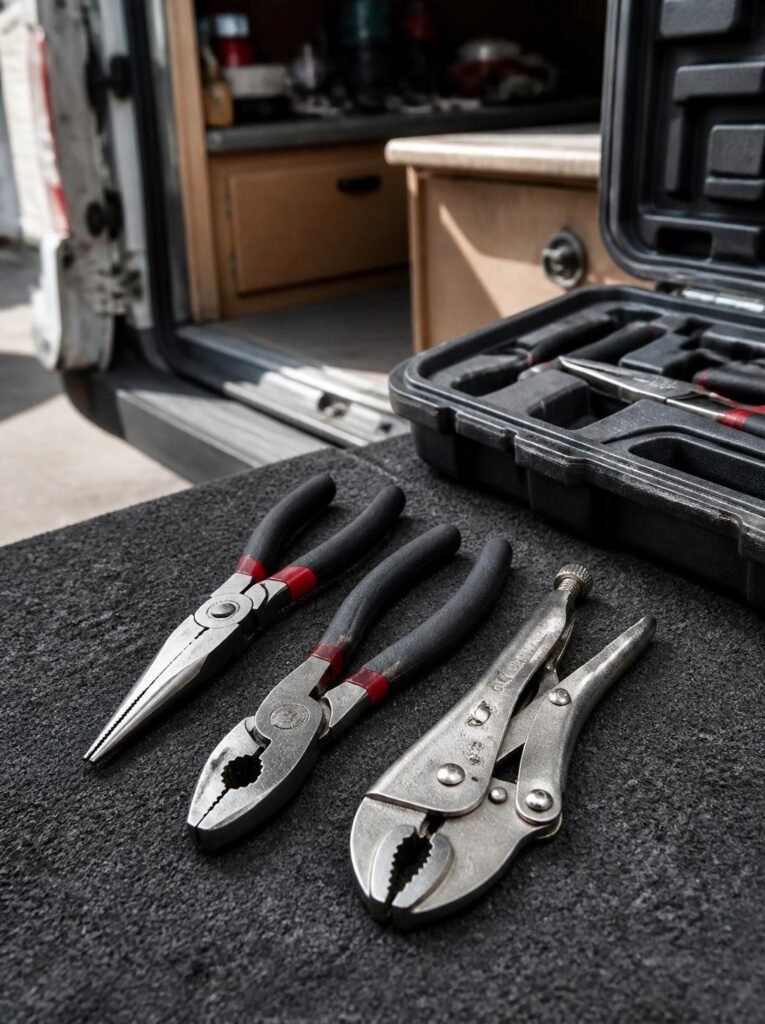
What it is. A small set that typically includes needle nose pliers, slip joint pliers, and locking pliers.
Why you need it. Pliers handle gripping, bending, and holding in situations where a wrench or screwdriver won’t, and locking pliers act like a third hand when you need to clamp something in place.
What to look for. Solid construction, comfortable handles, and jaws that line up and grip firmly.
Budget tip. Quality pliers last for years, so this is a place where spending a bit more pays off.
Tip. Locking pliers can also help with stripped fasteners or stuck parts, though they can damage finished surfaces, so use them where appearance doesn’t matter.
4. Cordless Drill and Driver
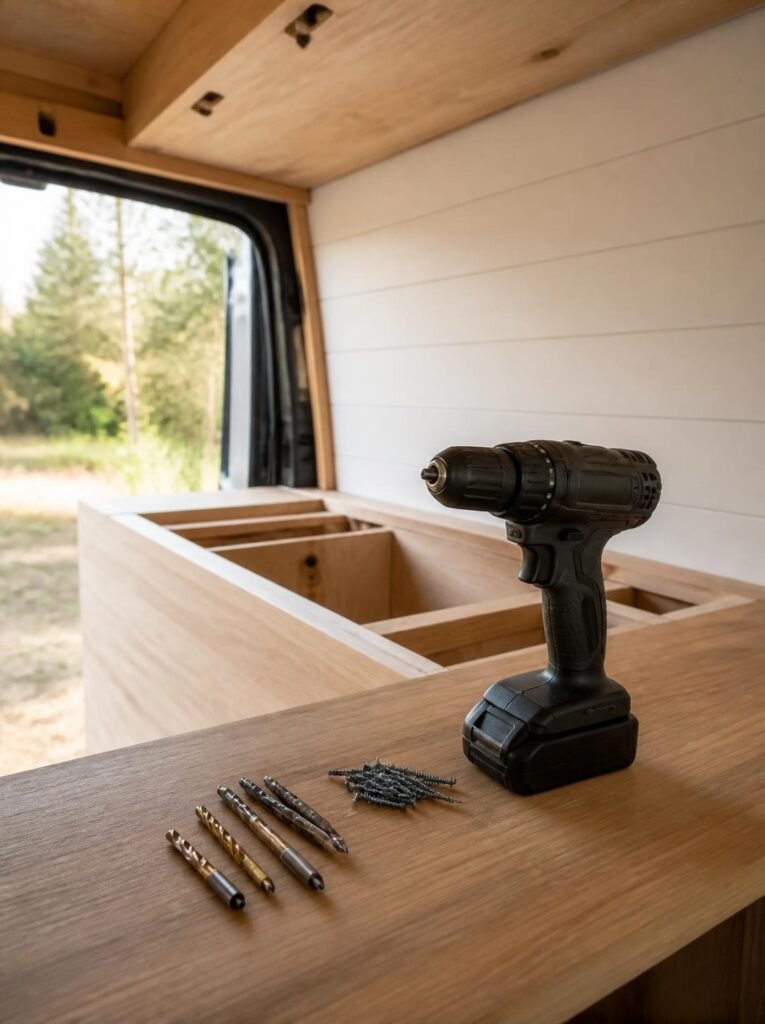
What it is. A battery powered drill with a set of drill bits and driver bits.
Why you need it. A drill makes build outs, mounting, and repairs faster and easier, whether you’re installing a shelf, fixing a cabinet, or adding a hook.
What to look for. A compact, lightweight model with a reliable battery, two speed settings, and a good charger. Consider whether your power setup can charge the battery comfortably.
Budget tip. A basic cordless drill is enough for most van work, and buying into a battery platform you might expand later can save money over time.
Tip. Keep bits sharp and sorted by size, and wear eye protection when drilling, since metal shavings and dust are easy to get in your eyes. If you’re building or renovating, my 11 small camper renovation must haves guide covers related materials and planning.
5. Digital Multimeter
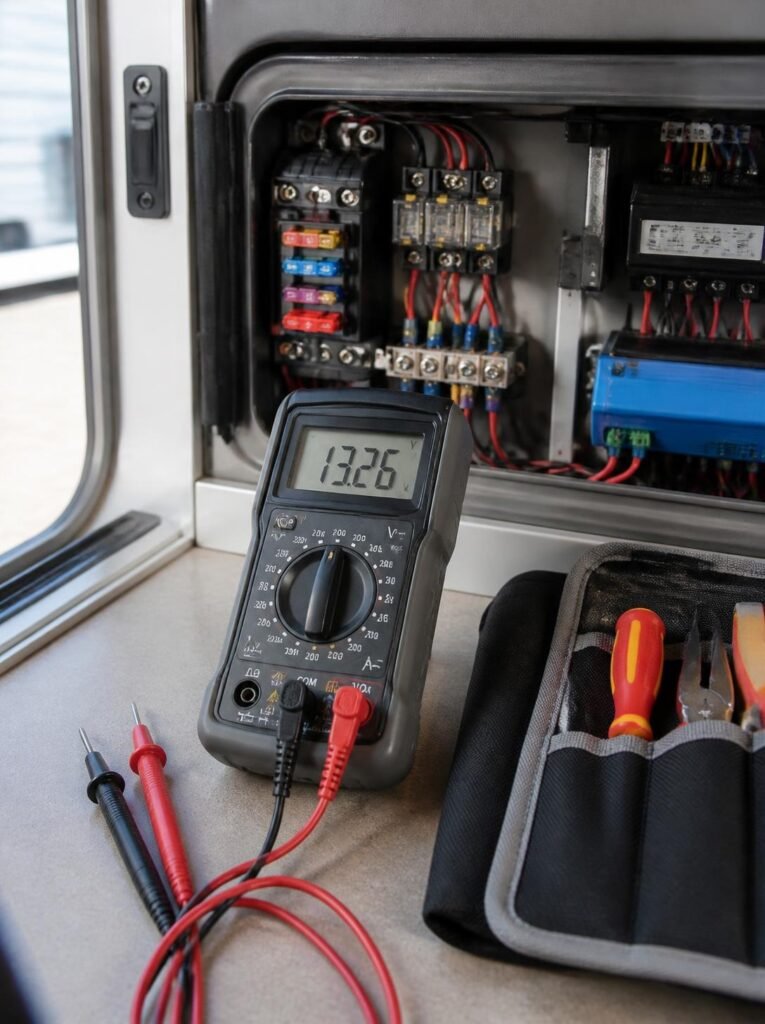
What it is. A handheld meter that measures voltage, continuity, and resistance, and some models measure current.
Why you need it. Many van problems turn out to be electrical, and a multimeter helps you find out whether a battery is healthy, a fuse is blown, or a wire has a break, rather than guessing.
What to look for. Clear readings, a durable build, and the basic functions you’ll use for 12 volt systems. A model with an auto ranging feature is easier for beginners.
Budget tip. A basic multimeter is inexpensive, and you don’t need an advanced model for most van diagnostics.
Tip. Learn a few basic measurements, like checking battery voltage and testing fuses, before you need to do it in an emergency. If you’re unsure about working on your van’s electrical system, consult a qualified professional.
6. Wire Strippers and Crimpers
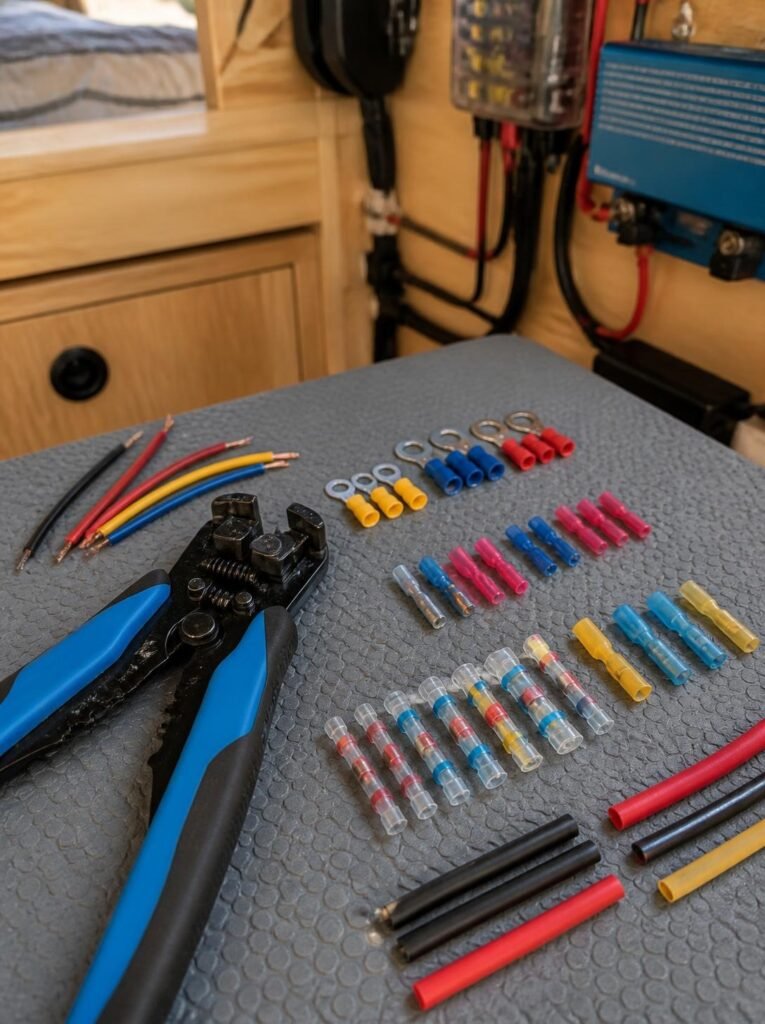
What it is. A tool that strips insulation from wires and crimps connectors onto them, often combined in one tool.
Why you need it. Good connections matter in a vehicle with constant vibration, and poor ones can cause intermittent failures, heat, and even fire risk.
What to look for. A tool that handles the wire gauges you use, with clean cutting and firm crimping, plus an assortment of quality connectors.
Budget tip. Cheap crimpers often produce weak connections, so choose a decent quality tool, since it’s central to electrical safety.
Tip. Tug test each crimp after you make it, and use heat shrink connectors where moisture could be an issue.
7. OBD-II Scanner
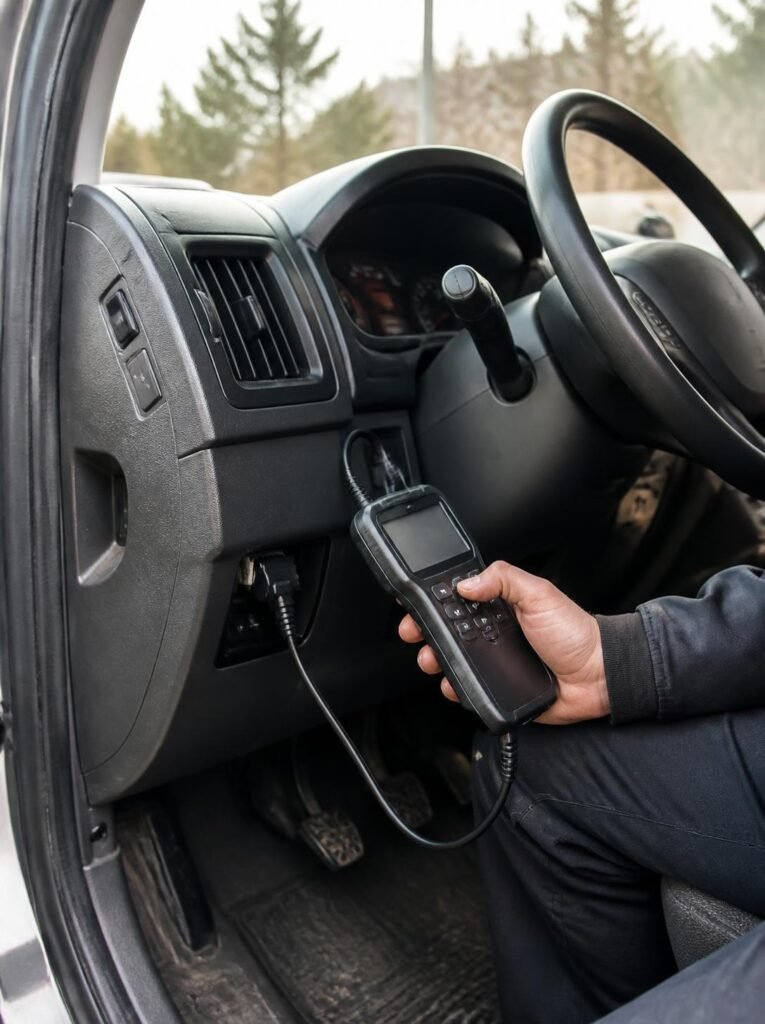
What it is. A small device that plugs into your vehicle’s diagnostic port and reads engine trouble codes. Most vehicles built since the mid 1990s have an OBD-II port, though availability and standards vary by region and vehicle.
Why you need it. A check engine light can mean anything from a loose gas cap to a serious problem, and a scanner tells you what the vehicle is reporting, so you can decide whether it’s safe to continue or you need a mechanic.
What to look for. Compatibility with your vehicle, an easy to read display or phone app connection, and the ability to clear codes after a repair.
Budget tip. A basic scanner or Bluetooth model is inexpensive and often enough for most van owners.
Tip. A code is a clue rather than a diagnosis, so use it as a starting point, and if you’re unsure, have it checked by a professional.
8. Lithium Jump Starter
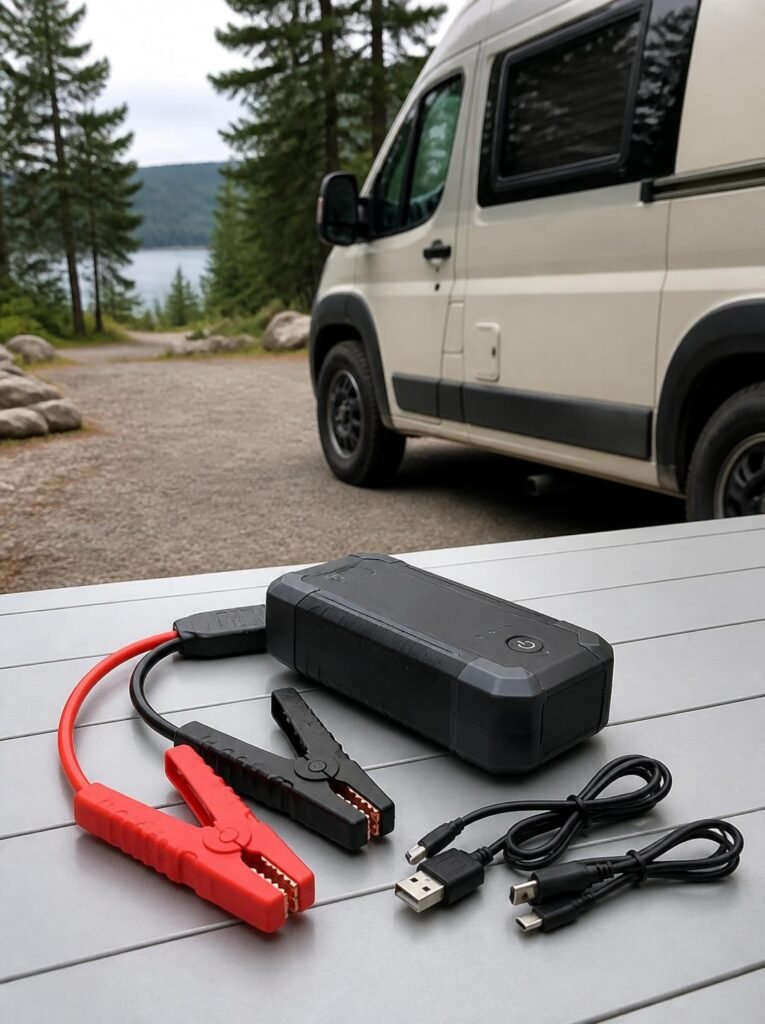
What it is. A compact battery pack that can jump start a dead vehicle battery without needing another vehicle.
Why you need it. A dead battery can strand you in an empty trailhead lot, and a jump starter lets you get going without waiting for help.
What to look for. A unit rated for your engine size, since larger or diesel engines need more power, along with clear safety features like reverse polarity protection.
Budget tip. Buy for your actual engine, rather than the cheapest option, since an underpowered unit won’t start a larger engine.
Tip. Keep it charged, store it away from extreme heat, and recharge it periodically, since lithium batteries lose charge over time.
9. Tire Pressure Gauge and Tire Plug Kit
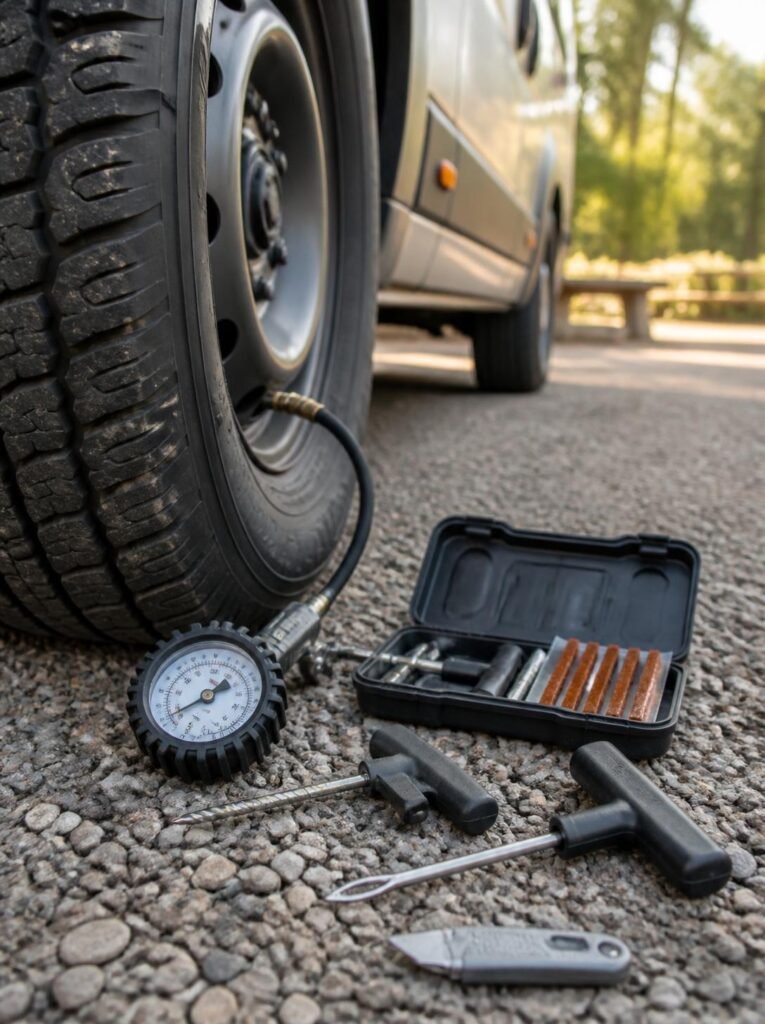
What it is. A reliable gauge for checking tire pressure, and a kit that lets you plug a simple puncture in the tread.
Why you need it. Correct tire pressure affects handling, wear, and safety, and a plug kit can get you back on the road after a nail or screw puncture.
What to look for. An accurate gauge that reads in the range your tires need, and a plug kit with the necessary tools and plugs.
Budget tip. Both are inexpensive and take up almost no space, making them a high value pair.
Tip. A plug is a temporary fix and doesn’t work on sidewall damage, so have a tire professional inspect it as soon as you can. My 5 must have camper gadgets guide covers tire monitoring that works well alongside this.
10. Bottle Jack and Lug Wrench
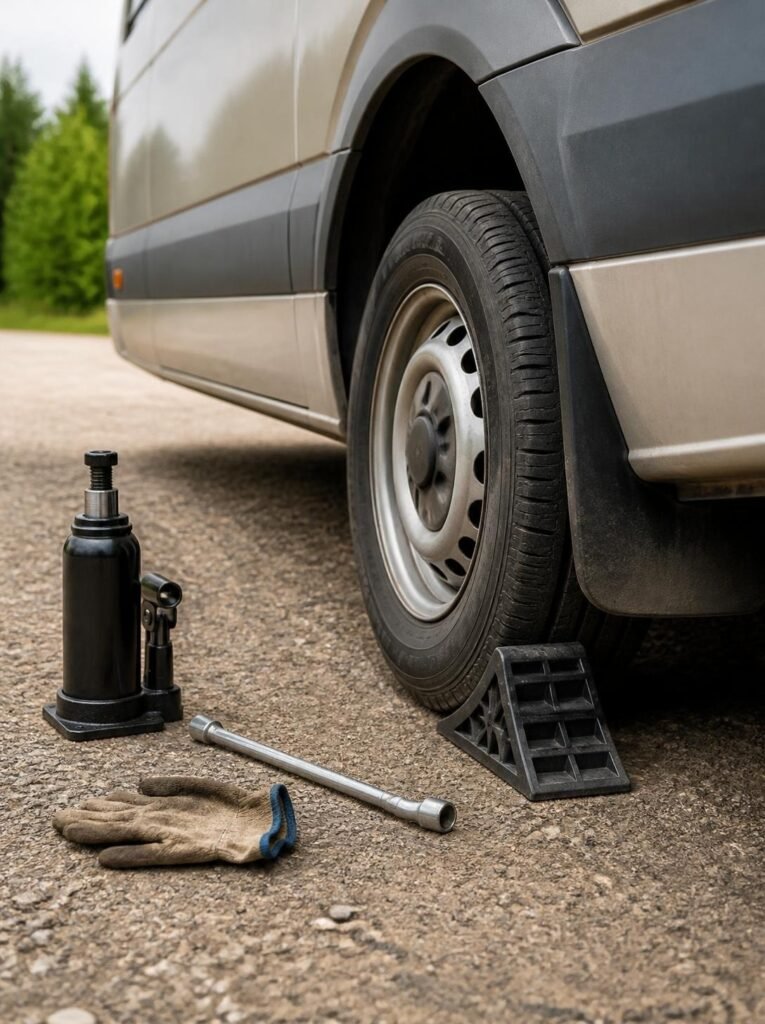
What it is. A hydraulic jack and a wrench that fits your van’s lug nuts, used for changing a flat tire.
Why you need it. The jack that comes with some vehicles is flimsy, and a sturdier jack and a proper lug wrench make a roadside tire change safer and easier.
What to look for. A jack with a capacity comfortably above your van’s loaded weight according to your vehicle manual, and a lug wrench of the correct size with enough leverage.
Budget tip. A reasonable quality jack is a worthwhile investment, since it’s central to safety.
Tip. Never get under a vehicle supported only by a jack, and use a stable, level surface, wheel chocks, and jack stands for anything beyond a quick tire change.
11. Traction Boards and a Folding Shovel
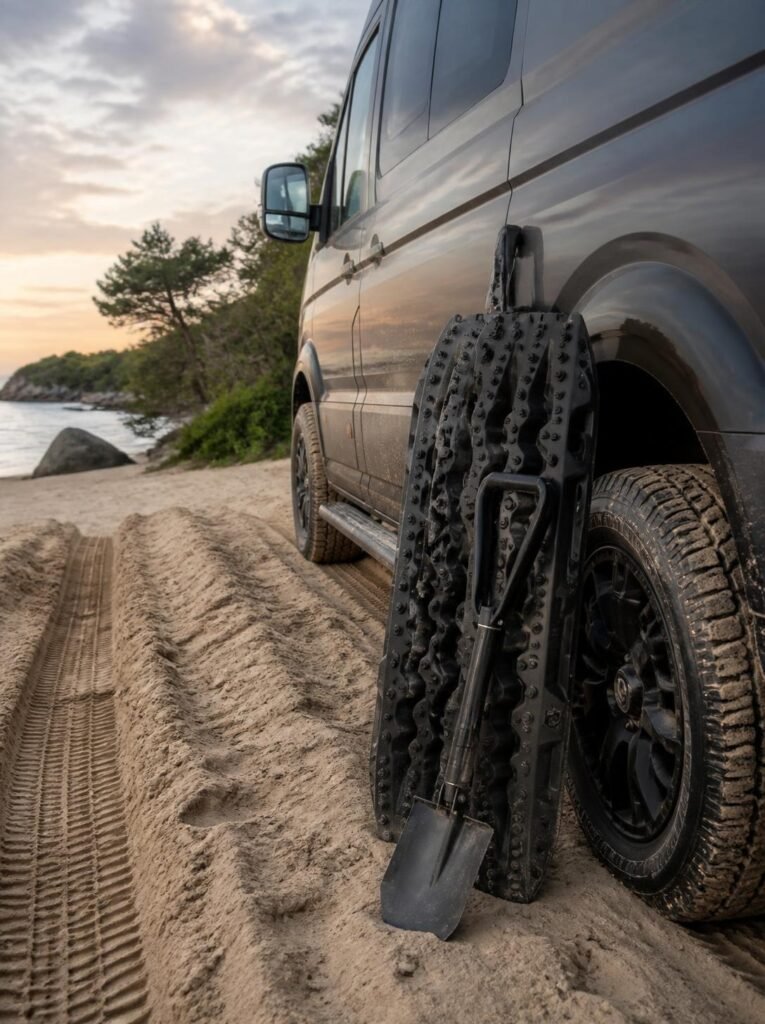
What it is. Rigid boards that you place under stuck tires to give them grip, plus a compact shovel for digging.
Why you need it. Sand, mud, and snow can trap a van quickly, and these tools let you recover on your own, particularly useful when camping on dirt roads or near beaches. My how we found free beachfront camping spots guide covers where this kind of recovery gear becomes relevant.
What to look for. Boards sized for your tires and strong enough for your van’s weight, and a shovel that’s sturdy but compact.
Budget tip. A simple folding shovel is inexpensive, while traction boards cost more, so consider whether you often drive on loose surfaces.
Tip. Lowering tire pressure slightly can help on sand, but you’ll need a way to reinflate afterward, and you should follow local rules on beach driving.
12. Rechargeable Headlamp and Work Light
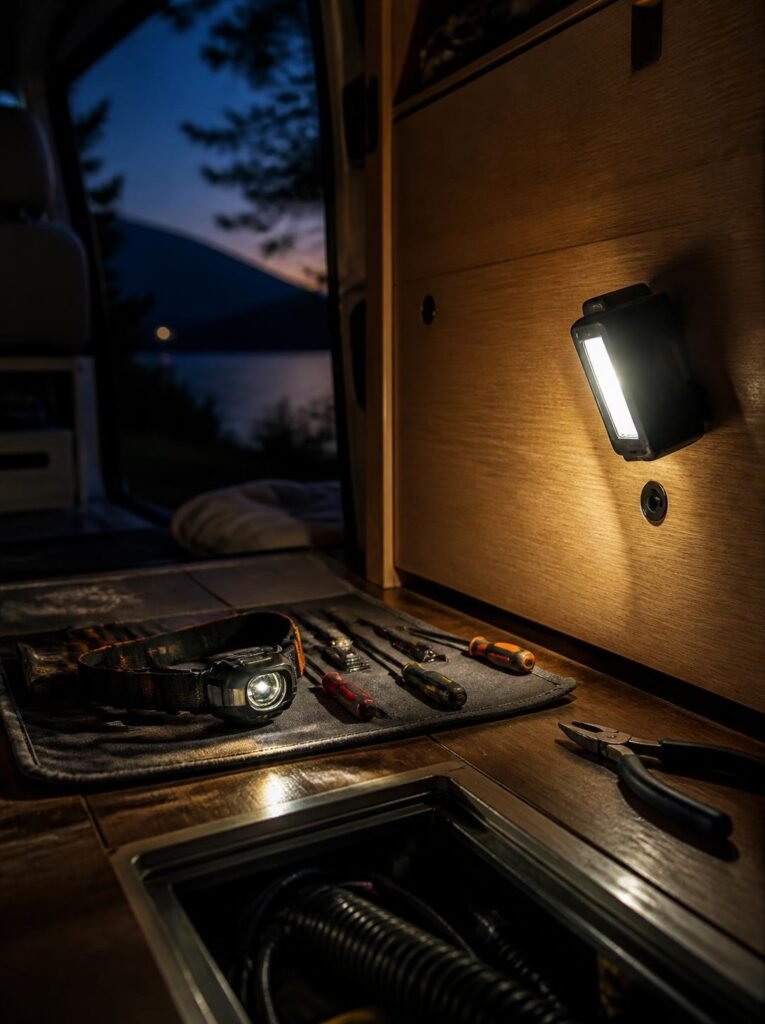
What it is. A hands free headlamp and a freestanding or magnetic work light.
Why you need it. Repairs often happen after dark, in awkward spots, and a headlamp frees up both hands while a work light illuminates a larger area.
What to look for. Adjustable brightness, a long battery life, and USB rechargeability so you can top up from your van’s power.
Budget tip. Good lights are affordable, so choose reliable ones, since they’re used constantly.
Tip. Keep spare charging cables with your lights, so you’re never caught with a dead one at the worst moment.
13. Multi-Tool and Utility Knife

What it is. A folding tool with pliers, blades, and screwdrivers, and a sturdy utility knife.
Why you need it. These tools handle the small, everyday tasks, like cutting rope or tape, opening packages, and tightening a loose screw, without you having to dig out your full kit.
What to look for. Quality construction, a locking blade, and a design that feels comfortable in your hand.
Budget tip. A good multi-tool lasts for years, so it’s one of the best value purchases on this list.
Tip. Keep one within easy reach in the cab and another with your main tool kit.
How to Organize Your Tools in a Van

Space and weight are limited, so keep tools in a compact, hard sided case or tool roll and secure it so it doesn’t shift while you’re driving.
Group tools by task, mechanical, electrical, and roadside, so you can find what you need quickly.
Store heavy items low and close to the axles, and keep emergency tools like the jack and jump starter somewhere easy to reach.
My 5 easy RV organization accessories and hacks guide has ideas that adapt well to a van.
A Note on Safety
Tools don’t replace judgment. Know your limits, particularly with electrical and brake related work, and consult a professional when something is outside your skill level.
Carry a fire extinguisher and a basic first aid kit, and review your vehicle’s manual for guidance on jacking points and torque specifications.
For more on staying prepared on the road, my RV living hacks: 10 things I wish I knew guide covers habits that apply to van life too.
Frequently Asked Questions
What tools should a beginner van lifer buy first? Start with a basic socket and screwdriver set, a multimeter, a tire pressure gauge, a jump starter, and a multi-tool, then add other tools as your needs become clear.
Do I need a full mechanic’s toolkit? Not usually. A compact, thoughtfully chosen kit handles most common issues, and a professional can handle larger repairs.
Is a jump starter better than jumper cables? A jump starter works without another vehicle, which is an advantage in remote areas, though cables are cheaper and don’t need charging.
Can I fix tires myself? You can plug a simple tread puncture temporarily, but sidewall damage and larger problems need professional repair or replacement.
How much should I spend on tools? Spend more on tools tied to safety and reliability, like your jack, crimpers, and jump starter, and less on items you’ll use rarely.
Final Thoughts
The best van life tool kit is one that matches how you actually travel and what you’re comfortable fixing yourself.
Start with the basics, add tools as real needs arise, and keep everything organized and accessible.
With a modest, well chosen set, you’ll handle most of the small problems that come with life on the road, and you’ll feel more confident heading down the next unmarked dirt road.
If you’re also looking for places to take your van, my top 15 RV parks in North America guide and best camping gear under $50 guide are good next reads.