

There is a specific kind of dread that comes from standing at the airport, bag checked and boarding pass in hand, only to realize you packed plenty of clothes but forgot your charger, your medication, or the printed hotel confirmation you swore you would remember. It happened to me more than once before I finally changed how I pack.
The shift was small but it made a real difference. I stopped thinking only about what I wanted to bring and started thinking about what would actually be difficult, expensive, or stressful to replace once I was already at my destination.

These are the fifteen things I check before every single holiday, because they are the easiest items to forget and, without fail, the ones I most regret not having when they go missing.
If you’re also thinking through what actually goes in the bag you keep with you versus what gets checked, this pairs well with my airport carry on essentials guide, which digs deeper into that specific decision.
My 5 Minute Holiday Packing Check

Before diving into the full list, run through this quick check. It covers the categories that matter most and takes almost no time once it becomes a habit.
Travel documents. Money and payment cards. Phone and chargers. Medication and personal essentials. Weather appropriate clothing.
If those five categories are covered, you are in far better shape than most travelers standing in a security line, even before we get into the rest of this list.
1. Passport and Travel Documents

This covers more than just your passport. It means visas if required, boarding passes, hotel confirmations, travel insurance information, your driver’s license, and copies of anything genuinely important. I learned the hard way not to scatter these across different bags.
One year I had my passport in my backpack and my hotel confirmation buried in a checked suitcase, and untangling that mess at check in was not a good start to the trip. Now everything important lives in one dedicated folder or pouch, and it never leaves my carry on.
2. Phone, Charger, and Power Bank

This category covers more than the phone itself. It means the charger, the actual charging cable, a power bank, a travel adapter if you’re heading somewhere with different outlets, downloaded boarding passes, and offline maps saved before you lose signal.
Having all of this together matters most when you’re actually moving between an airport, a hotel, and whatever comes next, since that is exactly when you have the least patience for digging through a bag looking for a cable.
3. A Comfortable Travel Outfit

Comfortable clothes means more than just something soft. For a long flight or a full day of driving, I look for breathable fabric, an easy layering setup, shoes I can actually walk in, and something warm enough for an airport or plane that always seems to run about ten degrees colder than expected.
This is not the outfit for looking put together. It is the outfit for surviving several hours of sitting and moving through terminals without wanting to change the second you land.
4. Essential Toiletries
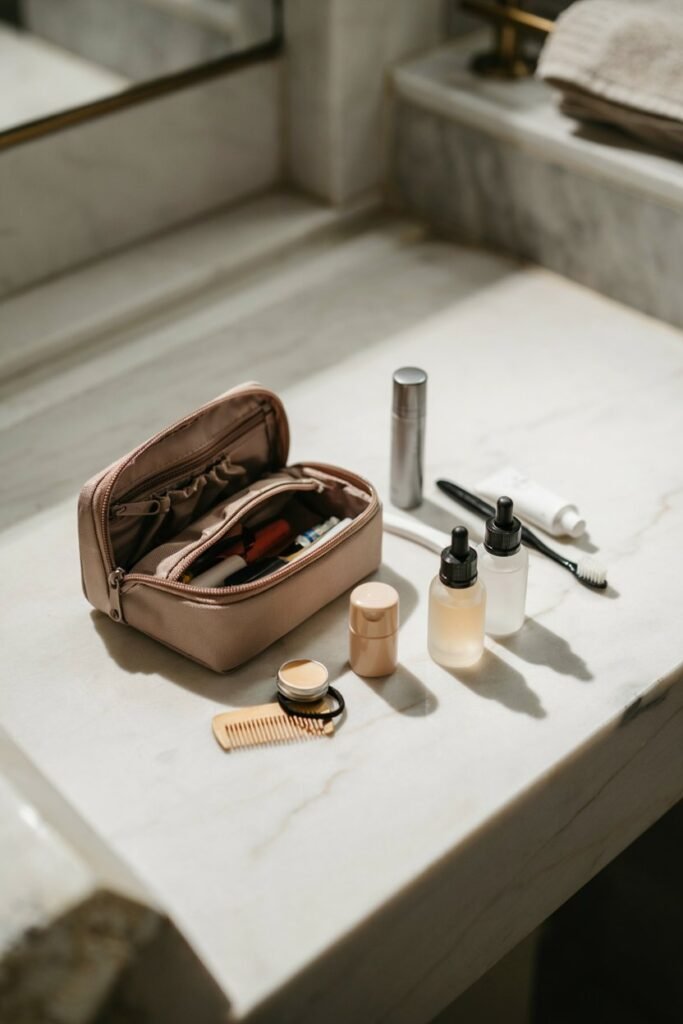
I keep this list focused on what I actually use rather than building an entire bathroom’s worth of products.
A toothbrush and toothpaste, deodorant, basic skincare, whatever hair essentials you genuinely reach for daily, sunscreen, lip balm, and a few small personal care items cover nearly everything.
Travel sized versions of the products you already use every day cut down on bulk significantly compared to packing full sized bottles just in case.
5. Prescription Medications and Personal Health Items

This deserves its own section rather than getting lumped in with toiletries.
Medication should generally stay in your carry on rather than checked luggage, since lost luggage is inconvenient but lost medication can genuinely derail a trip.
Bring enough for the full length of your stay rather than assuming you can easily find a replacement once you arrive, since that assumption does not always hold true depending on where you’re headed.
As always, follow your own clinician’s specific instructions here rather than general packing advice.
6. Weather Appropriate Layers

This is where checking the destination’s actual forecast, rather than packing based on assumptions about the season or region, genuinely pays off.
I have packed for what I assumed would be a mild trip and ended up needing a proper jacket I didn’t bring.
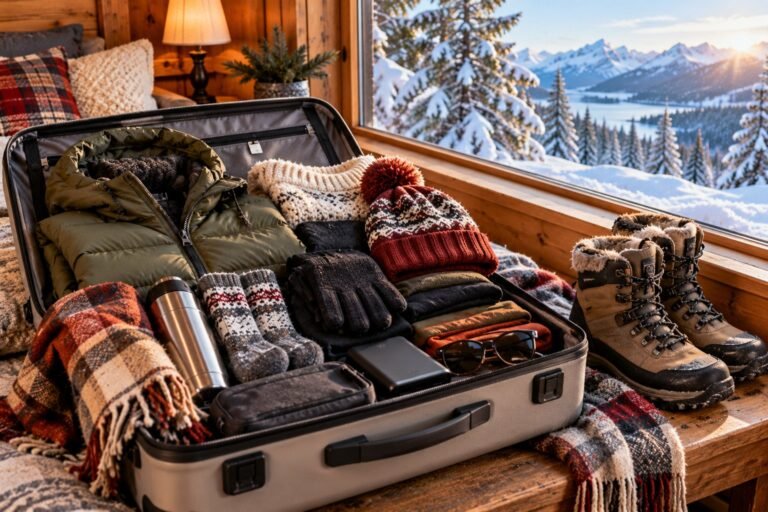
Lightweight layers, a rain jacket, a sweater, a hat, warm socks, and sun protection cover most scenarios without requiring you to guess.
7. Comfortable Walking Shoes

Shoes are one of the easiest things to get wrong on a trip, and one of the most miserable to get wrong once you’re actually there.
Bring a pair that is already broken in rather than debuting brand new shoes on day one of a trip full of walking. A blister on the first afternoon has a way of coloring the rest of the entire trip.
8. Underwear, Socks, and Sleepwear

This sounds almost too obvious to mention, but these are exactly the items people forget when they’re rushing through packing at the last minute.
A simple trick that has genuinely helped me is packing underwear and socks together by day, or keeping them in a dedicated packing cube, so I’m not searching through a jumbled suitcase every morning of the trip.
9. A Small Day Bag

You do not want to carry your entire suitcase around once you actually reach your destination.
A small backpack, a crossbody bag, or a lightweight day bag holds your phone, wallet, water bottle, sunglasses, camera, snacks, and travel documents for whatever you’re doing that day, without dragging your full luggage along for the ride.
10. Reusable Water Bottle

This is about convenience more than anything else. A reusable bottle comes in handy during long airport waits, road trips, sightseeing days, and generally any long travel day where buying bottled water repeatedly gets both expensive and wasteful.
Just remember to check your specific airport’s security rules and empty it before going through screening if required.
11. Snacks for the Journey

This is one of those small details that makes a trip feel more comfortable without much effort. What you actually pack depends on the type of trip.
A flight calls for something easy and mess free, a road trip has a bit more room for variety, and a family holiday usually means packing enough to keep everyone reasonably content between meals.
Nuts, granola bars, crackers, dried fruit, and protein bars cover most situations. It’s also worth checking destination and airline restrictions ahead of time if you’re crossing any borders with food.
12. Sunglasses and Sun Protection

Don’t limit this thinking to summer beach trips. Sun protection matters during city breaks, hiking holidays, and even winter destinations, where sun reflecting off snow can be surprisingly intense. A good pair of sunglasses earns its spot in nearly every type of trip I take.
13. Laundry Bag

This is a small item that makes a genuinely bigger difference than you’d expect.
Keeping dirty clothes separated from clean ones keeps the rest of your suitcase organized throughout the trip and makes unpacking at home significantly less unpleasant.
A simple reusable bag works just as well as a dedicated laundry bag if you don’t want to buy something new specifically for this.
14. A Small Emergency Kit

Keep this realistic rather than turning it into a full first aid kit you’ll never fully use.
Bandages, blister patches, basic pain relief, hand sanitizer, tissues, and a few personal care items cover the kind of small, annoying problems that come up on almost every trip. The goal here is not preparing for a major emergency.
It’s having something available for the minor issues that are only truly annoying when you have absolutely nothing on hand to deal with them.
15. A Little Extra Space

This isn’t technically an item, but it might be the most practical thing on this entire list. Avoid packing your suitcase completely full before you even leave home.
Leave room for souvenirs, gifts, anything you end up buying during the trip, extra snacks for the way home, and the general unexpected purchases that tend to happen on any holiday.
Zipping a suitcase that was already stretched to its limit on the way there, now with extra items added on the way home, is a problem worth avoiding entirely by simply not filling it all the way in the first place.
What I Pack in My Carry On

This might be the single most useful section for actually applying everything above.
I separate carry on essentials from anything going into checked luggage using one simple principle: if losing your checked suitcase would genuinely ruin your first twenty four hours at your destination, it belongs in your carry on instead.
That means my passport and documents, phone, wallet, medication, charger, power bank, headphones, any important valuables, one full change of clothes, basic toiletries, and snacks all stay with me rather than getting checked.
Everything else, the bulk of your actual wardrobe and anything replaceable, can reasonably go into checked luggage without much risk.
Things I Stopped Packing for Holidays

Just as important as what to bring is what to leave behind, and this is where a lot of packing lists fall short. I stopped packing too many pairs of shoes, since I almost never wear more than two on any given trip.
Full sized toiletries stopped making the cut once I realized travel sizes cover the exact same needs for a fraction of the weight.
Clothes for every possible weather scenario, rather than the weather actually forecasted, used to eat up an enormous amount of suitcase space for no real reason.
Excessive just in case outfits, items easily available at the destination if genuinely needed, and clothes I don’t actually enjoy wearing at home but somehow still packed out of habit have all been cut from my routine.
Every one of these used to take up space without earning its place in the suitcase.
Before You Zip the Suitcase

Before finishing up, run through these five checks. Weather: what will the actual temperature be at your destination, not just the general season.
Activities: will you be walking extensively, swimming, hiking, or attending anything more formal.
Accommodation: does the hotel provide towels, a hair dryer, or basic toiletries, which can save you from overpacking items you won’t even need.
Transportation: will comfortable shoes or a day bag matter more than usual for how you’ll be getting around.
Local rules: are there any restrictions on medications, food, batteries, or other items specific to where you’re headed.
Frequently Asked Questions
What should I pack first for a holiday? Start with your five minute check: travel documents, money and cards, phone and chargers, medication, and weather appropriate clothing, since these cover the categories that would cause the most disruption if forgotten.
What should always go in my carry on? Anything that would be difficult or stressful to be without for a day or two, including your documents, medication, chargers, and at least one change of clothes.
How many outfits should I pack for a week? Most trips don’t require a full week’s worth of unique outfits, since laundry, repeating a few key pieces, or laundry service at your accommodation usually covers the gap comfortably.
What toiletries should I bring on holiday? Focus on what you genuinely use daily rather than a full bathroom’s worth of products, and lean on travel sized versions wherever possible.
How can I avoid overpacking? Pack for the actual forecast and planned activities rather than every possible scenario, and leave some extra space in the suitcase rather than filling it completely.
Should I pack a power bank when traveling? Yes, a power bank is one of those things you don’t notice when it’s sitting in your bag, but you definitely notice when your phone is at eight percent and you’re trying to find your hotel after a long travel day.
What should I pack for a holiday with kids? The same core essentials apply, with extra attention paid to snacks, entertainment for travel time, and a slightly larger emergency kit given how often minor scrapes happen with kids around.
What should I do the night before traveling? Run through the before you zip the suitcase checklist above, confirm your travel documents and boarding passes are accessible, and charge every device fully so you’re not starting the trip already behind.
Final Thoughts
Good packing isn’t about bringing more. It’s about bringing the right things and knowing exactly where they are when you need them. Once you get into the habit of running through a quick check before every trip, packing stops feeling like a last minute scramble and starts feeling like something you can genuinely do in under an hour. If you’re planning a longer adventure once your bags are packed, my guides to the most incredible hiking trips in the USA and best road trips in America are great places to start thinking about where to go next. For more specific packing guidance, my backpacking essentials for your next trip, backpack essentials for multi day hiking, summer packing list for couples, and cheap weekend getaways for couples guides cover the packing side of a few other kinds of trips worth planning next.