
Some landscapes are pretty. Others stop you mid sentence the first time you actually see them in person, no matter how many photos you’ve scrolled past beforehand.
The United States has an unusually deep well of the second kind, places where the scale, the color, or the sheer improbability of the scenery genuinely exceeds what a screen can prepare you for.
This list covers eleven places that consistently earn that reaction, along with the practical details to actually plan a visit rather than just admire from afar.
Several of these pair naturally with destinations I’ve covered elsewhere, so my best travel destinations in Arizona guide and must see places to visit in USA guide are both worth a look if you want to build a bigger trip around one of these stops.
Quick Guide to These Beautiful Places
| Destination | State | Known For | Ideal Stay |
|---|---|---|---|
| Antelope Canyon | Arizona | Light beams, curved sandstone | 1 day |
| Maroon Bells | Colorado | Mirror lake and peaks | 1 to 2 days |
| Crater Lake | Oregon | Deep blue volcanic lake | 1 to 2 days |
| Napali Coast | Hawaii | Dramatic sea cliffs | 1 to 3 days |
| Bryce Canyon | Utah | Orange hoodoo spires | 1 to 2 days |
| Havasu Falls | Arizona | Turquoise waterfalls | 2 to 3 days |
| White Sands | New Mexico | Rolling white gypsum dunes | 1 day |
| Multnomah Falls | Oregon | Tall, easily accessible waterfall | Half day |
| Horseshoe Bend | Arizona | Dramatic river bend overlook | Half day |
| Blue Ridge Parkway | Virginia/North Carolina | Fall foliage, mountain views | 2 to 4 days |
| Mendenhall Ice Caves | Alaska | Blue glacial ice caves | 1 day |
1. Antelope Canyon, Arizona
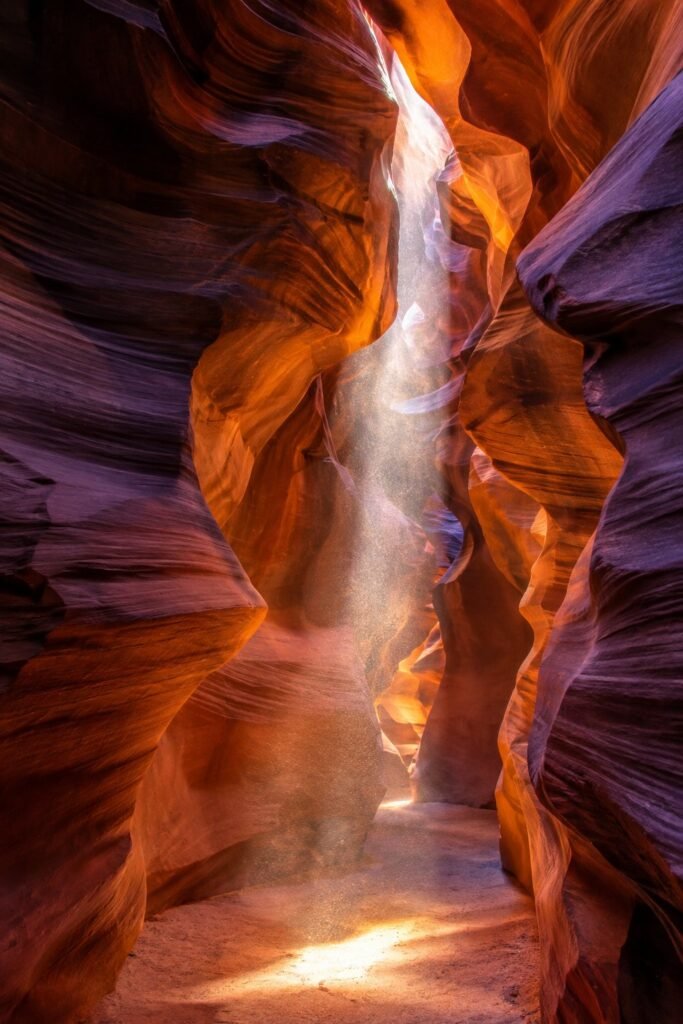
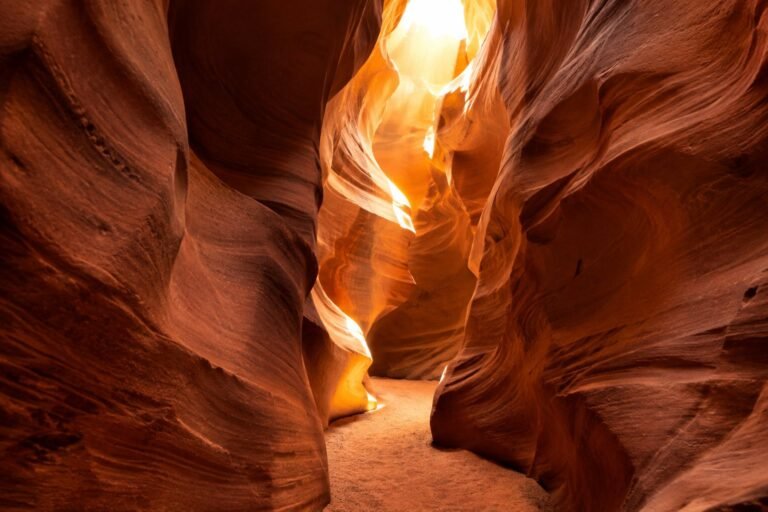
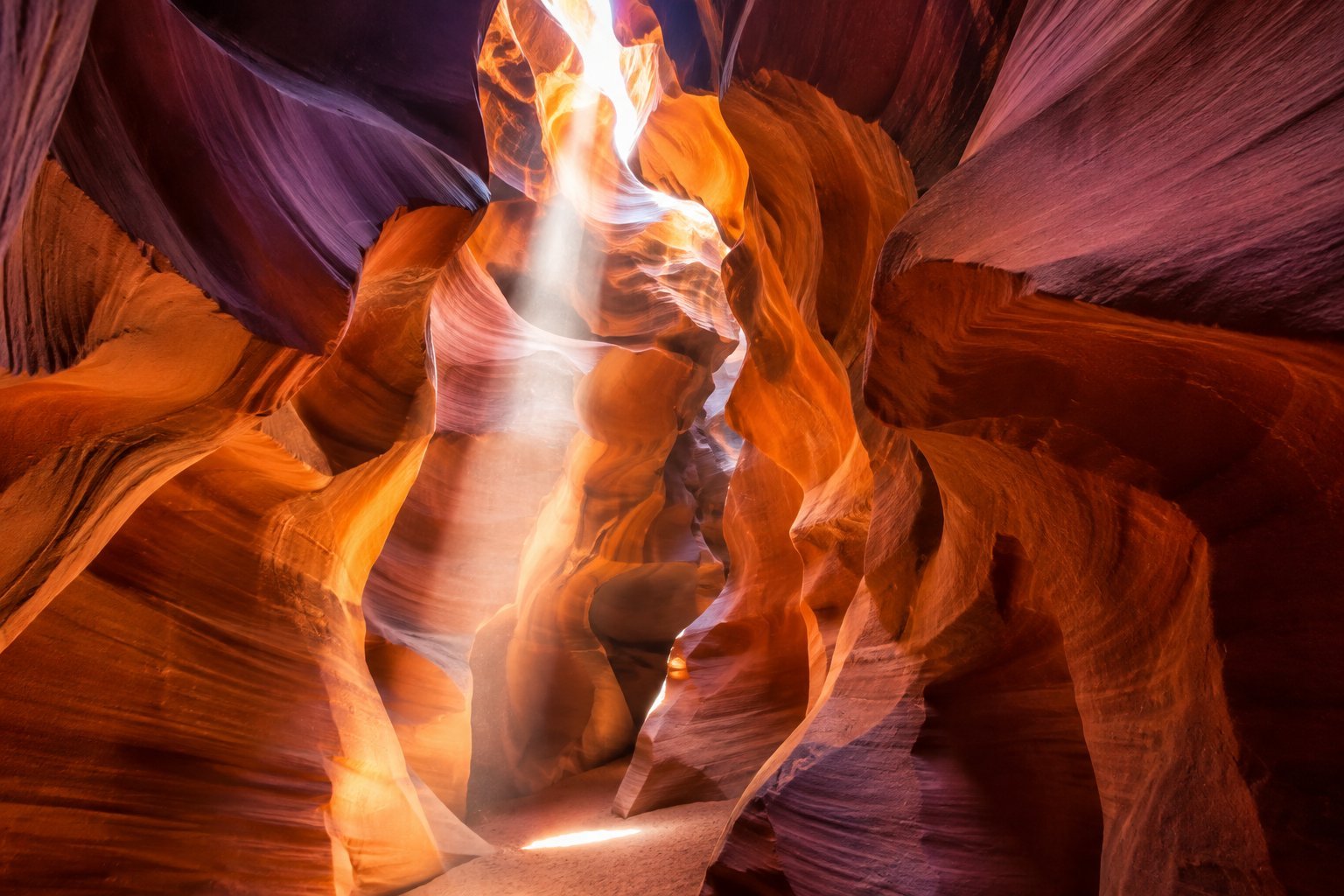
Why it’s beautiful. The narrow, curving sandstone walls of this slot canyon glow in shades of orange and purple as sunlight filters down from above, especially when a visible beam of light cuts through the narrow opening at the right time of day.
Best things to do. Take a guided tour through either Upper or Lower Antelope Canyon, since access requires a Navajo guide, and photograph the light beams that appear most dramatically around midday in the summer months.
How to get there. Fly into Page, Arizona’s small regional airport, or drive in from Flagstaff, roughly two and a half hours away.
Where to stay. Page offers a range of hotels within easy reach of both Upper and Lower Antelope Canyon.
Budget tips. Lower Antelope Canyon tours generally cost less than Upper Antelope Canyon tours, while offering a similarly striking experience.
Safety tips. Flash flooding is a genuine risk in slot canyons, so tours are sometimes cancelled or rescheduled based on weather, and it’s worth building flexibility into your schedule around this.
2. Maroon Bells, Colorado
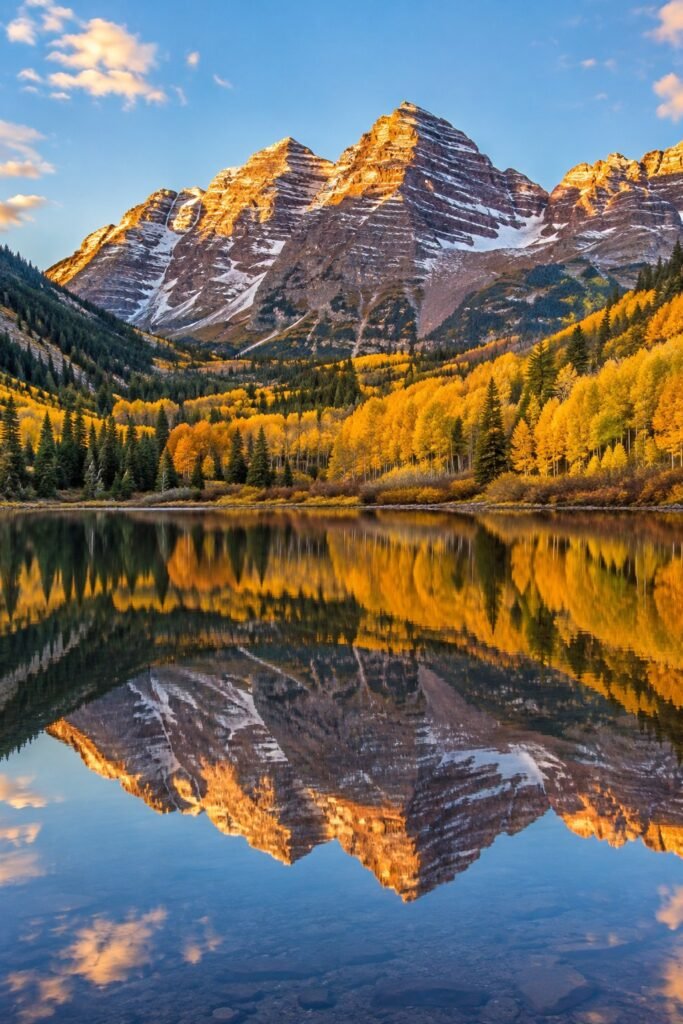
Why it’s beautiful. Twin fourteen thousand foot peaks reflect almost perfectly in Maroon Lake below, creating one of the most photographed mountain views in the entire country, especially during fall when aspens turn gold around the lake’s edge.
Best things to do. Walk the short, flat trail around Maroon Lake for the classic reflection view, or continue onto one of the longer trails into the surrounding wilderness for a more demanding hike.
How to get there. Fly into Aspen or Denver, then drive to nearby Aspen, from which a required shuttle or early morning private vehicle access reaches Maroon Lake itself.
Where to stay. Aspen offers the closest lodging, though it runs on the pricier side, with nearby Carbondale or Glenwood Springs offering more affordable alternatives.
Budget tips. The shuttle from Aspen costs far less than trying to arrange private vehicle access during restricted hours, and the lake trail itself is free to walk.
Safety tips. Afternoon thunderstorms are common in the Colorado Rockies during summer, so plan hikes for the morning and be prepared to turn back if weather rolls in.
3. Crater Lake, Oregon
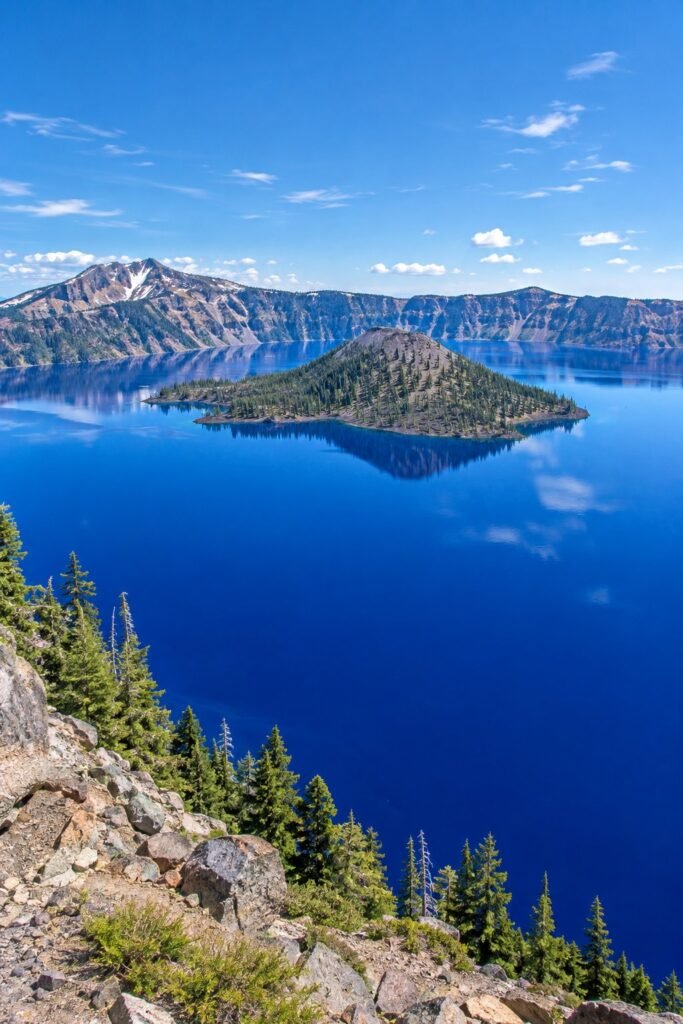
Why it’s beautiful. Formed by the collapse of an ancient volcano, this lake holds some of the clearest, deepest blue water in the country, a color so vivid it genuinely looks artificial in photos until you see it yourself.
Best things to do. Drive the Rim Drive loop for sweeping overlooks from multiple angles, and take a boat tour out to Wizard Island if visiting during the summer season when it’s operating.
How to get there. Fly into Medford, Oregon, then drive roughly an hour and a half to the park.
Where to stay. Limited lodging exists within the park itself, with the town of Klamath Falls offering a wider range of options a bit further away.
Budget tips. The Rim Drive and most overlooks are included with standard park entry, making this a strong value destination beyond the optional paid boat tour.
Safety tips. Snow can linger at this elevation well into early summer, so check current road and trail conditions before planning your specific visit dates.
4. Napali Coast, Kauai, Hawaii
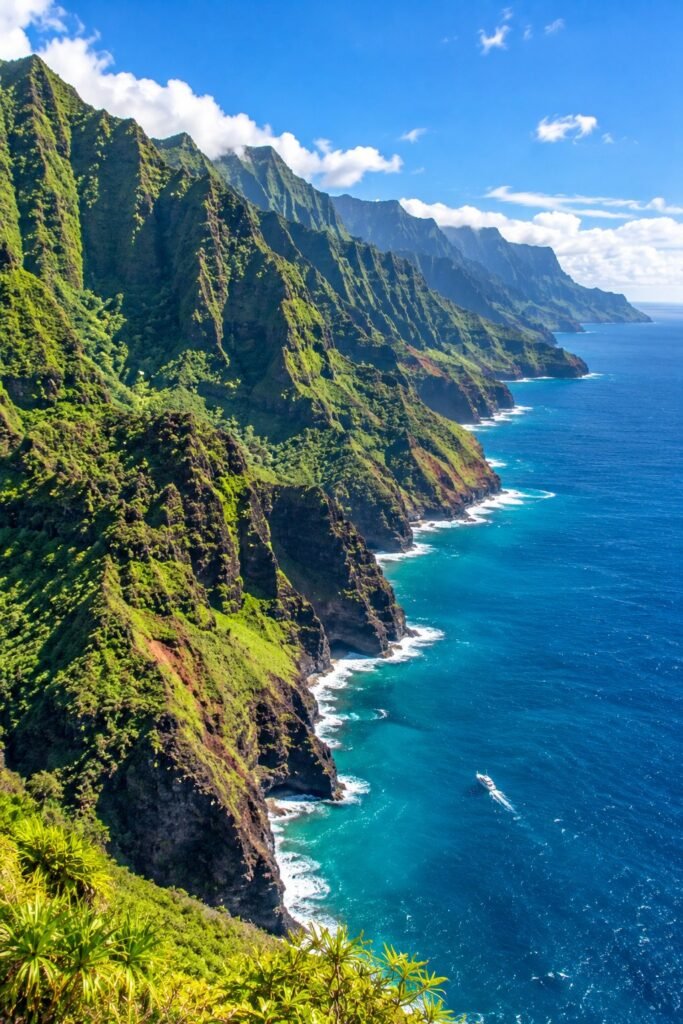
Why it’s beautiful. Towering, knife edged green cliffs plunge directly into the Pacific along this roadless stretch of Kauai’s coastline, creating scenery so dramatic it regularly appears in films needing a stand in for a prehistoric landscape.
Best things to do. Take a boat tour along the coastline for the most complete view, or hike a portion of the demanding Kalalau Trail for a ground level perspective if you’re an experienced hiker.
How to get there. Fly into Lihue Airport on Kauai, then drive to one of the boat tour departure points or trailheads.
Where to stay. Princeville or Hanalei on Kauai’s north shore offer the most convenient bases for accessing the coast.
Budget tips. A shorter boat tour covering a portion of the coastline costs less than a full day option and still delivers dramatic views of the cliffs.
Safety tips. The Kalalau Trail is genuinely demanding and has resulted in serious injuries for underprepared hikers, so only attempt it with proper gear, fitness, and realistic expectations about the terrain.
5. Bryce Canyon, Utah
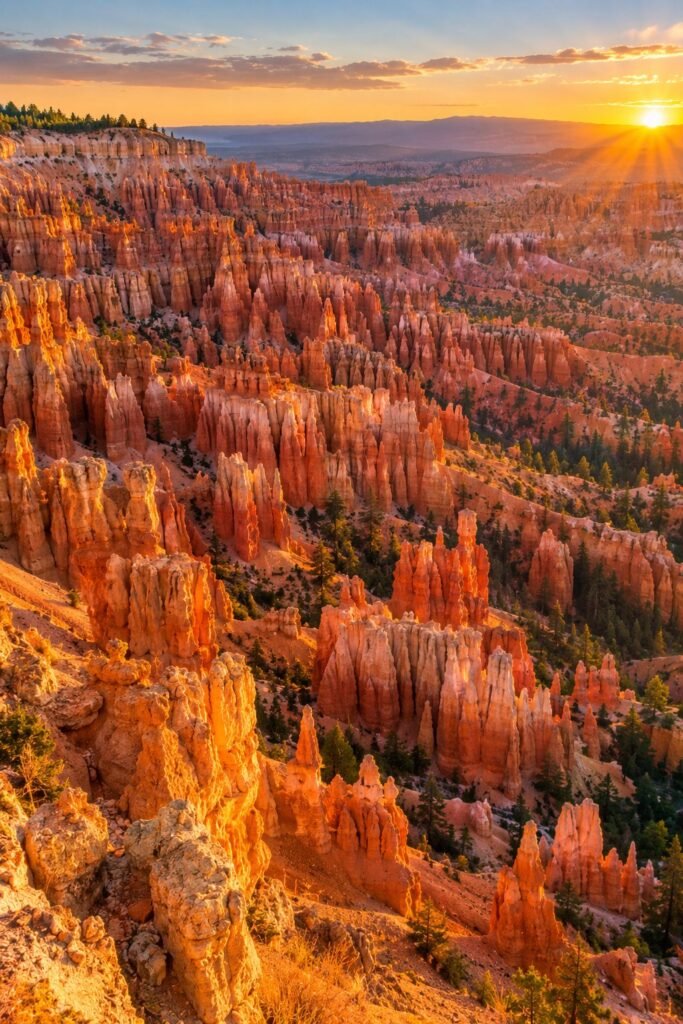
Why it’s beautiful. Thousands of thin, orange and pink rock spires called hoodoos fill this natural amphitheater, creating a landscape that looks genuinely otherworldly, especially at sunrise when the low light intensifies the color.
Best things to do. Walk the rim trail for sweeping overlooks, or descend into the amphitheater itself on the Navajo Loop or Queens Garden trails for an up close look at the hoodoos.
How to get there. Fly into Las Vegas or Salt Lake City, then drive, roughly four hours from Las Vegas or three and a half from Salt Lake City.
Where to stay. Lodging exists within the park itself, with the nearby town of Bryce Canyon City offering additional options just outside the entrance.
Budget tips. Sunrise views from the rim, some of the best in the park, cost nothing beyond your park entrance fee.
Safety tips. This park sits at high elevation, so pace yourself on the descent trails and carry water, since the return climb is more strenuous than the way down.
6. Havasu Falls, Arizona
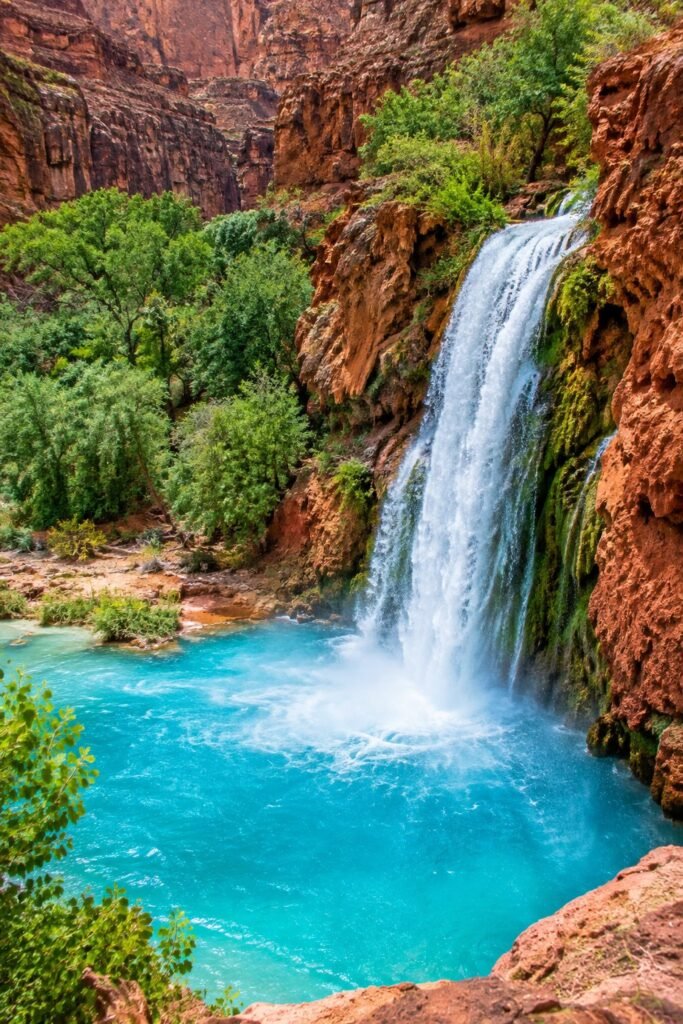
Why it’s beautiful. Bright turquoise water cascades over red rock cliffs deep within a Grand Canyon side canyon, a color combination so striking it’s genuinely hard to believe until you’re standing in front of it.
Best things to do. Hike in to the falls, roughly ten miles from the trailhead, and spend a day or two swimming in the pools beneath the falls before hiking back out.
How to get there. Fly into Las Vegas, then drive to the Hualapai Hilltop trailhead, roughly three and a half hours away.
Where to stay. A permit is required to camp near the falls, issued by the Havasupai Tribe, since the land belongs to the reservation.
Budget tips. Permits must be booked well in advance and sell out quickly, so the primary cost here is the permit itself rather than lodging or additional fees.
Safety tips. The hike in and out is genuinely demanding given the distance and heat, so carry enough water and pace yourself, particularly during the hottest summer months.
7. White Sands National Park, New Mexico
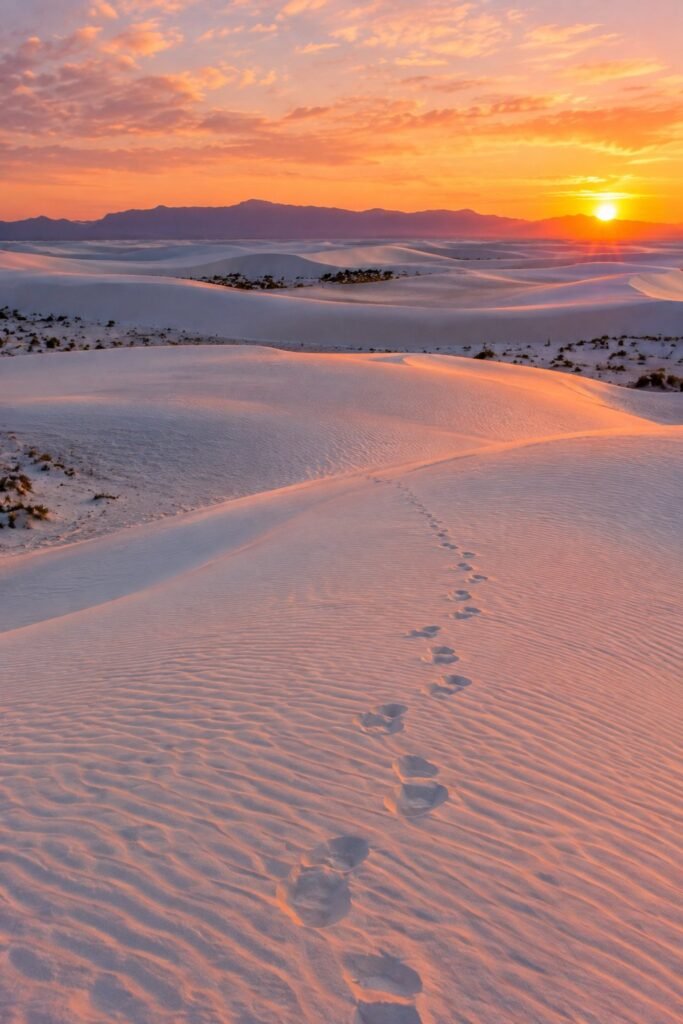
Why it’s beautiful. Rolling dunes of brilliant white gypsum sand stretch for miles, creating a landscape that looks more like snow than desert, especially dramatic at sunset when the dunes take on soft pink and orange tones.
Best things to do. Walk or sled down the dunes on a rented plastic sled, drive the scenic Dunes Drive, and stay for sunset when the changing light transforms the entire landscape.
How to get there. Fly into El Paso, Texas, then drive roughly an hour and a half to the park.
Where to stay. Alamogordo, New Mexico offers the closest lodging options to the park entrance.
Budget tips. Sled rentals are inexpensive and one of the most memorable low cost activities in any national park on this list.
Safety tips. There’s no shade anywhere in the dune field, so carry water and sun protection even for a short visit, and be cautious about losing your bearings among the dunes if you wander off the marked trail.
8. Multnomah Falls, Oregon
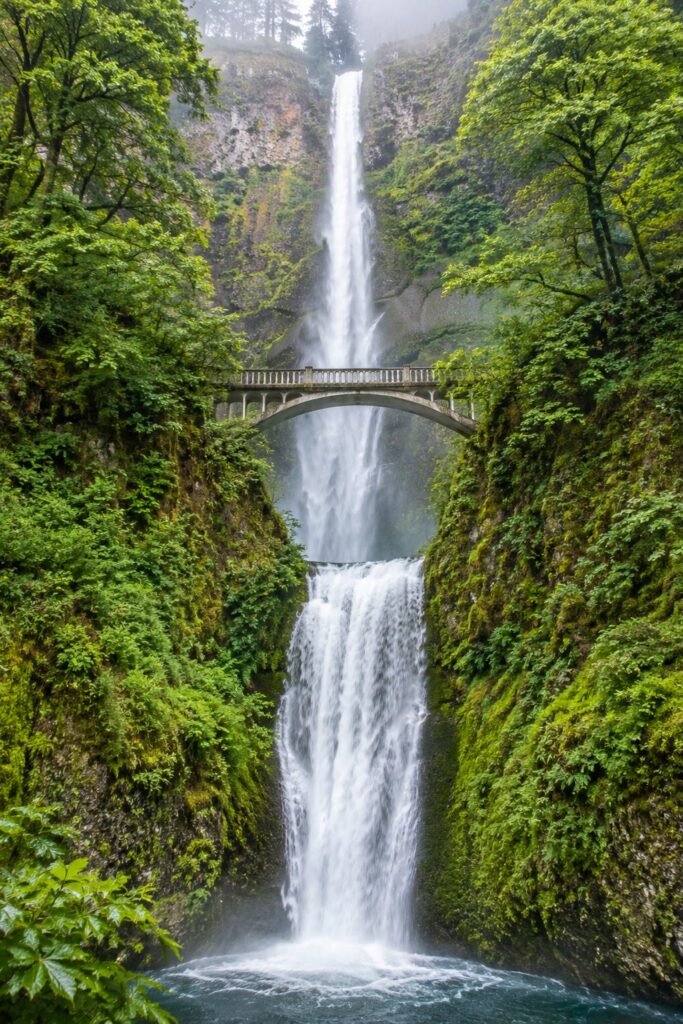
Why it’s beautiful. This two tiered waterfall drops a combined 620 feet through the Columbia River Gorge, with a historic stone footbridge crossing directly in front of the lower tier, creating one of the most photographed waterfall views in the entire country.
Best things to do. Walk the short paved path to the base of the falls and the footbridge, or continue on the steeper trail to an upper viewpoint for a different perspective.
How to get there. A straightforward thirty minute drive east of Portland along the Historic Columbia River Highway.
Where to stay. Most visitors day trip from Portland rather than staying directly in the gorge.
Budget tips. Viewing the falls and crossing the footbridge is completely free, making this one of the best value stops on this entire list.
Safety tips. The area can get extremely crowded, particularly on weekends, and a timed use permit system has been used seasonally for vehicle access, so check current requirements before your visit.
9. Horseshoe Bend, Arizona
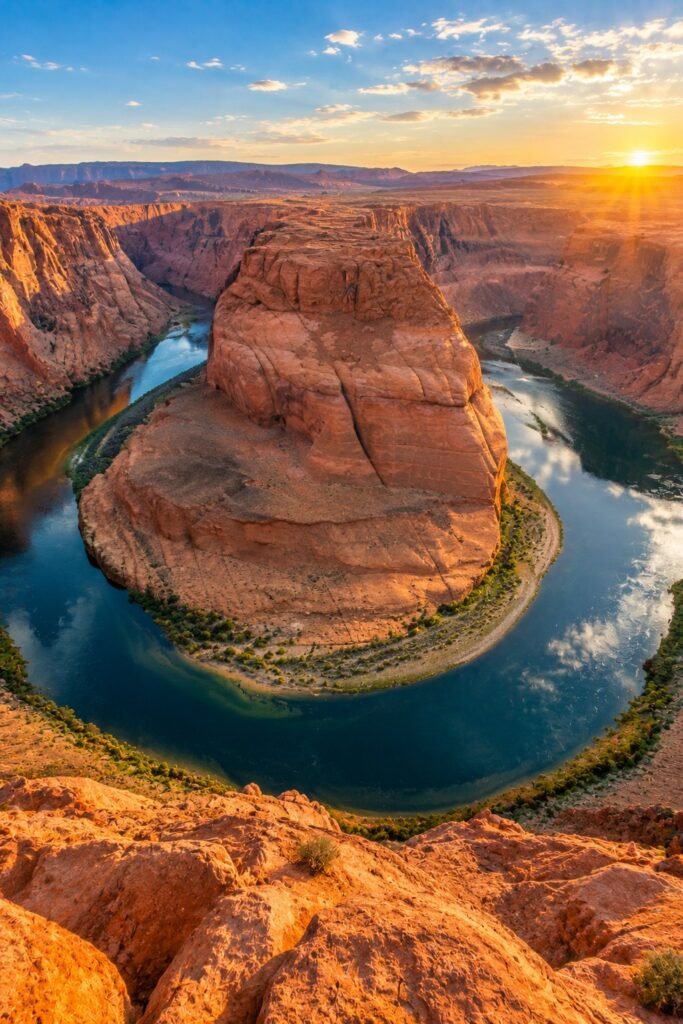
Why it’s beautiful. The Colorado River curves dramatically around a sheer sandstone cliff, creating a nearly perfect horseshoe shape visible from a clifftop overlook roughly a thousand feet above the water.
Best things to do. Walk the relatively short but exposed trail from the parking area to the overlook, and time your visit for morning or late afternoon to avoid the most intense midday sun.
How to get there. A short drive south of Page, Arizona, making it an easy pairing with a visit to nearby Antelope Canyon.
Where to stay. Page offers the closest and most convenient lodging.
Budget tips. A modest parking fee applies, and the overlook itself is otherwise free to visit.
Safety tips. There are no guardrails at the main overlook, so keep a safe distance from the edge, especially with kids, and avoid the trail during lightning storms given its exposed nature.
10. Blue Ridge Parkway, Virginia and North Carolina
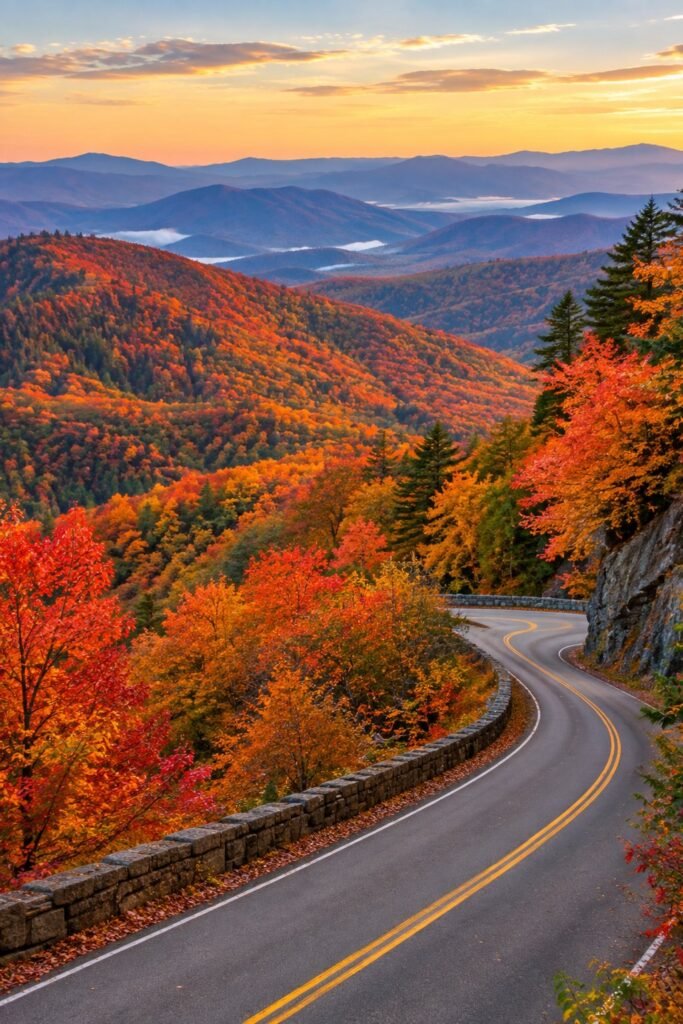
Why it’s beautiful. This scenic mountain road winds for over four hundred miles through the Appalachians, offering an almost continuous stretch of overlooks, especially spectacular during fall when the surrounding forest turns brilliant shades of red and orange.
Best things to do. Drive sections of the parkway at a leisurely pace, stopping at overlooks along the way, and hike one of the many trailheads accessible directly from the road.
How to get there. The parkway connects Shenandoah National Park in Virginia to Great Smoky Mountains National Park in North Carolina, with numerous access points along its length.
Where to stay. Small towns like Asheville, North Carolina or Roanoke, Virginia offer good bases depending on which section of the parkway you’re exploring.
Budget tips. The parkway itself has no toll or entrance fee, making it one of the most affordable scenic drives in the entire country.
Safety tips. Sections of the parkway close seasonally due to snow and ice, so check current conditions before planning a winter visit.
11. Mendenhall Ice Caves, Alaska
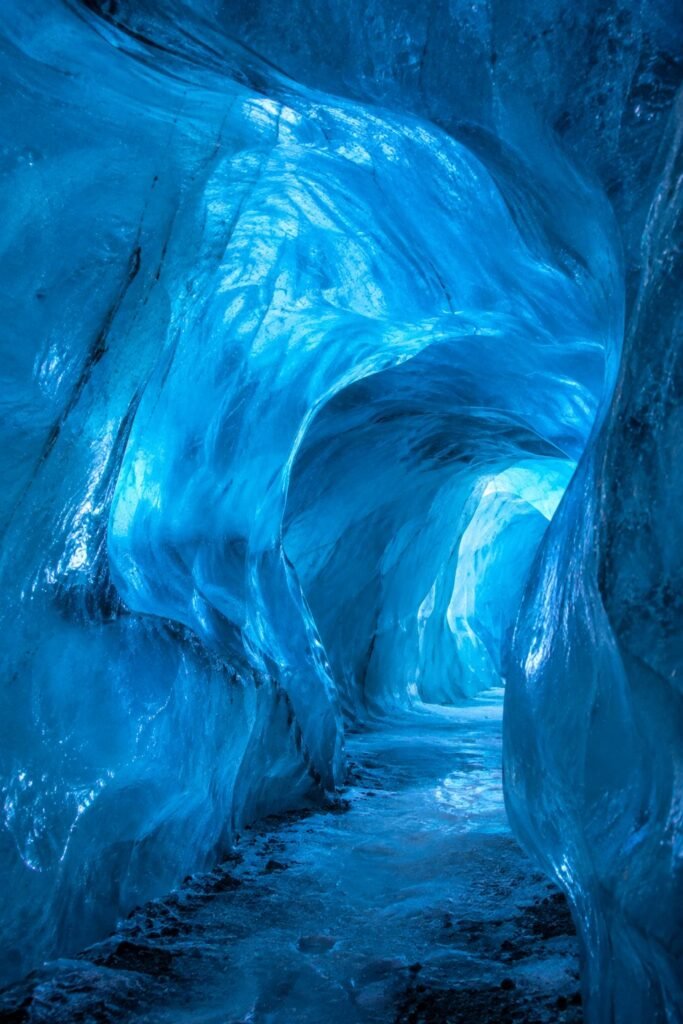
Why it’s beautiful. Carved directly into the Mendenhall Glacier, these ice caves glow a genuinely surreal blue from within, a color created by centuries of compressed ice absorbing every wavelength of light except blue.
Best things to do. Visit with a guided tour, required for safe access to the caves, which typically involves a kayak or boat crossing followed by a hike onto the glacier itself.
How to get there. Fly into Juneau, Alaska, from which the glacier sits just a short drive from town.
Where to stay. Juneau offers the most practical lodging base for a Mendenhall Glacier visit.
Budget tips. This is one of the pricier experiences on this list given the specialized guiding required, though it remains one of the most singular natural sights in the entire country.
Safety tips. Never attempt to access the ice caves without a qualified guide, since the caves’ structural stability changes constantly and unguided access has led to serious injuries and deaths in the past.
Which Beautiful Place Fits Your Trip?
| If you want… | Go to… |
|---|---|
| Glowing slot canyon light beams | Antelope Canyon |
| A mirror lake mountain reflection | Maroon Bells |
| The bluest water you’ve ever seen | Crater Lake |
| Dramatic roadless sea cliffs | Napali Coast |
| Otherworldly orange rock spires | Bryce Canyon |
| Turquoise desert waterfalls | Havasu Falls |
| Rolling white sand dunes | White Sands |
| An easy, iconic waterfall view | Multnomah Falls |
| A dramatic river bend overlook | Horseshoe Bend |
| Fall foliage and mountain drives | Blue Ridge Parkway |
| Glowing blue glacial ice | Mendenhall Ice Caves |
Frequently Asked Questions
Which of these places is easiest to visit without much planning? Multnomah Falls and Horseshoe Bend both require minimal advance planning, since neither requires a permit or guided tour, unlike Havasu Falls or the Mendenhall Ice Caves.
Which of these require permits or reservations? Havasu Falls requires a permit from the Havasupai Tribe, Antelope Canyon requires a guided tour booking, and Maroon Bells requires shuttle reservations or timed vehicle access during peak hours.
What’s the best time of year to see fall foliage on this list? The Blue Ridge Parkway and Maroon Bells both offer spectacular fall color, typically peaking in early to mid October depending on elevation and specific location.
Are any of these destinations good for a family with young kids? Multnomah Falls, Crater Lake’s Rim Drive, and White Sands all offer accessible, less strenuous ways to enjoy the scenery without requiring a demanding hike.
Which of these places is the most physically demanding to reach? Havasu Falls requires a genuinely demanding ten mile hike each way, and the Napali Coast’s Kalalau Trail is similarly serious, both requiring real preparation and fitness.
Final Thoughts
Beauty on this scale tends to come with a bit of extra planning attached, a permit here, a guided tour there, a weather dependent window that doesn’t always cooperate. That effort is exactly why these places still feel special rather than overrun.
Whether that means the turquoise glow of Havasu Falls, the mirror stillness of Maroon Lake, or the impossible blue of an Alaskan ice cave, these eleven places prove that the most beautiful spots in the country are often the ones that ask a little more of you before they show you why they’re worth it.