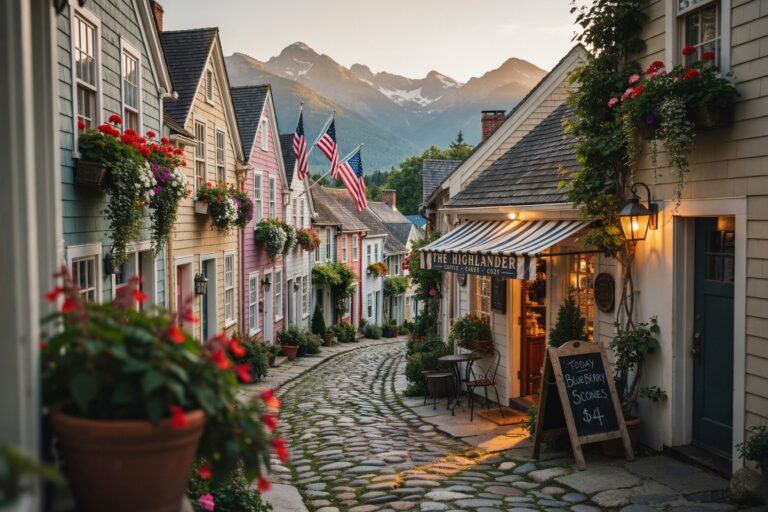

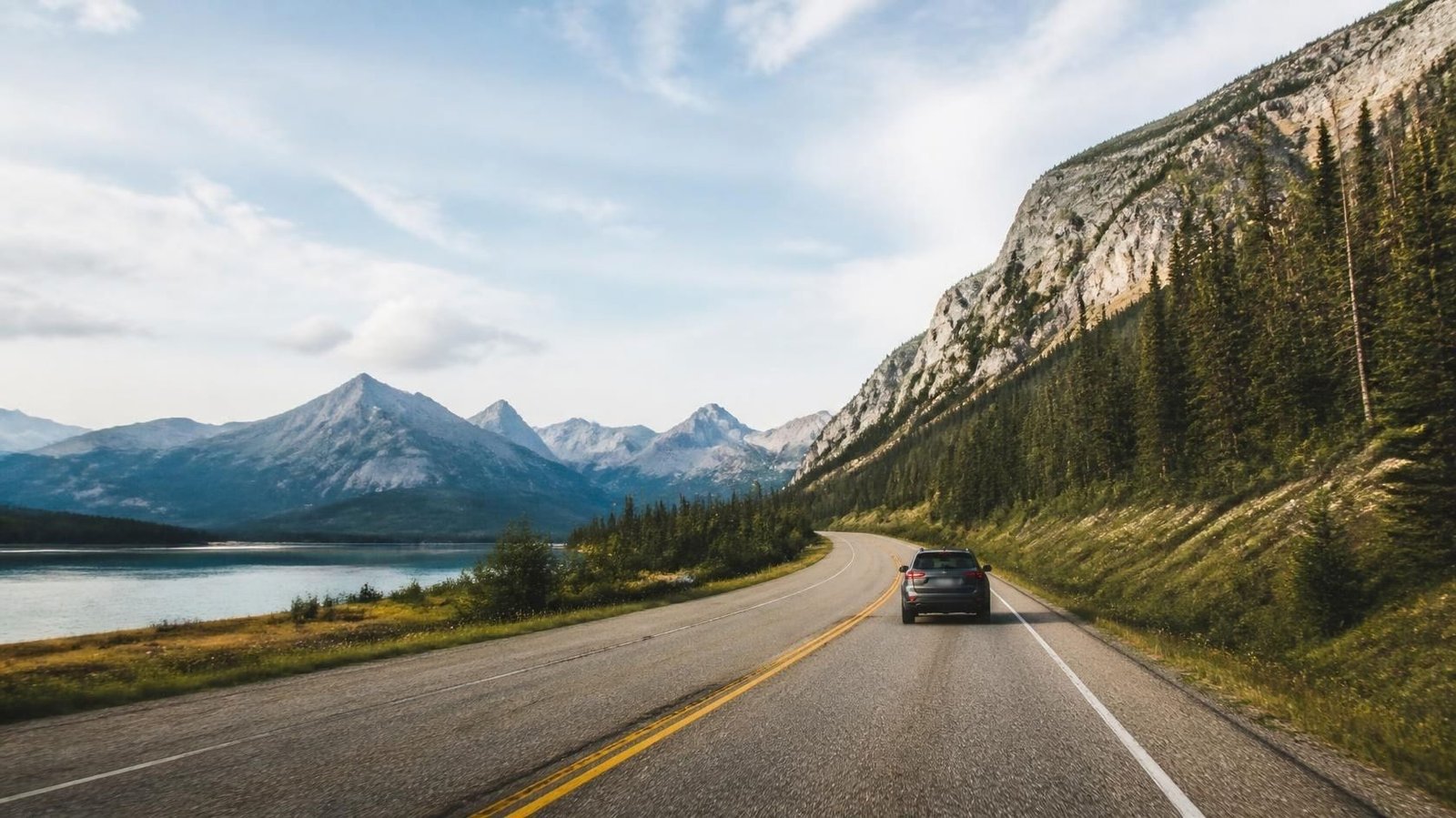
Road trips are one of my favorite ways to experience the USA because the drive itself can become just as memorable as the destination.
I have always enjoyed having the freedom to stop at a viewpoint that catches my attention, spend extra time in a small town, or change the route when I find somewhere worth exploring.
That flexibility is what makes a good road trip feel completely different from a regular vacation.
The USA is especially well suited to this kind of travel. You can drive along dramatic coastlines, through red rock deserts, across mountain ranges, past enormous national parks, and through quiet towns that you might otherwise miss.

I also find that having a planned route makes the experience much easier because you can see which stops are genuinely worth your time instead of trying to fit everything into the trip at the last minute.
In this guide, I’m sharing 11 USA road trip itineraries that stand out for their scenery, memorable stops, and variety.
I’ve included practical details such as how many days to allow, the best places to stop, what you should not skip, and tips that can make the drive smoother.
Whether you have a long weekend or several weeks available, these routes give you a solid starting point for planning a road trip you will actually enjoy.
1. Pacific Coast Highway, California
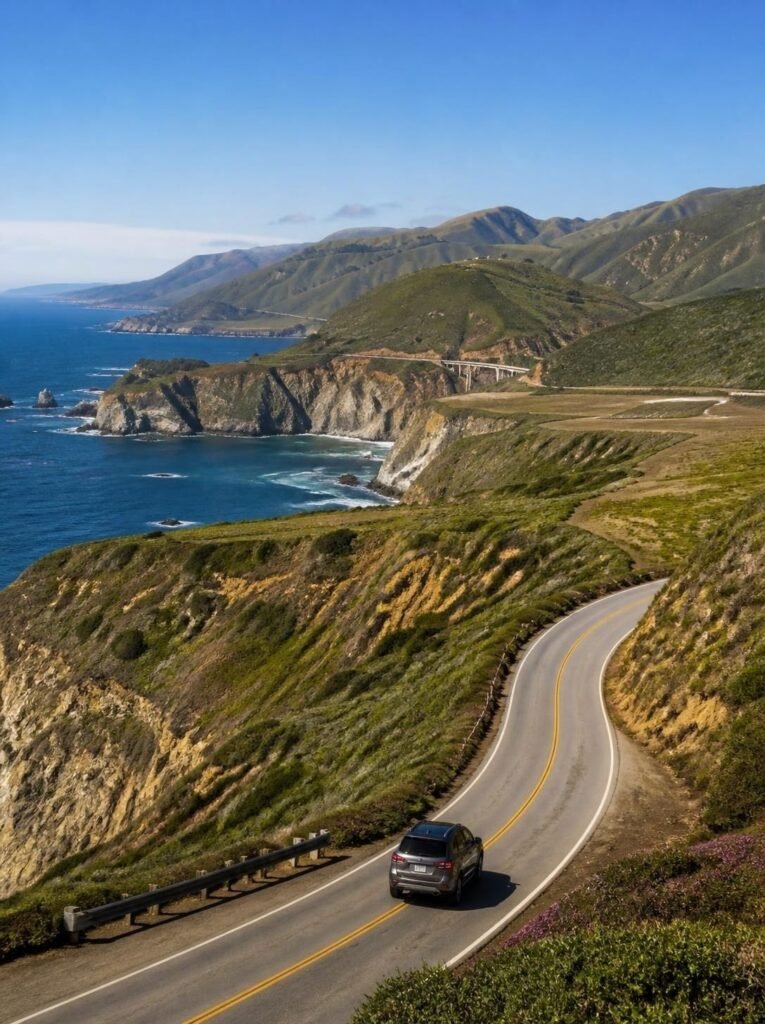
Route: San Francisco → Monterey → Big Sur → San Luis Obispo → Santa Barbara → Los Angeles
Ideal time: 4 to 7 days
California’s Pacific Coast Highway is one of the road trips I would put near the top of any USA road trip list. The combination of ocean views, dramatic cliffs, beach towns, scenic overlooks, and California coastal scenery makes the drive feel special from the moment you leave San Francisco.
I recommend giving yourself more time than you think you need. The distance might look manageable on a map, but you will want to stop frequently for viewpoints, beaches, food, and small coastal towns.
Start in San Francisco
San Francisco makes a great starting point because you can spend a couple of days exploring the city before picking up your car and heading south.
I like the idea of treating the city as part of the road trip rather than simply arriving, renting a car, and immediately leaving. Walk around Fisherman’s Wharf, see the Golden Gate Bridge, explore the neighborhoods, and get comfortable before beginning the coastal drive.
Stop in Monterey and Carmel
Once you leave San Francisco, make your way toward Monterey and Carmel by the Sea.
This section gives you a beautiful introduction to the California coastline, and Carmel is particularly worth allowing extra time for. The town has a charming atmosphere, interesting shops, restaurants, and a completely different feel from the larger cities farther south.
If you enjoy taking your time rather than rushing from attraction to attraction, this is a good place to slow down.
Spend time in Big Sur
Big Sur is the part of this itinerary I would be least willing to rush.
The scenery becomes much more dramatic as the road follows the coastline, with cliffs, ocean views, forests, and scenic pullouts along the way. Give yourself plenty of daylight because you will probably want to stop more often than expected.
One of my biggest road trip tips here is to avoid planning every minute of the drive. Leave room for unexpected stops because some of the best memories can come from simply pulling over when you see a beautiful viewpoint.
Continue toward Santa Barbara
After Big Sur, continue south toward San Luis Obispo and Santa Barbara.
This gives the itinerary a nice change of scenery. Instead of spending the entire trip surrounded by rugged cliffs, you get warmer coastal scenery, beaches, palm trees, and relaxed California towns.
Santa Barbara is an excellent place to spend a night before continuing toward Los Angeles.
What I would not skip
The coastal viewpoints around Big Sur are the obvious highlights, but I would also make time for Carmel, Monterey, and Santa Barbara.
Another thing I recommend is starting your driving days early. You will have more daylight for scenic stops and can avoid feeling like you are racing to reach your hotel before dark.
2. Utah Mighty 5 Road Trip
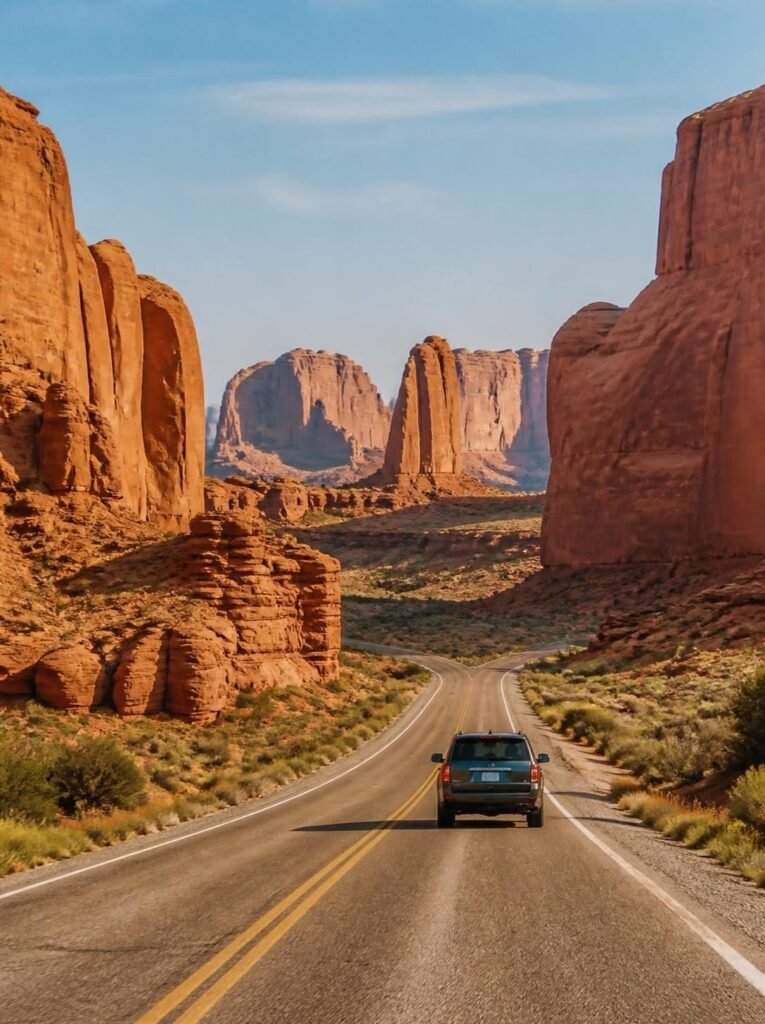
Route: Salt Lake City → Zion National Park → Bryce Canyon → Capitol Reef → Arches → Canyonlands
Ideal time: 7 to 10 days
If you want a road trip that feels completely different from the California coast, Utah is one of the best choices.
The Utah Mighty 5 route takes you through five incredible national parks, each with its own landscape. I love this itinerary because the scenery keeps changing. One day you can be walking among towering red cliffs, and the next you can be surrounded by hoodoos, natural arches, or enormous canyon landscapes.
Begin at Zion National Park
Zion is a great place to start because it immediately gives you that feeling that you have entered somewhere completely different.
Give yourself at least two days if possible. One day can feel rushed, especially if you want to hike and explore beyond the most popular viewpoints.
I would also check park transportation and trail conditions before your visit because access and shuttle arrangements can affect how you plan your day.
Drive to Bryce Canyon
From Zion, continue to Bryce Canyon National Park.
The landscape changes dramatically here. Bryce is famous for its hoodoos, which create one of the most unusual landscapes on the route.
Try to see the park around sunrise or sunset if your schedule allows. The changing light makes the rock formations look completely different from what you see in the middle of the day.
Continue through Capitol Reef
Capitol Reef is often overlooked by travelers trying to squeeze Utah into a short itinerary, but I would not remove it simply to save time.
It gives you another perspective on Utah’s landscape and provides a quieter section of the trip after the busier parks.
This is also a good reminder that a road trip does not have to be about checking destinations off a list. Sometimes the less crowded stop ends up being one of the most enjoyable parts.
Finish around Moab
Moab is the perfect base for exploring both Arches National Park and Canyonlands National Park.
I would allow at least two days here because trying to see both parks in a single rushed day would take away from the experience.
Arches is famous for its enormous natural rock arches, while Canyonlands offers huge canyon views and a much more expansive landscape.
My planning tip for Utah
Do not underestimate the driving time between stops.
The parks can look relatively close together when you are looking at a map, but hiking, parking, viewpoints, and park roads can turn a short drive into a full day of exploring.
For this itinerary, I would rather add an extra day than try to squeeze everything into the shortest possible schedule.
3. Blue Ridge Parkway Road Trip
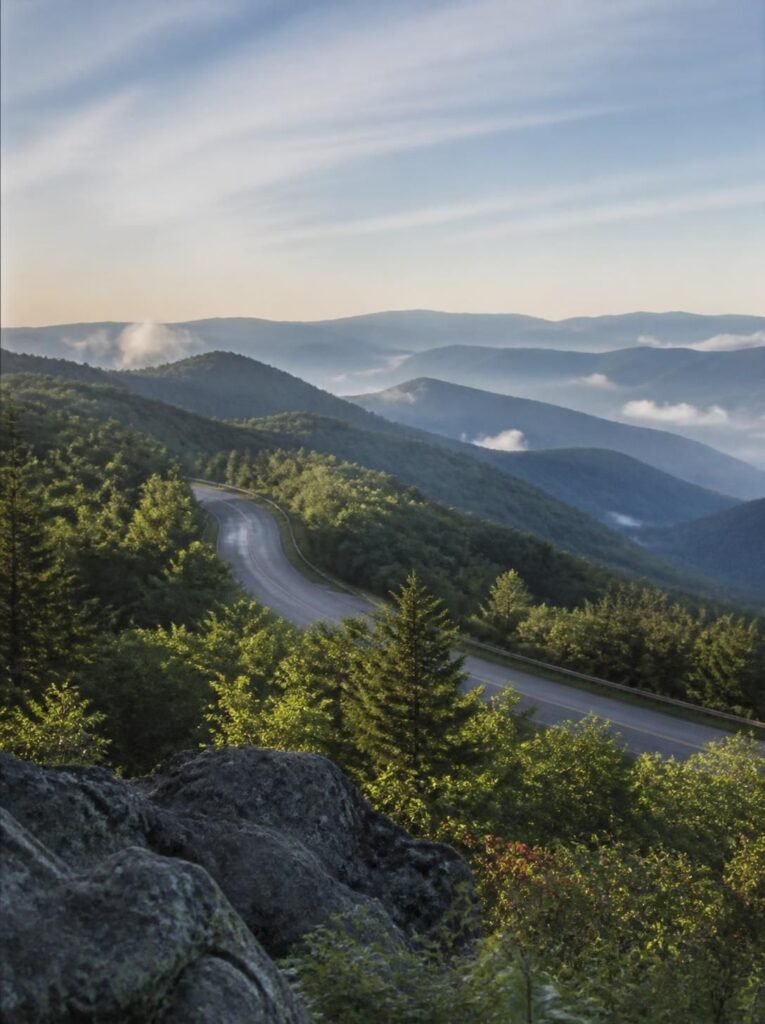
Route: Shenandoah National Park → Roanoke → Blue Ridge Parkway → Asheville → Great Smoky Mountains
Ideal time: 5 to 8 days
For a slower and more scenic road trip, I would choose the Blue Ridge Parkway.
This route is completely different from the wide open landscapes of the American West. Instead, you get rolling mountains, forested roads, overlooks, small towns, waterfalls, and beautiful stretches of Appalachian scenery.
I especially like this type of road trip because you do not have to fill every day with major attractions. The drive itself is part of the experience.
Begin in Shenandoah
Starting around Shenandoah National Park gives you an easy way to combine a national park with the Blue Ridge Parkway.
Spend some time exploring the park before heading south. Skyline Drive is particularly enjoyable when you want scenic views without having to spend the entire day hiking.
Take your time on the Parkway
The biggest mistake I would avoid here is treating the Blue Ridge Parkway like a normal highway.
This is a route to enjoy slowly.
Stop at overlooks, take short walks, photograph the scenery, and allow extra time between destinations. If you try to follow a strict schedule, you can easily turn one of the most relaxing road trips in the country into a stressful driving day.
Spend time in Asheville
Asheville makes a great overnight stop because it gives you a break from driving and adds food, art, shops, and local culture to the itinerary.
I would plan at least one full day here if you have enough time.
It also gives you the opportunity to explore the surrounding mountain area instead of simply passing through.
End near Great Smoky Mountains National Park
Continue south toward Great Smoky Mountains National Park to finish the trip.
The combination of mountain roads, forests, overlooks, and hiking trails makes this a satisfying ending to the itinerary.
If you are traveling during fall, give yourself extra time because this area can become very busy during peak foliage season.
4. Route 66 Road Trip

Route: Chicago → St. Louis → Oklahoma City → Amarillo → Santa Fe → Flagstaff → Las Vegas → Santa Monica
Ideal time: 10 to 14 days
Route 66 is one of the USA road trips I would choose when I want the journey to feel like a destination itself. The historic route crosses a huge stretch of the country and gives you a mix of classic roadside attractions, old motels, small towns, diners, desert scenery, and quirky stops that you would probably miss on a faster interstate drive.
What I enjoy about this itinerary is that it is not only about beautiful scenery. It has character. You get to see a side of America that feels very different from visiting major cities and national parks alone.
Start in Chicago
Chicago is a great place to begin because you can spend a couple of days enjoying the city before getting on the road.
I would not rush this part. Walk along the Chicago River, explore the neighborhoods, enjoy some local food, and give yourself time to adjust before beginning the long drive west.
Once you leave Chicago, the landscape gradually changes as you move through Illinois and toward Missouri.
Stop in St. Louis
St. Louis is an easy addition to the itinerary and gives you a good opportunity to break up the first section of the drive.
The Gateway Arch is the obvious landmark, but I would also make time for some local food and a relaxed evening before continuing west.
Explore Oklahoma and Texas
As you continue toward Oklahoma City and Amarillo, the road trip starts to feel more like classic Route 66.
This is where I would slow down and enjoy the roadside attractions instead of trying to reach the next major city as quickly as possible.
Amarillo is also worth including for the chance to experience the changing landscape as the route moves toward the Southwest.
Continue through Santa Fe
Santa Fe adds another completely different atmosphere to the trip.
The architecture, art, food, and desert surroundings make it a worthwhile stop rather than simply somewhere to sleep for the night.
I would give yourself at least one full day here if your schedule allows.
Finish in Santa Monica
From the Southwest, continue toward Flagstaff and then Las Vegas before finishing around Santa Monica.
Ending at the Pacific Ocean gives the trip a satisfying conclusion after crossing so much of the country.
My biggest tip for Route 66 is to avoid trying to recreate the entire historic route perfectly. Some sections no longer follow the original road, so focus on the experience and the interesting stops rather than worrying about following every original mile.
5. Florida Keys Road Trip
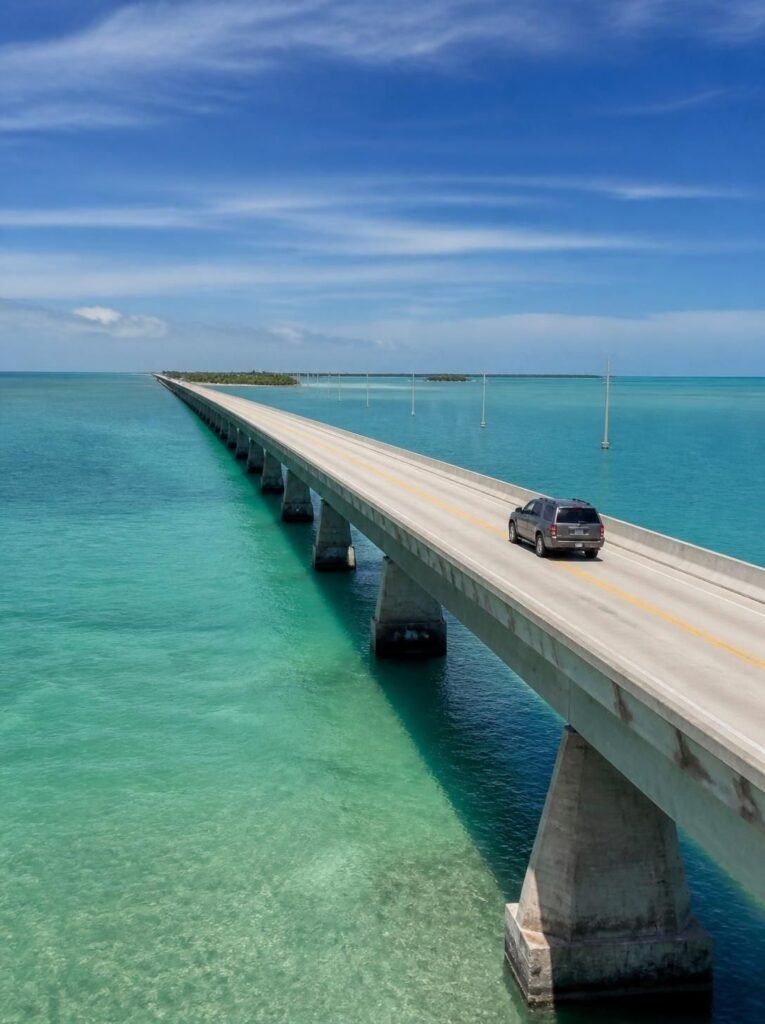
Route: Miami → Key Largo → Islamorada → Marathon → Big Pine Key → Key West
Ideal time: 4 to 6 days
The Florida Keys are perfect when you want a road trip that feels relaxed from the beginning.
Instead of driving through mountains or deserts, this route takes you across a chain of islands connected by bridges, with turquoise water, tropical scenery, seafood restaurants, beaches, and plenty of opportunities to stop along the way.
I like this itinerary because the driving distances are manageable, so you can spend more time enjoying each destination.
Begin in Miami
Start your trip in Miami and spend at least a day exploring before heading toward the Keys.
Miami gives you a completely different experience from the smaller islands, so I like having the city portion at the beginning rather than trying to combine everything into one rushed day.
Stop in Key Largo
Key Largo is the first major stop once you leave mainland Florida.
This is a good place for anyone interested in snorkeling, diving, boating, or simply spending time around the water.
You do not need to pack your schedule with activities. One of the best things about the Keys is having time to slow down.
Spend time in Islamorada
Islamorada is another place I would include even if you are tempted to drive straight to Key West.
The area is known for fishing, water activities, restaurants, and beautiful views.
This is the type of stop where I would rather spend a few hours enjoying the scenery than rushing around trying to visit every attraction.
Take your time around Marathon
Marathon is roughly in the middle of the route, which makes it a practical overnight stop.
It also gives you access to beaches and nearby islands without having to drive all the way to Key West in one day.
Finish in Key West
Key West is the natural ending point.
Give yourself at least two nights if possible because there is enough to do without needing to rush through it.
Walk around the historic areas, watch the sunset, enjoy the restaurants, and simply take in the atmosphere.
I would also avoid planning your return drive immediately after your final evening in Key West. Giving yourself breathing room makes the entire trip feel much more relaxed.
6. Pacific Northwest Road Trip
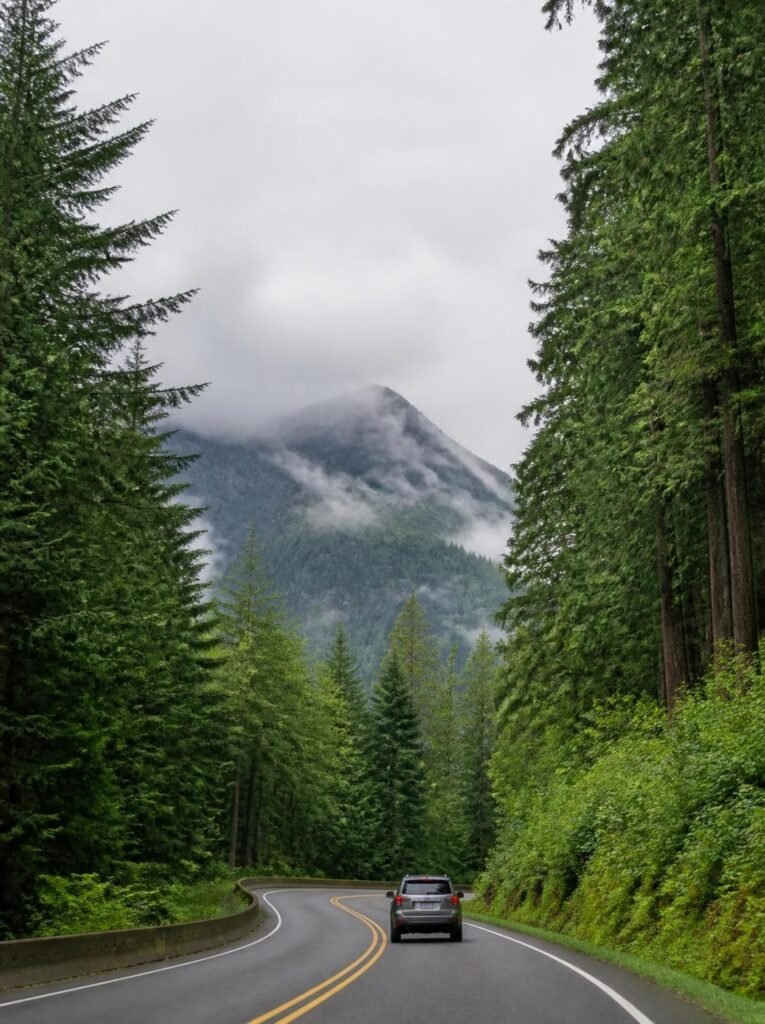
Route: Seattle → Olympic National Park → Portland → Columbia River Gorge → Bend → Crater Lake → Redwood Coast
Ideal time: 7 to 10 days
The Pacific Northwest is one of my favorite choices for travelers who want a road trip with a little bit of everything.
You get cities, evergreen forests, rugged coastline, waterfalls, mountains, lakes, and national parks without having to spend the entire trip driving through the desert.
Start in Seattle
Spend a couple of days in Seattle before picking up your car.
I like starting here because it gives you the chance to enjoy the city before heading into quieter areas.
Pike Place Market, the waterfront, and the surrounding neighborhoods are easy additions to your itinerary.
Explore Olympic National Park
From Seattle, make your way toward Olympic National Park.
This is where the trip really changes pace.
The park offers an incredible variety of landscapes, including dense forests, mountains, lakes, and coastline. Give yourself at least two days if you want to explore properly.
I would resist the temptation to see every part of the park in one day because the roads and distances between different areas can take longer than expected.
Continue to Portland
After Olympic National Park, head toward Portland.
Portland gives you another opportunity to slow down, enjoy good food, explore local neighborhoods, and take a break from hiking and driving.
One night can work if you are short on time, but I would stay longer if you have room in your schedule.
Drive through the Columbia River Gorge
The Columbia River Gorge is one of the best sections of this itinerary.
Waterfalls, dramatic cliffs, forests, and river views make the drive itself memorable.
This is another place where I recommend leaving extra time. If you see a trail or viewpoint that interests you, you will be glad you did not schedule every minute of the day.
Continue toward Bend and Crater Lake
Bend makes a convenient stop before continuing toward Crater Lake.
Crater Lake National Park is especially impressive because of the intense blue color of the lake and the surrounding volcanic landscape.
Check seasonal road conditions before planning this section because weather can affect access, particularly outside the summer season.
Finish along the Redwood Coast
Ending the trip along Northern California’s Redwood Coast gives you one more major landscape change.
The enormous redwood trees create a completely different atmosphere from the mountains and coastline you experienced earlier in the trip.
I would plan enough time here to take a few short walks rather than simply driving through and moving on.
7. New England Fall Foliage Road Trip
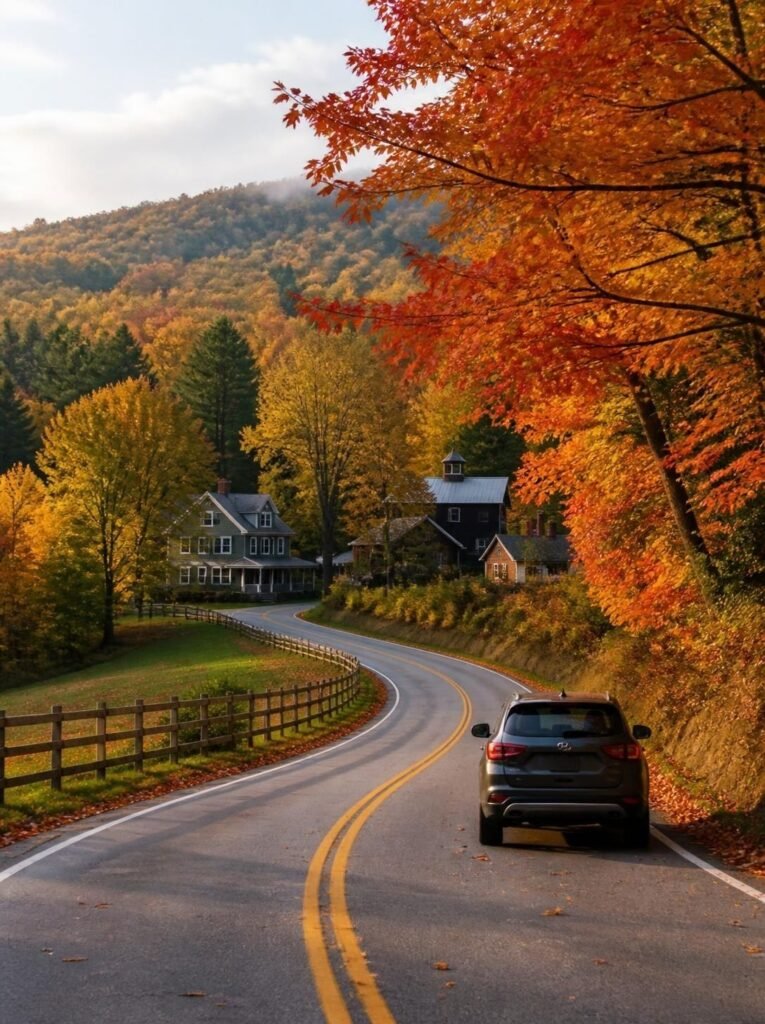
Route: Boston → White Mountains → Stowe → Burlington → Adirondacks → Woodstock → Boston
Ideal time: 5 to 8 days
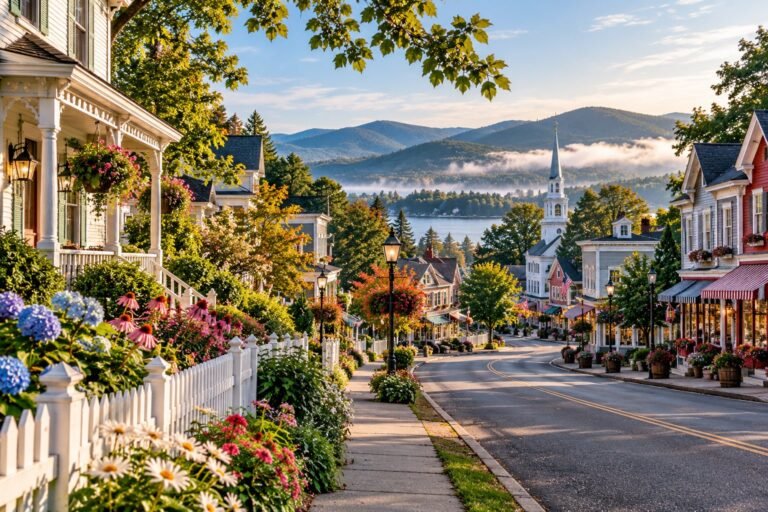
If you want a road trip built around beautiful scenery, charming towns, covered bridges, mountain roads, and changing leaves, New England in the fall is hard to beat.
The timing matters more here than with many other road trips. Fall foliage changes from north to south, so I would check current foliage conditions before booking hotels and finalizing the route.
Start in Boston
Boston makes an easy starting point because you can explore the city before heading into New England’s smaller towns.
Spend a day or two walking around the historic areas, trying local restaurants, and getting ready for the quieter portion of the trip.
Drive through New Hampshire
Head north toward the White Mountains.
This is where the road trip starts to feel completely different from Boston. Mountain scenery, forests, scenic drives, and small towns become the focus.
The Kancamagus Highway is one of the roads I would prioritize if conditions are good.
Continue to Stowe
Stowe, Vermont, is another beautiful stop, particularly during peak foliage.
I would give yourself enough time to explore beyond the main road. Small roads, local shops, farms, and viewpoints can make this section much more memorable.
Explore Burlington
Continue toward Burlington for a change of scenery.
Lake Champlain gives you beautiful water views, while the city itself makes a comfortable place to spend the night.
This is also a good place to slow down before continuing the drive.
Finish through the Adirondacks
From Vermont, continue toward the Adirondacks before making your way back toward Boston.
This creates a satisfying loop instead of simply retracing the same road.
My biggest tip for a New England fall road trip is to book accommodation early.
Popular towns can fill quickly during peak foliage season, and waiting until the last minute can leave you with limited choices or much longer drives between stops.
8. Grand Canyon and Arizona Road Trip
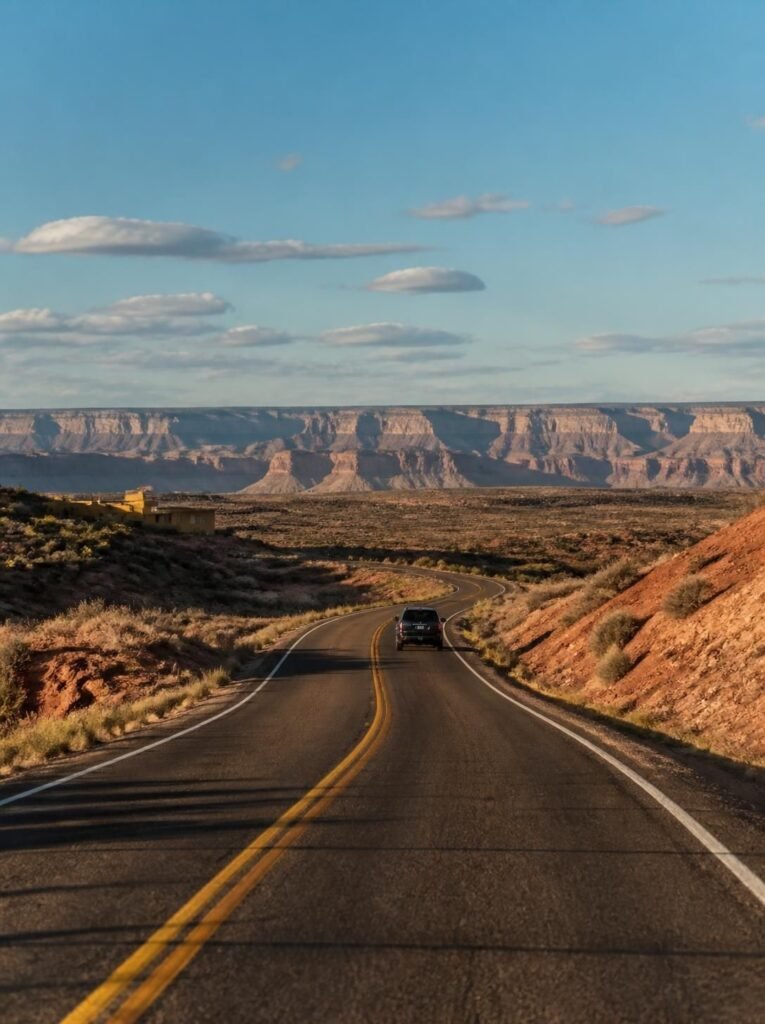
Route: Las Vegas → Grand Canyon → Page → Monument Valley → Sedona → Phoenix
Ideal time: 6 to 8 days
Arizona is one of my favorite places for a road trip when I want dramatic scenery without having to spend every day covering enormous distances. This itinerary combines one of the most famous natural wonders in the country with red rock landscapes, desert towns, scenic drives, and some of the most recognizable landscapes in the Southwest.
I would not treat this as a quick drive from Las Vegas to the Grand Canyon. The best part of this itinerary is taking your time between the major stops.
Start in Las Vegas
Las Vegas is a convenient starting point because it has plenty of car rental options and makes an easy base before heading into the desert.
You do not need to spend several days here if your main goal is the road trip. One night can be enough before heading toward the Grand Canyon.
Spend time at the Grand Canyon
The Grand Canyon deserves more than a quick photo stop.
I recommend spending at least one full day exploring the South Rim if that is the section you choose for this itinerary.
Walk along the rim, visit several viewpoints, and allow yourself time to simply take in the scale of the canyon. It is one of those places where rushing from one viewpoint to another can actually make the experience less enjoyable.
Continue to Page
From the Grand Canyon, continue toward Page.
This section introduces another completely different style of desert scenery.
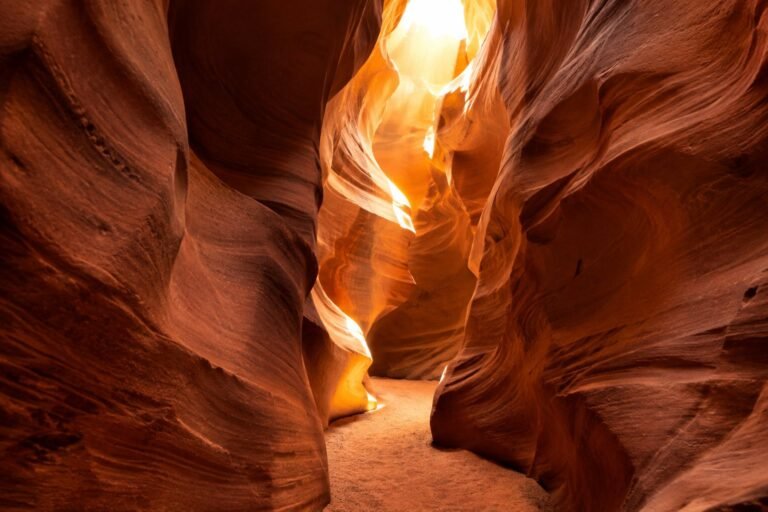
Lake Powell, Horseshoe Bend, and the surrounding red rock landscape make Page a worthwhile stop. If you want to visit popular attractions such as Antelope Canyon, book ahead because tours can fill up.
Drive through Monument Valley
Monument Valley is one of the stops that gives this road trip its classic Southwest feeling.
The enormous sandstone formations rising from the desert make the drive feel almost cinematic.
Give yourself enough daylight to enjoy the area instead of arriving late and immediately leaving the next morning.
Finish in Sedona
Sedona is the perfect way to end the route.
The red rock formations surrounding the town create a completely different atmosphere from the Grand Canyon, and there are plenty of opportunities for hiking, scenic drives, shopping, and relaxing.
If you have time, spend two nights here. After several days of driving, having a slower final destination makes the trip feel much more balanced.
9. Glacier National Park and Montana Road Trip
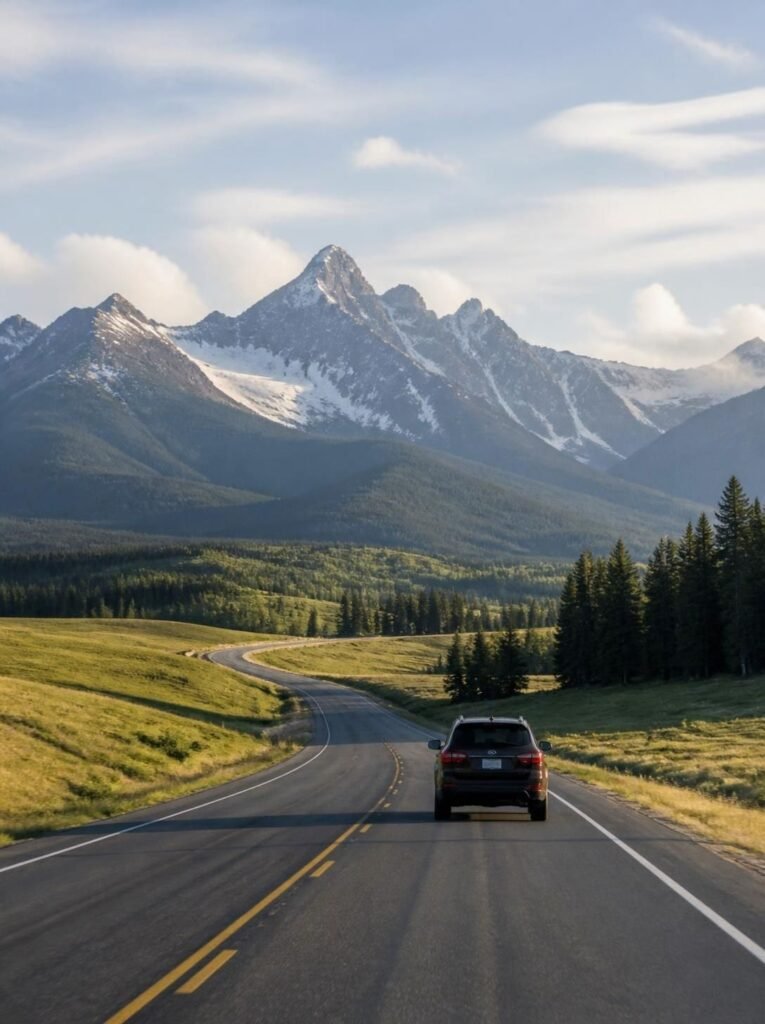
Route: Missoula → Glacier National Park → Whitefish → Flathead Lake → Yellowstone National Park → Grand Teton National Park
Ideal time: 8 to 12 days
For mountain scenery, wildlife, lakes, forests, and some of the most beautiful roads in the country, I would put Montana very high on the list.
This itinerary is especially good for travelers who enjoy outdoor adventures but still want a proper road trip between the major destinations.
Begin in Missoula
Missoula makes a convenient starting point for exploring western Montana.
You can spend a night here before heading north toward Glacier National Park.
The city also gives you a chance to stock up on anything you need before spending more time in rural areas.
Explore Glacier National Park
Glacier is the highlight of this route.
Give yourself at least two or three days if you can.
Going-to-the-Sun Road is one of the major reasons to make the trip, but I would not make the mistake of treating it as simply a road you drive from one end to the other.
Stop at viewpoints, take short hikes, and allow time for unexpected wildlife sightings and changing weather.
Road access can also be seasonal, so check current conditions before you plan your exact route.
Stay around Whitefish
Whitefish is a great place to spend a night after exploring the park.
It gives you a comfortable town atmosphere with restaurants, shops, and accommodation options while keeping you close to Glacier.
Drive toward Yellowstone
Continue south through Montana toward Yellowstone National Park.
This is where the road trip becomes even more impressive because the landscape keeps changing.
Yellowstone deserves several days if you want to experience the major geothermal areas, wildlife, lakes, and scenic drives without rushing.
Continue to Grand Teton
Finish the trip at Grand Teton National Park.
The dramatic mountain range creates an incredible ending, particularly around sunrise and sunset.
I would spend at least two days here if your schedule allows.
My biggest tip for this route is to avoid packing too many activities into each day. Mountain roads, park traffic, wildlife stops, and weather can all change your schedule quickly, so flexibility makes a huge difference.
10. New York to Niagara Falls Road Trip

Route: New York City → Hudson Valley → Catskills → Finger Lakes → Niagara Falls
Ideal time: 5 to 7 days
You do not need several weeks to enjoy a memorable USA road trip.
This New York route is a great option if you want something shorter that still gives you a combination of city attractions, scenic countryside, charming towns, lakes, wineries, and one of the country’s most famous waterfalls.
Start in New York City
I recommend exploring New York City before renting your car.
Driving in the city can be stressful and parking can be expensive, so there is little reason to have a rental car while you are exploring Manhattan.
Once you are ready to leave, pick up your car and head north.
Explore the Hudson Valley
The Hudson Valley is an easy transition from the city to the quieter side of New York State.
You will find scenic towns, mountain views, farms, restaurants, and plenty of opportunities to stop along the way.
I would give yourself at least one night here rather than treating it as a section of road you simply drive through.
Continue through the Catskills
The Catskills are a great place to add some outdoor time to the trip.
You can choose a few hikes, scenic viewpoints, or small towns depending on how active you want the trip to be.
This flexibility makes the route work for different types of travelers.
Spend time in the Finger Lakes
The Finger Lakes region deserves a place on the itinerary because it adds another completely different landscape.
The lakes, vineyards, small towns, and countryside make this one of the most relaxing sections of the drive.
If you enjoy food and wine, you could easily spend an extra day here.
Finish at Niagara Falls
Niagara Falls is the natural finale.
Give yourself enough time to see the falls from different viewpoints and enjoy the surrounding area instead of arriving late and immediately leaving.
If you are crossing into Canada, remember to check the current entry requirements and make sure you have the appropriate travel documents.
11. Alaska Road Trip

Route: Anchorage → Seward → Homer → Denali → Fairbanks
Ideal time: 10 to 14 days
For a road trip that feels completely different from anywhere else in the USA, Alaska belongs on the list.
The distances are much larger, but that is part of the adventure. The route takes you through enormous landscapes, mountains, glaciers, forests, lakes, and remote stretches of road where the scenery becomes the main attraction.
Begin in Anchorage
Anchorage is the easiest starting point for many Alaska road trips because it gives you access to major roads, rental cars, restaurants, accommodation, and supplies.
Spend at least a day here before heading out.
Drive toward Seward
The drive from Anchorage toward Seward is one of the sections I would take slowly.
The scenery along the Seward Highway is beautiful, with mountains and water appearing throughout the route.
Seward itself is worth spending a couple of days exploring, especially if you want to take a boat trip or see glaciers and marine wildlife.
Continue toward Homer
Homer gives the itinerary another change of scenery.
The town is known for its coastal setting, fishing, and views across Kachemak Bay.
I would not rush through this section. Alaska rewards travelers who leave room for slower days.
Head toward Denali
After Homer, make your way back north toward Denali National Park.
Denali is one of the biggest highlights of the entire itinerary, so allow at least two days if possible.
Wildlife sightings can never be guaranteed, but the possibility of seeing bears, moose, caribou, and other wildlife is part of what makes the area so memorable.
Finish in Fairbanks
Finish the road trip in Fairbanks.
It gives you a completely different perspective on Alaska and makes a good final destination before flying home.
Because Alaska is so large, I would build extra flexibility into this itinerary. Weather, road conditions, wildlife, construction, and seasonal access can all affect your plans.
How to Choose the Right USA Road Trip
With 11 completely different itineraries, the best route really depends on the kind of experience you want.
If you want coastal scenery, choose the Pacific Coast Highway or the Florida Keys.
If you want national parks and dramatic landscapes, Utah, Arizona, Montana, and Alaska are excellent choices.
If you want small towns and slower scenic driving, the Blue Ridge Parkway or New England is a better fit.
If you want a classic cross country experience, Route 66 is hard to beat.
And if you only have five to seven days, the New York to Niagara Falls route gives you plenty to see without requiring a huge time commitment.
Tips I Would Use When Planning a USA Road Trip
I always recommend building the route around the places you genuinely want to experience rather than trying to collect as many destinations as possible.
Give yourself extra driving time. A route that looks easy on Google Maps can take much longer once you add fuel stops, meals, traffic, parking, viewpoints, hikes, and unexpected places you want to explore.
I would also avoid changing hotels every single night unless the route requires it. Staying two nights in selected locations makes the trip much less tiring and gives you more time to actually enjoy where you are.
Before leaving, check road conditions, park closures, seasonal access, weather, parking requirements, and reservation rules for major attractions. National parks in particular can have changing access rules depending on the season.
And finally, leave room for the unplanned stops. Some of my favorite road trip memories have come from places that were never on the original itinerary. A scenic overlook, a small restaurant, an interesting town, or a quiet stretch of road can become the part of the trip you remember long after you get home.
A great USA road trip is not about how many miles you can cover. It is about giving yourself enough time to enjoy the places between the destinations.