
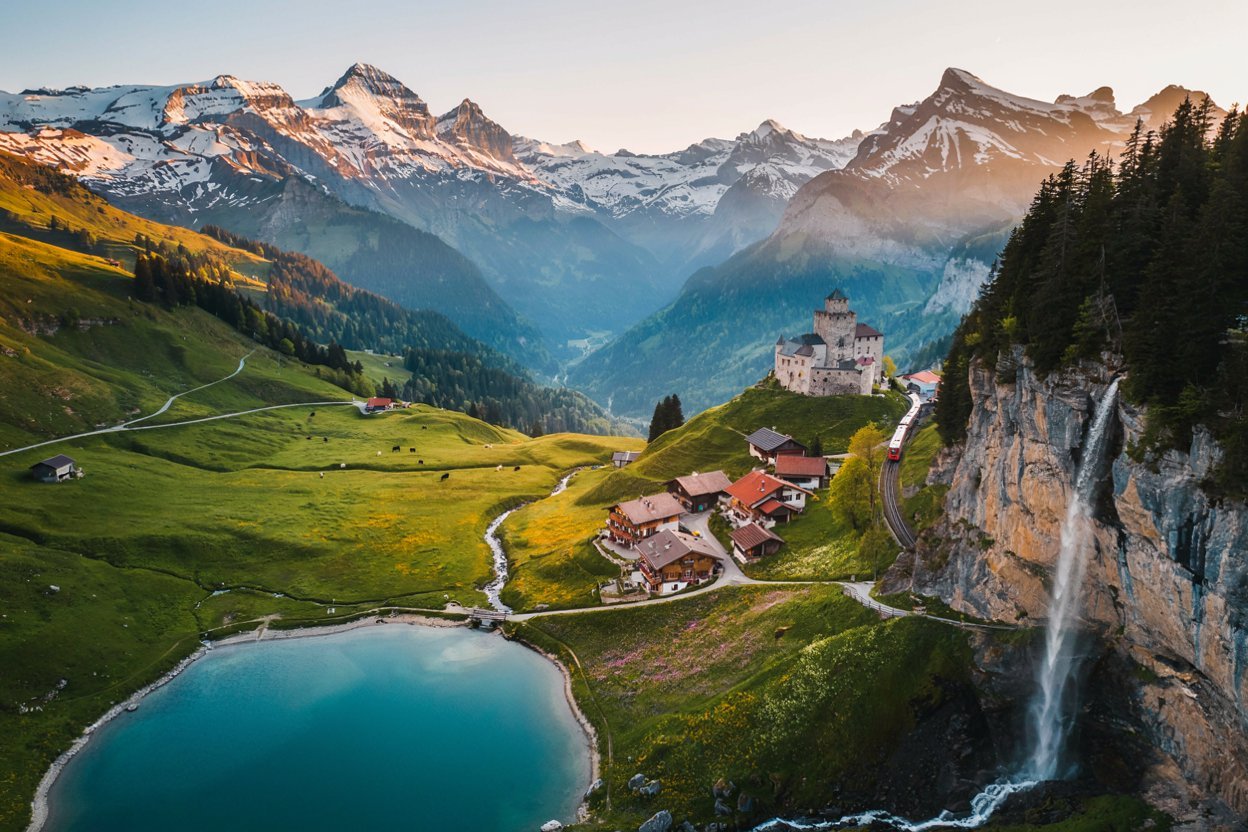
A friend visiting from the US spent her first morning in Lauterbrunnen staring up at a waterfall dropping straight down a cliff face into the middle of the village and kept asking when the “real” scenery would start, convinced this had to be some kind of curated welcome stop before the actual trip began. It never stopped looking like that. That was just Switzerland.
Fairy tale is a word that gets thrown around loosely in travel writing, but in Switzerland it holds up under scrutiny in a way it rarely does elsewhere. Waterfalls fall directly into town centers.
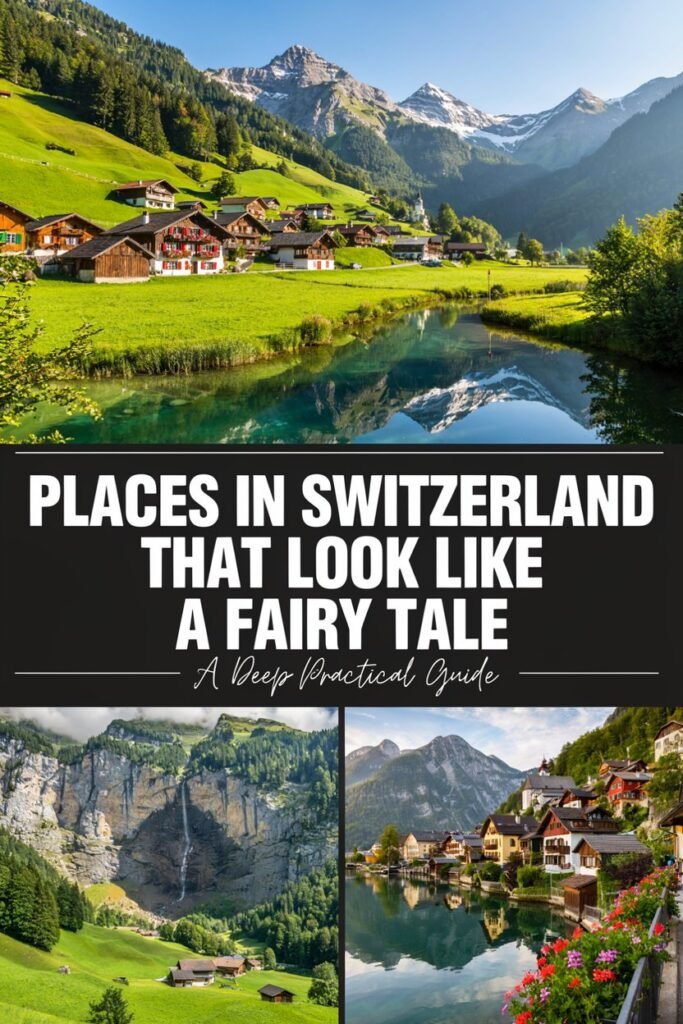
Villages sit car-free on cliff ledges reachable only by cable car. Wooden chalets line streets that haven’t changed their footprint in centuries, with glaciers visible at the end of the road.
This guide covers ten villages and small towns that earn the comparison, along with the practical details that actually matter, how to get there, where to stay by budget, what to do, and when to go, since Switzerland rewards planning more than it rewards winging it.
If you’re building a longer Alps itinerary around this, pairing a few of these with a base in a bigger hub like Lucerne or Interlaken usually works better than trying to string all ten together in one trip.
How to Travel Around Switzerland
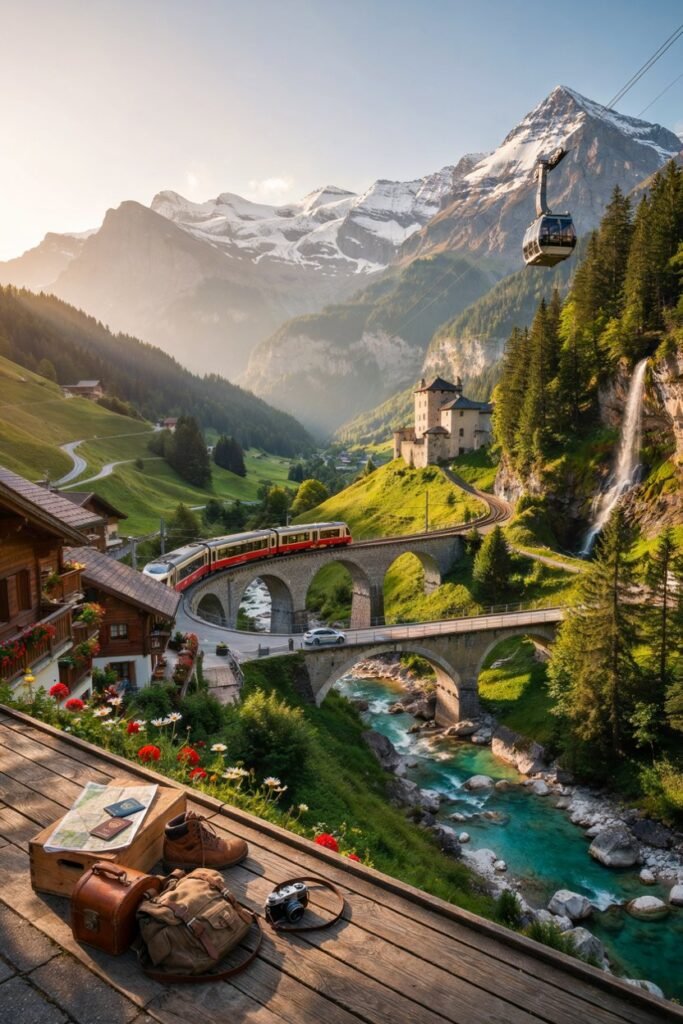
Switzerland is one of the easiest countries in Europe to explore, thanks to its outstanding transportation network. These tips will help you make the most of your trip.
- Travel by train whenever possible. Switzerland’s rail network is fast, reliable, and connects almost every city, village, and mountain destination.
- Consider a Swiss Travel Pass. If you plan to visit several regions, the pass offers unlimited travel on most trains, buses, and boats, along with discounts on many mountain railways and attractions.
- Rent a car only if needed. A car is useful for exploring remote villages, but many popular destinations are easier to reach by train, and parking can be expensive.
- Stay at least two nights in each region. This gives you enough time to enjoy the scenery without constantly packing and moving between hotels.
- Book panoramic trains early. Scenic routes like the Glacier Express and Bernina Express often sell out during the busiest travel seasons.
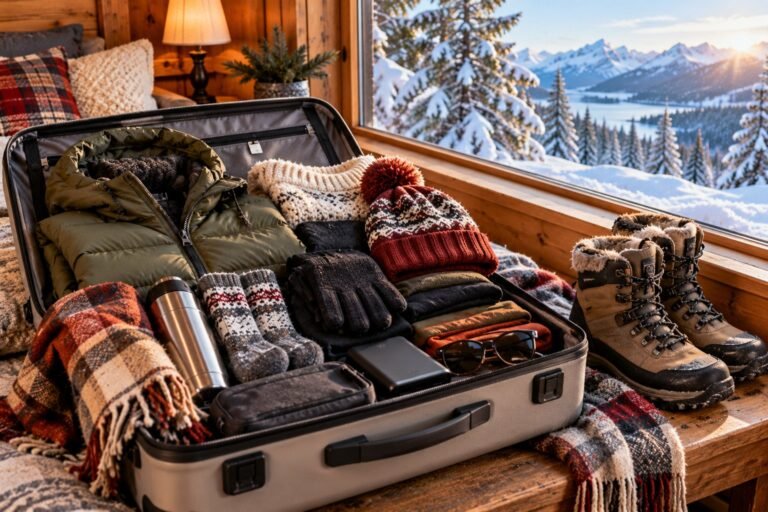
- Pack for changing weather. Mountain temperatures can be much cooler than nearby cities, even during summer, so bring layers and a lightweight waterproof jacket.
- Leave room for spontaneous stops. Some of Switzerland’s most beautiful lakes, villages, and viewpoints are the ones you discover while traveling between destinations.
1. Lauterbrunnen
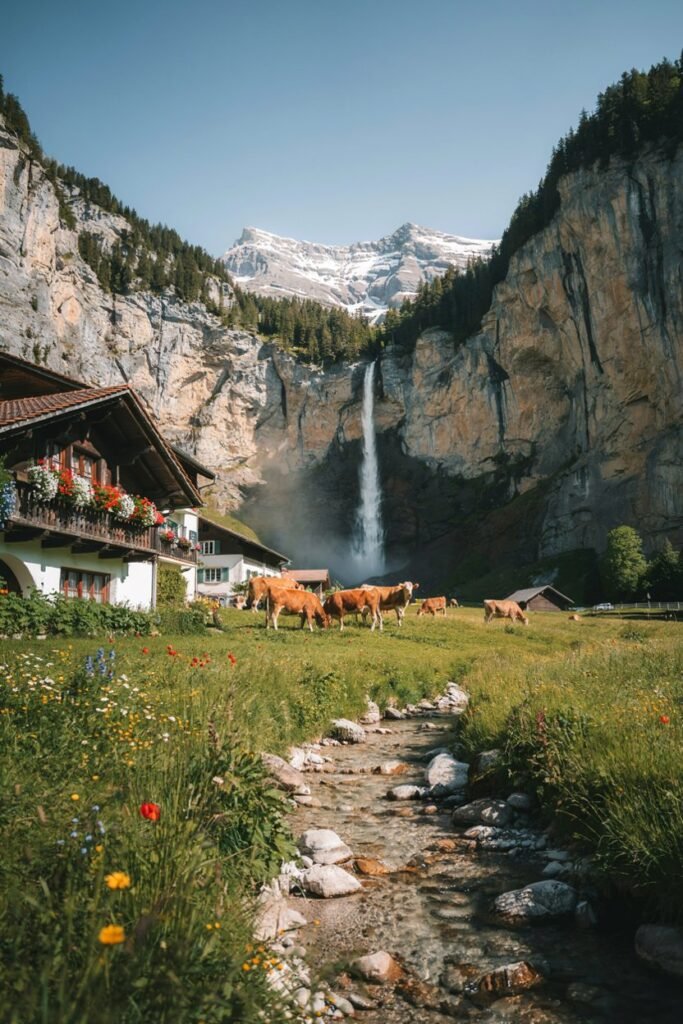
A hiker resting on a bench near the village church pointed out that the valley has 72 waterfalls total, though most visitors only ever notice Staubbach Falls, the one dropping almost directly into the village itself, close enough that the mist reaches the nearest rooftops on a windy day.
Why you will love it
Lauterbrunnen sits at the base of a sheer 1,500-foot cliff wall in the Bernese Oberland, with Staubbach Falls cascading almost into the village center.
It’s widely believed to have influenced Tolkien’s vision of Rivendell, and standing in the valley, that connection isn’t hard to see.
How to locate it
Lauterbrunnen sits in the canton of Bern, reachable by train from Interlaken Ost in about 20 minutes. It also serves as the main gateway to the car-free villages of Wengen, Mürren, and Gimmelwald higher up the valley.
Where to stay
- Budget: Hostels and campgrounds along the valley floor, several with direct waterfall views, are some of the most affordable stays in the region.
- Mid range: Family-run guesthouses and small hotels in the village center put you close to the train station and trailheads.
- Luxury: A handful of boutique hotels with cliffside or waterfall views offer a higher-end version of the same setting.
What to do
- Walk to the base of Staubbach Falls, just steps from the village center
- Ride the cable car or funicular up to Wengen, Mürren, or Grütschalp for valley views
- Hike part of the valley floor trail beneath the cliffs
- Visit Trümmelbach Falls, a series of glacial waterfalls inside the mountain
Best time to visit: June to September, for the fullest waterfall flow from snowmelt and the most reliable hiking weather.
Safety tip: Trail and cable car conditions can change quickly with weather in the high valley, so check current status boards at the station before heading up.
2. Zermatt
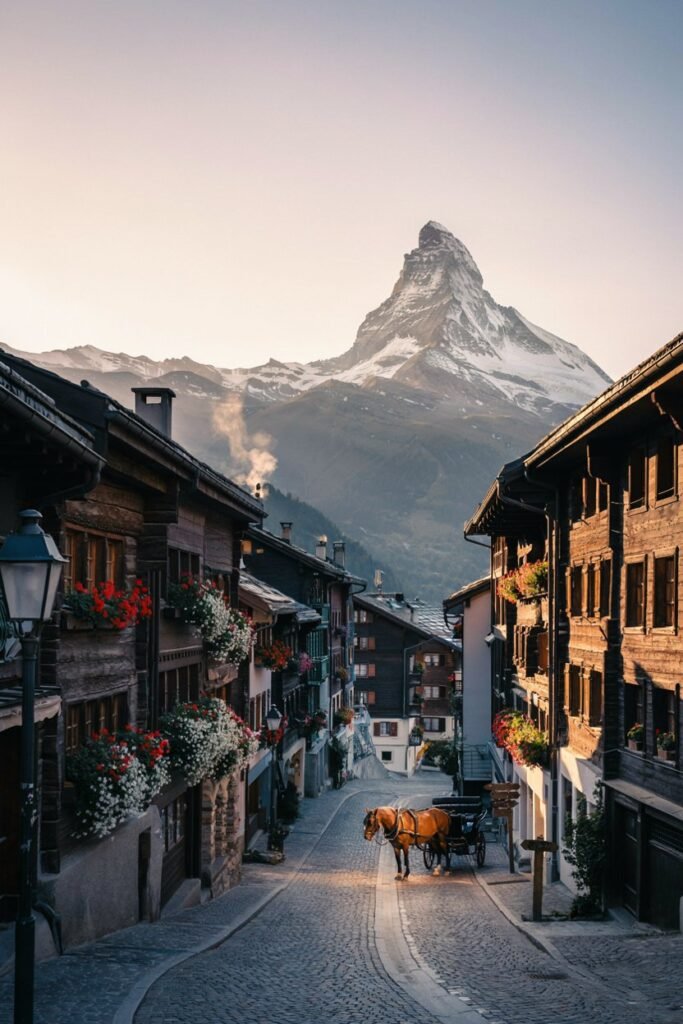
A hotel concierge mentioned that Zermatt has never allowed combustion-engine cars within town limits, not as a modern eco-initiative but as policy dating back over a century, and the quiet that comes with it, just electric taxis and horse-drawn sleighs, makes the Matterhorn looming at the end of the main street feel even larger.
Why you will love it
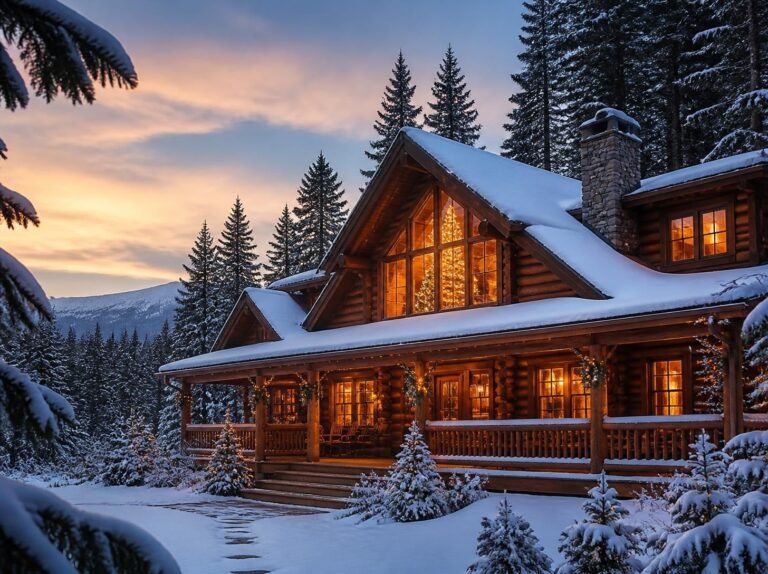
Zermatt pairs a genuinely car-free alpine village with a direct view of the Matterhorn, one of the most recognizable mountains in the world. Wooden chalets and narrow streets give it a classic Swiss village feel, while the surrounding peaks give it a scale most villages can’t match.
How to locate it
Zermatt sits in the canton of Valais, reached by train from Täsch, where visitors must park and continue by rail since private cars aren’t permitted into town. The journey from Zurich takes roughly three and a half hours by train.
Where to stay
- Budget: Hostels and simpler guesthouses on the edge of town keep costs down while remaining walkable to the center.
- Mid range: Chalet-style hotels along the main street offer classic alpine character with reasonable rates.
- Luxury: Five-star mountain resorts with direct Matterhorn views are the town’s signature splurge, some with private spa facilities.
What to do
- Ride the Gornergrat railway for panoramic Matterhorn views
- Take the cable car to the Matterhorn Glacier Paradise, Europe’s highest cable car station
- Walk the village’s car-free main street and browse its shops
- Hike or ski depending on season, with terrain suited to both
Best time to visit: December to March for skiing, or June to September for hiking and clearer mountain views.
Safety tip: Altitude increases quickly on cable car rides, so pace yourself at higher stations and stay hydrated, especially if arriving directly from lower elevations.
3. Grindelwald
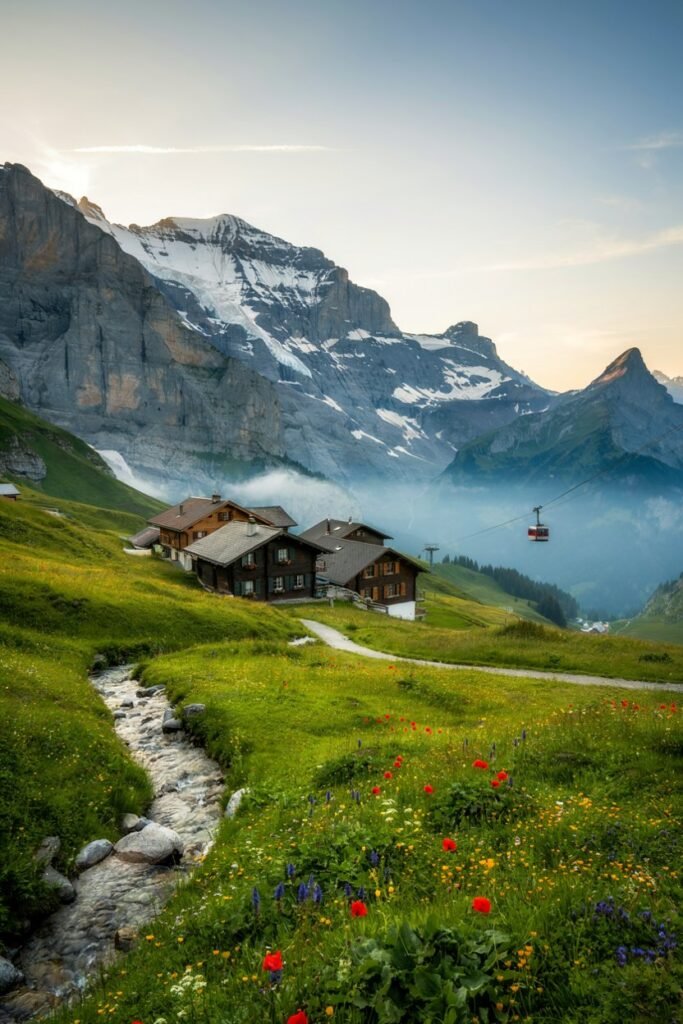
A ski instructor mentioned that Grindelwald sits directly beneath the north face of the Eiger, one of the most notorious climbing routes in the world, and that on clear mornings you can watch climbers on the wall from the village itself with a decent pair of binoculars.
Why you will love it
Grindelwald combines a classic wooden-chalet village with a direct, dramatic view of the Eiger’s north face, giving it a sense of scale that few alpine towns can match. It works equally well as a summer hiking base or a winter ski destination.
How to locate it
Grindelwald sits in the Bernese Oberland, about 40 minutes by train from Interlaken Ost. The village itself is walkable, with several cable cars and gondolas departing directly from town for higher elevations.
Where to stay
- Budget: Hostels and simple guesthouses near the train station keep costs down.
- Mid range: Chalet-style hotels along the main street put you close to the gondola stations and shops.
- Luxury: Mountain resorts with Eiger views, some with spa facilities, sit slightly outside the village center.
What to do
- Ride the Eiger Express gondola up toward Jungfraujoch, the “Top of Europe”
- Hike the First Cliff Walk, a suspended path along a cliff edge
- Ski or snowboard in winter across a large connected terrain
- Visit the village’s small local museum for regional history
Best time to visit: December to March for skiing, or June to September for hiking with the fullest mountain views.
Safety tip: High-altitude excursions like Jungfraujoch can bring sudden weather shifts, so dress in layers even during summer visits.
4. Gimmelwald
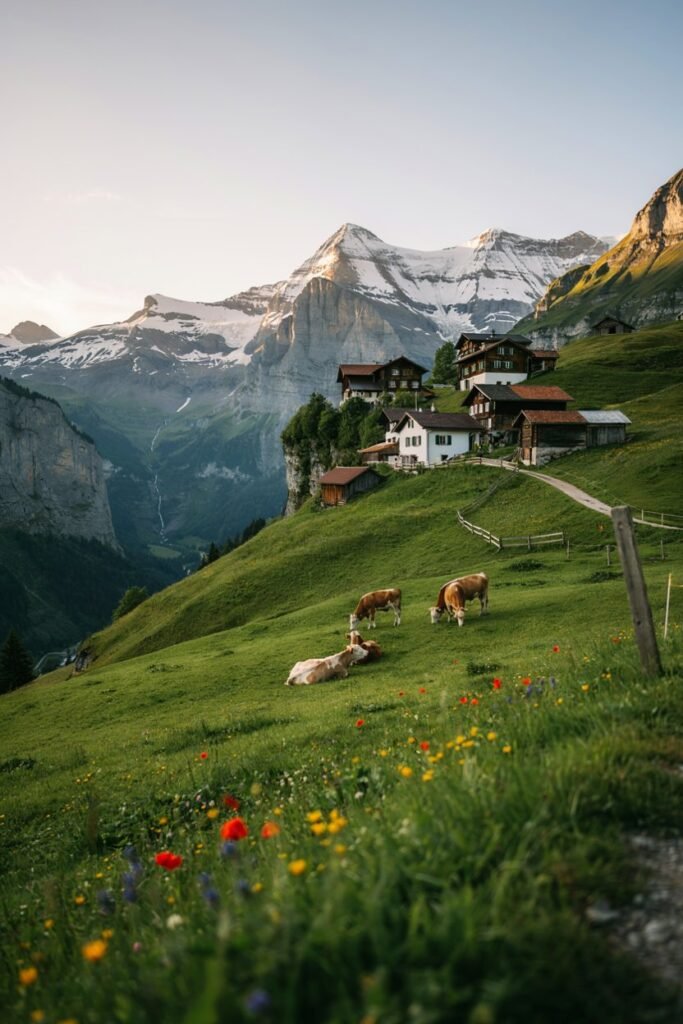
A local farmer mentioned that Gimmelwald has resisted major tourist development for decades, partly by law and partly by choice, and that many residents still keep working farms right alongside the handful of guesthouses, cows grazing a few steps from where hikers pass through on the valley trail.
Why you will love it
Gimmelwald is one of the last car-free, still-working farming villages in the Bernese Oberland, perched on a cliff ledge above the Lauterbrunnen valley. It’s small, quiet, and largely undeveloped compared to its more famous neighbors, making it a rare genuine escape rather than a polished tourist stop.
How to locate it
Gimmelwald sits above Lauterbrunnen, reached by cable car from Stechelberg at the valley floor. No road access exists for private vehicles, so the cable car is the only practical way in.
Where to stay
- Budget: A well-known mountain hostel in the village offers some of the cheapest beds in the region.
- Mid range: A handful of small guesthouses and pensions provide simple, comfortable rooms.
- Luxury: Options are limited here by design, since the village has deliberately avoided large-scale hotel development.
What to do
- Walk the high trail toward Mürren for sweeping valley and mountain views
- Sit at the village edge and take in the view across the Lauterbrunnen valley
- Visit in early summer for wildflower-covered meadows
- Use it as a quiet overnight base before continuing on to Mürren or the Schilthorn
Best time to visit: June to September, for the clearest trails and mildest weather at this elevation.
Safety tip: Trails around the village involve real exposure in places, so sturdy footwear and caution matter more here than in more developed villages.
5. Appenzell
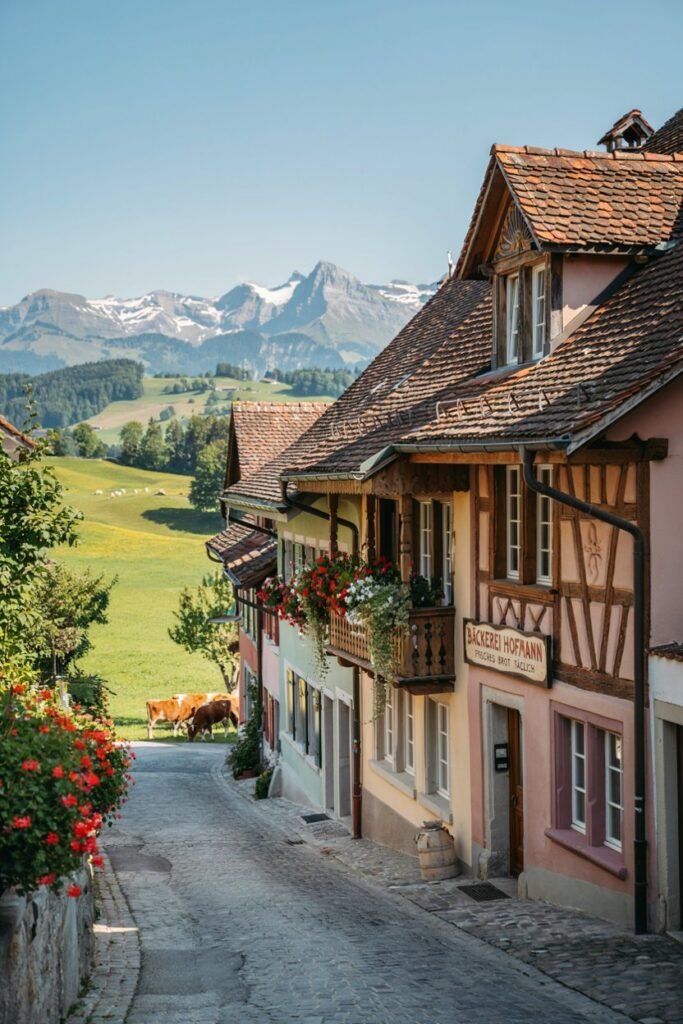
A cheesemaker at a roadside stand explained that Appenzell Innerrhoden didn’t grant women the right to vote in local matters until 1990, one of the last regions in Europe to do so, a strange footnote for a town otherwise defined by painted house facades and quiet rural tradition.
Why you will love it
Appenzell is known for its brightly painted, ornately decorated house facades, a distinct regional style found almost nowhere else in Switzerland.
Set in rolling green hill country in the country’s northeast, it offers a softer, pastoral version of the fairy tale image compared to the high alpine villages further south.
How to locate it
Appenzell sits in northeastern Switzerland, about an hour by train from Zurich via St. Gallen. The town center is compact and easily walkable.
Where to stay
- Budget: Guesthouses on the edge of town keep costs down while staying close to the center.
- Mid range: Traditional inns within the historic core put you right among the painted facades.
- Luxury: A handful of upscale countryside hotels nearby add spa amenities and rural views.
What to do
- Walk the main street and take in the painted house facades
- Visit a local cheese dairy for a tasting of Appenzeller cheese
- Hike into the surrounding green hills toward Ebenalp or Seealpsee
- Time a visit around Landsgemeinde, the region’s traditional open-air voting assembly
Best time to visit: May to September, for comfortable hiking weather and the fullest green landscape.
Safety tip: Trails into the surrounding hills can be steep and exposed near Ebenalp, so check conditions and stick to marked paths.
6. Stein am Rhein
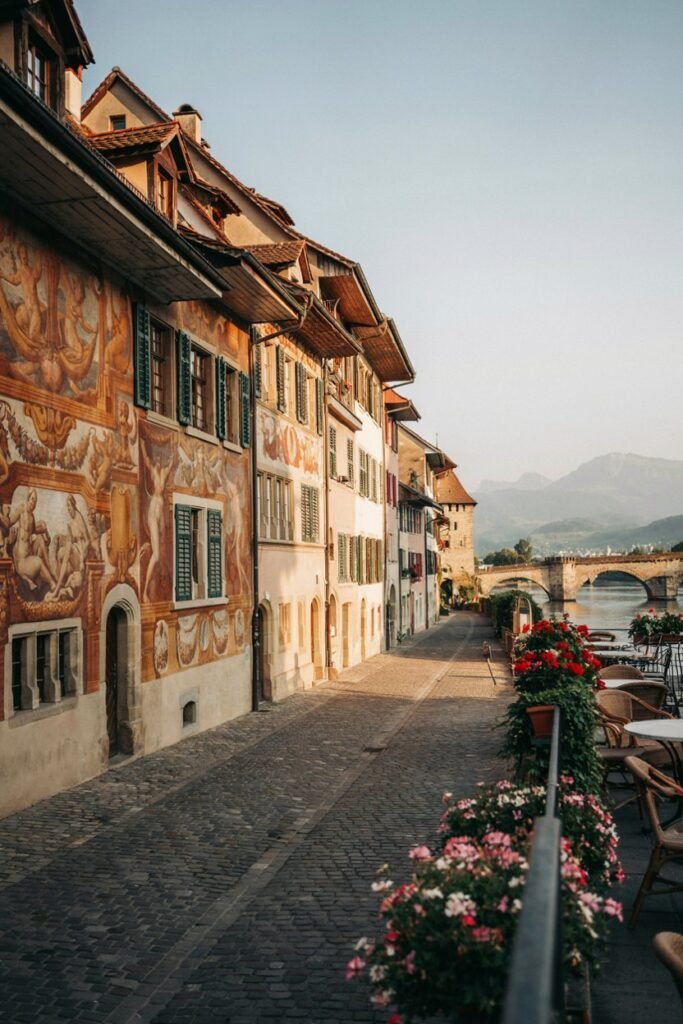
A boat captain running the Rhine ferry mentioned that Stein am Rhein’s old town has barely changed its footprint since the medieval period, and that many of the elaborately painted building facades date back centuries, restored rather than replaced each time.
Why you will love it
Stein am Rhein sits directly on the Rhine River, with an old town full of frescoed, painted facades on nearly every building, considered some of the best-preserved medieval architecture in Switzerland.
It’s compact, walkable, and less crowded than some of the country’s more famous stops.
How to locate it
Stein am Rhein sits in the canton of Schaffhausen, near the German border, about an hour by train from Zurich. The old town is small and fully walkable, with the Rhine running directly through it.
Where to stay
- Budget: Guesthouses on the edge of the old town cost less while staying a short walk from the center.
- Mid range: Riverside inns within the historic district put you right among the painted facades.
- Luxury: A handful of upscale hotels along the water offer a quieter, higher-end version of the same setting.
What to do
- Walk the old town and take in the painted building facades
- Take a Rhine boat cruise, with routes toward Lake Constance or Schaffhausen
- Climb up to Hohenklingen Castle for views over the town and river
- Sit at a riverside café and watch the boats pass
Best time to visit: April to June or September to October, for mild weather and thinner crowds than summer.
Safety tip: Riverside paths can be slippery when wet, so watch your footing, especially near the boat docks.
7. Gruyères
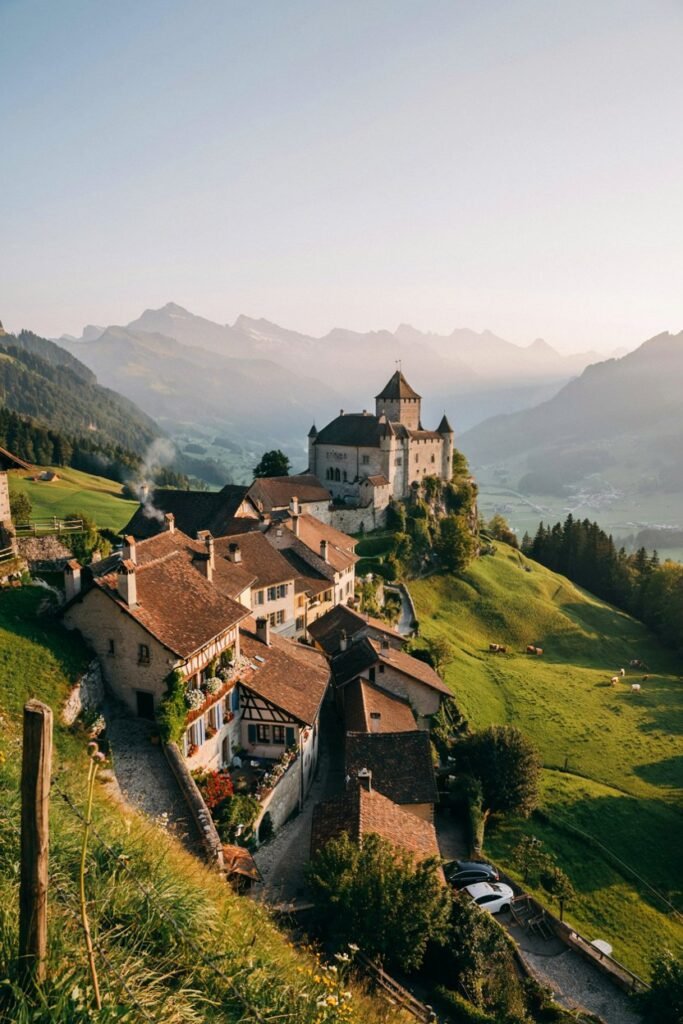
A cheesemaker outside the village walls mentioned that the town gave its name to the famous cheese rather than the other way around, and that the recipe has barely changed since medieval dairy farmers in this exact valley first started making it.
Why you will love it
Gruyères is a walled medieval hilltop village overlooking rolling dairy country in French-speaking Switzerland, home to the cheese that carries its name.
Its cobblestone streets, castle, and surrounding pastoral scenery make it one of the most classically “fairy tale” villages in the country.
How to locate it
Gruyères sits in the canton of Fribourg, reached by train from Bulle or Montreux, followed by a short walk uphill to the walled village itself. Cars are not permitted within the village walls.
Where to stay
- Budget: Guesthouses in nearby Bulle cost less, with an easy train connection into Gruyères.
- Mid range: Small inns within the village walls put you right in the historic center.
- Luxury: A historic hotel inside the walls, along with countryside options nearby, offer a higher-end version of the same setting.
What to do
- Walk the cobblestone streets and visit Gruyères Castle
- Tour La Maison du Gruyère, a working cheese dairy just outside the village
- Visit the H. R. Giger Museum, an unexpected contrast to the medieval setting
- Take in views over the surrounding dairy pastures from the village walls
Best time to visit: May to September, for comfortable walking weather and the fullest green countryside views.
Safety tip: Cobblestone streets throughout the village are uneven, so wear sturdy shoes, especially in wet weather.
8. Iseltwald
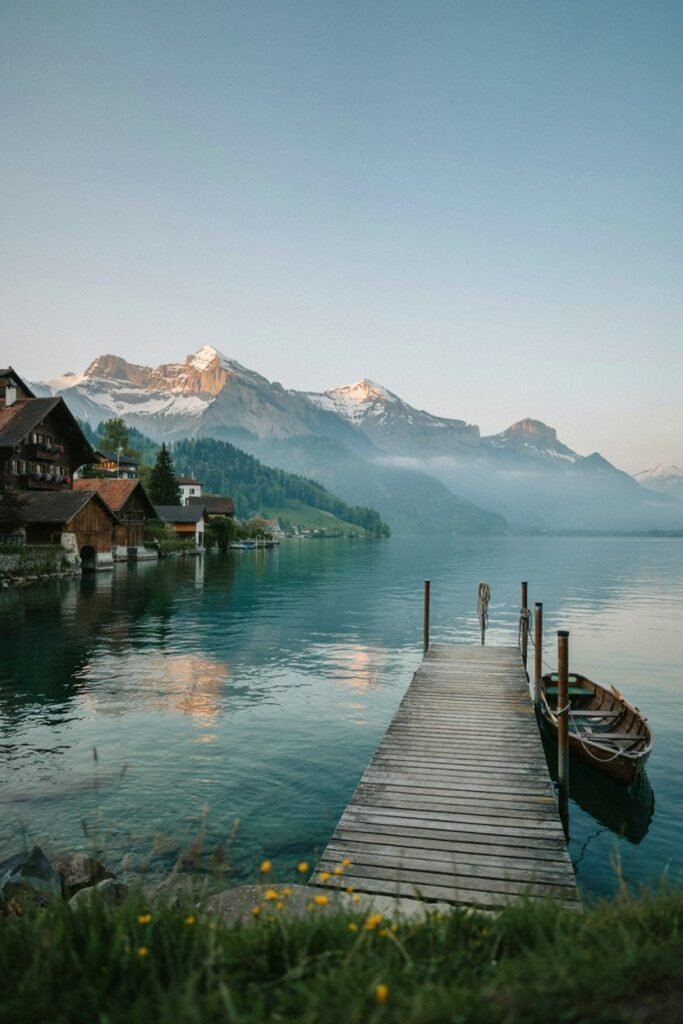
A local boat operator mentioned that this small village briefly became a global sensation after a single dock appeared in a popular Korean drama, and that visitor numbers still spike whenever a new season of the show airs somewhere in the world.
Why you will love it
Iseltwald is a small, quiet village on the shores of Lake Brienz, known for its turquoise water, wooden dock, and small peninsula setting.
It’s less about grand architecture and more about a single, perfect view, the kind of place worth visiting for an afternoon rather than a full trip.
How to locate it
Iseltwald sits on Lake Brienz in the Bernese Oberland, about a 20 minute drive or bus ride from Interlaken. The village itself is tiny and walkable in under an hour.
Where to stay
- Budget: Campgrounds and simple guesthouses nearby keep costs down.
- Mid range: A handful of small hotels and guesthouses in the village offer lake views.
- Luxury: Larger resorts in nearby Interlaken or along the lake add more amenities, a short drive away.
What to do
- Walk out to the small peninsula and its well-known dock
- Swim or kayak in Lake Brienz’s turquoise water
- Take a boat trip along the lake toward Brienz or Interlaken
- Walk the quiet village streets away from the main viewpoint
Best time to visit: June to September, for the clearest, most vividly turquoise water.
Safety tip: The main viewpoint gets crowded and slippery near the water’s edge in peak season, so watch footing on the dock and rocks.
9. Mürren
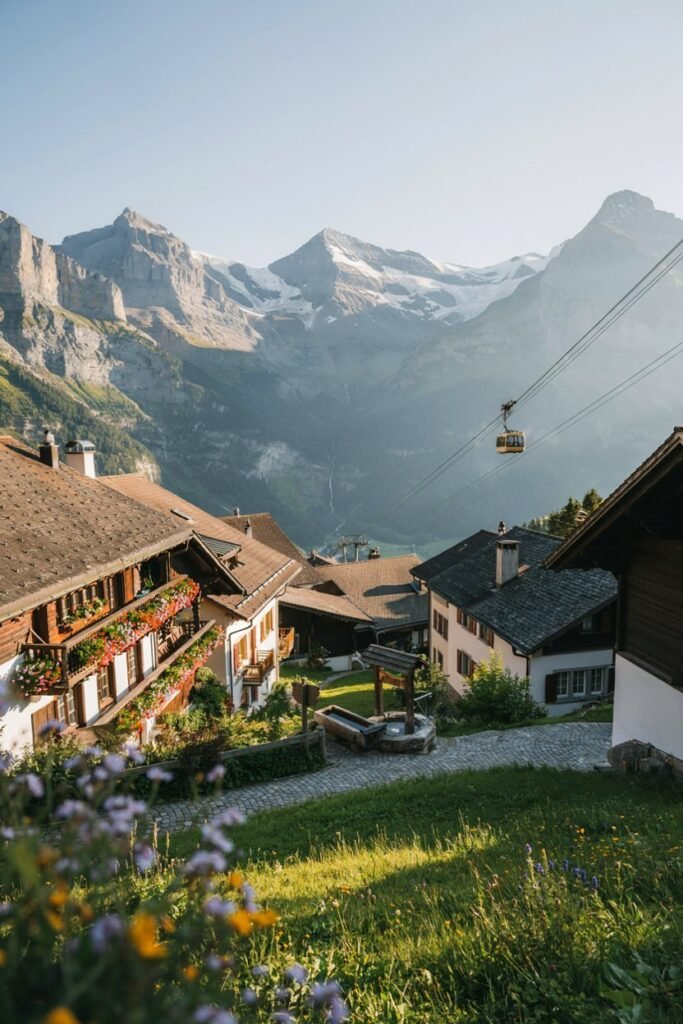
A cable car operator mentioned that Mürren has no road access at all, not even a service road, and that literally everything in the village, from groceries to construction materials, arrives by cable car or the small mountain railway.
Why you will love it
Mürren sits on a high ledge above the Lauterbrunnen valley, car-free and reachable only by cable car or rail, with direct views of the Eiger, Mönch, and Jungfrau across the valley.
It’s quieter and less developed than Zermatt or Grindelwald, with a genuinely remote feel despite being easy to reach.
How to locate it
Mürren sits above Lauterbrunnen, reached by cable car from Stechelberg via Gimmelwald, or by a scenic rail and cable car route through Grütschalp. No private cars are permitted.
Where to stay
- Budget: Simple guesthouses and a mountain hostel keep costs down.
- Mid range: Chalet-style hotels along the village’s main path offer solid comfort with valley views.
- Luxury: A historic mountain hotel with panoramic Eiger views is the village’s signature splurge.
What to do
- Walk the village’s car-free paths and take in views across the valley
- Ride the cable car up to the Schilthorn for a 360-degree panorama
- Hike toward Gimmelwald or further along the high valley trail
- Visit in winter for skiing on quieter, less crowded terrain than nearby resorts
Best time to visit: June to September for hiking, or December to March for a quieter ski alternative to Grindelwald.
Safety tip: Weather at this elevation shifts quickly, so check cable car and trail status before heading up to the Schilthorn.
10. Château-d’Œx
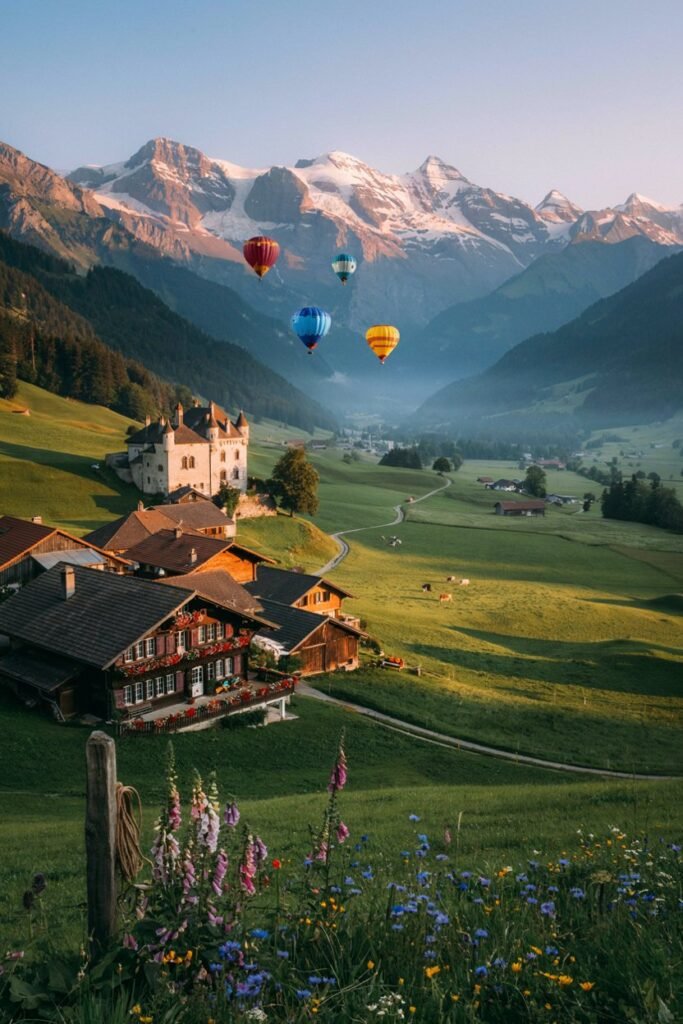
A hot air balloon pilot prepping for a morning flight mentioned that this valley hosts one of the world’s most famous ballooning events every January, drawn specifically by the unusually stable air currents created by the surrounding mountains, a detail that had nothing to do with scenery and everything to do with physics, though the view certainly didn’t hurt.
Why you will love it
Château-d’Œx sits in a quiet Alpine valley in the Vaud region, known for its wooden chalets, dairy farming tradition, and status as one of the world’s premier hot air ballooning destinations.
It’s a lower-key alternative to the more famous Bernese Oberland villages, with a genuine working alpine character.
How to locate it
Château-d’Œx sits in the canton of Vaud, reached by train from Montreux via the Golden Pass line, one of Switzerland’s most scenic rail routes. The village center is small and walkable.
Where to stay
- Budget: Guesthouses and simpler chalets on the edge of the village keep costs down.
- Mid range: Traditional chalet-style hotels within the village put you close to the center and rail station.
- Luxury: A handful of upscale countryside hotels nearby add spa amenities and valley views.
What to do
- Take a hot air balloon flight over the valley, weather permitting
- Visit the village’s cheese dairy for a tasting
- Ride the Golden Pass scenic rail line to or from Montreux
- Hike into the surrounding hills for valley and mountain views
Best time to visit: Late January for the balloon festival, or June to September for hiking and mild weather.
Safety tip: Balloon flights are entirely weather dependent and can be cancelled last minute, so avoid scheduling one on your final morning in case it needs to be rescheduled.
How to Travel Between These Villages
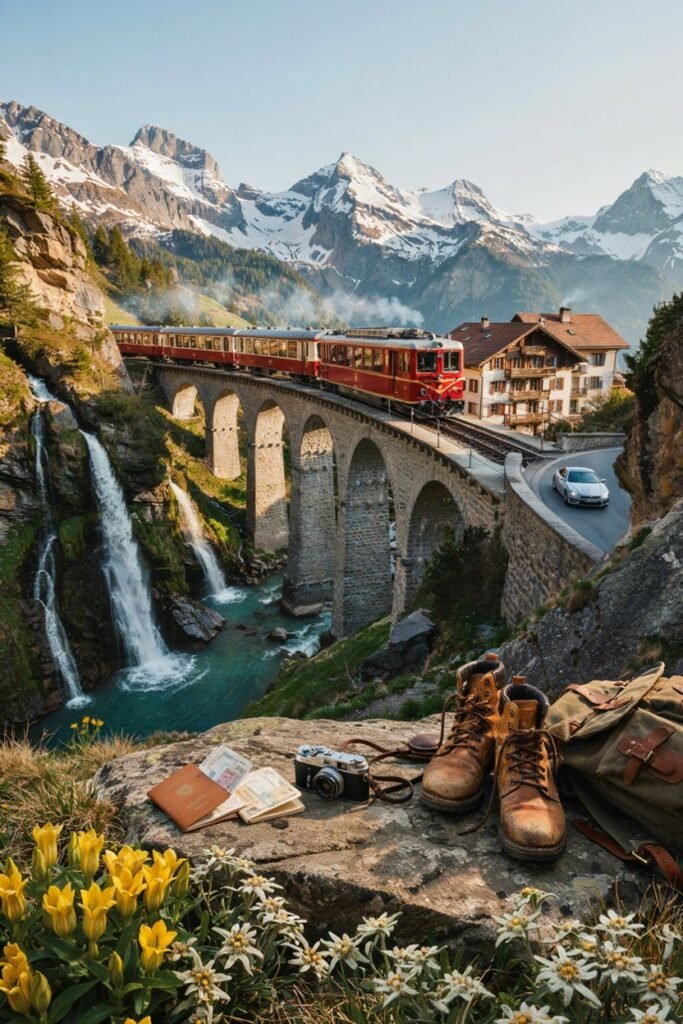
Switzerland’s train network connects nearly every village on this list, and a Swiss Travel Pass is worth pricing out if you’re visiting more than three or four stops, since it covers trains, many cable cars, and boats in one ticket.
Interlaken works well as a central base for the Bernese Oberland cluster, Lauterbrunnen, Grindelwald, Gimmelwald, and Mürren, since all four are reachable within an hour.
Zermatt and Gruyères sit further from that cluster and are best treated as separate legs rather than day trips, given the additional travel time involved.
A car helps for reaching Appenzell, Stein am Rhein, and Château-d’Œx efficiently, though all three are also reachable by train with a bit more time built in.
Book cable cars and mountain railways in peak summer and ski season in advance where possible, since some routes, especially toward Jungfraujoch and the Schilthorn, sell out or run reduced capacity during the busiest weeks.
Common Mistakes to Avoid
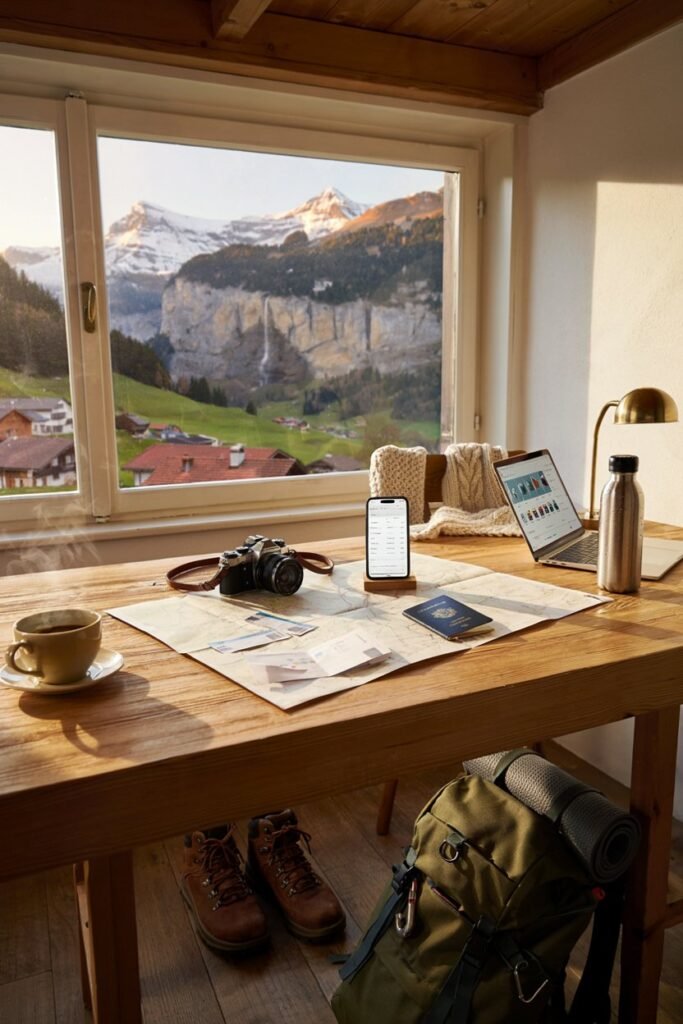
Trying to cover too much ground in too few days is the most common one. These villages reward slowing down, and the travel time between regions is often longer than a map suggests once cable cars and connections are factored in.
Skipping advance bookings for peak-season cable cars and popular mountain excursions, then arriving to find reduced availability or long queues.
Underestimating altitude and weather changes, especially on high cable car rides to spots like Jungfraujoch, Gornergrat, or the Schilthorn.
Bringing a car into car-free villages like Zermatt, Mürren, or Gimmelwald, only to find nowhere to park it once you arrive.
Visiting in peak summer without accounting for higher prices and crowded trains, especially on the Bernese Oberland’s most popular routes.
FAQ
Do I need a car to visit these villages?
Not necessarily. Switzerland’s train and cable car network reaches nearly everywhere on this list, and several villages, including Zermatt, Mürren, and Gimmelwald, don’t allow private cars at all. A car helps most for Appenzell, Stein am Rhein, and Château-d’Œx.
How many villages can I realistically visit in one trip?
Four to six well-paired villages over a week to ten days works better than trying to see all ten. Grouping by region, the Bernese Oberland cluster as one stretch, for instance, cuts down significantly on travel time.
Is Switzerland an expensive place to plan this kind of trip?
Yes, generally more expensive than most of Europe, particularly for accommodation and dining. Shoulder season travel and a Swiss Travel Pass can help offset some of the cost.
What’s the best time of year to visit?
June through September for the fullest hiking and sightseeing conditions, or December through March if skiing is part of the plan. Shoulder months bring thinner crowds but some cable cars and trails may run reduced schedules.
Are these villages walkable?
Most are, and several are entirely car-free by design. Expect some uneven cobblestone streets and elevation changes, so comfortable, sturdy shoes matter throughout.
Final Thought
What separates these ten villages from a simple postcard is that almost none of them built their look for visitors in the first place. Zermatt banned cars before tourism made it fashionable.
Gimmelwald stayed a working farm village on purpose. Gruyères named a cheese after itself centuries before anyone thought to photograph the town. The fairy tale quality here isn’t a costume, it’s just what was already there, protected long enough to still be standing.
Pick a few that fit the trip you actually want, mountain drama, pastoral quiet, medieval architecture, and build in enough time to slow down in each one.
Switzerland’s villages don’t need much help looking like something out of a story. They mostly just need you to stop moving long enough to notice.