
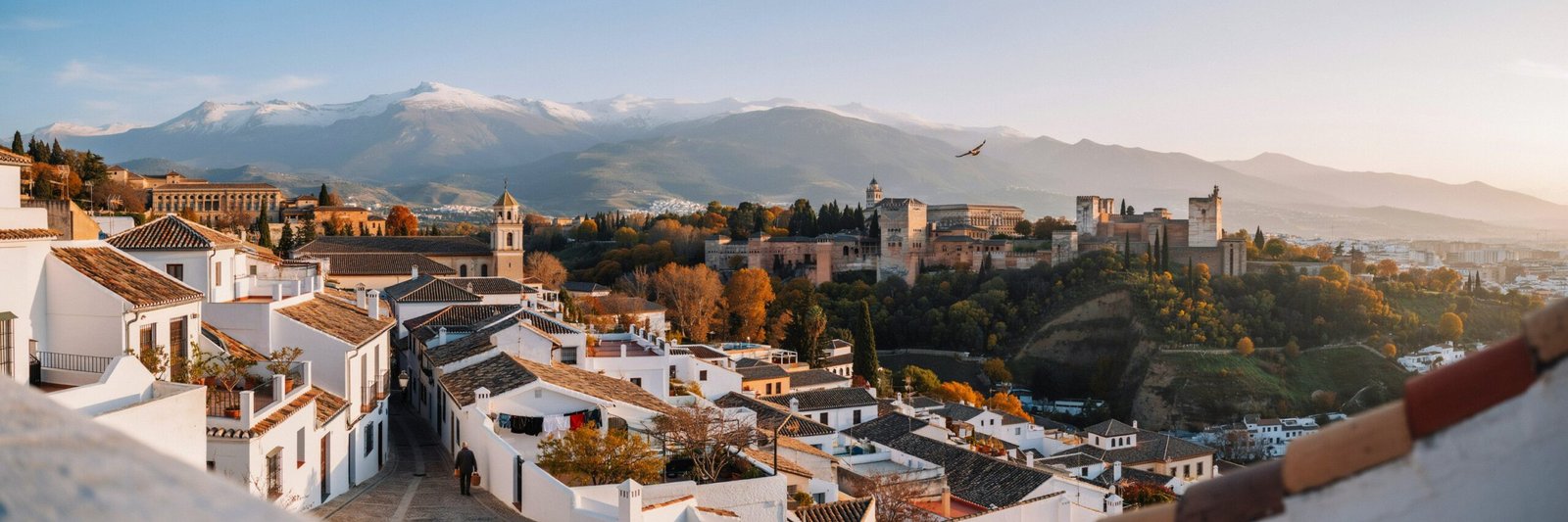
Granada sits at the foot of the Sierra Nevada mountains, and the combination of snow capped peaks, Moorish architecture, and a genuinely lively tapas culture makes it one of the most rewarding stops in Andalusia, often mentioned in the same breath as Seville and Córdoba, yet somehow still a little less crowded than either.
The city’s defining feature, the Alhambra, draws visitors from around the world, but Granada has far more layered history than one palace complex alone.

This guide covers the five best places to actually visit once you’re there, along with the practical details to plan around each one.
If you’re building a broader Andalusia trip, my prettiest village in Spain: Frigiliana guide covers another strong nearby stop worth pairing with Granada, and my 15 best places to visit in France guide is worth a look if you’re continuing on to a broader European trip.
Quick Guide to Granada’s Best Spots
| Place | Best For | Ideal Time Needed |
|---|---|---|
| The Alhambra | History, architecture | 3 to 4 hours |
| Albaicín and Mirador de San Nicolás | Views, wandering | 2 to 3 hours |
| Generalife Gardens | Gardens, peaceful walking | 1 to 1.5 hours |
| Sacromonte | Flamenco, cave houses | 2 to 3 hours |
| Granada Cathedral and Royal Chapel | History, architecture | 1 to 1.5 hours |
1. The Alhambra
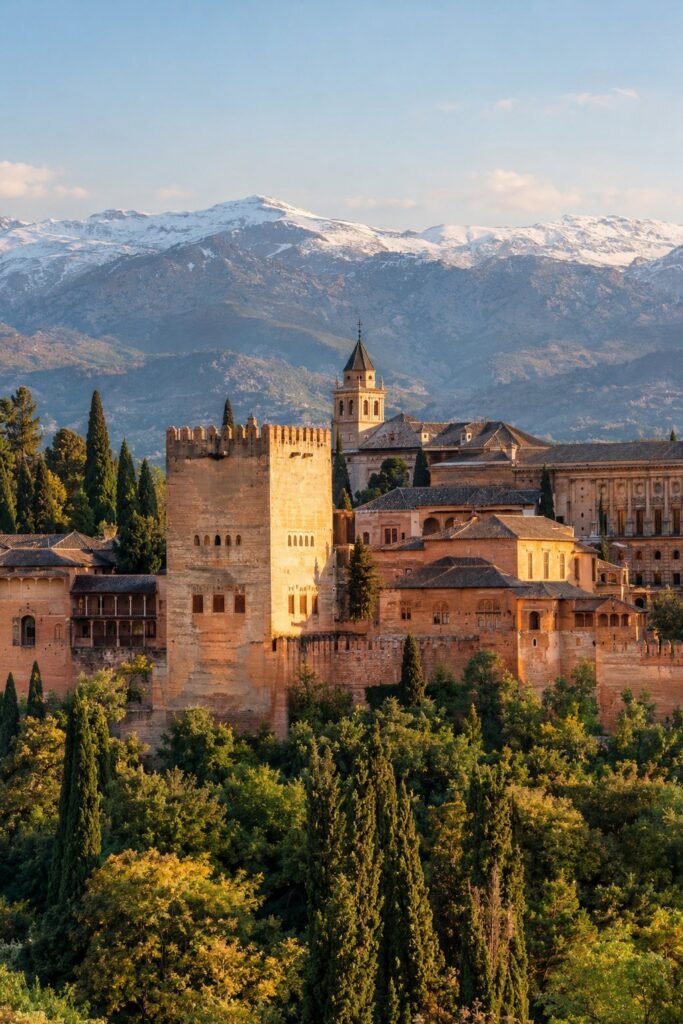
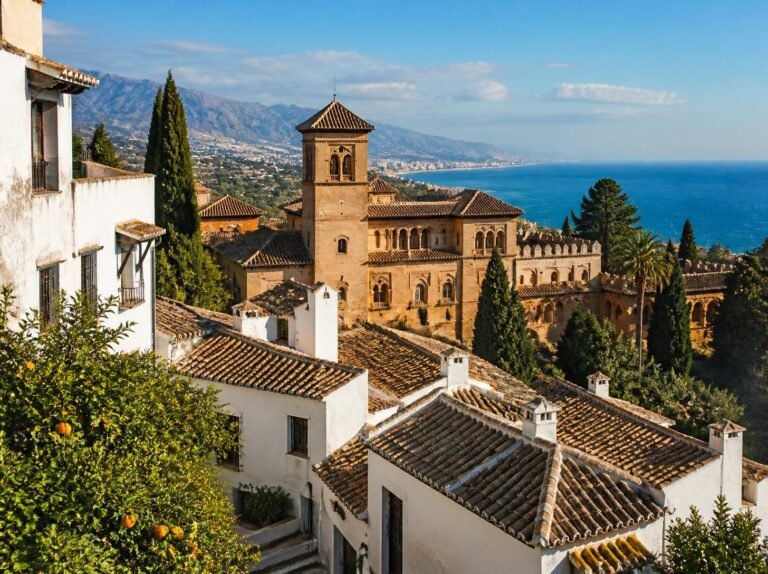
Why visit. This sprawling palace and fortress complex, built primarily during the Nasrid dynasty’s rule over Granada, represents one of the finest surviving examples of Islamic architecture in the world, with intricately carved stucco walls, reflecting pools, and courtyards that still feel genuinely magical centuries later.
How to get there. The Alhambra sits on a hill above the city center, reachable by a scenic uphill walk of about twenty to thirty minutes from the Albaicín, or a short bus ride if you’d rather save your legs for inside the complex itself.
Where to stay. Staying in the Albaicín or near Plaza Nueva puts you within an easy walk of the Alhambra entrance.
Getting around. Once inside, the complex is explored entirely on foot, and it’s genuinely large enough that comfortable shoes make a real difference over a multi-hour visit.
Fun things to do. Walk through the Nasrid Palaces, the most ornately decorated section of the complex, explore the Alcazaba fortress for sweeping views over the city, and take your time in the Partal Gardens, a quieter, less crowded section many visitors rush past.
Budget tips. Book tickets online well in advance, since they’re timed entry and frequently sell out days or even weeks ahead during peak season, and a general ticket covering the full complex is more cost effective than piecing together separate entries.
Safety tips. Wear comfortable shoes given the extensive walking and some uneven historic flooring, and keep an eye on your entry time slot, since arriving late to the Nasrid Palaces specifically can mean losing your reserved access entirely.
2. Albaicín and Mirador de San Nicolás
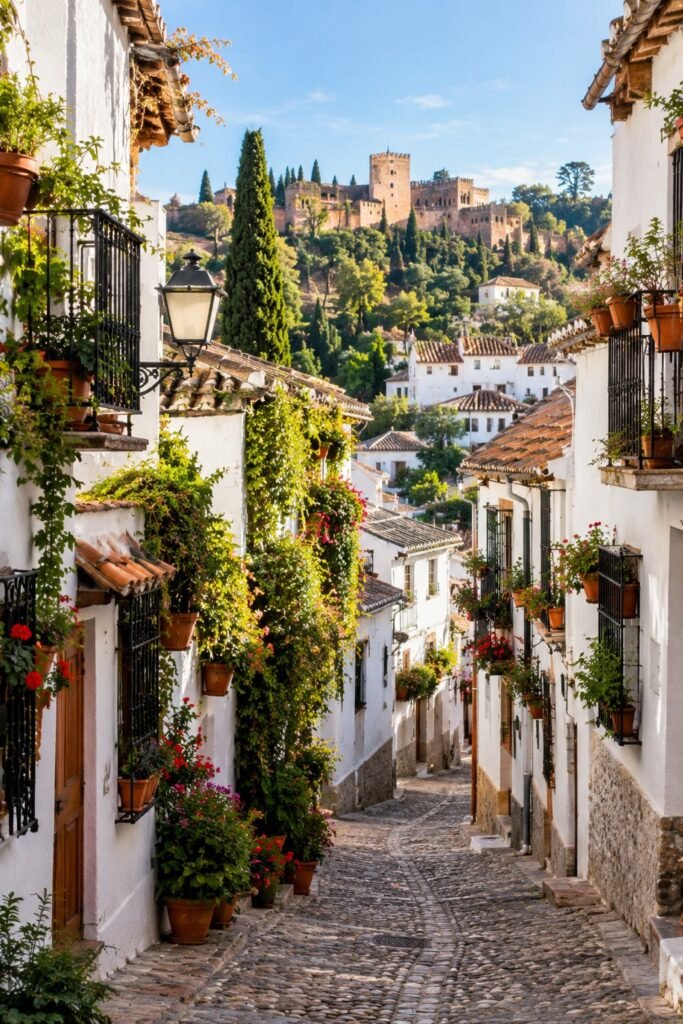
Why visit. Granada’s old Moorish quarter, a UNESCO recognized neighborhood of narrow, winding whitewashed streets climbing a hillside opposite the Alhambra, offers some of the most atmospheric wandering in the entire city, culminating at a viewpoint with one of the best panoramas in Spain.
How to get there. The Albaicín sits just across the river valley from the Alhambra, an easy walk from the city center, though the streets climb steeply in places.
Where to stay. Staying within the Albaicín itself offers a genuinely atmospheric base, with small guesthouses tucked into the historic streets.
Getting around. This neighborhood is explored entirely on foot, and getting a little lost among the winding streets is honestly part of the experience.
Fun things to do. Wander without a fixed plan, let the streets lead you upward, and time your visit to reach the Mirador de San Nicolás around sunset, when the view across to the Alhambra with the Sierra Nevada mountains behind it is genuinely one of the best sights in the country.
Budget tips. Wandering the Albaicín and visiting the Mirador cost nothing, making this one of the best free experiences in Granada.
Safety tips. The Mirador de San Nicolás draws crowds at sunset, so keep an eye on your belongings in the busier moments, and wear sturdy shoes given the steep, occasionally uneven cobblestone streets throughout the neighborhood.
3. Generalife Gardens
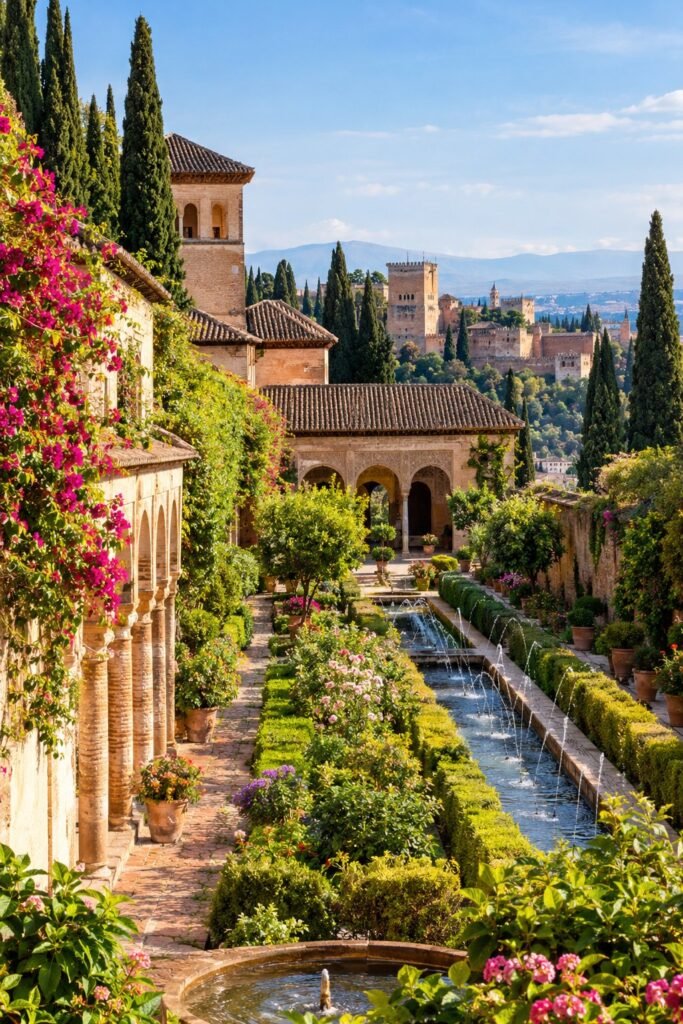
Why visit. Just beside the Alhambra, these terraced gardens served as the Nasrid rulers’ summer retreat, built around reflecting pools, fountains, and carefully manicured greenery that offer a quieter, more peaceful contrast to the grandeur of the palace itself.
How to get there. The gardens sit within the broader Alhambra complex, a short walk from the main palace area.
Where to stay. The same accommodation options near the Alhambra or in the Albaicín work well for visiting the gardens.
Getting around. Entirely walkable, with paved paths winding through the terraced garden levels.
Fun things to do. Walk the Patio de la Acequia, the garden’s signature long reflecting pool lined with fountains, and take time to simply sit and enjoy the peaceful atmosphere rather than rushing through on the way to somewhere else.
Budget tips. Entry is typically included with a standard Alhambra ticket, so there’s no need to pay separately if you’re already visiting the main complex.
Safety tips. Pathways can be slightly uneven in places, though this is generally one of the easiest, lowest risk stops on this entire list.
4. Sacromonte
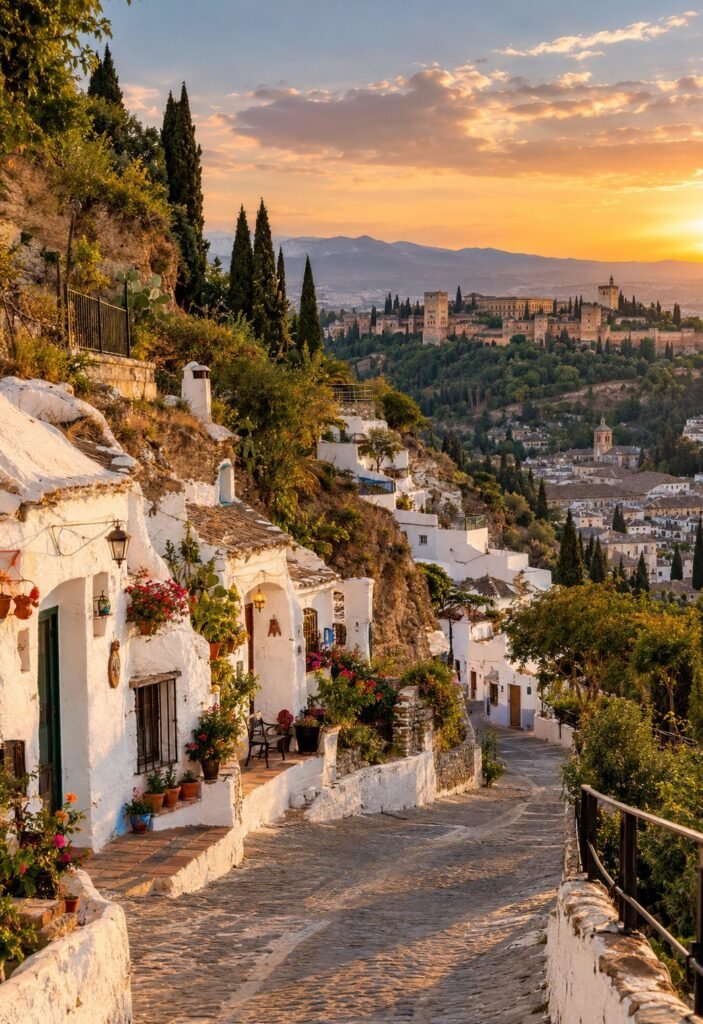
Why visit. This hillside neighborhood, historically home to Granada’s Romani community, is known for its cave houses carved directly into the hillside, many of which still function as homes, flamenco venues, or small museums today.
How to get there. Sacromonte sits just beyond the Albaicín, reachable by a continued uphill walk or a short bus ride from the city center.
Where to stay. Most visitors base themselves in the Albaicín or central Granada and visit Sacromonte as a half day excursion rather than staying overnight.
Getting around. The neighborhood’s main street follows the hillside, with cave dwellings visible along the way, best explored on foot.
Fun things to do. Visit the Sacromonte Caves Museum to learn about the neighborhood’s history and traditional cave architecture, and catch an evening flamenco show in one of the cave venues, a genuinely intimate and atmospheric way to experience this uniquely Granadan art form.
Budget tips. Wandering the main street and viewing the cave exteriors costs nothing, though a flamenco show or museum entry both carry a modest fee worth budgeting for.
Safety tips. The walk up to Sacromonte involves a real, sustained incline, so pace yourself, and stick to the main street rather than wandering into areas that are clearly private residences.
5. Granada Cathedral and Royal Chapel

Why visit. Built on the site of the city’s former main mosque following the Christian reconquest, Granada Cathedral is a massive Renaissance structure, while the adjoining Royal Chapel holds the tombs of Ferdinand and Isabella, the Catholic Monarchs whose reign marked a pivotal turning point in Spanish history.
How to get there. Located in the heart of the city center, an easy walk from most central Granada accommodation.
Where to stay. Staying anywhere in central Granada puts you within easy reach of the cathedral.
Getting around. Centrally located and entirely walkable from the surrounding streets and plazas.
Fun things to do. Tour the cathedral’s soaring Renaissance interior, and visit the adjoining Royal Chapel to see the elaborate tombs and a small museum of royal artifacts, including Isabella’s personal art collection.
Budget tips. A combined ticket covering both the cathedral and Royal Chapel typically offers better value than separate admission to each.
Safety tips. This is a low risk, straightforward indoor visit, with no particular safety concerns beyond general awareness in the surrounding busy plaza.
How to Get to Granada
Federico García Lorca Granada Airport has limited direct flights, so many travelers fly into Málaga and continue by bus or rental car, roughly a two hour drive, or take a train from Madrid or Seville, both well connected to Granada’s main station.
Best Time to Visit Granada
Spring and fall both offer comfortable temperatures for walking the Alhambra and the Albaicín’s steep streets without the intensity of Granada’s summer heat, which can be genuinely significant given the city’s inland, lower elevation setting relative to the nearby mountains.
Winter brings the added appeal of nearby Sierra Nevada skiing for travelers interested in combining a city visit with mountain time.
Frequently Asked Questions
How many days do you need in Granada? Two to three days covers all five of these places comfortably, with an extra day worth adding if you want to include a day trip into the surrounding Sierra Nevada mountains.
Do I need to book Alhambra tickets in advance? Yes, strongly recommended, since tickets are timed entry and regularly sell out, especially during spring and summer.
Is Granada walkable? Yes, the historic center, Albaicín, and Alhambra are all within walking distance of each other, though the terrain is hilly enough that comfortable shoes matter.
Is Granada expensive to visit? It runs more affordable than Spain’s larger cities like Madrid or Barcelona, making it a strong value stop within a broader Andalusia itinerary.
What is Granada famous for free tapas? Yes, Granada is well known for a long standing tradition of serving a free tapa with every drink ordered at many of the city’s bars, a genuine local custom worth building a meal or two around.
Final Thoughts
Granada rewards travelers who give it more than a rushed day trip to the Alhambra alone.
Between the palace’s intricate architecture, the Albaicín’s winding streets, and a glass of local wine paired with a free tapa as the sun sets over the Sierra Nevada, this is a city built for slow, unhurried exploration rather than a checklist visit.
Book your Alhambra tickets early, wear good shoes, and leave room to simply wander.