
The things that make a trip frustrating are rarely the big things. It’s almost never the flight itself or the destination.
It’s the tangled charger cable at the bottom of your bag, the toiletry bottle that leaked into everything else, the dead phone battery right when you need your boarding pass, or the suitcase that somehow becomes an unsolvable puzzle every time you try to find one specific shirt.
After taking trips where I packed too much and trips where I wished I had brought a few extra essentials, I have become much more selective about the accessories I actually carry. You don’t need dozens of gadgets to travel comfortably.
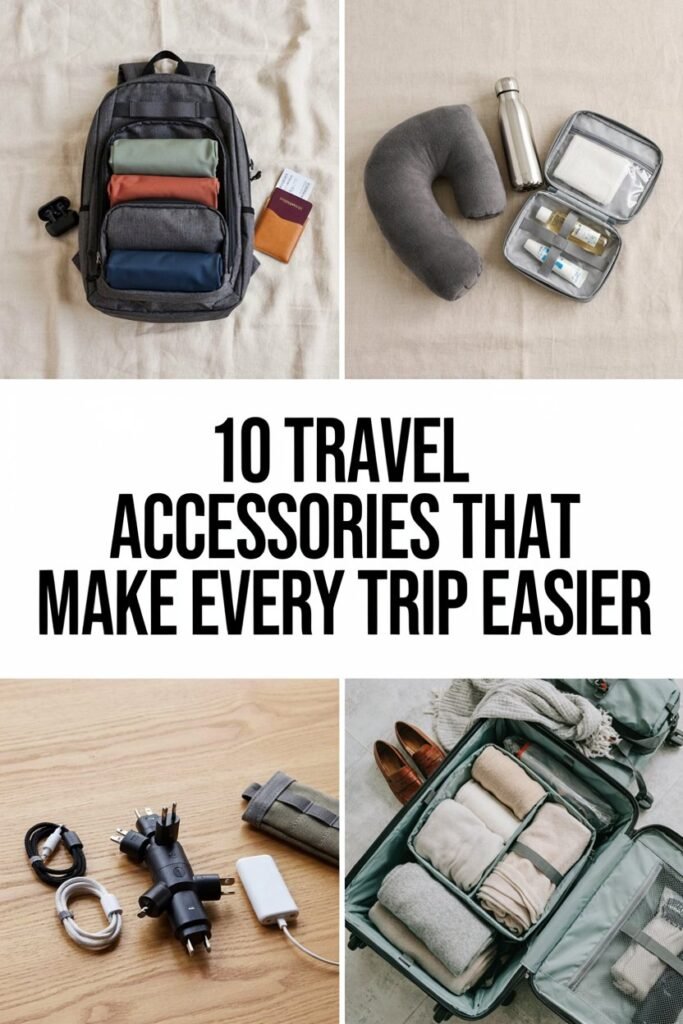
You need a handful of practical items that genuinely earn their space in your luggage, solve a real problem, and get used on nearly every trip rather than sitting untouched in a drawer between vacations.
This guide walks through ten of those, why each one actually matters, and just as importantly, who doesn’t need to bother with it. If you’re building out a broader packing list alongside this one, my airport carry on essentials guide covers the adjacent ground worth reviewing too.
Disclaimer
This post may contain affiliate links. As an Amazon Associate, I earn from qualifying purchases at no additional cost to you. I only recommend travel accessories that I genuinely find useful for making trips more organized and comfortable. Product availability, prices, airline rules, and travel requirements can change, so always check current details before your trip.
Amazon Shopping List You Need
- BAGAIL Compression Packing Cubes – I use these to keep my suitcase organized and make better use of my packing space.
- Anker Portable Power Bank – I always carry one so my phone stays charged while I am out exploring.
- HERO RFID Blocking Travel Wallet – I use this to keep my passport, cards, and important travel documents together.
- Apple AirTag – I love using one to keep track of my luggage when traveling.
- Neck Travel Pillow – I always pack one for long flights, road trips, and airport waits.
- Reusable Travel Water Bottle – I use this to stay hydrated without constantly buying bottled water.
- Universal Travel Adapter – I never travel internationally without one for charging my devices.
What Makes a Travel Accessory Worth Packing?
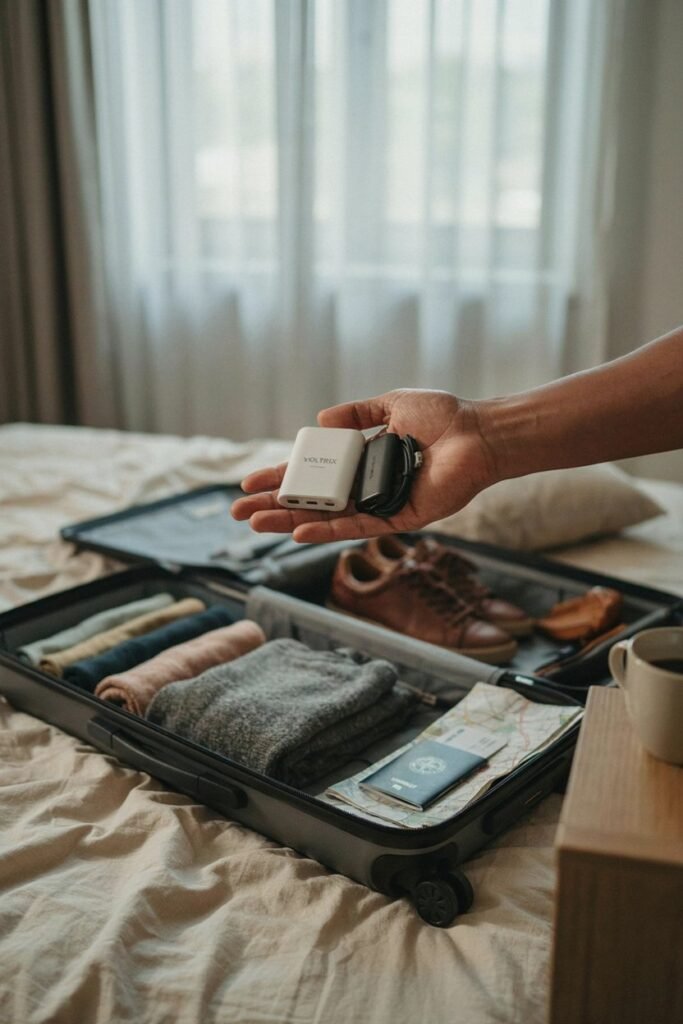
Not every travel gadget that shows up in your social media feed deserves a spot in your bag.
A good travel accessory should genuinely save space rather than add to the clutter, solve a specific, real problem you’ve actually run into, stay lightweight enough that you don’t think twice about packing it, work across different types of trips rather than one narrow use case, hold up to repeated travel without falling apart after a couple of uses, and be simple enough to use without a learning curve at five in the morning at the airport.
Not every traveler needs all ten items on this list. Someone doing a carry-on-only weekend trip has a very different set of priorities than someone packing for a two week international trip with checked luggage. The goal here is helping you figure out which of these actually solve problems you have, not convincing you to buy all ten.
1. Packing Cubes
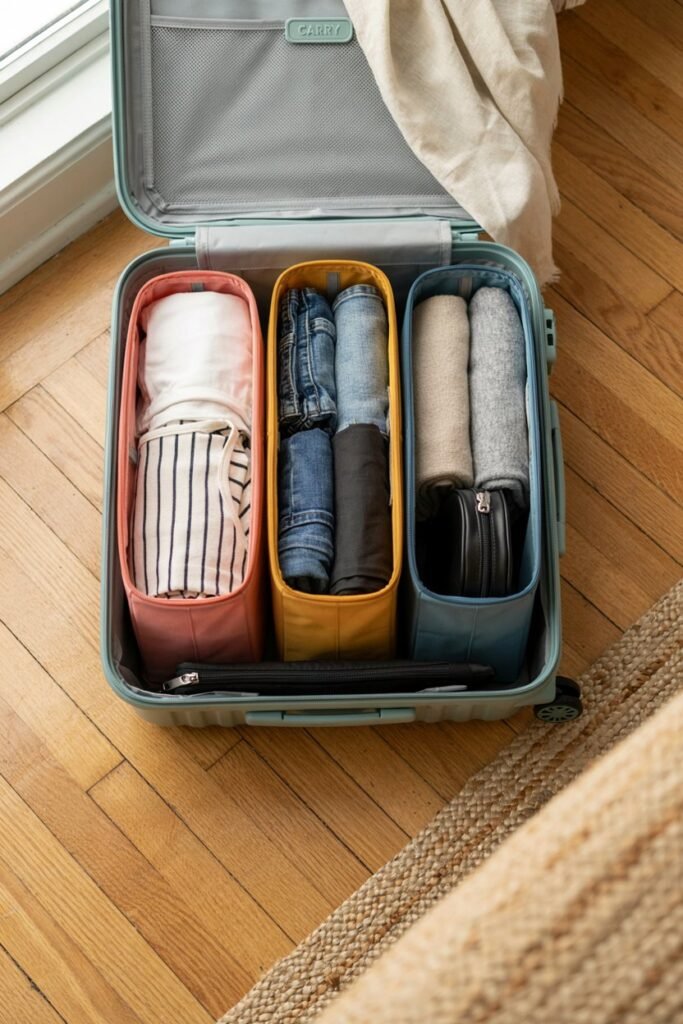
The problem. Clothes become an unsolvable mess in a suitcase, and finding one specific shirt somehow means pulling out half your wardrobe in the process.
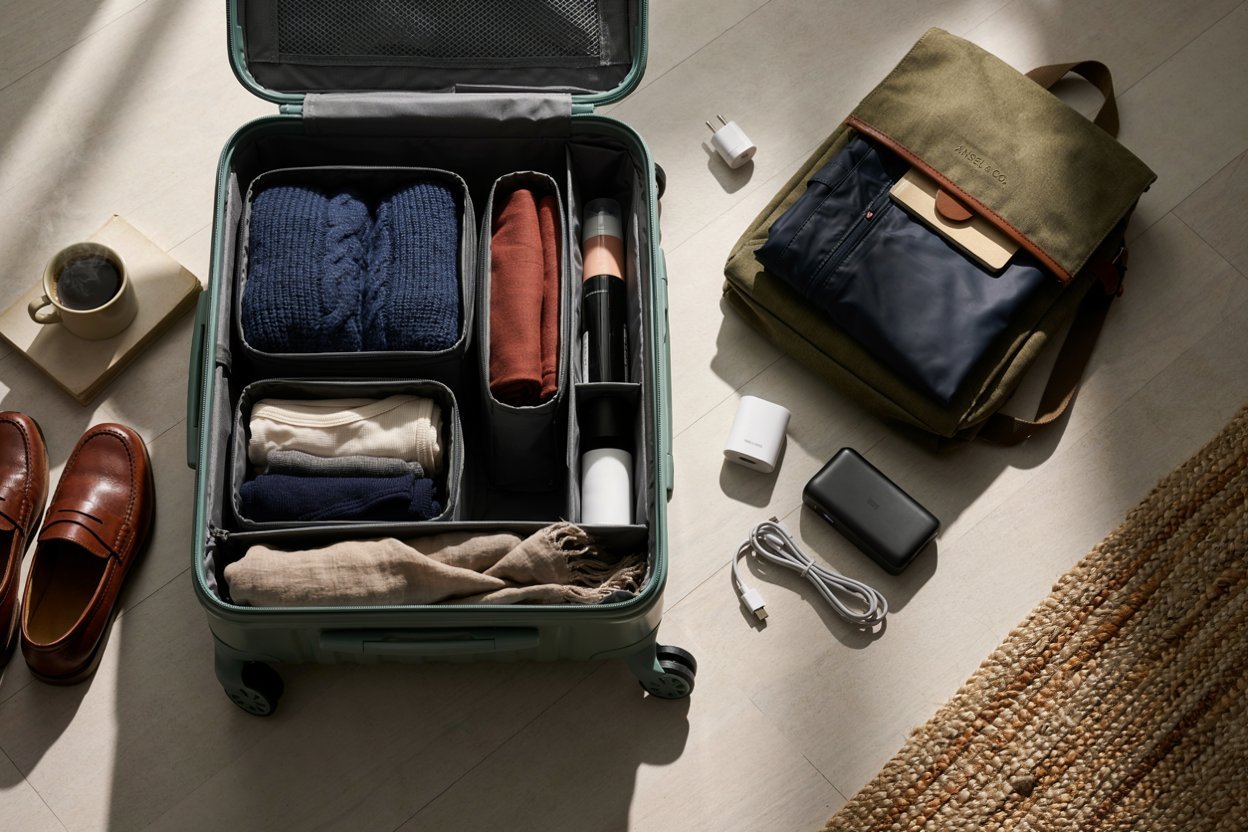
Why I like them. Packing cubes divide your clothing into manageable, visible sections, which makes both packing and unpacking noticeably faster, especially at the end of a long travel day when you really don’t want to dig through a chaotic bag.
Best for. Long trips, family travel where multiple people’s clothes end up in one shared suitcase, carry-on-only travelers trying to maximize space, and anyone who packs the same way every time and wants that system to actually work.
What to look for. Lightweight material that doesn’t add unnecessary bulk, strong zippers that won’t fail after a few trips, a range of sizes for different clothing categories, and compression cubes specifically if you’re trying to fit more into a limited carry-on space.
My practical tip. Use different cubes for actual categories, tops in one, bottoms in another, rather than just splitting random clothes evenly between them. If you’ve ever opened your suitcase looking for one shirt and somehow ended up pulling out half your wardrobe, this is one of the simplest fixes available.
2. Portable Power Bank
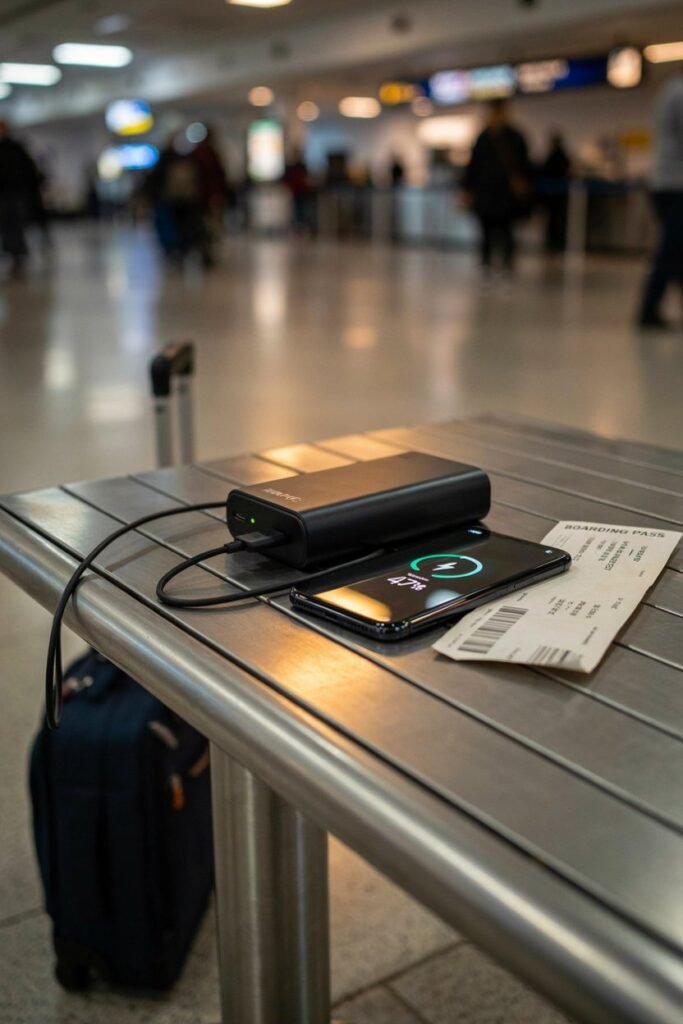
The problem. A dead phone at exactly the wrong moment, mid navigation, right as your boarding pass needs to be scanned, or in the middle of an unfamiliar city, ranks among the most stressful small problems a trip can throw at you.
Why I like it. Between maps, boarding passes, photos, ride-sharing apps, and general communication, a phone gets used constantly while traveling in a way it usually doesn’t at home, and battery life simply doesn’t keep up without backup power.
Best for. Basically every type of trip, though it matters most on travel days with long layovers, limited outlet access, or heavy phone reliant navigation.
What to look for. A capacity that matches how many charges you actually need, since a bigger capacity also means more weight, and multiple ports if you’re regularly charging more than one device.
My practical tip. Check your airline’s specific rules on power banks before you fly, since batteries have carriage requirements that vary by capacity and airline, and a power bank confiscated at security is a genuinely bad way to start a trip.
3. Universal Travel Adapter
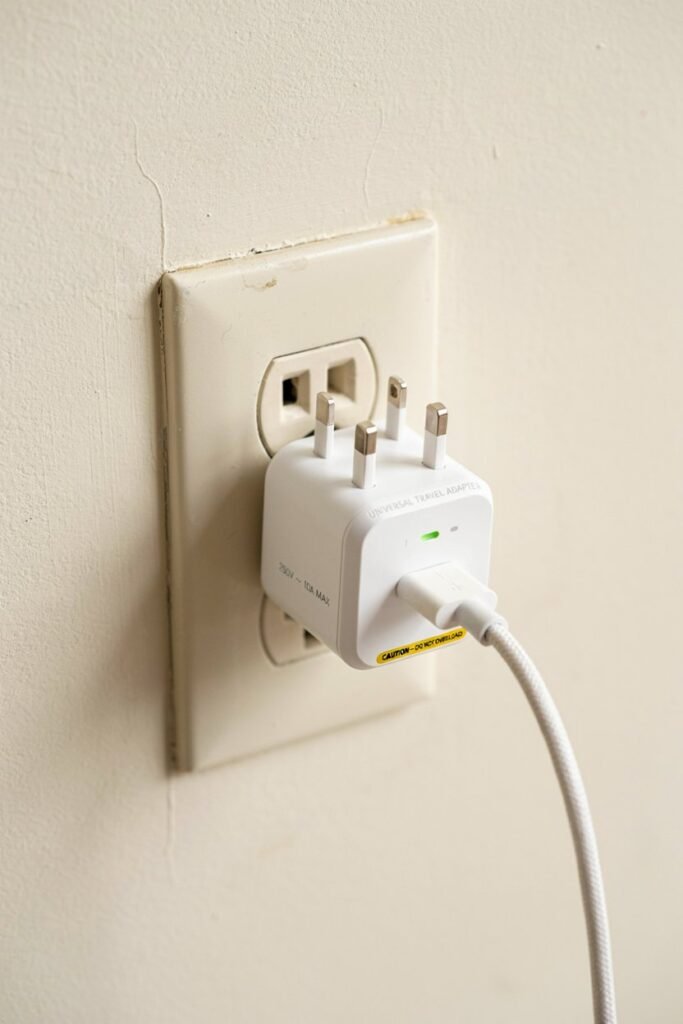
The problem. Plug shapes and outlet designs differ significantly around the world, and showing up with the wrong plug means a phone, laptop, or camera that simply can’t charge.
Why I like it. One universal adapter covers the plug shape differences across most countries, removing the need to research and buy a separate adapter for every single destination.
Best for. International travel specifically, since domestic trips within your own country obviously don’t require this at all.
What to look for. Confirm whether you need voltage conversion in addition to a plug adapter, since these solve different problems.
An adapter changes the physical plug shape, while a voltage converter changes the actual electrical output, and most modern electronics, including phones and laptops, handle a range of voltages automatically, though some older or higher wattage devices do not.
Also check whether the adapter includes USB or USB-C ports built in, which reduces how many separate items you need to pack.
My practical tip. Buy this well before your trip and test it at home with your actual devices rather than assuming it will simply work once you land somewhere with a different outlet standard.
4. Hanging Toiletry Bag
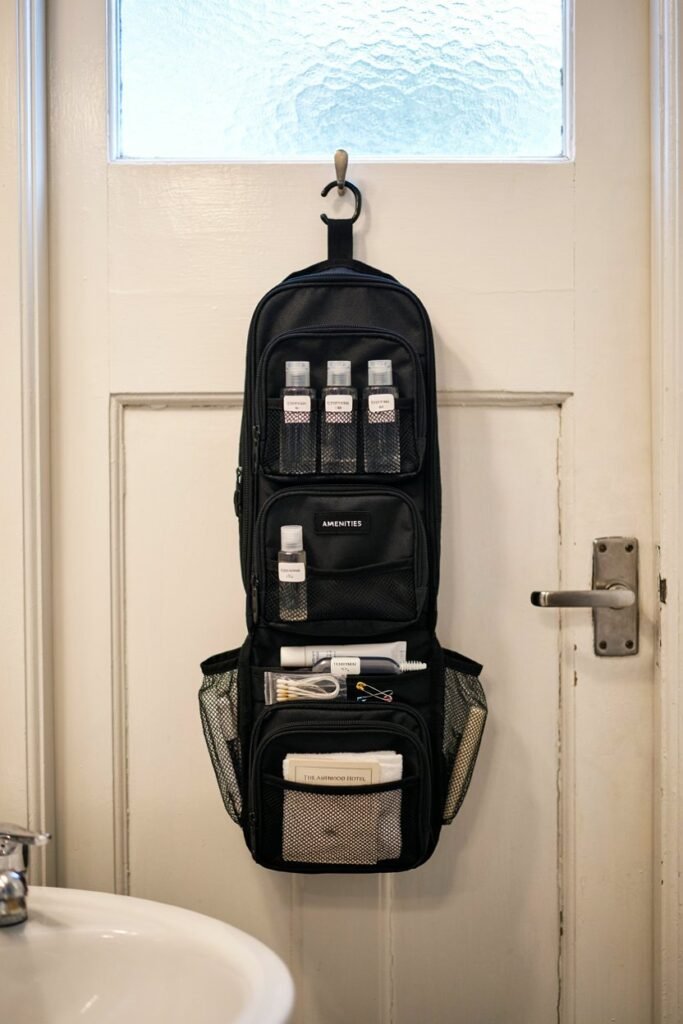
The problem. Digging through a flat toiletry bag balanced awkwardly on a small hotel bathroom counter, or worse, the edge of a sink, gets old after about one trip.
Why I like it. A hanging design gives you an actual organized surface in bathrooms that often don’t have much counter space to begin with, which matters a lot more in hostels, RVs, cruise cabins, and older hotel rooms than people expect going in.
Best for. Longer trips with more toiletries to manage, and any travel style involving smaller or shared bathrooms where counter space is genuinely limited.
What to look for. Multiple compartments to keep items separated and visible, water resistant material in case something leaks, and a sturdy hook that actually holds the bag’s weight once it’s loaded up.
My practical tip. Pack heavier items toward the bottom of the bag so it hangs evenly rather than pulling awkwardly to one side.
5. Reusable Water Bottle
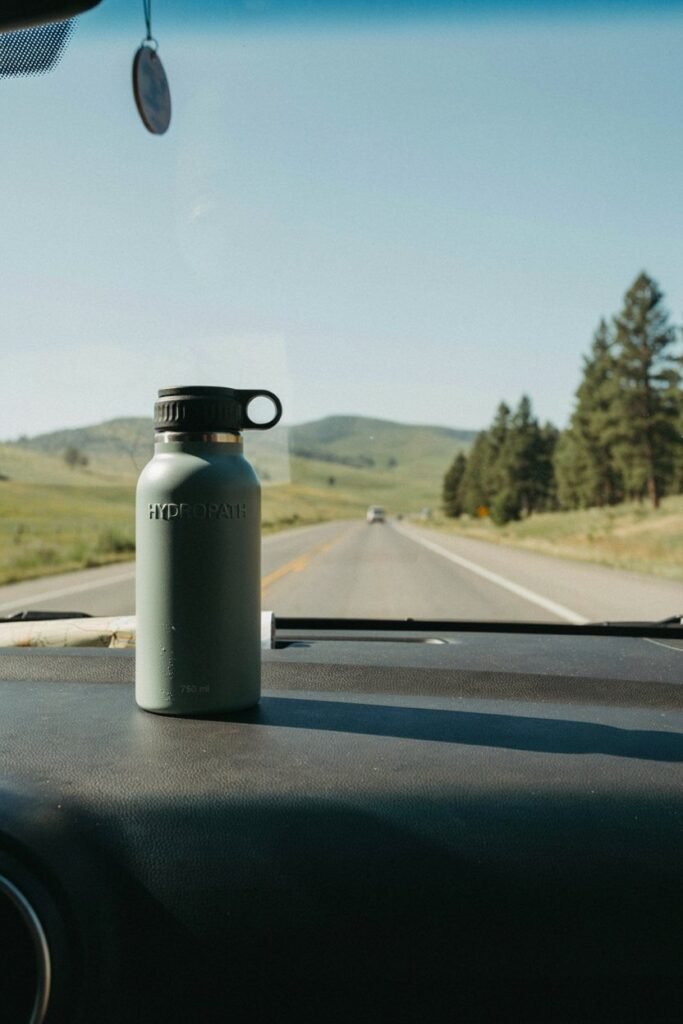
The problem. Staying hydrated during travel days is harder than it should be, especially once you factor in the cost and waste of repeatedly buying bottled water throughout a trip.
Why I like it. A reusable bottle earns its keep during long airport waits, road trips, hiking, sightseeing days, and basically any long stretch of time away from easy access to a kitchen or fridge.
Best for. Road trips and hiking especially, though genuinely useful on nearly every kind of trip.
What to look for. A size that balances hydration needs against actual bag space, and an insulated option if keeping drinks cold matters to you throughout a hot day of sightseeing.
My practical tip. Empty your bottle before airport security if required at your specific airport, then refill it at a water fountain once you’re through, rather than trying to bring a full bottle through the checkpoint and having it confiscated.
6. Travel Cable Organizer
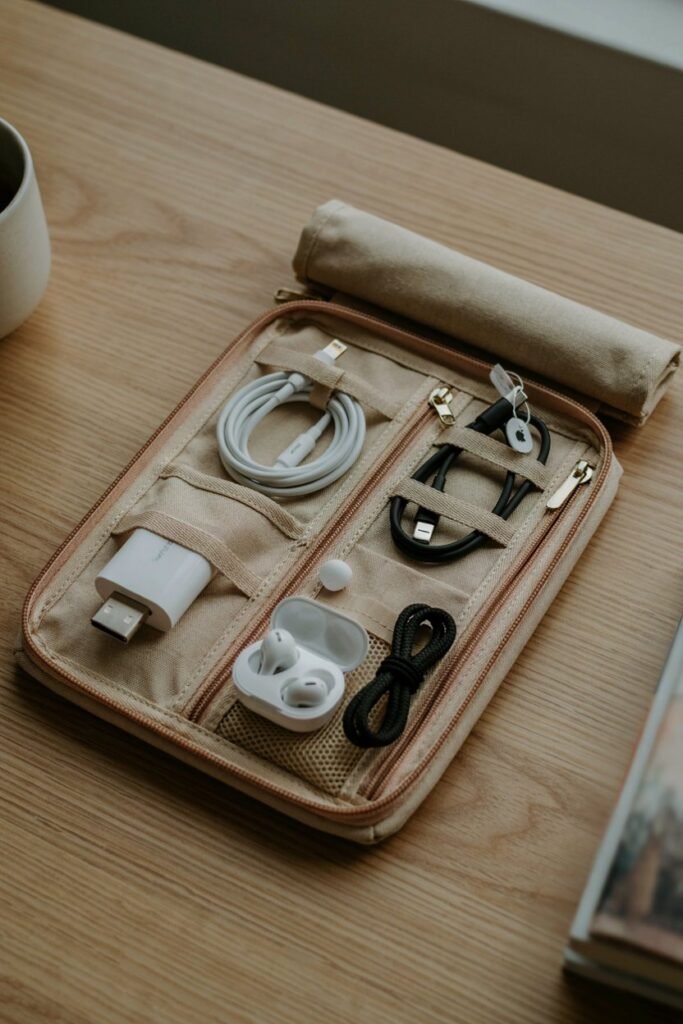
The problem. Phone cables, watch chargers, earbuds, camera cables, power bank cables, and a laptop charger all thrown loose into one bag pocket create a tangled mess that takes ten frustrating minutes to sort through every single time you need one specific cable.
Why I like it. A dedicated organizer keeps every cable visible and separated, which sounds minor until you’ve actually lived with the alternative for a few trips.
Best for. Anyone traveling with more than one or two electronics, which at this point is most travelers.
What to look for. Several small, separate sections rather than one large pouch, since throwing every cable into a single big compartment just recreates the same tangled mess in a slightly smaller space.
My practical tip. I prefer organizers with multiple small sections specifically because a single large pouch usually just creates another version of the same problem rather than actually solving it.
7. Lightweight Travel Daypack

The problem. Dragging a full suitcase around while sightseeing simply doesn’t work, and carrying loose items in your hands or pockets all day gets old fast.
Why I like it. A proper daypack gives you somewhere to keep the essentials, water, snacks, a camera, a light jacket, while you’re actually out exploring, without hauling your entire suitcase along for the ride.
Best for. Sightseeing heavy trips, day hikes, and city exploration where you need your hands free and somewhere secure to keep valuables.
What to look for. Lightweight construction that doesn’t add unnecessary bulk to your main luggage, comfortable straps for extended wear, some water resistance, security features like a hidden pocket or lockable zippers if you’re concerned about theft, a dedicated laptop or tablet compartment if relevant, and ideally a foldable design that packs down small when not in use.
My practical tip. If you’re combining this with any hiking during your trip, my best camping gear under $50 guide covers several other inexpensive items worth pairing with a good daypack.
8. Luggage Scale
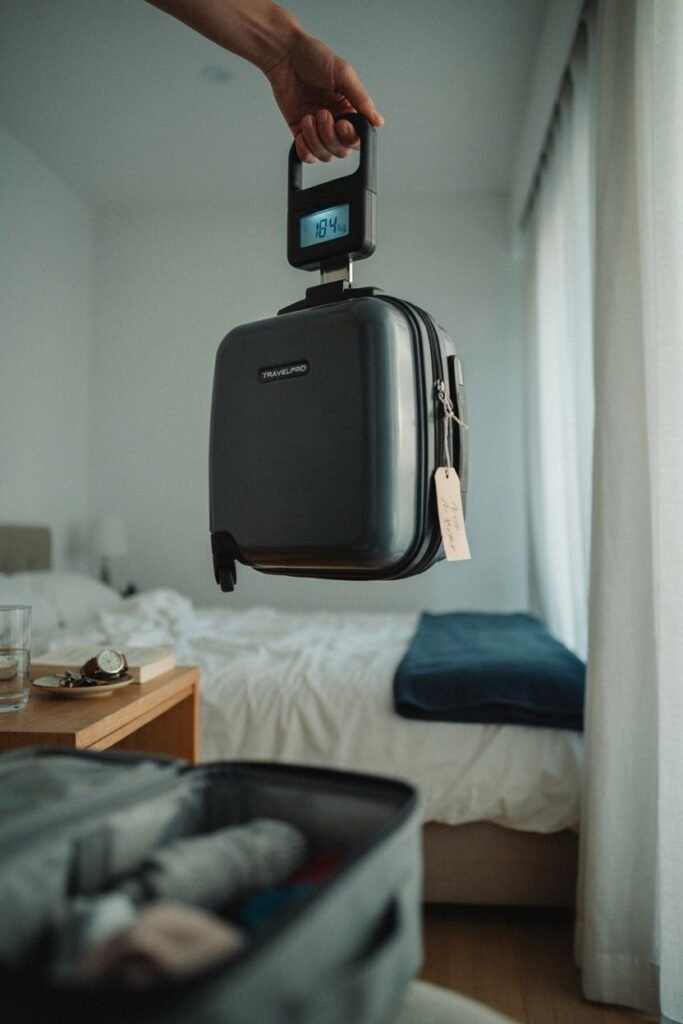
The problem. Overweight luggage fees at the airport are one of the most avoidable, and most annoying, costs a traveler can run into.
Why I like it. A small handheld scale lets you check your bag’s weight before you ever leave home, and again before heading to the airport for a return flight, rather than finding out at check-in that you’re over the limit.
Best for. Checked bags specifically, international travel with stricter weight limits, and anyone doing significant shopping during their trip who needs to check their bag’s weight again before flying home.
What to look for. A simple, accurate digital scale that’s small and light enough to not be a hassle to pack in the first place.
My practical tip. Weigh your suitcase after packing, not before, since those last few purchases and souvenirs can make a surprisingly big difference by the end of a trip.
9. Travel Laundry Bag
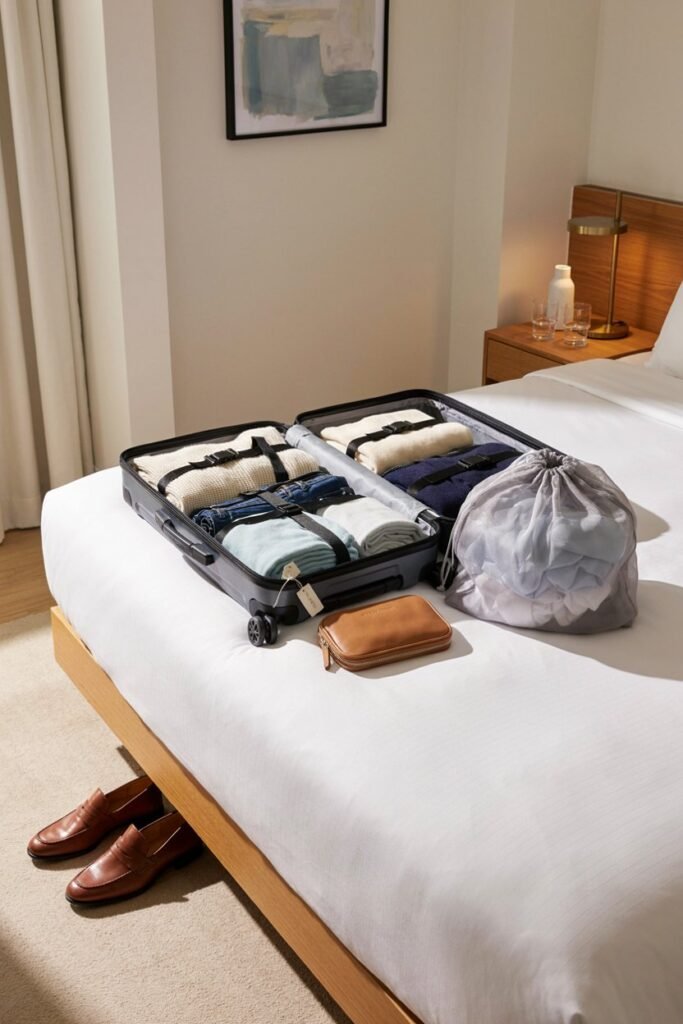
The problem. Dirty clothes mixed in with clean ones turns an entire suitcase into something you don’t want to open by the middle of a longer trip.
Why I like it. A dedicated laundry bag keeps worn clothes separated from clean ones, keeps shoes away from clothing, and gives you somewhere temporary to stash a damp swimsuit or towel without it touching everything else.
Best for. Longer trips especially, where the ratio of dirty to clean clothes shifts significantly by the later days.
What to look for. A washable, reusable bag rather than relying on disposable plastic bags that tend to tear or get lost along the way.
My practical tip. A mesh laundry bag also works well if you need to do a load of laundry at some point during a longer trip, since it can go straight into a washing machine without needing to be unpacked item by item first.
10. Comfortable Travel Pillow
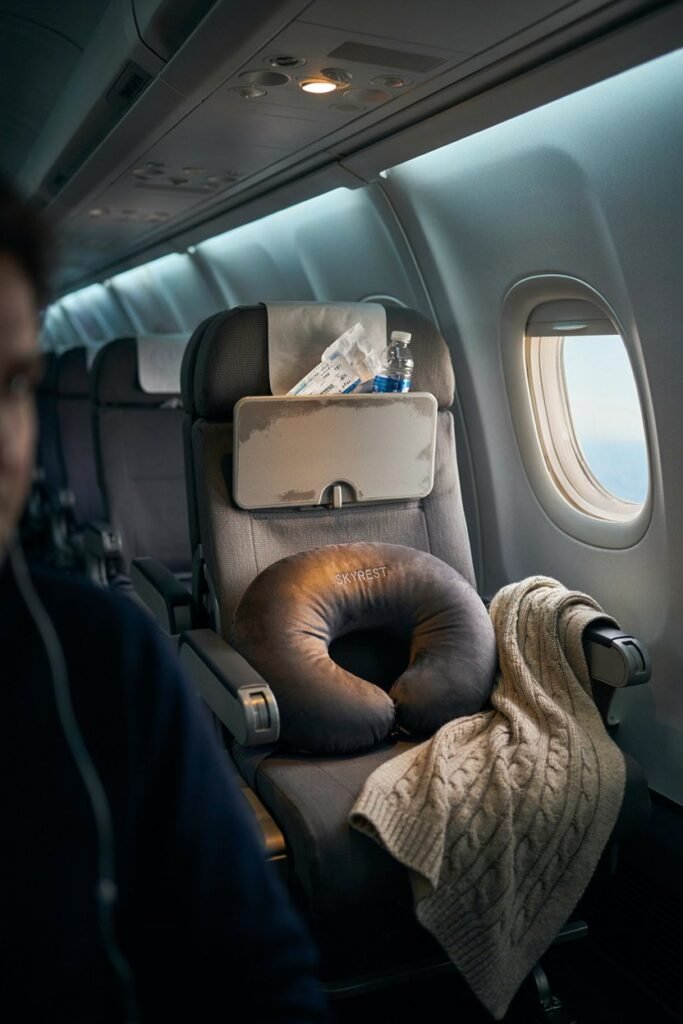
The problem. Long flights, bus journeys, train rides, and road trips all involve stretches of time where actual rest matters, and a stiff neck the next morning isn’t a great way to start a vacation.
Why I like it. A decent travel pillow supports your neck well enough to actually get some real rest during a long travel day, rather than the awkward, repeatedly-jolted-awake version of sleep most people settle for.
Best for. Long haul flights, overnight bus or train journeys, and long stretches of road trip passenger time.
What to look for. Genuine neck support rather than just a soft shape, a size that doesn’t take up excessive luggage space, compressibility for packing, a washable cover given how much use it gets, and ideally a strap that lets it attach to a bag or suitcase handle for easier carrying.
My practical tip. Not everyone gets along with travel pillows, and that’s a completely reasonable preference. If you’ve tried a few styles and none of them work for you, there’s no need to force it just because it’s a common recommendation.
Which Travel Accessories Do You Actually Need?
For a short weekend trip. Packing cubes, a power bank, a cable organizer, and a daypack cover most of what you’ll actually need without overpacking accessories for a trip that’s only a couple of days long.
For international travel. A universal adapter, a power bank, packing cubes, a luggage scale, and a toiletry bag address the specific challenges that come with longer, cross-border trips, from different outlets to stricter luggage weight limits.
For road trips. A reusable water bottle, a daypack, a power bank, and a travel laundry bag suit the different rhythm of a road trip, where you’re likely stopping at multiple places and need supplies on hand rather than packed away in a trunk. My fall camping packing list for the USA and best road trips in America guides both go into more detail if a road trip is specifically what you’re planning.
For carry-on-only travel. Packing cubes, a cable organizer, a toiletry bag, and a lightweight daypack help you make the most of genuinely limited space without needing to check a bag at all.
What I Wouldn’t Waste Luggage Space On
Not every travel gadget that looks appealing online is actually worth carrying.
I’d skip anything that’s bulky relative to how often you’d actually use it, single-purpose items that only solve one narrow problem you may not even run into, anything heavy enough to eat into your luggage weight allowance for minimal benefit, fragile gadgets that don’t hold up well to the general wear and tear of travel, and products that just duplicate something you already own and could easily bring instead.
A specialized gadget that solves a problem you don’t actually have isn’t a bargain just because it was cheap or looked clever in a video.
Comparison at a Glance
| Travel Accessory | Best For | Space Needed | Most Useful On |
|---|---|---|---|
| Packing cubes | Organization | Low | Long trips |
| Power bank | Keeping devices charged | Low | Travel days |
| Universal adapter | International travel | Low | Overseas trips |
| Hanging toiletry bag | Bathroom organization | Medium | Longer trips |
| Water bottle | Hydration | Medium | Road trips and sightseeing |
| Cable organizer | Electronics | Low | Any trip |
| Travel daypack | Day exploring | Low | Sightseeing |
| Luggage scale | Avoiding baggage fees | Very low | Checked luggage |
| Laundry bag | Separating clothes | Very low | Longer trips |
| Travel pillow | Comfort | Medium | Long journeys |
Frequently Asked Questions
What are the most useful travel accessories? Packing cubes and a portable power bank tend to earn their space on nearly every type of trip, since they solve two of the most universal travel frustrations, disorganized luggage and dead batteries.
What travel accessories should I pack for an international trip? A universal adapter, a power bank, packing cubes, and a luggage scale address the specific challenges that come with crossing borders, different outlets, longer flights, and stricter weight limits.
Are packing cubes really worth it? For most travelers, yes, particularly on longer trips or when packing for more than one person, since the organizational benefit compounds the more you’re actually digging through your bag during a trip.
Do I need a universal travel adapter? Only for international travel to countries with different outlet shapes than your own, and even then, check whether your specific electronics also need voltage conversion or just a plug shape adapter.
Can I bring a power bank on a plane? Generally yes, though airlines have specific capacity limits and typically require power banks to be packed in carry-on rather than checked luggage, so check your specific airline’s current policy before you fly.
What should I pack for a long flight? A power bank, a comfortable travel pillow if you use one, a reusable water bottle to fill after security, and a small pouch of essentials like headphones and any medication you might need mid-flight.
How can I avoid overpacking for a trip? Match your accessories to your specific trip type using a framework like the one above, rather than packing every item on a generic list, and be honest with yourself about which gadgets you’ve actually used on past trips versus which ones sounded good but never left your bag.
Final Thoughts
None of these ten accessories are essential for every single trip, and that’s genuinely the point. The goal isn’t to pack all ten just because they made a list somewhere.
It’s figuring out which two, three, or five actually solve problems you run into on your specific kind of travel, whether that’s a carry-on-only weekend trip or a longer international vacation.
Pack the ones that address a real frustration you’ve had before, skip the ones that don’t, and you’ll end up with a genuinely lighter, more useful bag rather than one padded with gadgets you never quite get around to using.
If you’re deciding between a couples getaway and something more budget conscious for your next trip, my cheap weekend getaways for couples guide is worth a look for planning what comes next.