

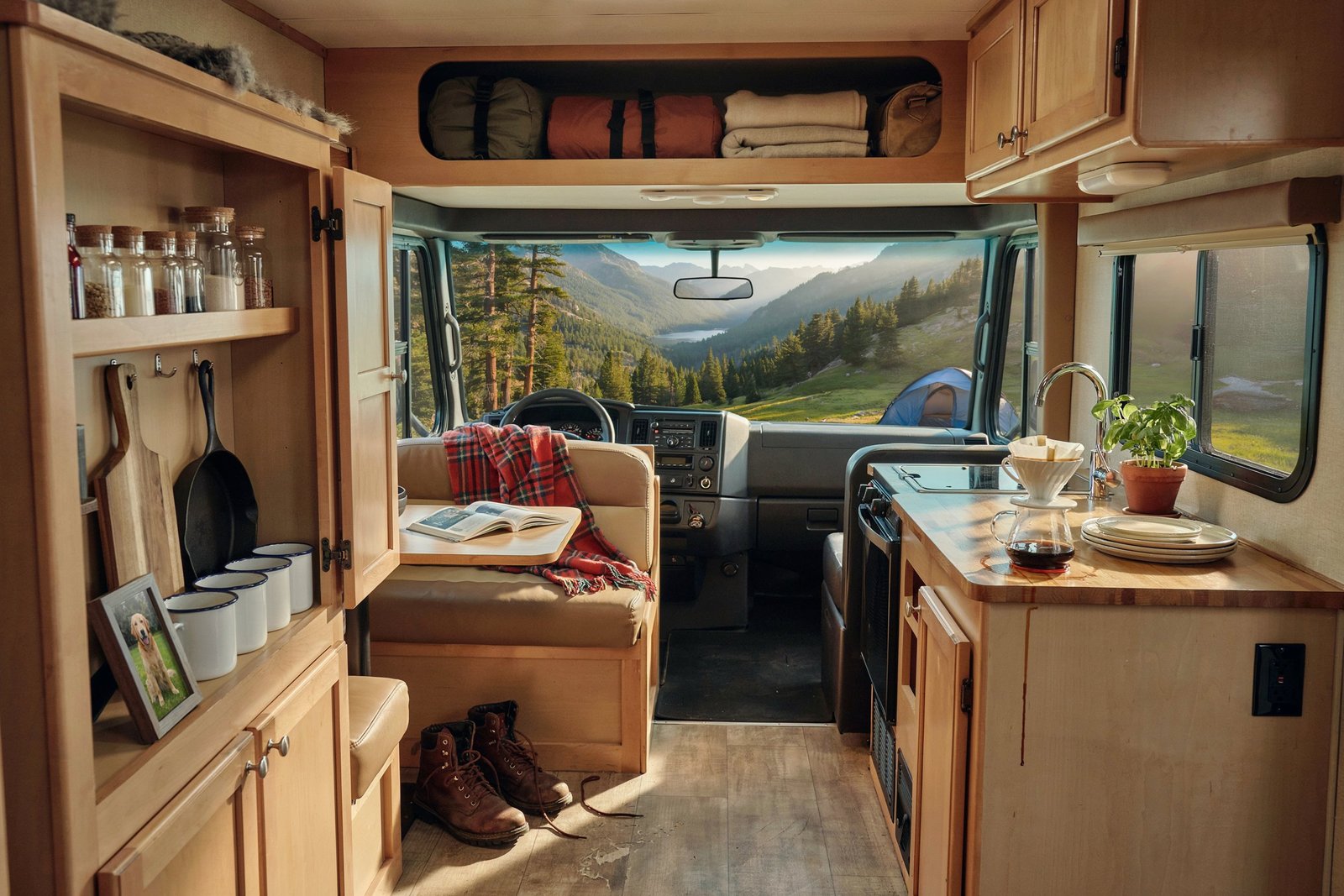
Our first RV trip lasted eleven days, and by day three we’d already realized how much we’d overpacked in some areas and completely underprepared in others.
We had three different phone chargers and not a single extra fuse, four sets of sheets and no proper leveling blocks.
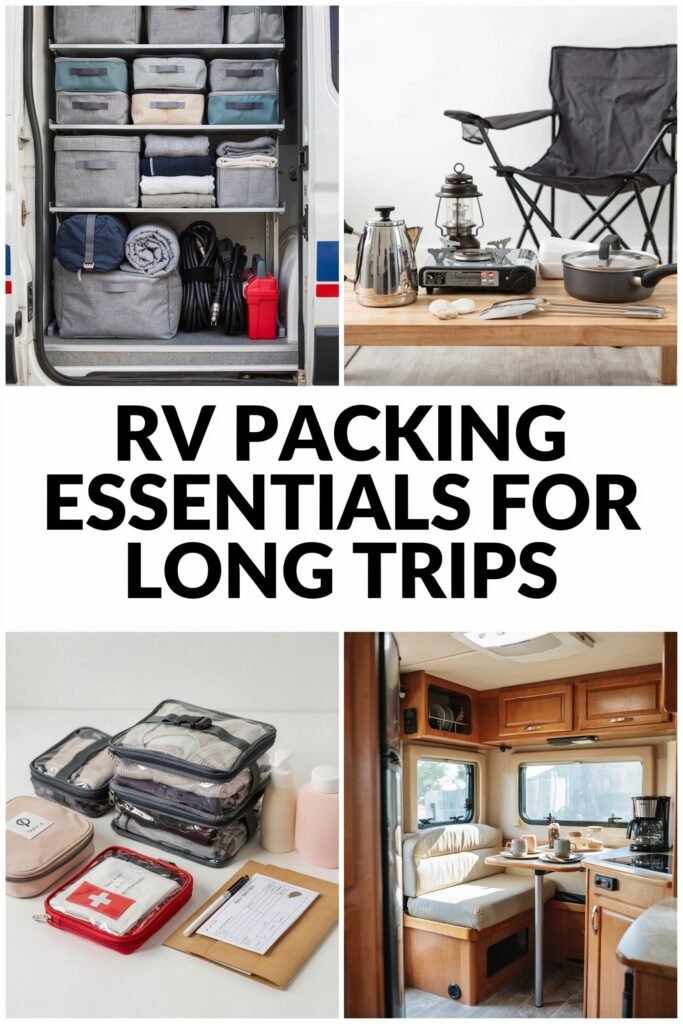
That trip rewrote how we pack for every RV trip since, and this post is the result of that ongoing trial and error.
If you’re planning a longer road trip that might include RV travel along the way, our 10 best road trips in America has route ideas worth pairing with a well packed rig.
Disclaimer
This post may contain affiliate links. As an Amazon Associate, I earn from qualifying purchases at no additional cost to you. I only recommend RV products and travel gear that I genuinely believe make long road trips more comfortable and organized. The information in this article is for general informational purposes only. Always check your RV’s specifications and travel needs before purchasing.
Amazon Shopping List You Need
- BAGAIL Compression Packing Cubes – I always use these to keep clothes organized on long RV trips.
- Collapsible Storage Bins – I love these for maximizing storage without taking up extra space.
- Portable Power Station – I like having reliable backup power for longer adventures.
- RV Sewer Hose Support Kit – One item I never leave behind for hassle free campsite setup.
- Surge Protector for RVs – I always use one to help protect my RV’s electrical system.
- Collapsible Laundry Basket – I find this perfect for keeping dirty clothes contained while traveling.
- First Aid Kit – I always pack one so I’m prepared for unexpected situations.
How I Organized This List
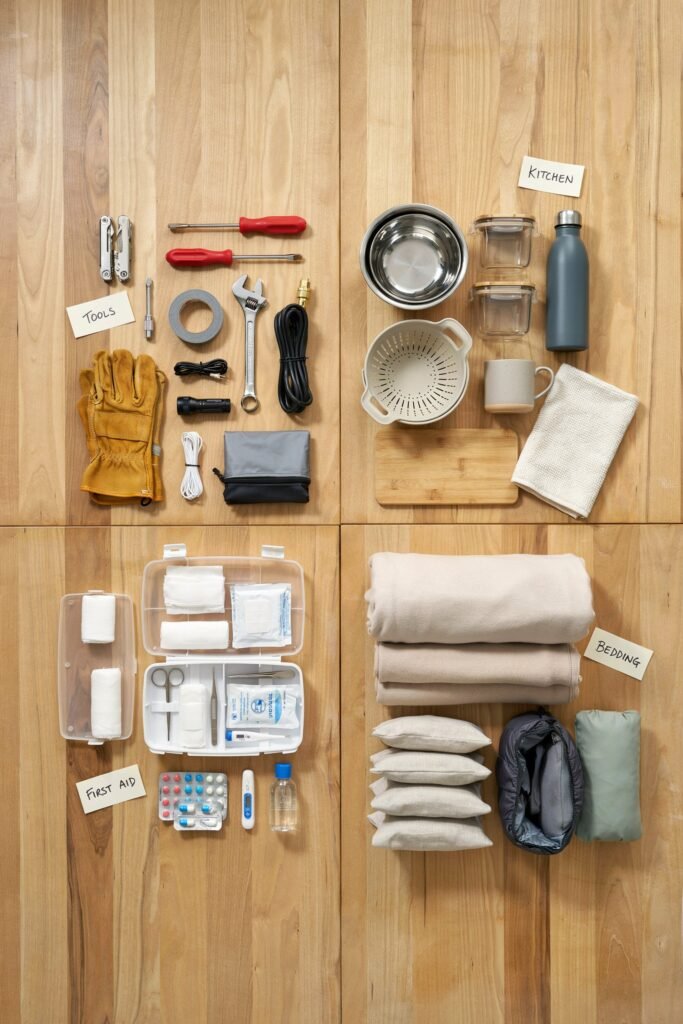
I grouped these RV essentials by category because packing for a camper is much easier when you think about how you will actually use everything on the road, rather than trying to remember one giant list of random items.
- Systems and mechanical essentials, the stuff that keeps the RV actually running
- Kitchen and food storage, adapted for a much smaller space than a home kitchen
- Comfort and sleep, since a bad night’s sleep affects the entire next day on the road
- Safety and emergency preparedness, easy to skip until you actually need it
- Organization tools, the small things that keep a moving home from turning into chaos
With that structure in mind, here’s what’s earned a permanent spot in our RV over multiple long trips.
Systems and Mechanical Essentials
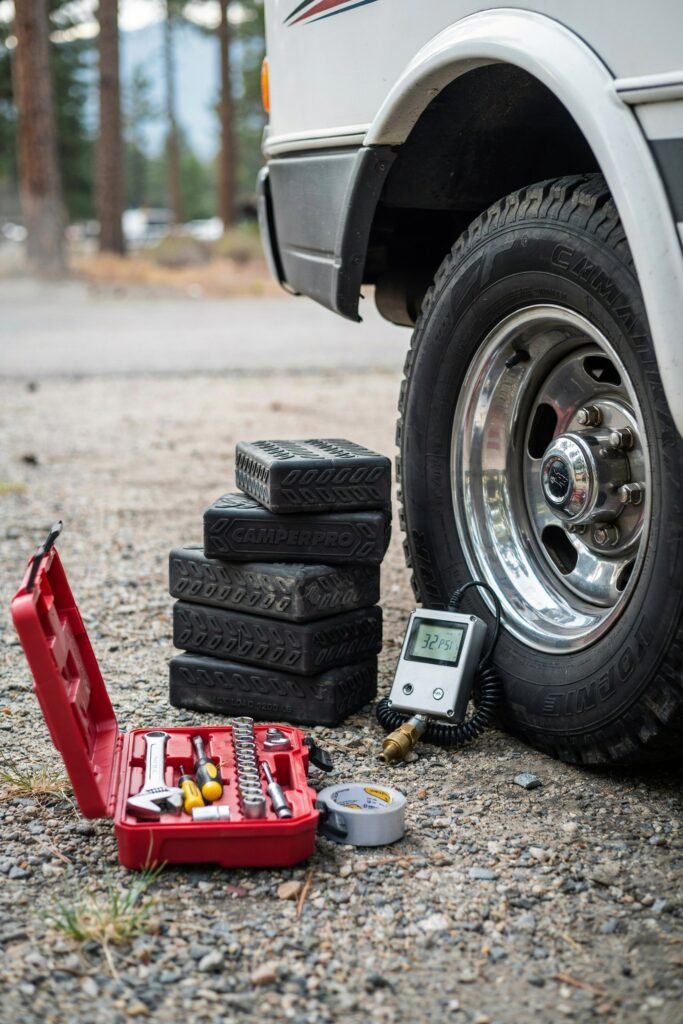
This category taught us the most expensive lessons, mostly because we didn’t take it seriously enough on our first trip.
What we always pack
- A full set of leveling blocks, since an unlevel RV affects everything from your fridge’s cooling efficiency to how well you sleep
- Extra fuses specific to your RV model, purchased before you leave rather than sourced from an unfamiliar auto shop mid trip
- A quality tire pressure monitoring system, which catches slow leaks long before they become a roadside emergency
- A sewer hose kit with extra gloves, kept completely separate from anything else in storage
- Jumper cables and a portable jump starter, since we’ve needed both on separate occasions
Our story with it On that first eleven day trip, a blown fuse knocked out our refrigerator overnight, and we lost an entire cooler’s worth of food before finding a replacement fuse two towns away.
We now carry a small labeled kit of every fuse size our RV uses, checked before every trip.
Personal tip Test your leveling blocks and tire monitor system before you leave home, not on your first night at a campsite. We learned this after fumbling with unfamiliar equipment in the dark on our first stop.
Kitchen and Food Storage
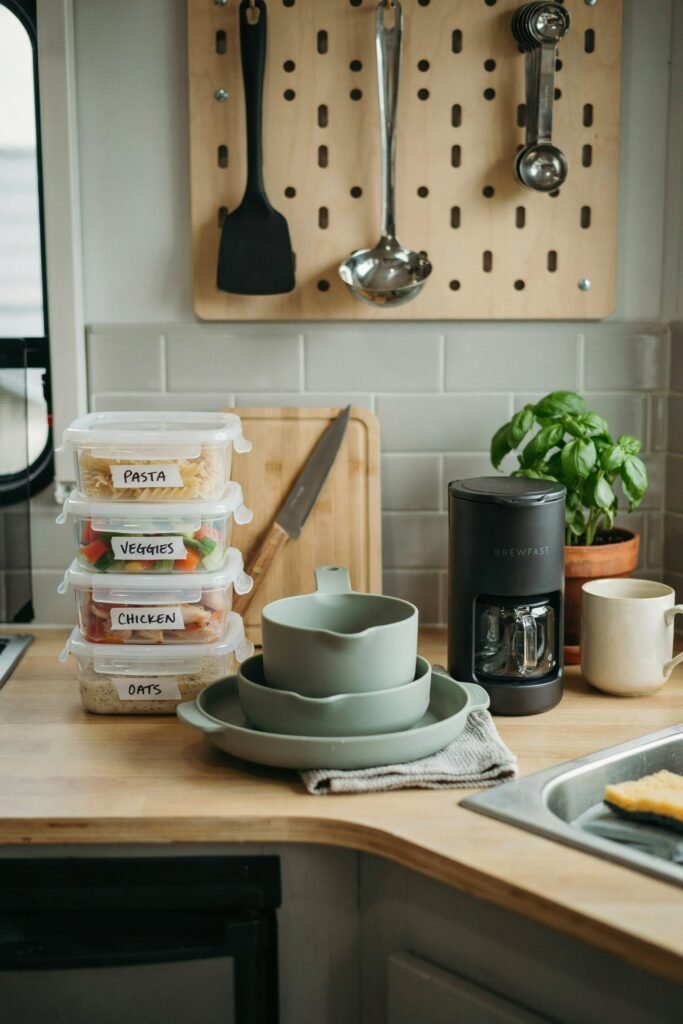
RV kitchens force a completely different approach to cooking and storage than a full sized home kitchen, and it took us a few trips to figure out what actually mattered.
What we always pack
- Collapsible cookware, which saves an enormous amount of cabinet space compared to standard pots and pans
- A set of stackable, labeled food containers, since loose bags and boxes shift constantly while driving
- A compact coffee maker, non negotiable for us regardless of how much other space it takes
- Reusable silicone bags for snacks and leftovers, more durable than disposable options for a long trip
- A small fire extinguisher rated for kitchen fires, stored within easy reach of the cooking area
Our story with it We used loose grocery bags for food storage on our first trip, and after one sharp turn, half our pantry ended up scattered across the floor.
Switching to stackable, labeled containers solved that problem completely and made finding ingredients faster too.
Personal tip Pack a shelf liner with grip for cabinets and drawers. It’s a small addition that stopped nearly everything from sliding around during transit, something we wished we’d thought of before that first messy trip.
Comfort and Sleep Essentials

Sleep quality affects everything else on a long RV trip, and this is the category we underestimated most before learning better.
What we always pack
- A quality mattress topper, since factory RV mattresses are rarely comfortable enough for consecutive nights
- Blackout curtains or window covers, especially useful for early sunrise campsites
- A portable fan, since RV air conditioning doesn’t always keep every corner of the space evenly cool
- Comfortable, packable bedding that doesn’t take up excessive storage space
- Earplugs, which have saved more than one night at a noisy campground
Our story with it On a trip through a busy RV park near a highway, the road noise made sleep nearly impossible until we started packing proper earplugs and a white noise app as a backup. It completely changed how rested we felt heading into the next day’s drive.
Personal tip Invest in a mattress topper even if it takes up storage space. It made a bigger difference to how we felt each morning than almost any other single upgrade we made.
Safety and Emergency Preparedness
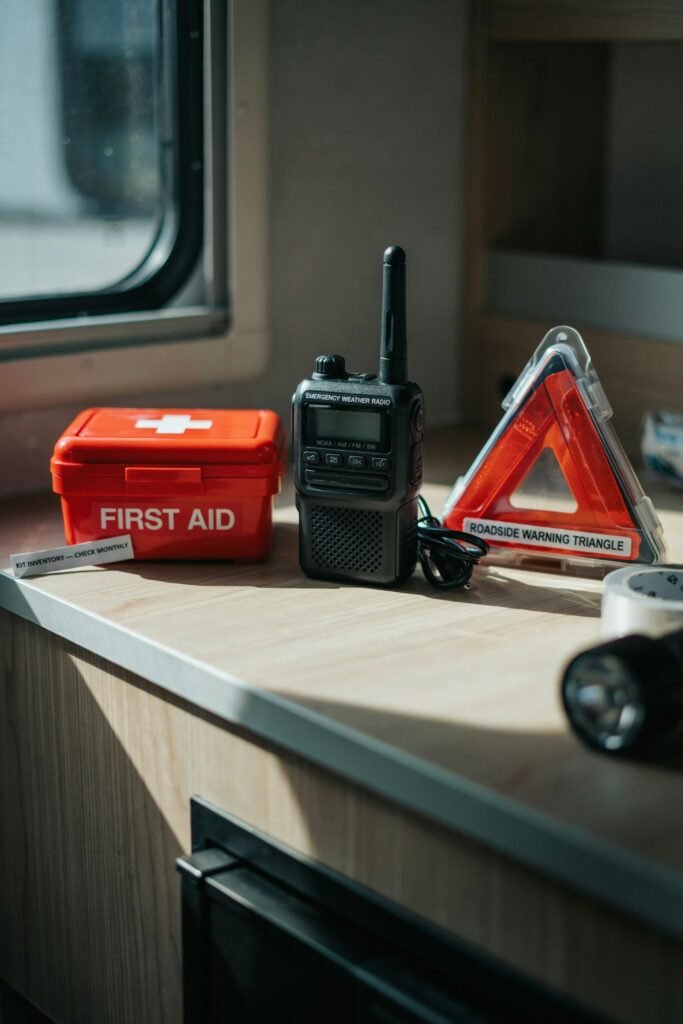
This is the category that’s easy to skip until the exact moment you need it, and we’ve learned that lesson more than once.
What we always pack
- A comprehensive first aid kit, more thorough than a basic travel version
- A backup battery powered weather radio, since cell service disappears in a lot of the more remote areas we’ve camped
- A roadside emergency kit including flares, a reflective triangle, and basic tools
- Extra water beyond what we think we’ll need, stored separately from our daily supply
- A written list of emergency contacts and RV specific information, kept in a waterproof pouch
Our story with it A sudden storm cut cell service completely during a trip through a more remote stretch of highway, and our battery powered weather radio was the only way we got real time updates on conditions ahead. We haven’t traveled without one since.
Personal tip Store your emergency kit somewhere easily accessible, not buried under everything else.
We learned this after struggling to dig ours out during an actual emergency, which is exactly when you don’t want to be searching.
Organization Tools That Actually Make a Difference
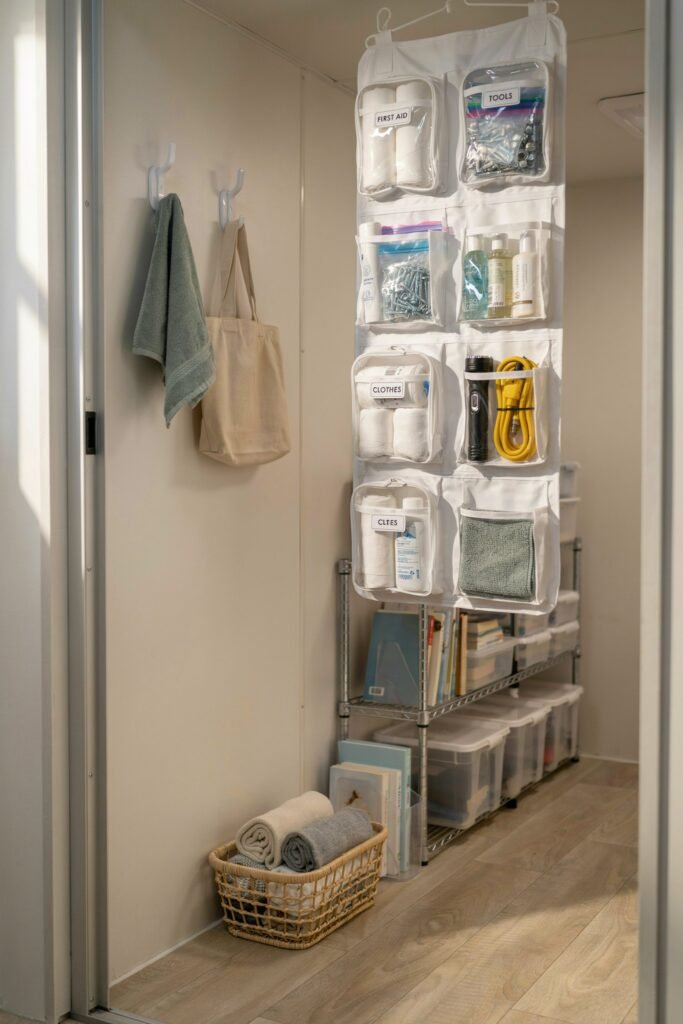
A few smaller items completely changed how manageable our RV felt on longer trips, more than any single big purchase did.
What we always pack
- Over the door organizers, which use vertical space that would otherwise go completely unused
- Command hooks, useful for hanging towels, bags, and small items without drilling into RV walls
- A designated bin for shoes near the entrance, which kept dirt and debris from spreading through the whole rig
- A small whiteboard or notepad for tracking supplies that are running low
- Cable and cord organizers, since tangled charging cables became a daily frustration before we fixed it
Our story with it Our first trip had cables tangled in nearly every drawer, and finding a specific charger became a daily annoyance.
A simple cord organizer solved a problem that had bothered us for years within a single afternoon of setup.
Personal tip Do a full organization pass on day one of a long trip, not just before you leave home.
Systems that looked good in the driveway sometimes need adjusting once you’re actually living in the space day to day.
A Few More Practical Notes
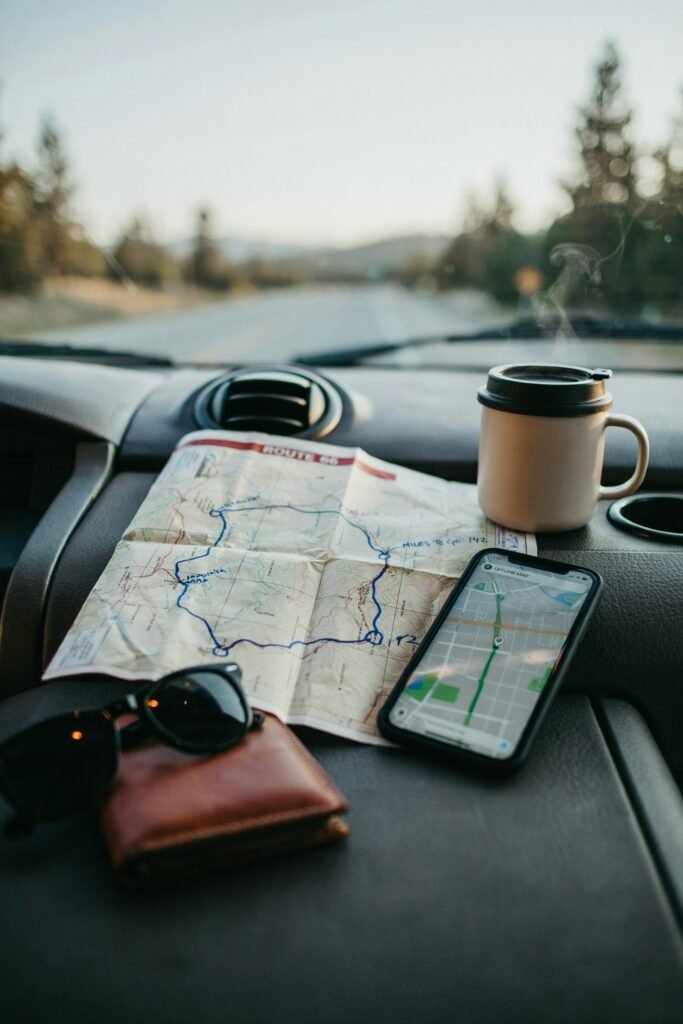
A handful of smaller lessons that didn’t need a full section but are worth knowing before a long RV trip.
- Research dump station locations along your route in advance, since they’re not always where you expect them to be
- Download offline maps for remote stretches, since cell service and GPS reliability both drop off in certain areas
- Pack a small tool kit specific to RV repairs, separate from any general travel tool kit
- If you’re combining RV travel with hiking stops along the way, our backpacking essentials guide covers what to bring for day hikes off the main route
- Our travel checklist is a useful starting point for the broader trip planning side, beyond just packing the RV itself
FAQ
What’s the single most important item people forget to pack for an RV trip? Extra fuses, without question.
We learned this the hard way when a blown fuse knocked out our fridge overnight, and it’s now one of the first things we check before every trip.
How much storage should I dedicate to emergency supplies versus everyday items? We keep emergency supplies in one clearly labeled, easily accessible area, roughly ten to fifteen percent of our total storage.
It’s a small enough footprint that it doesn’t crowd everyday items, but it’s always exactly where we expect it during a real emergency.
Do I need special cookware for RV kitchens? Collapsible or stackable cookware makes a real difference in a smaller kitchen.
Standard pots and pans work fine too, but they take up significantly more cabinet space than most RV kitchens comfortably allow.
How do I keep food organized during a long RV trip? Stackable, labeled containers solved this completely for us after loose grocery bags failed on our first trip.
Combined with a shelf liner with grip, our kitchen storage stopped shifting or spilling during transit entirely.
What should I do differently packing for a short RV trip versus a long one? Longer trips justify investing in comfort upgrades like a mattress topper and better organization systems, since you’ll feel the impact of a poor setup for many more nights. Shorter trips can get away with a more minimal, streamlined packing list.
Final Thoughts
Every category on this list came from a lesson we learned the harder way first, a blown fuse, a scattered pantry, a sleepless night near a busy highway.
That’s really how good RV packing gets built over time. It’s less about buying every gadget available and more about noticing what actually went wrong last time and fixing it before the next trip.
If you’re mapping out where your next RV trip might take you, our 10 best road trips in America and USA summer getaways for couples are good places to start planning the route itself.
Whatever you pack for your next trip, the goal isn’t bringing everything you might need. It’s bringing exactly what’s earned its place through experience.


