
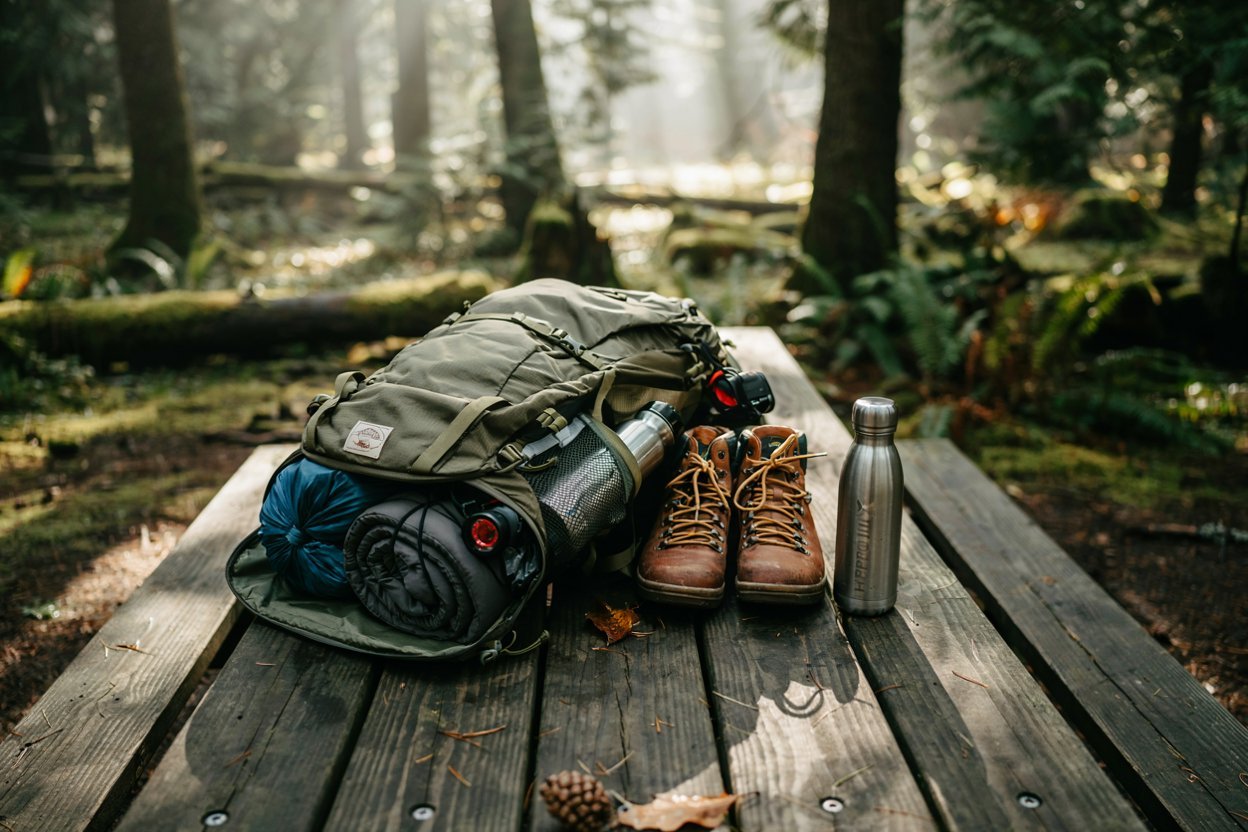
Every trip teaches me something new about what is actually worth carrying.
Some items earn a permanent place in my bag because they prove useful again and again, while others quietly get left behind after a single trip.
Rather than chasing the latest travel gadgets, I’ve gradually built a packing kit around the things I genuinely rely on.
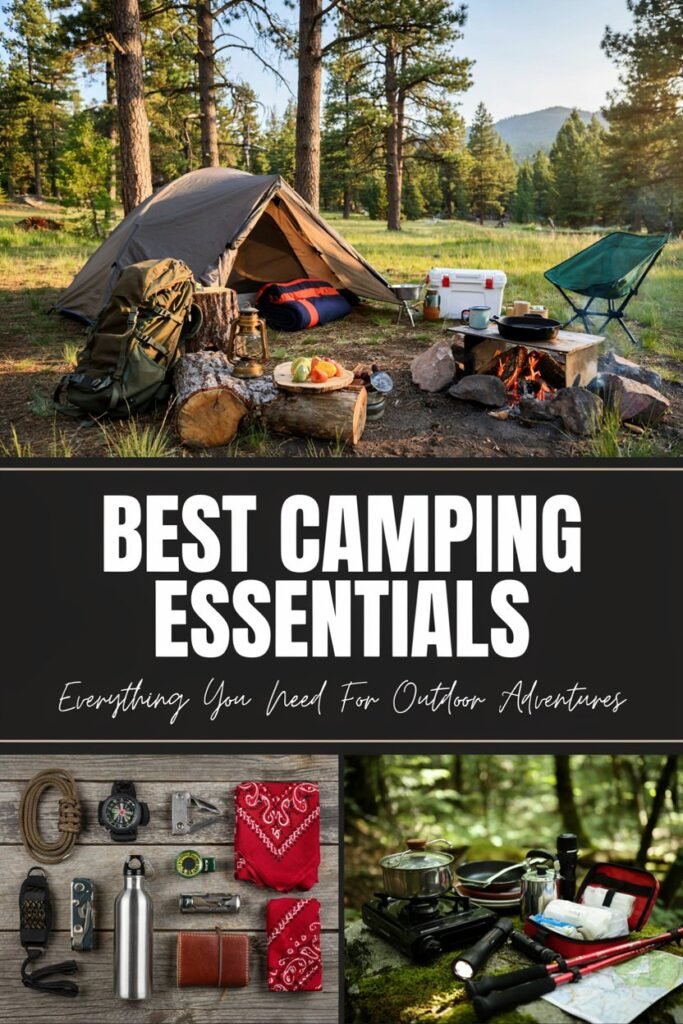
These are the essentials that have made airports easier, kept me organized on long travel days, and solved small problems before they became frustrating ones.
This guide brings everything together in one place.
It is the collection of travel essentials I reach for before every trip, updated with the gear that has consistently earned its place in my luggage and made traveling simpler, lighter, and more enjoyable.
Disclaimer
This post may contain affiliate links. As an Amazon Associate, I earn from qualifying purchases at no additional cost to you. I only recommend camping gear that I genuinely believe makes outdoor adventures safer, more comfortable, and more enjoyable. The information in this article is for general informational purposes only. Always choose gear that fits your camping style and destination.
Amazon Shopping List You Need
- Coleman Sundome Camping Tent – I think it’s a great all around tent for most camping trips.
- TETON Sports Sleeping Bag – I always recommend a warm, comfortable sleeping bag.
- LifeStraw Personal Water Filter – I never camp without a reliable way to filter water.
- Black Diamond LED Headlamp – I always pack a hands free light for evenings around camp.
- Camping Cookware Set – I love having a compact cooking set for easy campsite meals.
- Anker Portable Power Bank – I keep one with me to charge my devices on the go.
- YETI Rambler Insulated Water Bottle – I always bring an insulated bottle to keep drinks cold or hot throughout the day.
What I Have Learned About Packing the Right Camping Essentials
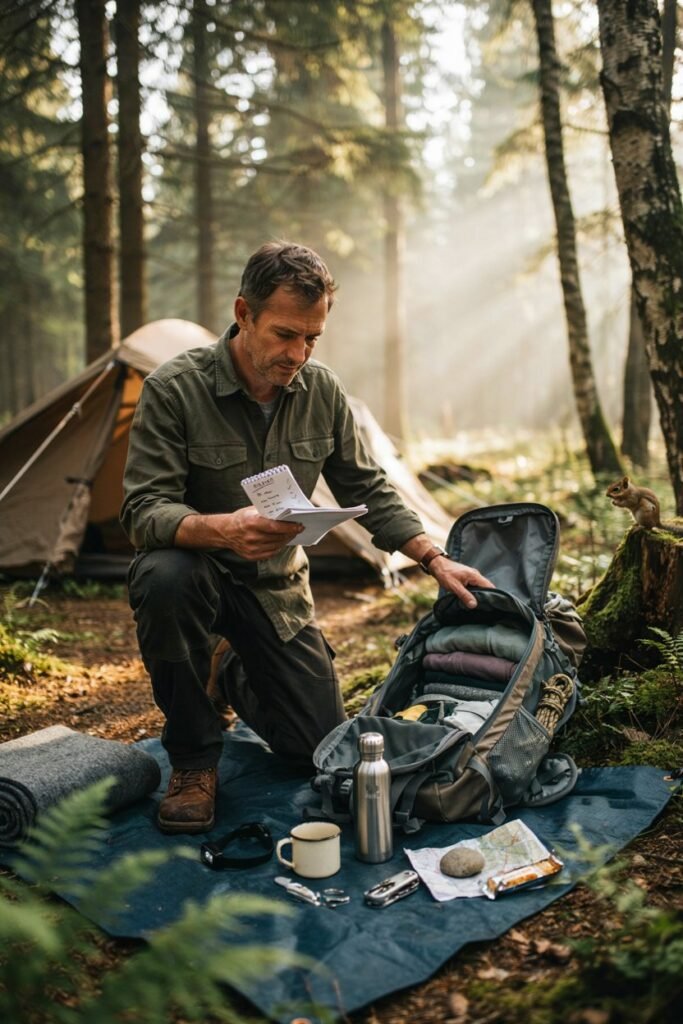
One camping trip is all it takes to realize how much the right gear matters. I have forgotten items I thought I could live without and packed things that never left the bottom of my backpack.
Those experiences quickly taught me that successful camping is not about bringing more gear. It is about bringing the gear you will actually use.
Since then, I have refined my packing list after every adventure, keeping the items that proved their value and leaving behind the ones that only added extra weight.
The result is a collection of camping essentials I rely on whether I am heading out for a single night or a longer weekend in the outdoors.
The gear in this guide has earned its place through real trips, helping me stay comfortable, organized, and prepared no matter where the trail leads.
Shelter and Sleep System
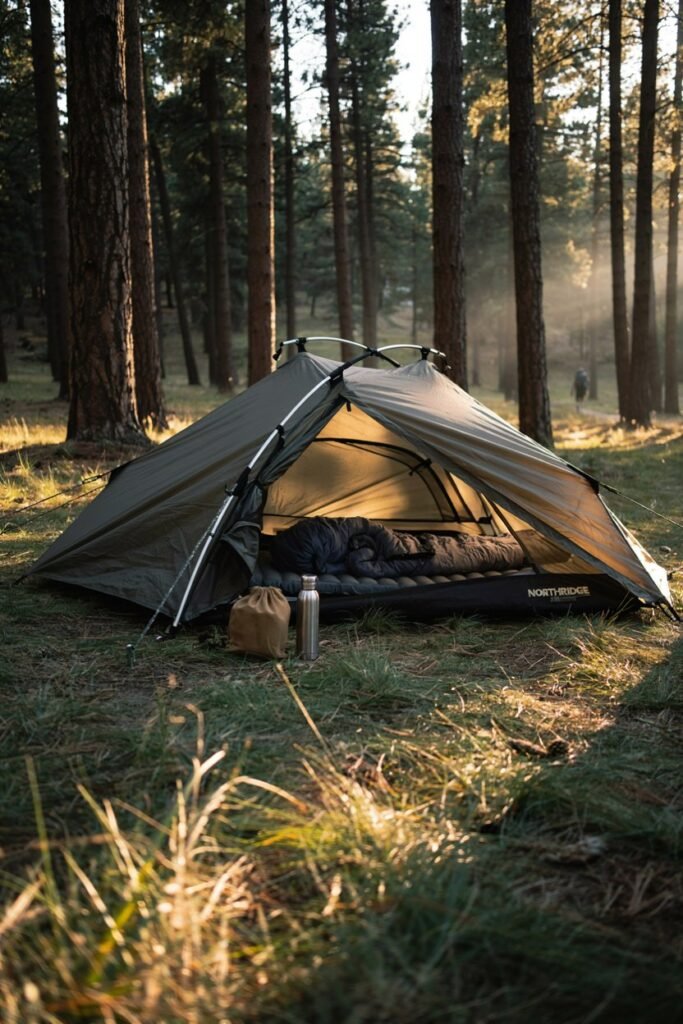
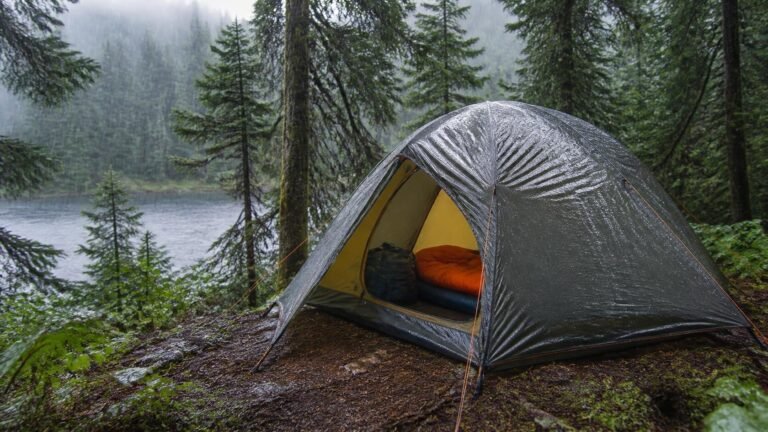
Tent
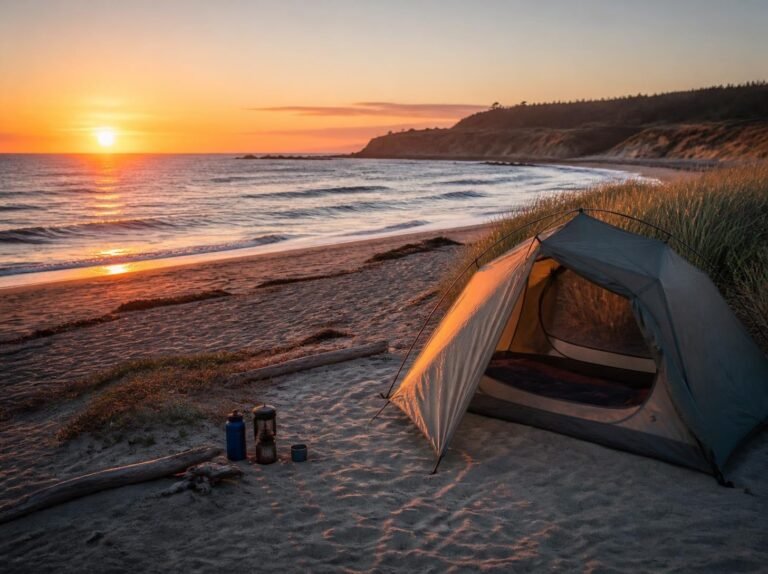
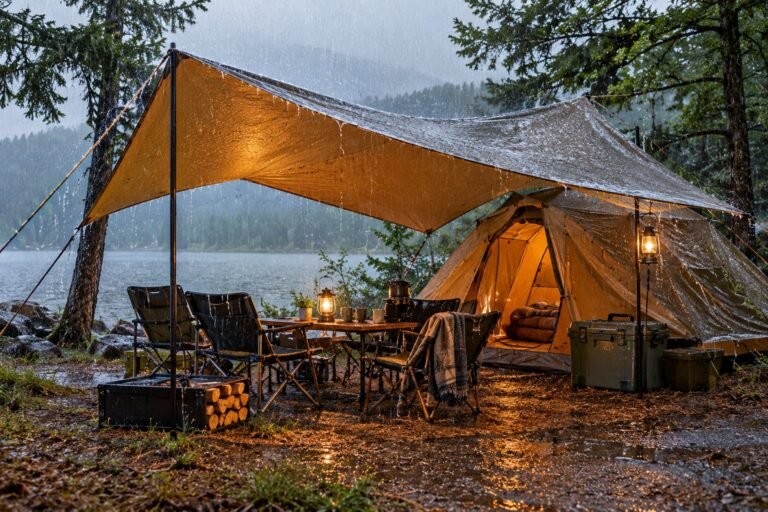
On a trip through a coastal campground a few summers ago, a storm rolled in overnight with wind gusts strong enough to bend my tent poles.
The tent held because I had chosen one rated for rougher weather, and I learned that lesson stuck with me ever since. A good tent is the backbone of any camping trip.
Look for one that is easy to set up, weather resistant, and sized appropriately for your group.
A three season tent works well for most conditions, while a four season tent is worth the investment if you plan to camp in snow or extreme wind.
Pay attention to the tent’s waterproof rating and always bring a footprint or ground tarp to protect the floor from moisture and sharp rocks.
Sleeping Bag
After that freezing night I mentioned earlier, I never leave for a trip without checking the temperature rating on my sleeping bag against the actual forecast.
Choose a bag rated for the lowest temperature you expect to encounter, then add a buffer of about ten degrees for comfort.
Down bags are lighter and pack smaller, but synthetic bags perform better when wet and cost less. A bag liner can add extra warmth and keeps the interior clean between washes.
Sleeping Pad
I used to skip the sleeping pad on short trips, thinking I could tough it out on the bare ground.
One cold night camping near a lake changed my mind completely, since the ground pulled the warmth right out of my body faster than the air ever could.
Beyond comfort, a sleeping pad provides insulation between you and the cold ground.
Inflatable pads pack small and offer excellent insulation, while foam pads are more durable and budget friendly. Consider the R value of the pad, which measures how well it resists heat loss.
Pillow
A compact camping pillow has become one of my small luxuries on every trip. It adds real comfort without taking up much space in your pack.
Inflatable versions are the most popular for backpackers since they fold down to almost nothing.
Cooking and Food Supplies
Portable Stove
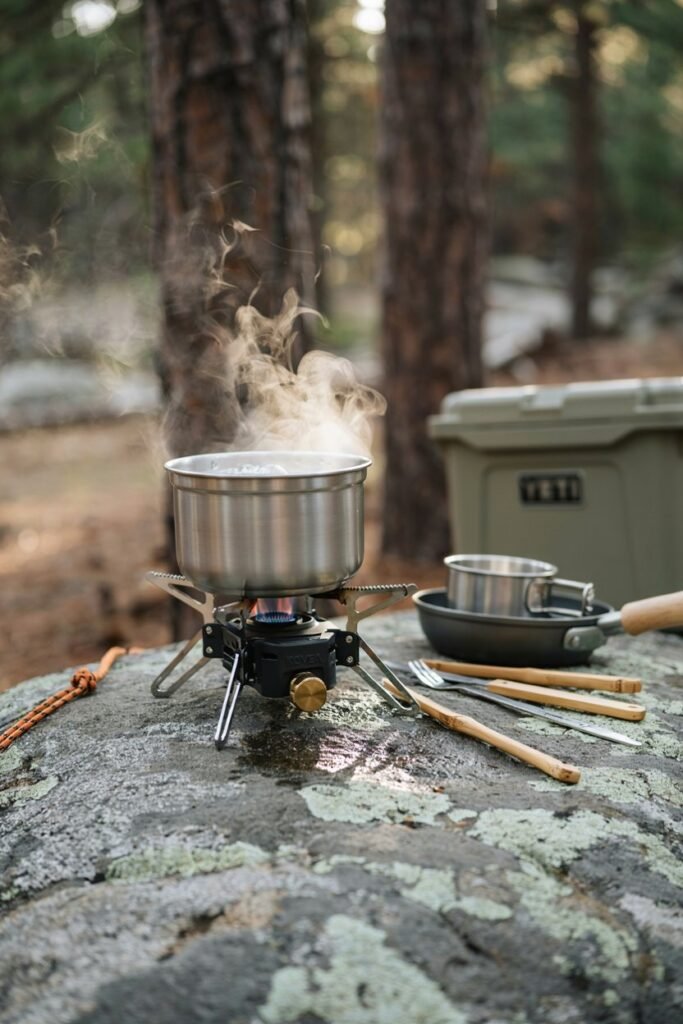
I once tried to start a campfire in wet conditions just to boil water for coffee, and it took nearly an hour of frustration before I gave up and switched to my backup stove.
Now a reliable stove is always the first thing packed. A lightweight camping stove lets you cook hot meals and boil water quickly.
Canister stoves are simple and efficient for most trips, while liquid fuel stoves perform better in cold weather or at high altitude.
Cookware Set
A compact cookware set with a pot, pan, and utensils designed for camping saves space and weight. Look for nesting designs that pack neatly together.
Cooler
On family car camping trips, a good cooler has saved more than one meal. Choose one with thick insulation and a secure seal to maximize ice retention over multiple days.
Water Filter or Purification Tablets
During a multi day trip through a remote trail system, my group relied entirely on a portable filter to draw water from streams along the route.
Access to clean water is one of the most important camping essentials, and a filter or purification tablets let you safely drink from natural sources while reducing the amount of water you need to carry.
Food Storage
In bear country, I learned quickly that proper food storage is not optional. Bear resistant containers or dry bags keep food safe from wildlife and moisture, and in some areas it is required by park regulations.
Reusable Utensils and Plates
Lightweight, reusable dishware reduces waste and is easy to clean with just a small amount of water and biodegradable soap.
Lighting and Power
Headlamp
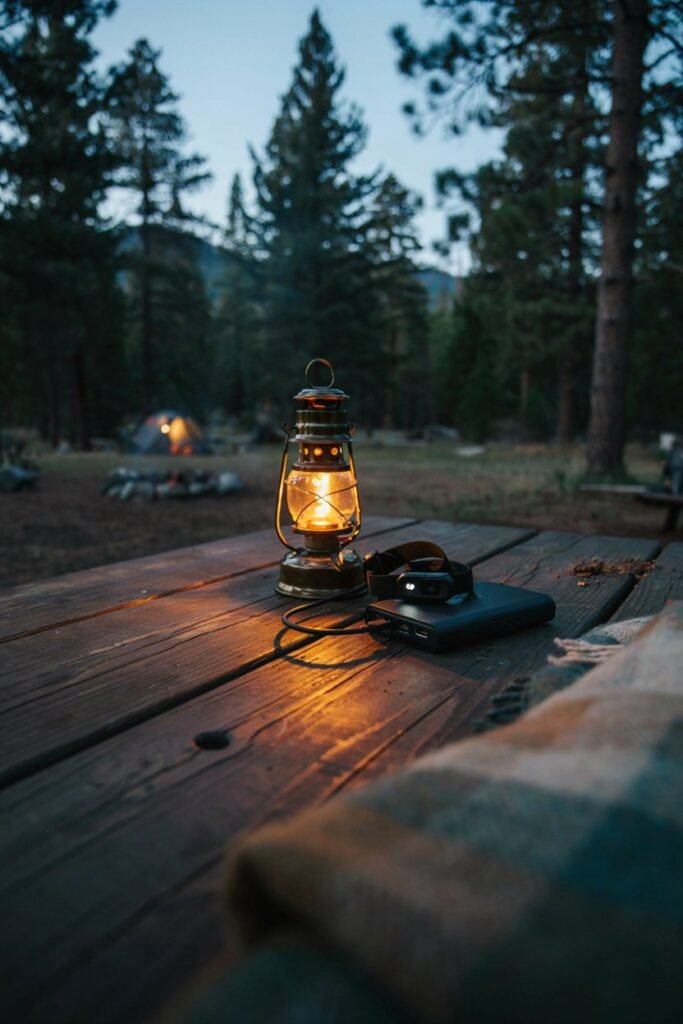
I once had to set up an entire tent in the dark after a hike ran longer than expected, and my headlamp was the only reason I could see what I was doing.
A headlamp keeps your hands free for cooking, setting up camp, or navigating in the dark. Choose one with adjustable brightness and a long battery life.
Lantern
A camping lantern illuminates the entire campsite, making it easier to cook, read, or socialize after sunset.
Rechargeable or solar powered lanterns are convenient options that reduce the need for extra batteries.
Portable Power Bank
On longer trips, keeping my phone charged for navigation and photos has always mattered more than I expect.
A solar powered charger or high capacity power bank ensures you never run out of battery when you need it most.
Clothing and Personal Gear
Layered Clothing
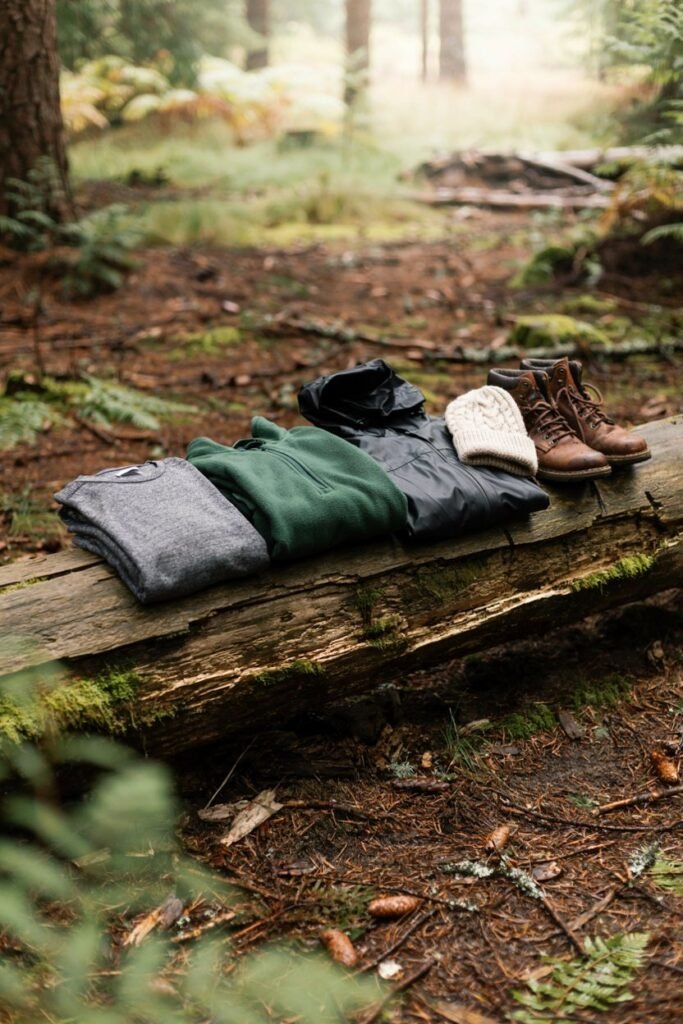
I have hiked through sunny mornings that turned into freezing, windy afternoons within a few hours, and layering saved me every time.
A moisture wicking base layer, insulating mid layer, and waterproof outer shell will keep you comfortable in almost any condition.
Hiking Boots or Shoes
Blisters from an ill fitting pair of boots once cut a trip short for me, so now I always break in new footwear well before a big hike.
Supportive, broken in shoes prevent blisters and provide stability on uneven terrain. Waterproof boots are ideal for wet trails or unpredictable weather.
Rain Gear
Even on trips with a clear forecast, I pack rain gear without exception after getting caught in an unexpected downpour with nothing but a cotton hoodie.
A packable rain jacket and pants can save your trip if the weather changes unexpectedly.
Hat and Gloves
Depending on the season, a sun hat, warm beanie, or insulated gloves can make a big difference in comfort throughout the day and night.
Navigation and Safety
Map and Compass
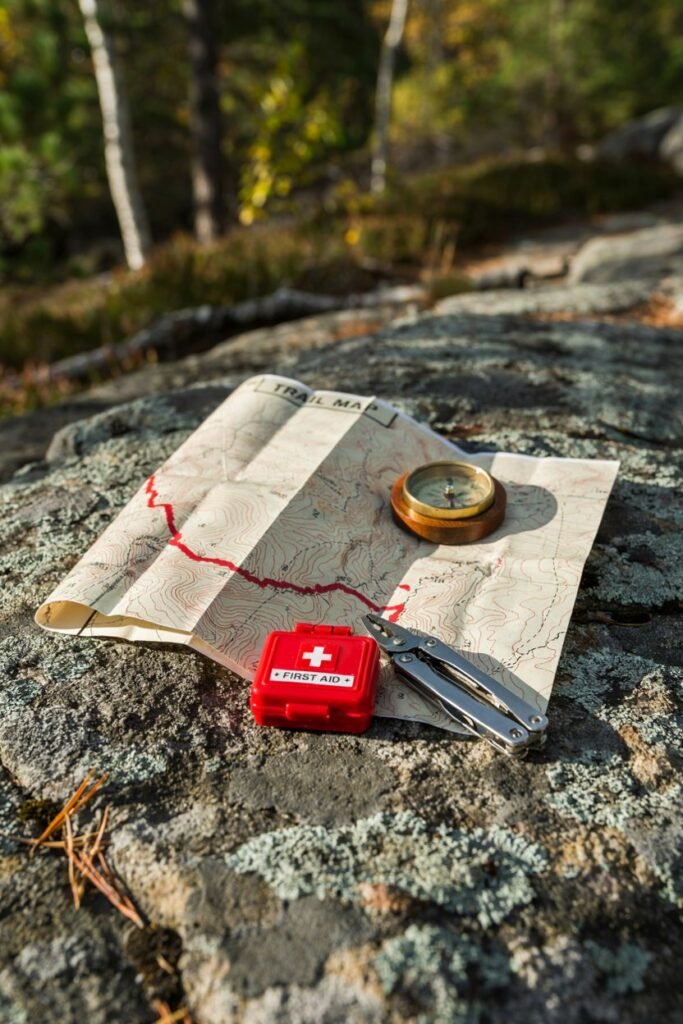
On a hike where my phone lost signal completely, a simple paper map and compass got my group back to the trailhead safely.
GPS apps are helpful, but they can fail due to dead batteries or poor signal, so a physical backup is worth carrying every time.
First Aid Kit
A well stocked first aid kit should include bandages, antiseptic wipes, pain relievers, blister treatment, and any personal medications.
Even small injuries can become serious if left untreated in remote areas.
Multi Tool or Knife
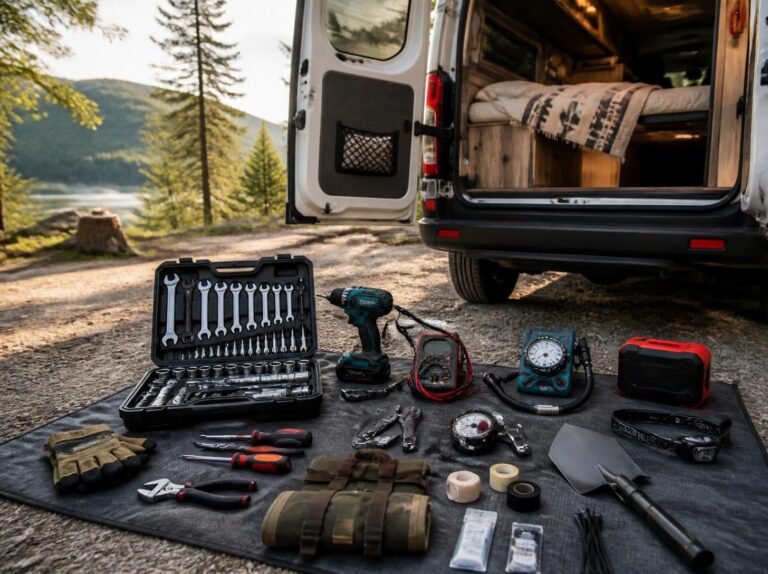
A durable multi tool or knife is useful for food preparation, gear repair, and general camp tasks, and mine has fixed more broken gear than I can count.
Fire Starter
Waterproof matches, a lighter, or a fire starter kit are essential for cooking and staying warm.
Practice starting a fire before your trip so you are prepared if conditions are damp, since I learned the hard way that dry practice at home makes a real difference in the field.
Insect Repellent and Sunscreen
Protecting your skin from bugs and sun exposure keeps you comfortable and prevents long term skin damage during extended time outdoors.
Comfort and Convenience Items
Camp Chair
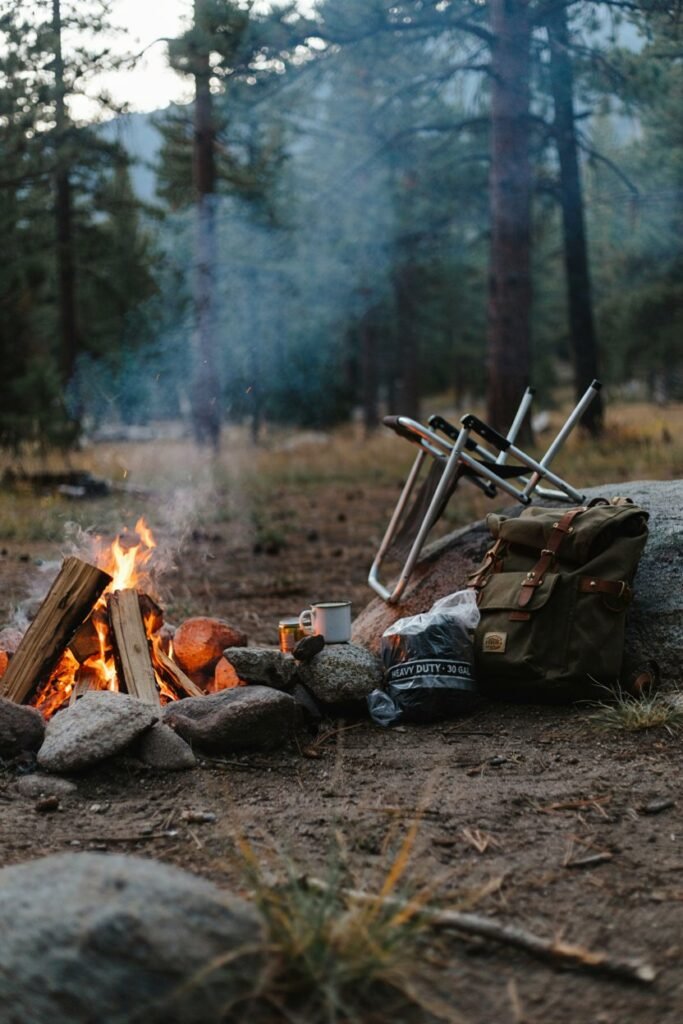
A lightweight, foldable camp chair adds comfort around the fire or campsite without taking up much room in your vehicle or pack.
Trash Bags
Practicing leave no trace principles means packing out everything you bring in.
A few extra trash bags make cleanup simple and help protect the environment.
Duct Tape
A small roll of duct tape has patched a torn tent and a leaking bag on more than one of my trips.
It can fix nearly any unexpected gear problem in the field.
Backpack
A comfortable, properly fitted backpack with enough capacity for your trip length is essential for carrying all your gear without unnecessary strain.
Extra Tips for a Smoother Camping Trip
Test Your Gear Before You Leave
Set up your tent, test your stove, and check your headlamp battery at home before your trip.
Discovering broken gear in the wilderness is far more stressful than fixing it in your backyard.
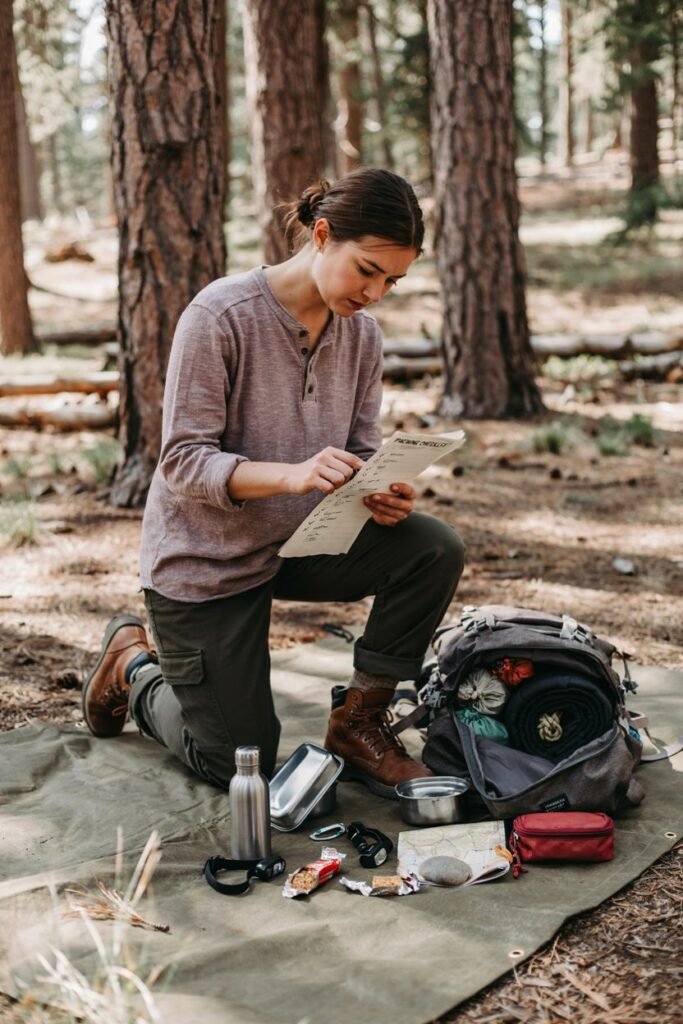
Pack a Physical Checklist
It is easy to forget small but important items when packing quickly.
Keep a written or printed checklist so you can verify everything before you drive away or start hiking.
Check the Weather and Trail Conditions
Conditions can shift fast in the outdoors.
Check the forecast a few days before your trip and again the morning you leave, and look up recent trail reports if you are hiking into a remote area.
Tell Someone Your Plans
Share your route, campsite location, and expected return date with a friend or family member.
This simple step makes a huge difference if something goes wrong and search and rescue needs a starting point.
Arrive With Time to Set Up Camp
Try to reach your campsite with plenty of daylight left.
Setting up a tent, organizing gear, and starting a fire is much easier and safer before it gets dark.
Store Food Properly Every Night
Even if you do not see wildlife nearby, always store food in a bear canister, hang it, or lock it in a vehicle.
Animals are drawn to scents quickly and consistently.
Bring More Water Than You Think You Need
Dehydration is one of the most common camping mistakes.
Pack extra water or a reliable filtration method, especially in hot weather or at higher elevations.
Practice Leave No Trace
Pack out all trash, avoid disturbing wildlife, stay on marked trails, and leave your campsite exactly as you found it so others can enjoy the same experience.
Frequently Asked Questions
What are the most important camping essentials for beginners
For beginners, the top priorities are a reliable tent, a sleeping bag rated for the expected temperature, a sleeping pad, a way to purify water, a first aid kit, and a headlamp.
These cover shelter, sleep, hydration, and safety, which are the foundation of any successful trip.
How much water should I bring camping
A general guideline is about one gallon of water per person per day for drinking, cooking, and basic hygiene.
If you plan to filter water from a natural source, bring a filter or purification tablets as a backup in case that water source is unavailable.
Do I need a four season tent for regular camping trips
Most campers only need a three season tent, which handles spring, summer, and fall conditions well.
A four season tent is only necessary if you plan to camp in winter, snow, or areas with very high winds.
What should be in a basic camping first aid kit
A basic kit should include adhesive bandages, gauze, antiseptic wipes, blister treatment, tweezers, pain relievers, any personal medications, and a small guide for treating common injuries.
How do I keep food safe from animals while camping
Use a bear resistant container, hang food from a tree using a proper hanging method, or store it in a vehicle if camping in an area with vehicle access.
Never keep food inside your tent.
What is the best way to stay warm at night while camping
Choose a sleeping bag rated below the expected low temperature, use an insulated sleeping pad with a good R value, wear dry layers to bed, and consider a bag liner for extra warmth on colder nights.
Is it necessary to bring a paper map if I have a GPS app
Yes. Phone batteries can die, and GPS signal can be unreliable in remote areas. A paper map and compass serve as a dependable backup for navigation.
Final Thoughts
This list keeps changing every time I come back from a trip, and I will keep updating it here as more lessons show up.
Packing the right camping essentials does not have to be complicated once you know what to prioritize.
Focus on shelter, sleep comfort, food and water, lighting, appropriate clothing, and safety gear, and you will be well prepared for almost any outdoor adventure.
Save this one and use it as your checklist before the next trip so nothing important gets left behind.
With the right preparation, you can spend less time worrying about gear and more time enjoying the beauty of the outdoors.