
Some RV gear is genuinely optional, a nice to have that makes life a little more comfortable.
This list isn’t that. These seven items cover the basic, functional needs that come up on essentially every trip, hooking up safely, leveling the rig, handling waste properly, and being prepared for the small mechanical issues that inevitably crop up on the road.
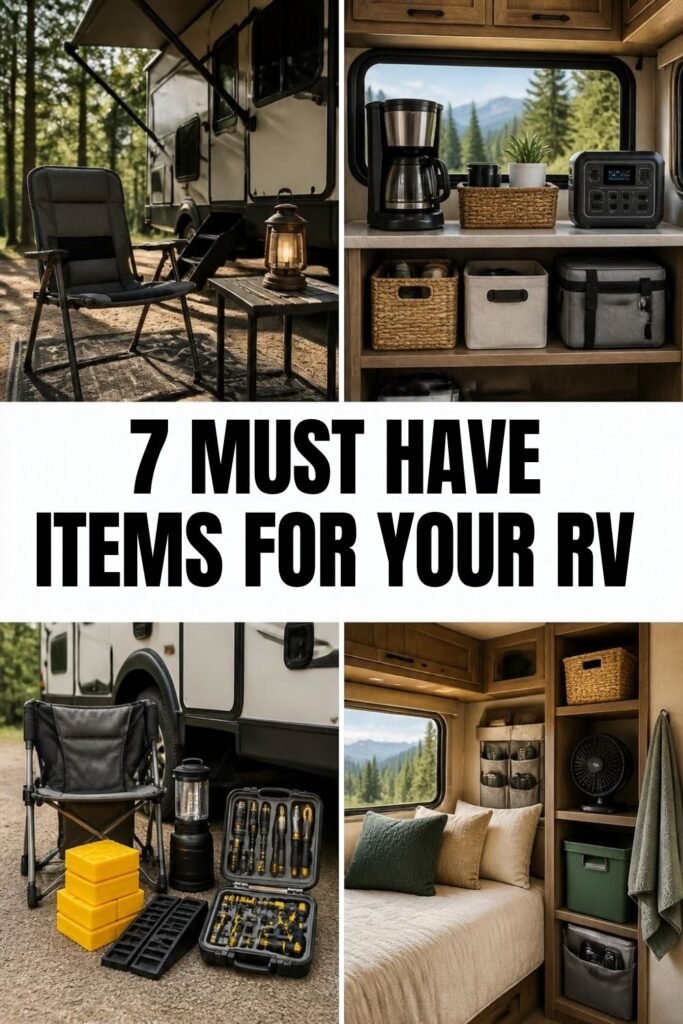
None of it is glamorous, and that’s exactly why it’s easy to overlook until you’re standing at a campsite without it.
This guide covers what each item actually does and what to look for before buying. If you’re also interested in the higher tech side of RV gear, my 5 must have camper gadgets that are awesome guide covers that territory, and my 5 easy RV organization accessories and hacks guide rounds out the storage side of things.
Quick Guide to These Must Have Items
| Item | Solves | Typical Price Range |
|---|---|---|
| Leveling blocks | An uneven, uncomfortable campsite | $20 to $50 |
| Sewer hose kit with support | Waste tank hookup and drainage | $30 to $80 |
| Drinking-safe fresh water hose | Contaminated or bad tasting water | $20 to $40 |
| Wheel chocks | Rig rolling or shifting while parked | $15 to $40 |
| Septic-safe toilet paper | Clogged holding tanks and sensors | $5 to $15 per pack |
| Basic RV tool kit | Minor repairs and roadside issues | $30 to $100 |
| Portable generator | Backup power without a hookup | $300 to $1,000+ |
1. Leveling Blocks
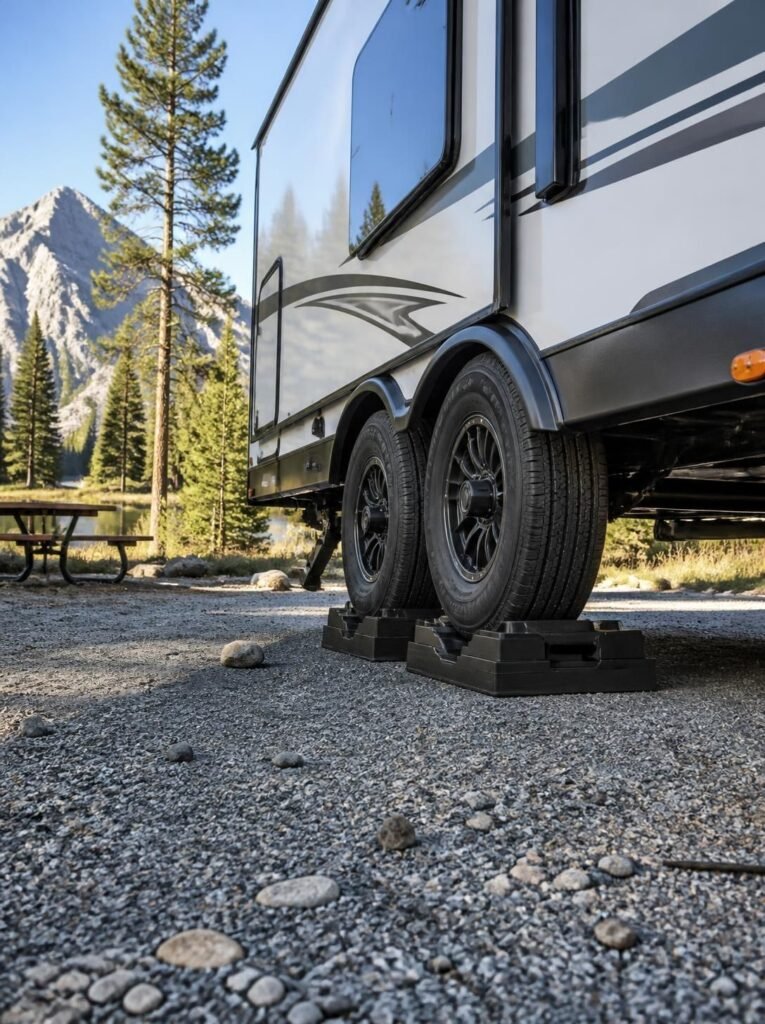
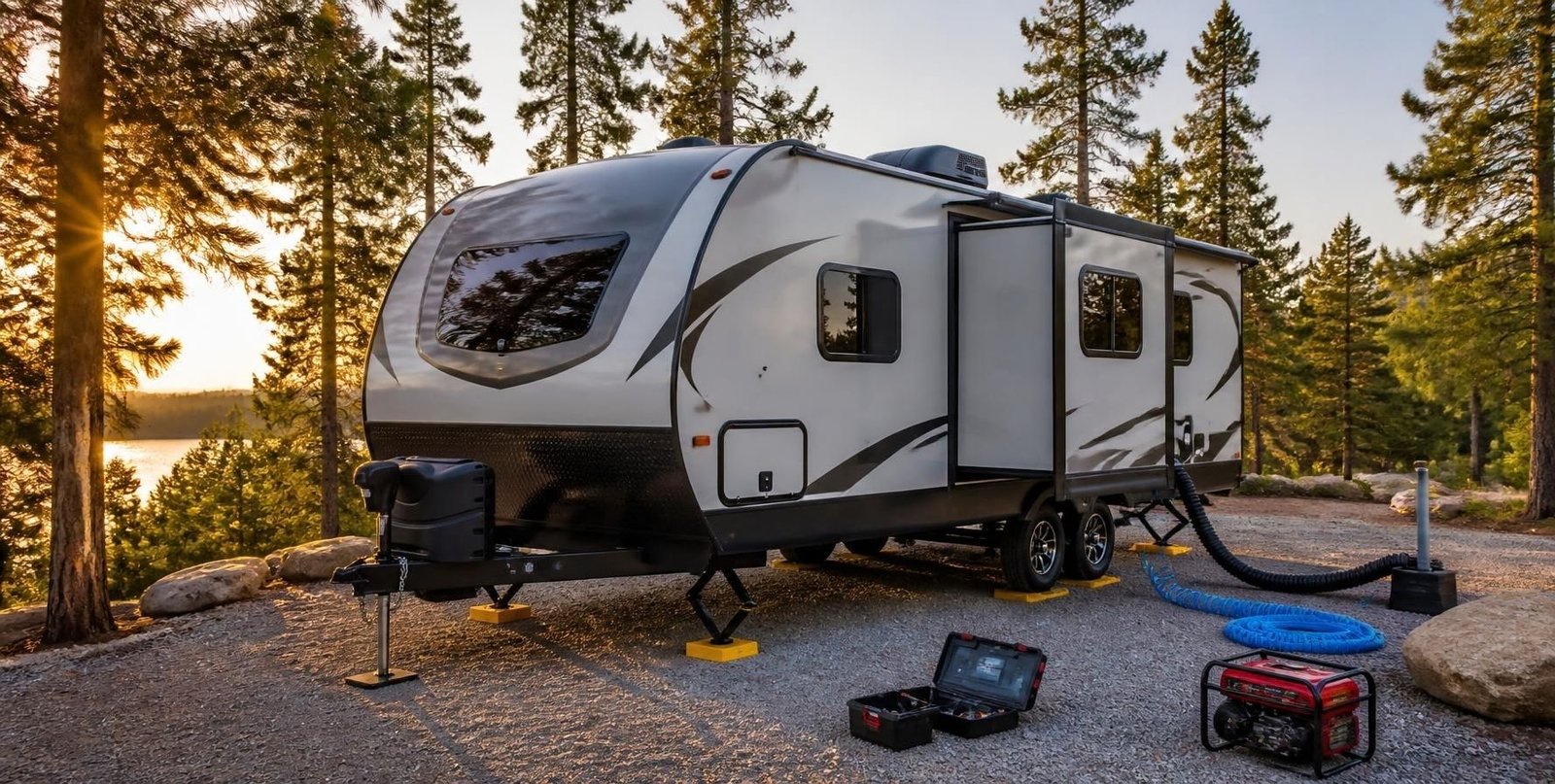
Why it’s a must have. Few things undermine a comfortable stay quite like a rig parked at even a slight angle, which affects everything from how well you sleep to whether your refrigerator operates correctly, since many RV fridges rely on being reasonably level to function properly.
Why you need it. Campsites are rarely perfectly flat, and leveling blocks let you compensate for that unevenness in minutes rather than hunting for one of the rare genuinely level spots in a campground.
What to look for. Stackable, interlocking blocks rated for your rig’s actual weight, since underrated blocks can crack or shift under a heavier RV.
Budget tips. A basic set of plastic interlocking blocks covers most situations without needing to invest in a more expensive automatic leveling system.
Tip. Keep a small bubble level in your glove box or tow vehicle so you can check your rig’s position quickly without needing to step inside and guess based on feel alone.
2. Sewer Hose Kit With Support
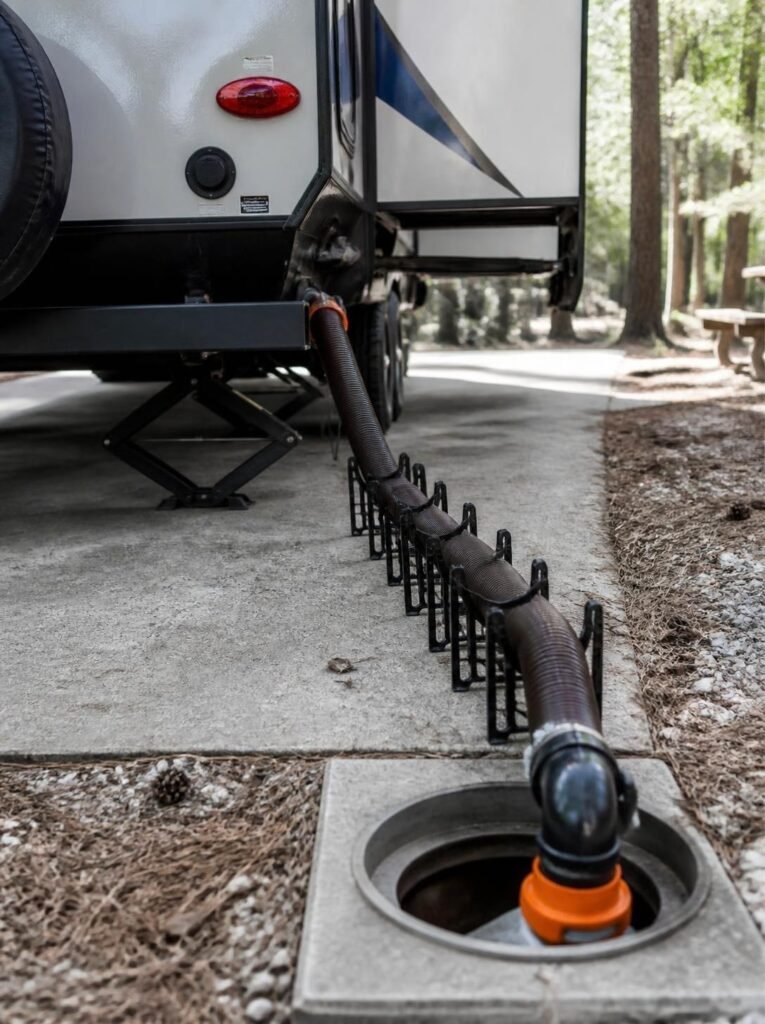
Why it’s a must have. Properly draining your holding tanks is one of the most basic, unavoidable tasks of RV ownership, and a flimsy, unsupported hose makes the entire process messier and more frustrating than it needs to be.
Why you need it. A quality hose paired with a support system keeps the hose properly sloped for full drainage and reduces the risk of leaks, kinks, or backflow that a cheap, unsupported hose is genuinely prone to.
What to look for. A hose rated for sewer use specifically, adequate length for a range of campsite hookup distances, and a support system with enough flexibility to accommodate uneven ground between your rig and the dump connection.
Budget tips. A mid range hose with a basic support system holds up considerably better over time than the cheapest option, which is one area worth not cutting corners on given how unpleasant a failure can be.
Tip. Store this hose in a completely separate, clearly labeled container from any other hoses you carry, since confusing it with a fresh water hose, even once, creates a genuinely serious problem.
3. Drinking-Safe Fresh Water Hose
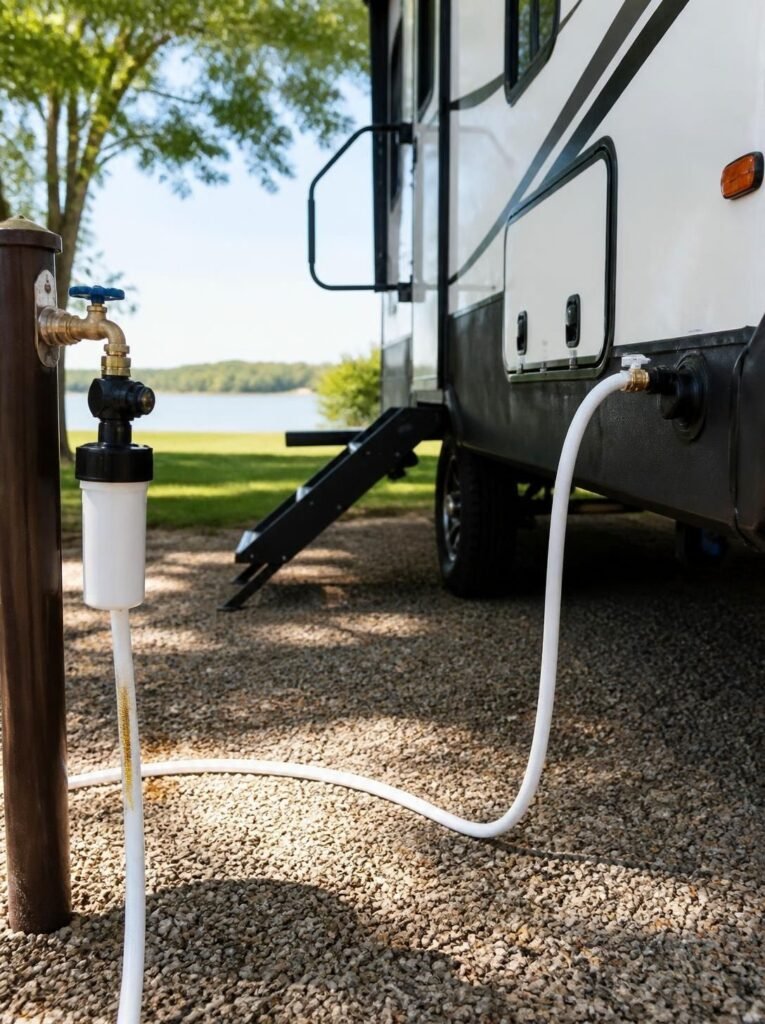
Why it’s a must have. A standard garden hose isn’t rated for drinking water and can leach chemicals into the water passing through it, making a dedicated, drinking-safe hose essential for filling your fresh water tank or connecting directly to a campground spigot.
Why you need it. This is a genuine health consideration, not just a convenience upgrade, since the water running through this hose is what you’ll be drinking, cooking with, and brushing your teeth with for the duration of your trip.
What to look for. A hose specifically labeled safe for drinking water, free of lead and BPA, and ideally a distinct color, commonly white or blue, that clearly differentiates it from your sewer hose at a glance.
Budget tips. This is not an area to economize heavily, given the health implications, though a mid range drinking-safe hose still costs relatively little compared to the rest of your RV gear.
Tip. Pair this hose with a water pressure regulator and inline filter, both of which further protect your plumbing and improve water taste regardless of the specific campground you’re hooked up to.
4. Wheel Chocks
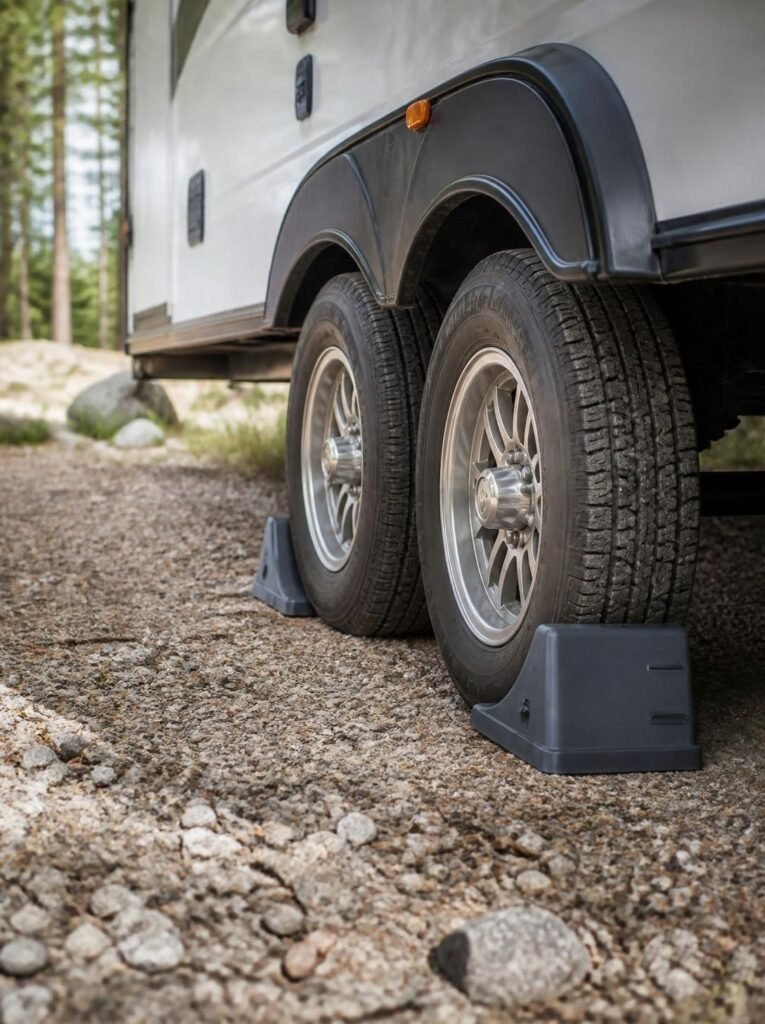
Why it’s a must have. Wheel chocks prevent your RV from rolling or shifting while parked, particularly important on any site with even a slight grade, and they’re a basic safety measure that takes only a minute to deploy.
Why you need it. Even a seemingly flat campsite can have enough of a subtle slope to allow a parked rig to creep, and chocks provide genuine peace of mind, especially important if you’re disconnecting a trailer from its tow vehicle.
What to look for. Chocks rated for your specific rig’s weight, with a design that won’t easily slip out from under the tire once set.
Budget tips. A basic pair of rubber or heavy duty plastic chocks covers the vast majority of situations without needing a more elaborate stabilizing system.
Tip. Chock both the uphill and downhill side of at least one wheel for genuinely secure stability, rather than relying on a single chock placed on just one side.
5. Septic-Safe Toilet Paper
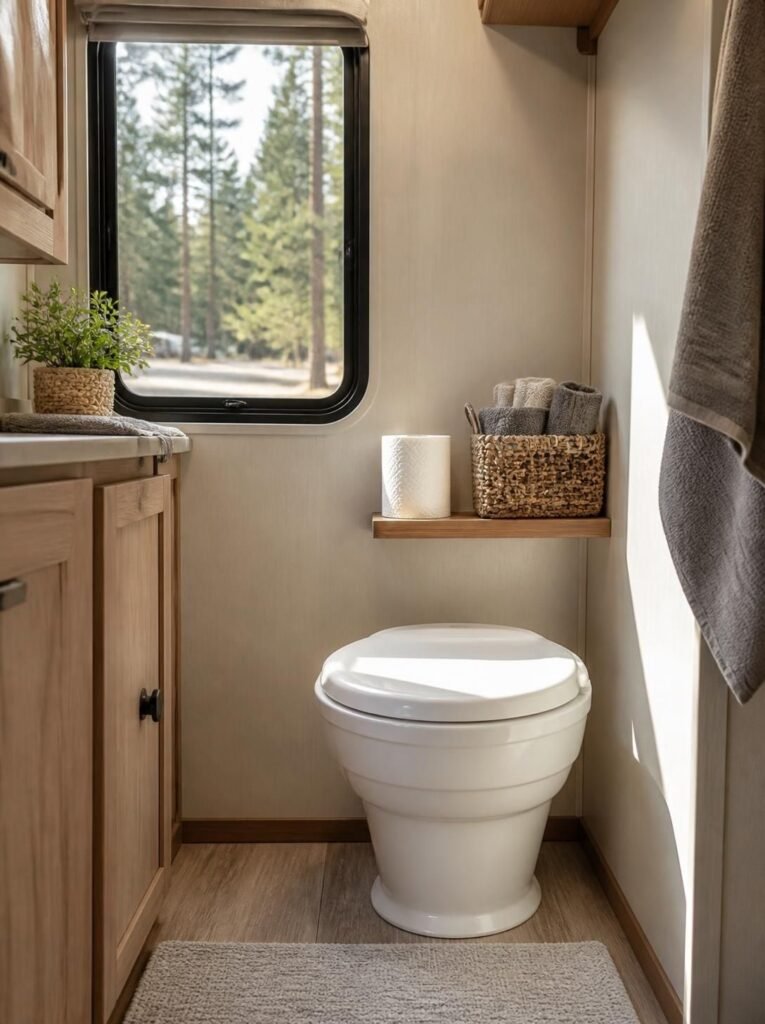
Why it’s a must have. Standard household toilet paper often doesn’t break down quickly enough for an RV’s smaller holding tank and plumbing system, leading to clogs, backups, and inaccurate tank level sensor readings that make managing your waste system considerably more frustrating.
Why you need it. A clogged RV holding tank is a genuinely unpleasant problem to deal with, and the fix is as simple as switching to a product specifically designed to break down quickly in a smaller tank system.
What to look for. Toilet paper explicitly labeled as RV or septic safe, and ideally tested to dissolve quickly, since not all products marketed this way perform equally well.
Budget tips. This typically costs only a little more than standard toilet paper, making it one of the cheapest, highest value items on this entire list relative to the problem it prevents.
Tip. Keep a dedicated stock of this paper in your RV specifically, separate from whatever you use at home, so you’re never tempted to grab the wrong roll out of convenience.
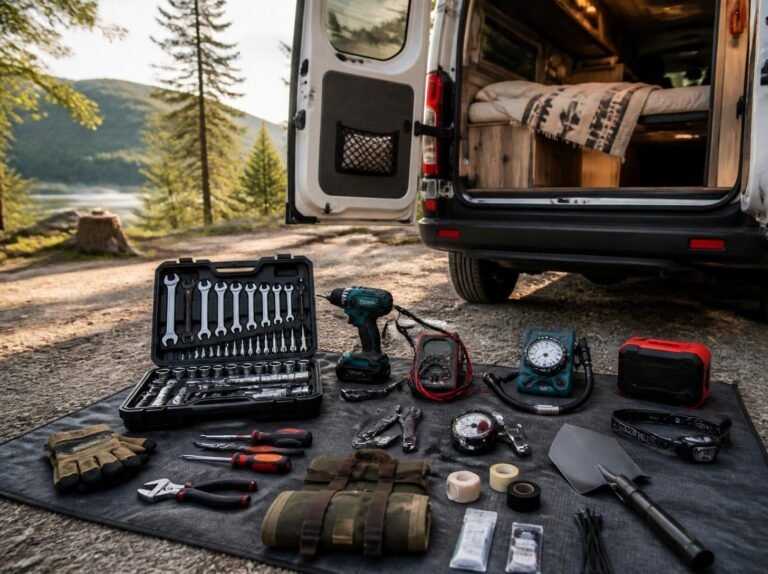
6. Basic RV Tool Kit

Why it’s a must have. Minor mechanical issues, a loose screw, a stuck slide out, a small plumbing fix, come up often enough on the road that having basic tools on hand saves a genuine amount of frustration compared to needing to track down a hardware store mid trip.
Why you need it. RVs experience more vibration and wear related issues than a stationary home, and being able to handle small fixes yourself keeps minor problems from derailing a trip entirely.
What to look for. A kit covering the basics, screwdrivers, pliers, an adjustable wrench, electrical tape, and a few spare fuses matched to your specific RV’s fuse ratings.
Budget tips. A general purpose tool kit covers most needs without requiring an RV specific branded version, so shopping for value in a standard hardware store kit works just as well.
Tip. Check and restock your spare fuses specifically before every major trip, since these are the most commonly used and most easily depleted item in a typical RV tool kit.
7. Portable Generator
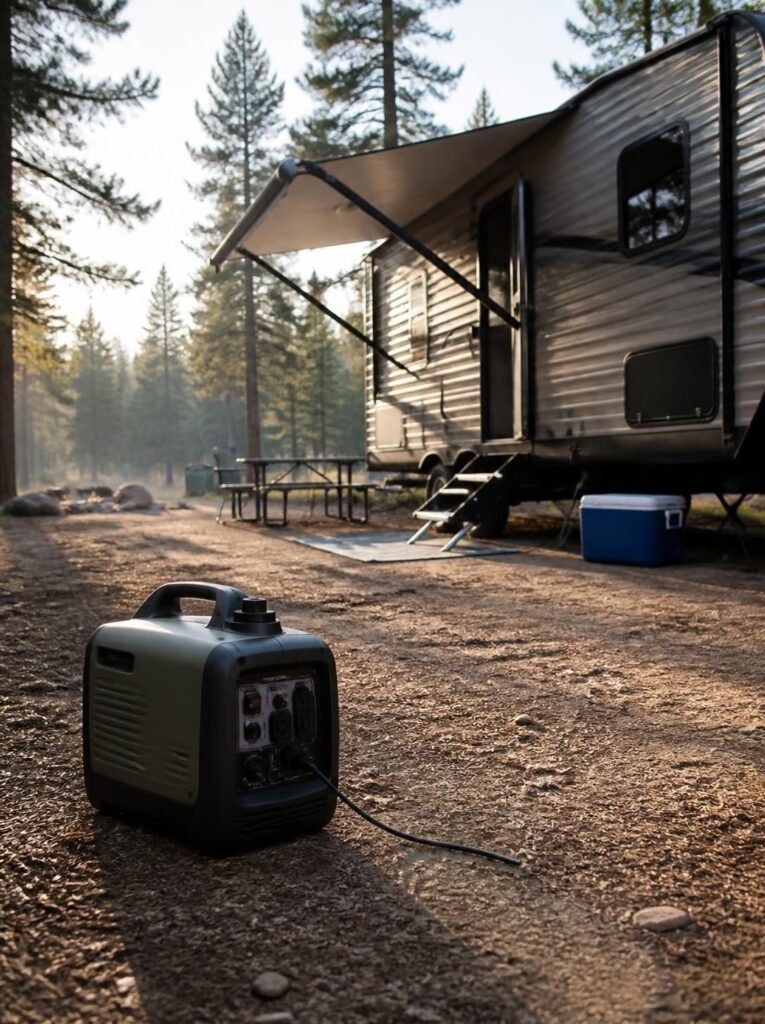
Why it’s a must have. A portable generator provides backup power independent of a campground hookup, useful both for boondocking and as a safety net if you’re relying on a hookup that turns out to be unreliable or unavailable.
Why you need it. Running an air conditioner, charging devices, or keeping a refrigerator cold without shore power requires a genuine power source, and a generator covers needs that a smaller solar setup sometimes can’t fully handle, particularly for higher draw appliances.
What to look for. Wattage output matched to what you actually plan to run, noise level, since many campgrounds have specific generator use hours and noise restrictions, and fuel type, with propane and gasoline both common options.
Budget tips. A smaller capacity generator covers basic needs like charging and lighting at a considerably lower price point than a larger unit capable of running an air conditioner.
Tip. Check individual campground rules on generator use before your trip, since many developed campgrounds restrict hours or ban generators entirely in certain areas.
Before You Buy: A Few General Tips
Match every item on this list to your actual rig size and camping style rather than buying the largest or most expensive version by default.
Store sewer and fresh water hoses in completely separate, clearly labeled containers without exception, since this single habit prevents one of the most serious and unpleasant mistakes an RV owner can make.
And do a pre-trip inventory check of consumable items specifically, fuses, septic-safe toilet paper, generator fuel, before every departure rather than assuming your supply is still adequate from the last trip.
Frequently Asked Questions
Can I use a regular garden hose instead of a drinking-safe one? No, standard garden hoses aren’t rated for drinking water and can leach chemicals into water passing through them, making a dedicated drinking-safe hose a genuine health consideration rather than just a nice upgrade.
Is septic-safe toilet paper really necessary, or is this overkill? It’s genuinely worth using, since standard toilet paper can clog an RV’s smaller tank system and plumbing in a way that’s considerably more disruptive than a similar issue in a full sized home system.
How many leveling blocks do I actually need? Most rigs need enough blocks to level at least two wheels, though a full set that can address more significant unevenness gives you more flexibility across a wider range of campsite conditions.
Do I need a generator if I already have a solar setup? Not necessarily, though a generator covers higher power draw needs, like running an air conditioner, that a typical portable solar setup often can’t fully handle on its own.
What size tool kit do I actually need for an RV? A basic kit covering common screwdrivers, pliers, a wrench, and electrical tape handles the vast majority of minor issues, and you can expand it over time based on the specific problems you actually encounter.
Final Thoughts
None of these seven items are exciting purchases, and that’s precisely the point. They’re the unglamorous basics that quietly prevent the kind of problems that can genuinely derail a trip, a tank that won’t drain properly, a rig that rolls on an uneven site, water you can’t safely drink.
Get these covered first, and the more exciting gadgets and organization upgrades become genuinely enjoyable additions rather than compensating for gaps in the basics.
If you’re ready to build out the rest of your setup, my 5 must have camper gadgets guide and top 15 RV parks in North America guide are both worth a look for what comes next.