
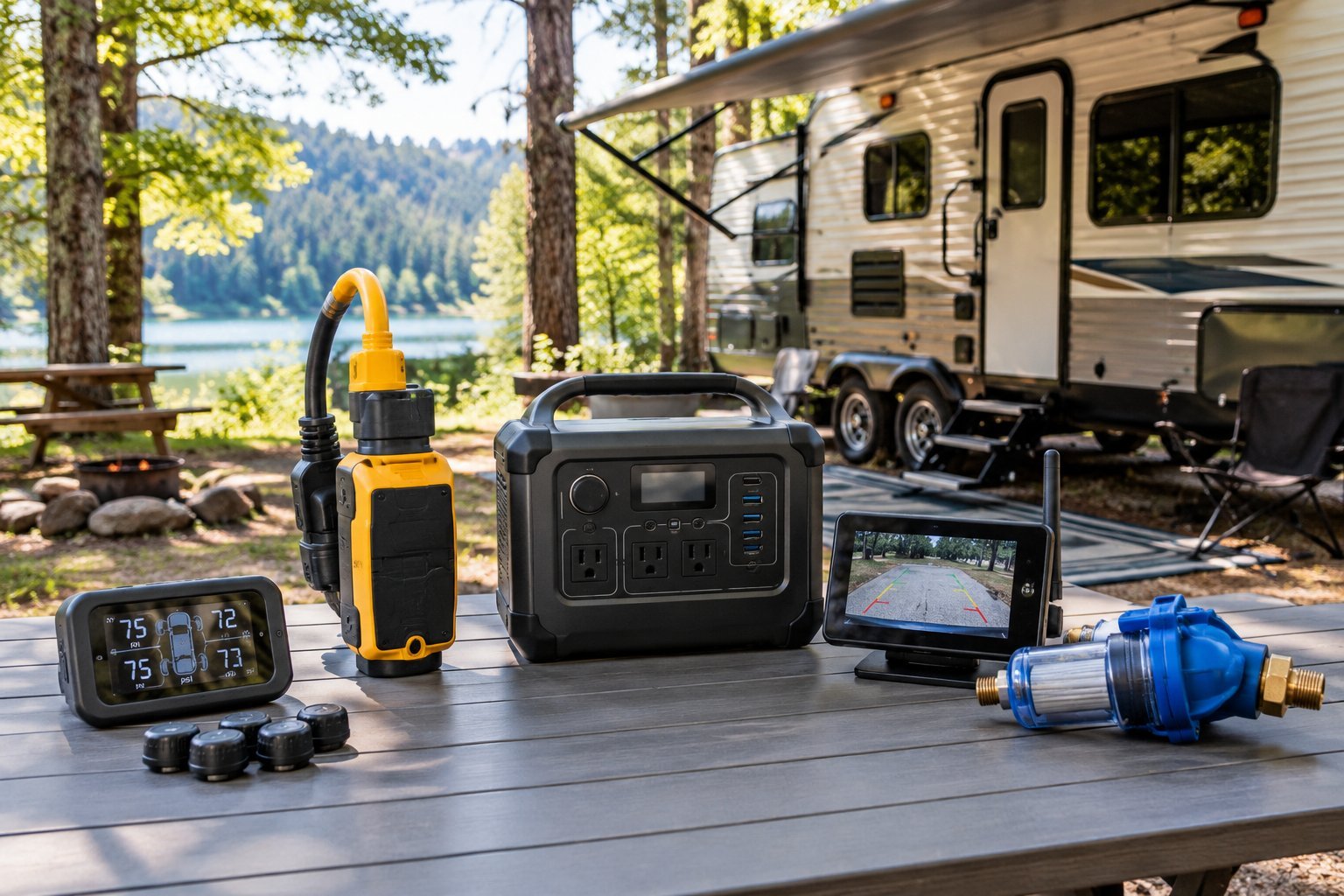
Not every camper gadget on the market actually earns its keep. A lot of them look clever in a product video and then spend the rest of their life in a storage bay, untouched after the first trip. The five on this list are different.
They solve genuine, recurring problems that come up on nearly every RV trip, towing safety, power protection, off grid flexibility, backing up a trailer, and campground water quality, and they’re popular for a reason rather than just a passing trend.

This guide covers what each one actually does, why it’s worth the investment, and what to look for before you buy.
If you’re also working on the storage side of your rig, my 5 easy RV organization accessories and hacks guide pairs naturally with this list, and my top 15 RV parks in North America guide is worth a look for where to actually put all this gear to use.
Quick Guide to These Camper Gadgets
| Gadget | Solves | Typical Price Range |
|---|---|---|
| Tire pressure monitoring system | Blowouts and tire failure while towing | $100 to $250 |
| Surge protector or EMS | Electrical damage from bad campground power | $60 to $300 |
| Portable solar generator | Power access while boondocking | $200 to $1,500+ |
| Wireless backup camera | Difficult, stressful backing up and parking | $100 to $300 |
| Water pressure regulator and inline filter | Damaged plumbing and poor tasting water | $20 to $60 |
1. Tire Pressure Monitoring System
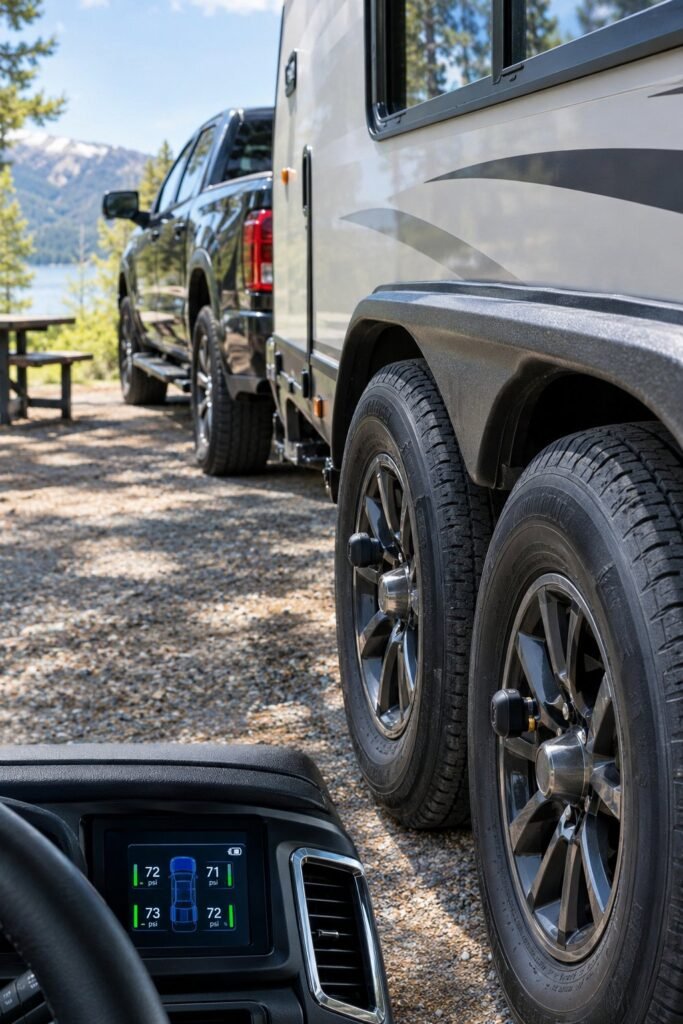
Why it’s awesome. A tire pressure monitoring system tracks real time pressure and temperature across every tire on your rig, including the tow vehicle, alerting you immediately if something starts trending toward a blowout rather than leaving you to find out the hard way on the highway.
Why you need it. Tire failure is one of the most common and genuinely dangerous issues RV owners face, and a slow leak or overheating tire often shows warning signs well before it fails completely, warning signs a monitoring system catches and a quick glance in your mirror never will.
What to look for. Wireless sensor compatibility with the number of tires on your specific setup, a clear in-cab display or app integration, and battery life on the individual sensors that matches how often you’re realistically willing to replace or recharge them.
Budget tips. Systems covering four to six tires cost less than those built for larger setups with dual rear wheels, so buy a system actually sized to your rig rather than overpaying for unnecessary sensor capacity.
Tip. Check sensor battery levels before every major trip rather than waiting for a low battery alert mid drive, since a dead sensor defeats the entire purpose of the system.
2. Surge Protector or Electrical Management System

Why it’s awesome. This device sits between your RV’s power cord and the campground pedestal, monitoring incoming voltage and automatically cutting power if it detects a surge, miswired pedestal, or other electrical fault before any of it reaches your rig’s sensitive electronics and appliances.
Why you need it. Campground electrical hookups vary wildly in quality, and a genuinely bad pedestal can fry an air conditioner, refrigerator, or other expensive onboard system in seconds, an expensive and completely avoidable repair with the right protection in place.
What to look for. A full electrical management system offers more comprehensive protection than a basic surge protector alone, including monitoring for low voltage, miswiring, and other faults beyond just surges specifically.
Budget tips. A basic surge protector costs considerably less than a full electrical management system, and while the fuller system offers better protection, a basic surge protector is still a meaningful upgrade over no protection at all if budget is tight.
Tip. Choose a model with a visible digital display showing real time voltage readings, which makes it easy to spot a questionable campground pedestal before you even plug in fully.
3. Portable Solar Generator or Power Station

Why it’s awesome. A portable solar generator gives you a genuine power source independent of a campground hookup, letting you run lights, charge devices, and in some cases power small appliances while boondocking or dry camping away from any electrical infrastructure.
Why you need it. Campsites with full hookups aren’t always available, especially for travelers who prefer more remote, undeveloped camping, and a solar generator removes the anxiety of running down your battery with no way to recharge until you reach the next developed site.
What to look for. Battery capacity matched to what you actually plan to run, the number and type of output ports, and whether the unit pairs with a compatible solar panel for recharging during the day while you’re out exploring.
Budget tips. Smaller capacity units cost significantly less and are genuinely sufficient if your main goal is charging phones and running small lights rather than powering larger appliances.
Tip. Test your specific power needs at home before a trip, running your actual devices off the unit to confirm the battery capacity genuinely matches your expectations rather than assuming based on the marketed specs alone.
4. Wireless Backup Camera System

Why it’s awesome. A wireless backup camera system mounts on the rear of your RV or trailer and streams a live video feed to a dashboard monitor, giving you a clear view of what’s directly behind you while backing into a site or navigating a tight turn.
Why you need it. Backing up a large rig, especially a trailer, is one of the most stressful parts of RV travel for a lot of owners, and a backup camera removes much of the guesswork and the need for a second person standing outside directing you the entire time.
What to look for. A genuinely reliable wireless signal with minimal lag, a weatherproof camera rated for outdoor use, and a monitor with adequate screen size and brightness to see clearly even in bright daylight.
Budget tips. Wired systems generally cost less than wireless ones, though the added convenience of a wireless setup, with no cable running the length of your rig, is worth the price difference for a lot of owners.
Tip. Mount the camera high enough to capture a wide field of view rather than just a narrow strip directly behind the bumper, which makes a noticeable difference in how useful the feed actually is while maneuvering.
5. Water Pressure Regulator and Inline Filter
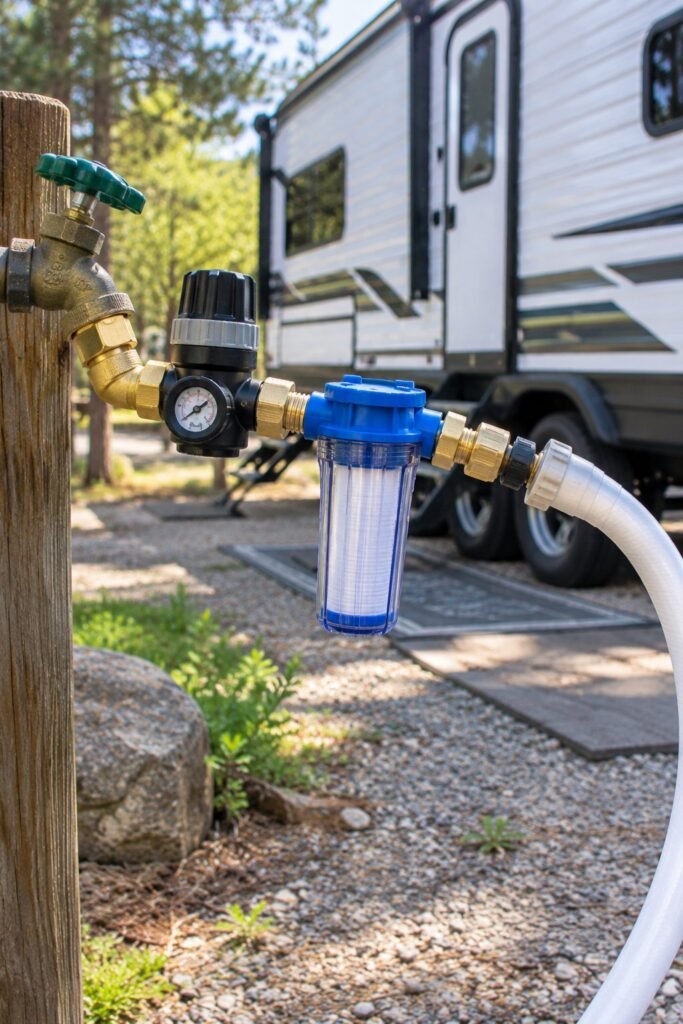
Why it’s awesome. This simple device attaches between the campground water spigot and your RV’s fresh water hose, regulating incoming pressure to a safe level while filtering out sediment and improving the taste of water that often varies significantly in quality from site to site.
Why you need it. Campground water pressure is frequently much higher than an RV’s internal plumbing is built to handle, and high pressure left unregulated can cause slow leaks or outright pipe damage over time, an expensive problem avoided entirely by a cheap, simple regulator.
What to look for. An adjustable pressure regulator rather than a fixed setting, and a filter rated to handle sediment and chlorine specifically, since both are common issues at a wide range of campgrounds.
Budget tips. This is genuinely one of the most affordable items on this entire list relative to the problem it prevents, making it one of the easiest upgrades to justify regardless of budget.
Tip. Replace the inline filter cartridge according to the manufacturer’s recommended schedule rather than waiting until water quality noticeably declines, since a worn out filter stops doing its job well before it becomes obvious.
Before You Buy: A Few Things to Consider
Match every gadget on this list to your actual camping style rather than buying based on what seems popular online.
A full electrical management system matters more if you frequently stay at older or smaller campgrounds with less reliable power, while a solar generator matters more if boondocking is a regular part of your travel rather than an occasional exception.
Check compatibility with your specific rig, tire count, power system, and plumbing setup all vary enough between RVs that a product built for one setup doesn’t always translate directly to another.
And prioritize based on actual risk and frustration level rather than trying to buy everything on this list at once, since even the most useful gadgets add up in cost quickly.
Frequently Asked Questions
Do I really need a tire pressure monitoring system if I check my tires manually? A monitoring system catches gradual pressure loss and temperature changes in real time while driving, something a manual check before departure simply can’t account for once you’re actually on the road.
Is a basic surge protector enough, or do I need a full electrical management system? A basic surge protector offers meaningful protection against power surges specifically, while a full electrical management system catches a wider range of electrical faults, including miswiring and low voltage, making it the more comprehensive choice if your budget allows.
How much solar generator capacity do I actually need? This depends entirely on what you plan to power, so it’s worth calculating your actual device and appliance power draw before choosing a unit rather than guessing based on price point alone.
Are wireless backup cameras reliable, or do they lose signal? Quality units generally maintain a reliable signal at the distances relevant to RV backing up, though cheaper models can experience more lag or dropout, which is worth factoring into your buying decision.
Is a water pressure regulator necessary at every campground, or just some? It’s worth using at every hookup, since pressure varies unpredictably between campgrounds and you won’t always know a specific site has dangerously high pressure until after damage has already occurred.
Final Thoughts
These five gadgets share a common thread: they each prevent a genuinely expensive or stressful problem for a relatively small upfront cost.
A blown tire, a fried refrigerator, a dead battery with no way to recharge, a stressful backing up situation, or a damaged water line are all avoidable with the right piece of equipment in place before the problem happens rather than after.
Start with whichever risk feels most relevant to how you actually camp, and build out the rest of your setup from there.
If you’re also looking to streamline your gear and storage, my DIY camping hacks guide and best camping gear under $50 guide both round out a well prepared setup for your next trip.