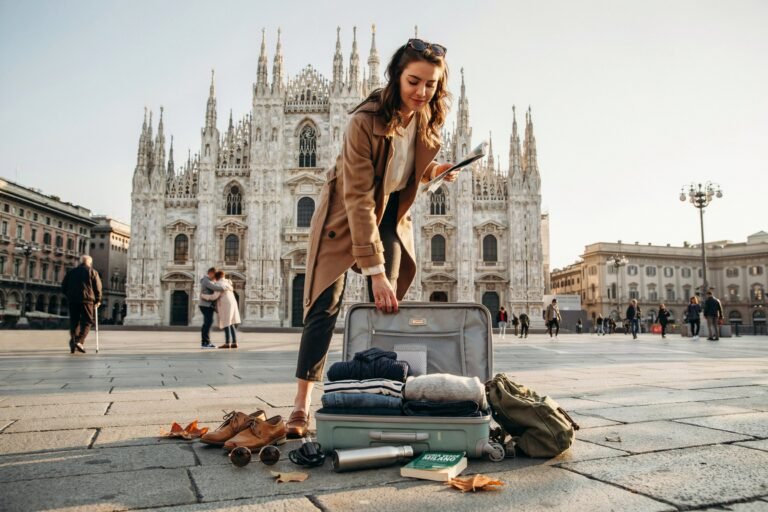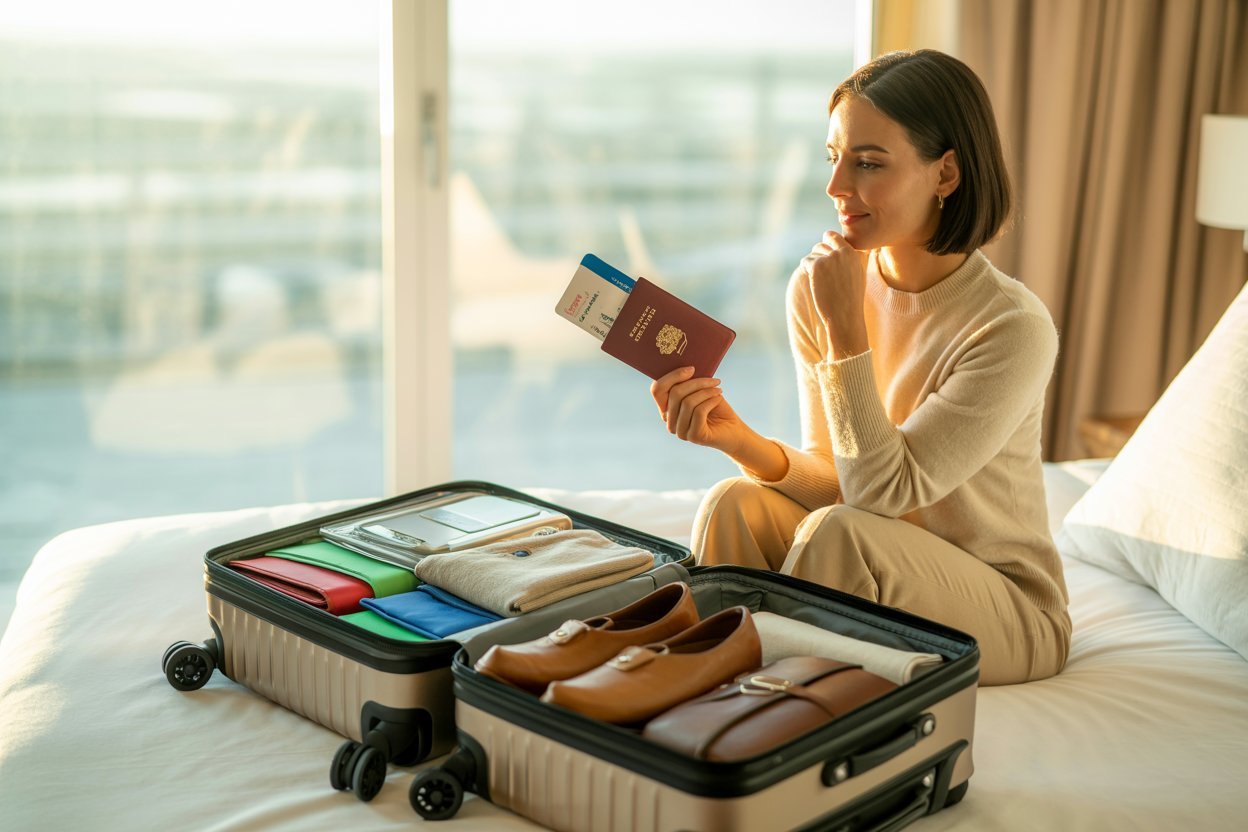
Packing for 10 days in Europe with just a carry-on might sound stressful, but once I figured out what actually works, it became so much easier—and honestly, way more freeing.
No heavy luggage, no waiting at baggage claim, and no dragging oversized suitcases through busy streets or train stations.
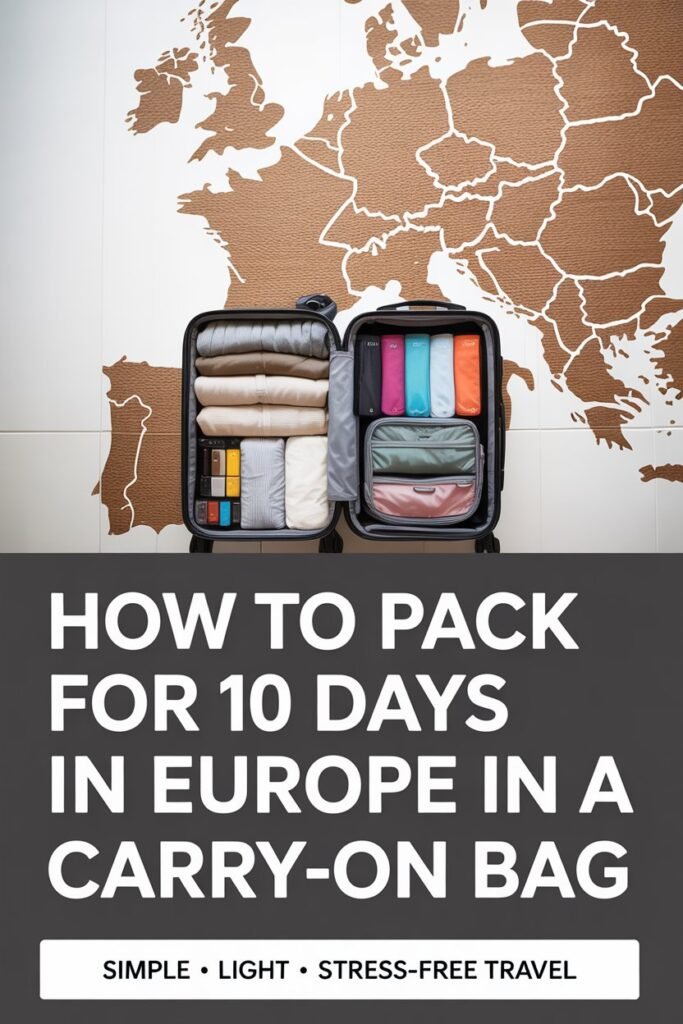
I’ve learned that it’s not about packing more it’s about packing smarter. Choosing versatile outfits, sticking to essentials, and planning ahead makes all the difference.
In this post, I’m sharing exactly how to pack for 10 days in Europe using only a carry-on, without feeling like you’re missing anything.
Disclaimer: This post contains affiliate links. If you make a purchase through these links, we may earn a small commission at no extra cost to you.
Amazon Shopping List: How to Pack for 10 Days in Europe
- Lightweight Carry-On Luggage
Perfect for navigating airports, trains, and cobblestone streets across Europe.
BUY NOW ON AMAZON - Packing Cubes Set
Helps organize outfits, save space, and keep your suitcase neat for 10 days.
BUY NOW ON AMAZON - Travel Toiletry Kit (TSA-Approved)
Keeps your essentials organized and compliant for flights and hotels.
BUY NOW ON AMAZON - Comfortable Walking Shoes
Essential for long days of sightseeing in cities, museums, and historic towns.
BUY NOW ON AMAZON - Universal Travel Adapter
Ensures you can charge devices in different European countries without issues.
BUY NOW ON AMAZON
How Traveling Light Changed My Europe Trips
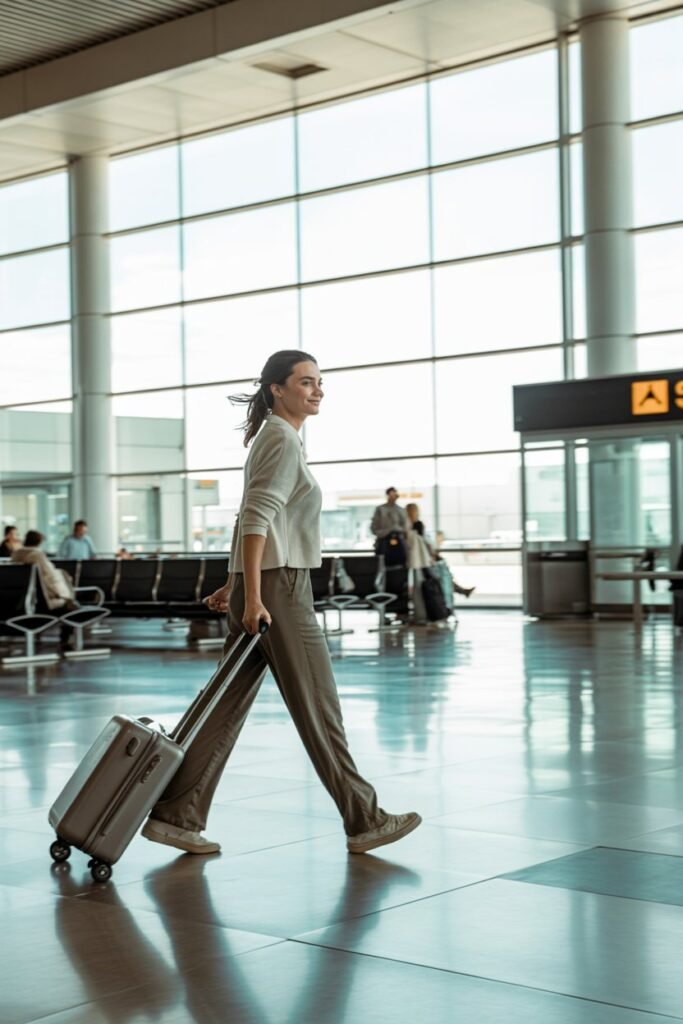
Packing light completely changed the way I experience Europe.
Instead of stressing over heavy bags, I move around easily whether I’m walking through narrow streets, hopping on trains, or checking into hotels.
- I move around faster and with less stress
- No waiting at baggage claim or worrying about lost luggage
- It’s easier to navigate airports, trains, and city streets
- I spend less time packing and unpacking
- I focus more on enjoying the trip, not managing luggage
Traveling light made everything feel simpler, smoother, and way more enjoyable.
What to Look for in the Perfect Carry-On Bag
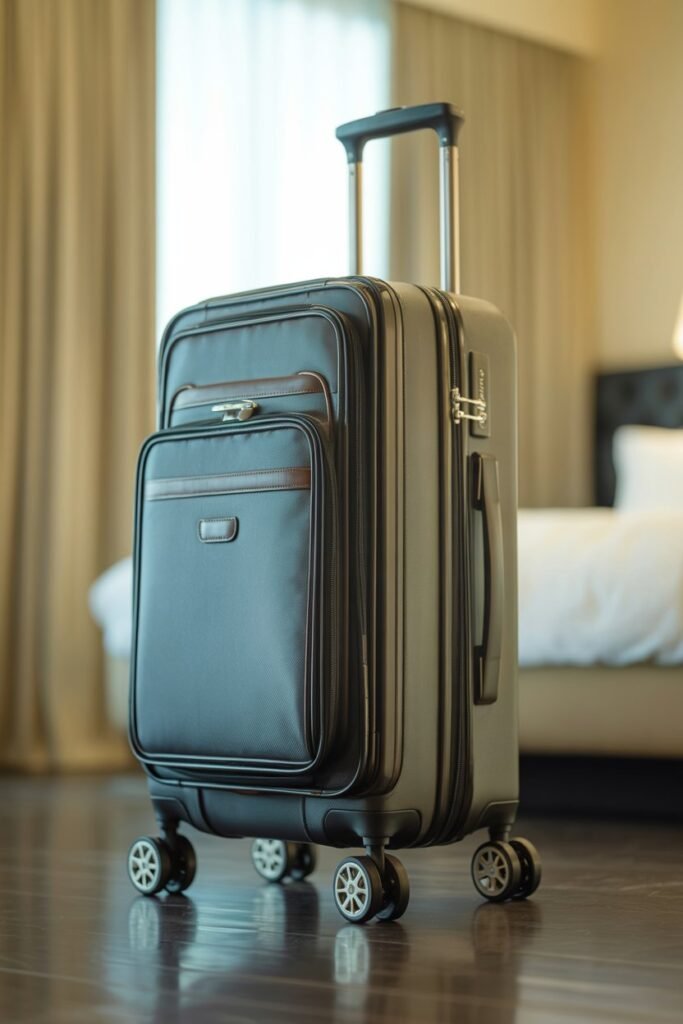
Picking the right carry-on honestly makes or breaks your whole packing experience.
Once I switched to a bag that actually fit my needs, everything felt easier—from packing to moving around during the trip.
- Choose a lightweight, durable suitcase that’s easy to carry or roll
- Make sure it meets airline size requirements to avoid surprises
- Look for multiple compartments to keep things organized
- Pick a bag with smooth wheels or comfortable straps
- Go for something that’s simple and easy to handle, not bulky
The right carry-on keeps everything organized and stress-free, so you can focus on your trip instead of your luggage.
The Simple Packing Strategy I Use for Every Trip
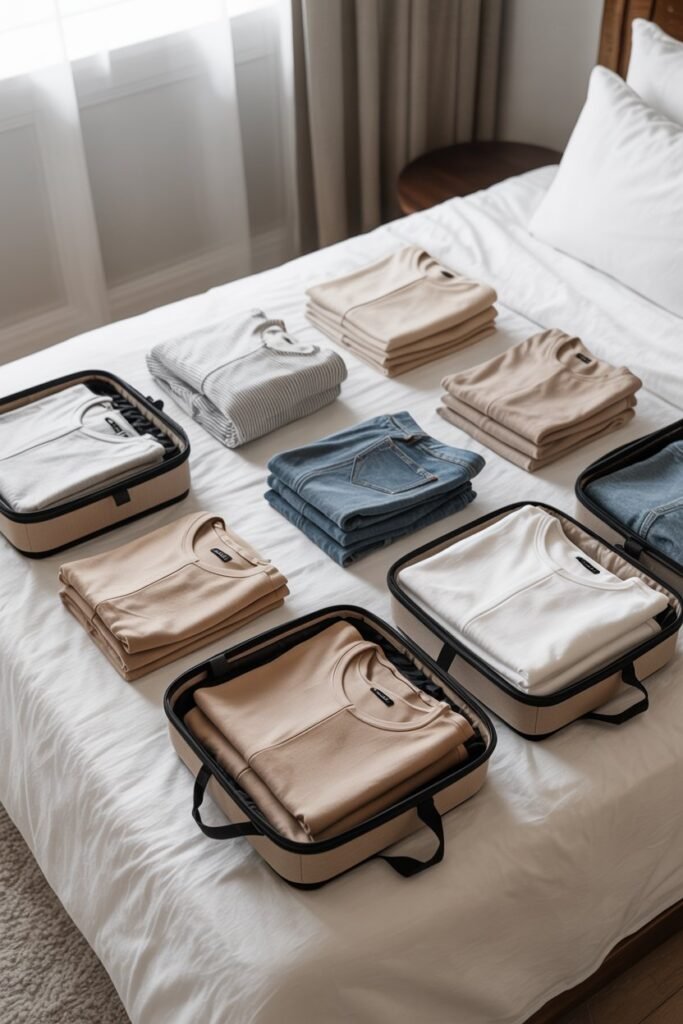
Over time, I stopped trying to pack for every possible situation and started focusing on what I’ll actually wear and use. Keeping things simple makes packing faster and way less stressful.
- I choose versatile outfits that can be mixed and matched
- I stick to a neutral color palette so everything works together
- I pack only what I know I’ll actually wear (not “just in case” items)
- I limit shoes to 2–3 pairs max
- I roll my clothes to save space and stay organized
- I plan outfits ahead so I’m not overpacking
This simple approach helps me fit everything I need into a carry-on without feeling like I’m missing anything.
The Only Clothes I Pack for a 10-Day Trip
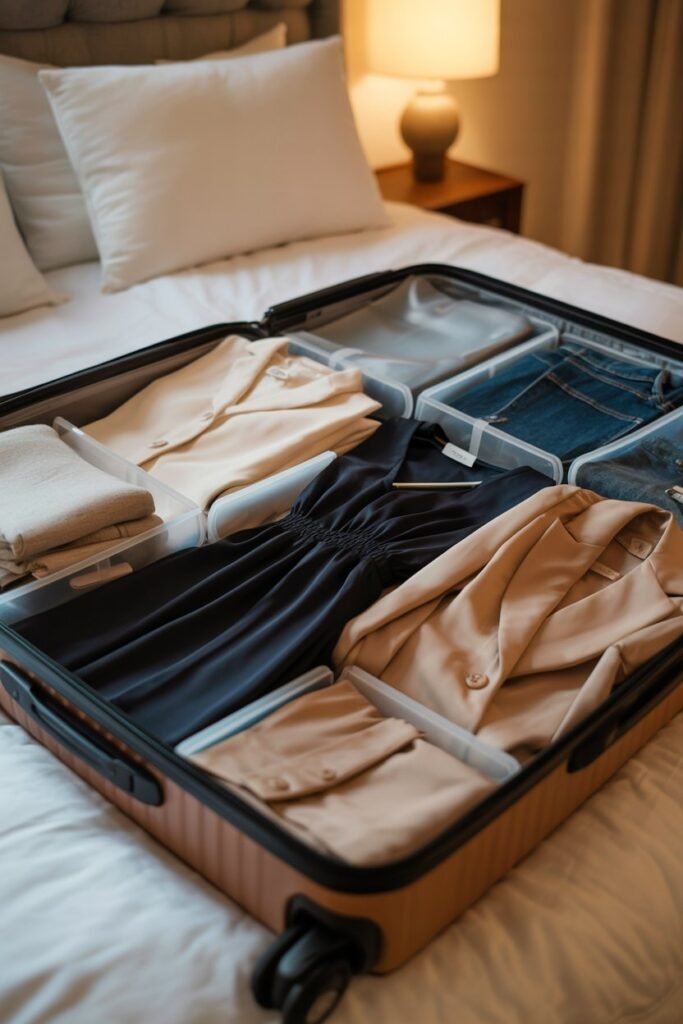
When I travel, I keep my clothing list very simple so everything fits easily into a carry-on and still gives me enough outfit options for the whole trip.
- 2–3 neutral tops (t-shirts, tank tops, or blouses)
- 1–2 long sleeve layers for cooler days or evenings
- 2 bottoms (jeans, trousers, or comfy pants)
- 1 dress or nice outfit for dinners or special outings
- 1 light jacket or blazer that goes with everything
- Sleepwear (1–2 sets)
- Undergarments for each day + a few extras
- Comfortable walking shoes + one dressier pair
- Light scarf or accessory to change up outfits
I focus on pieces that mix and match easily so I can create multiple outfits without overpacking.
My 3-Shoe Rule That Saves So Much Space
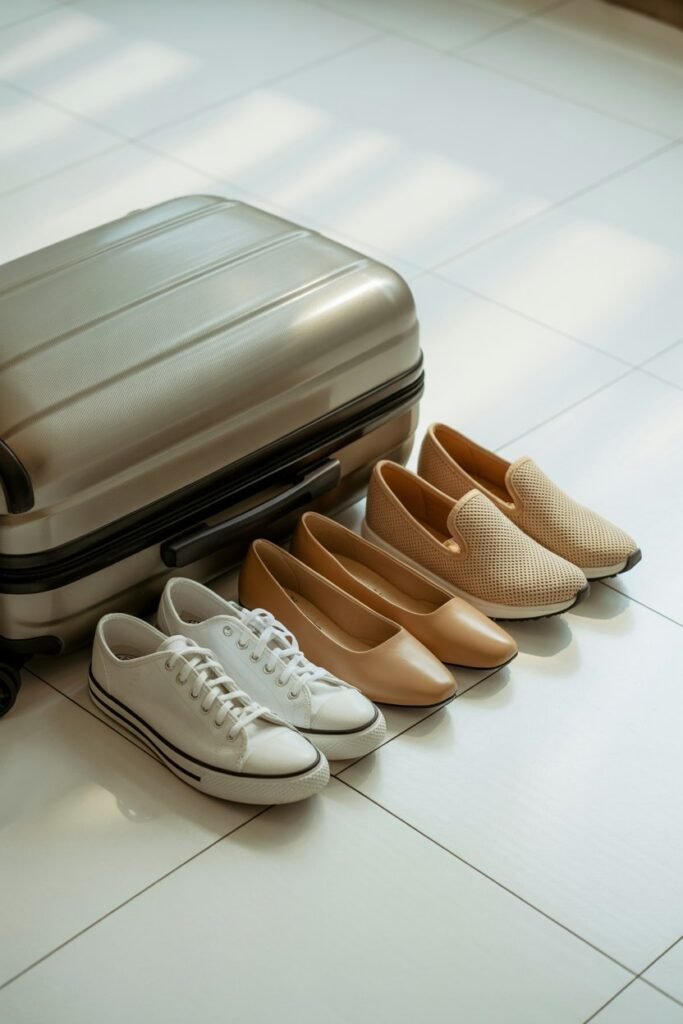
I keep my shoe packing super simple because shoes take up the most space in a carry-on. Sticking to just three pairs gives me everything I need without overpacking.
- 1 pair of comfortable walking sneakers for full travel days
- 1 pair of dressy flats or sandals for dinners or nicer outfits
- 1 lightweight casual pair (like slides or loafers) for easy wear
This simple rule keeps my bag light, organized, and still gives me options for every kind of day on my trip.
My Simple Comfort Essentials for Travel
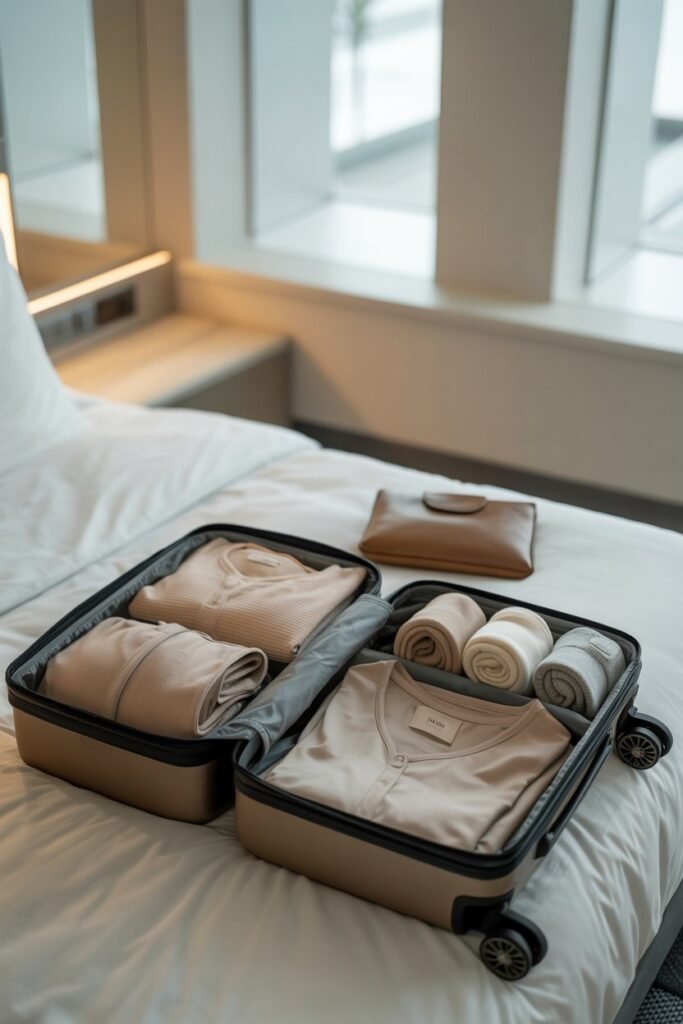
When I pack for a trip, I always make sure I include a few small essentials that keep me comfortable throughout the journey.
These are the items that don’t take up much space but make a big difference in how easy and relaxed my trip feels.
- Enough underwear for each day + 1–2 extras
- A set of comfortable sleepwear for restful nights
- A few basic basics (like camisoles or simple tees) for layering
- A pair of socks for every day of walking
- A lightweight travel bra or comfortable support wear
These simple items keep me feeling fresh, comfortable, and prepared without adding extra bulk to my carry-on.
My Leak-Free Toiletries Travel Routine
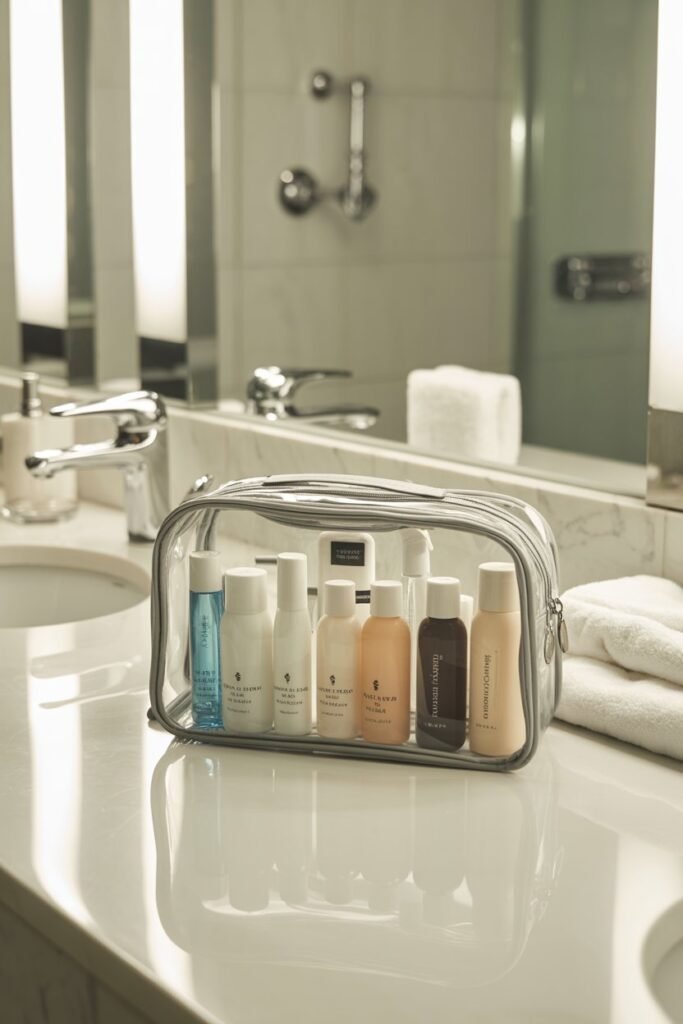
I keep my toiletries super simple when I travel, and I’ve learned a few tricks that stop spills, save space, and make airport security easier.
- I use travel-size bottles (100ml or less) for all liquids
- I pack everything in a clear, zippered toiletry bag
- I place a small plastic wrap under each bottle cap to prevent leaks
- I choose solid versions when possible (like bar soap or solid shampoo)
- I keep a separate mini pouch for daily essentials so I’m not unpacking everything
- I only bring what I actually use daily—no extras
This routine keeps my bag clean, organized, and completely stress-free during travel.
How I Pack Beauty Products Without the Extra Weight
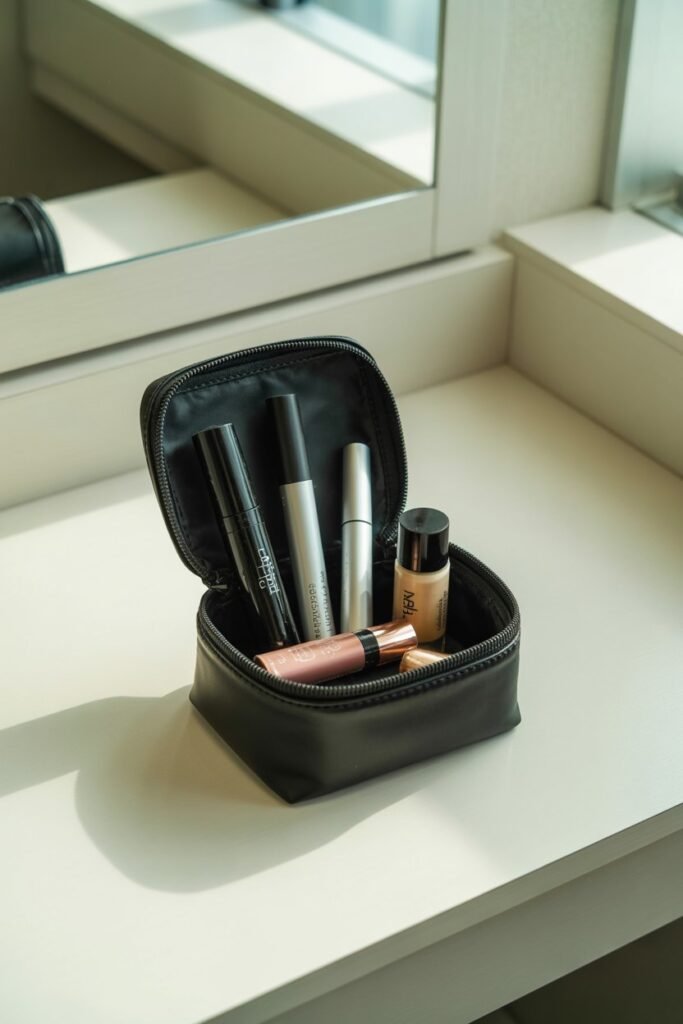
When I travel, I don’t bring my full beauty collection—I only focus on the essentials that keep me looking fresh without adding extra weight to my carry-on.
- I choose multi-use products (like lip & cheek tint or tinted moisturizer)
- I stick to mini or travel-size items only
- I skip heavy palettes and bring 1 neutral eyeshadow or none at all
- I pack lightweight basics like mascara, concealer, and lip balm
- I decant products into small reusable containers to save space
- I only bring what I actually use in my daily routine at home
This simple approach keeps my beauty bag light, organized, and perfect for traveling without stress.
How I Stay Organized With My Travel Tech Essentials
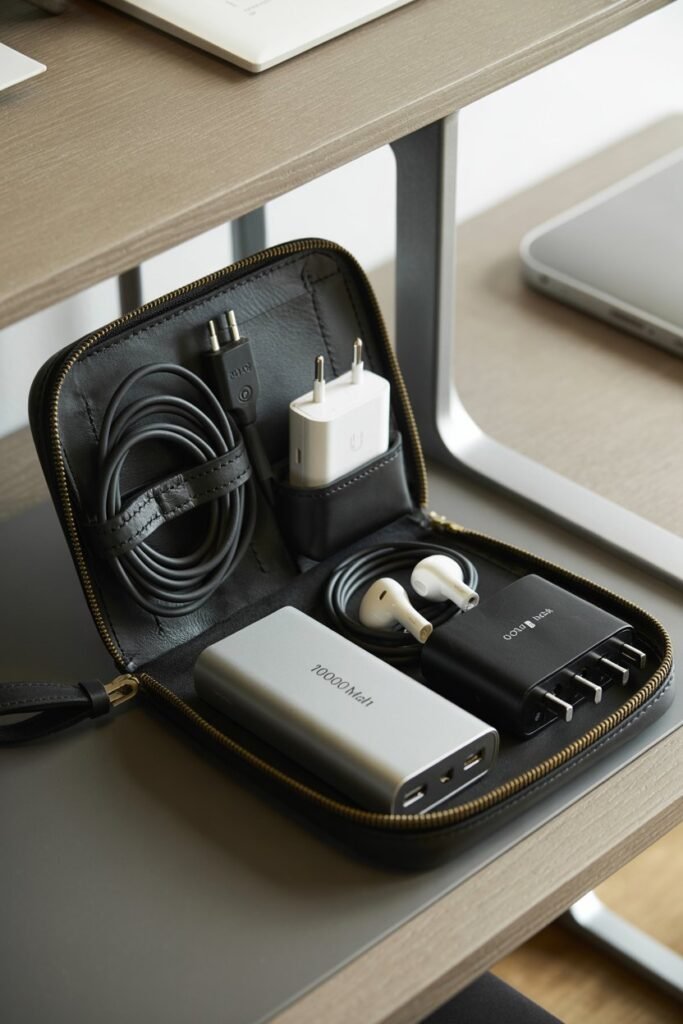
When I travel, I keep my tech setup simple so everything is easy to find, charge, and use without stress. Staying organized saves me time and prevents tangled cables or missing chargers.
- I use a small tech organizer pouch with compartments
- I keep all charging cables neatly wrapped or tied
- I pack a universal travel adapter for different outlets
- I bring a power bank for long travel days
- I label or separate items so I can find them quickly
- I keep all tech items in one dedicated section of my carry-on
This simple system keeps everything in one place and makes traveling much smoother.
How I Pack My Personal Item Like a Pro
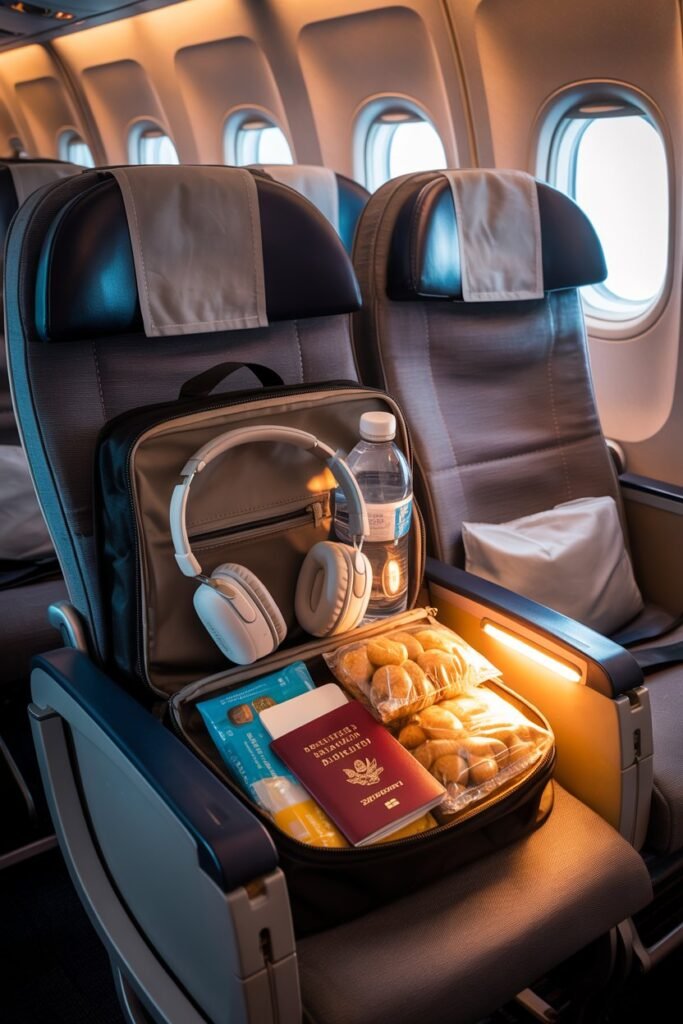
My personal item is just as important as my carry-on because it holds everything I need easy access to during travel.
I treat it like my “on-the-go survival bag” so I stay comfortable and organized from start to finish.
- I keep travel documents, passport, and wallet in an easy-to-reach pocket
- I pack a small toiletry pouch with lip balm, wipes, and hand cream
- I include tech essentials like phone, charger, power bank, and earbuds
- I bring snacks and a reusable water bottle for long travel days
- I add comfort items like a scarf, sunglasses, or light sweater
- I keep everything organized in small pouches so nothing gets lost
This setup makes my personal item super functional and helps me stay stress-free while traveling.
How I Keep My Suitcase Organized With Packing Cubes
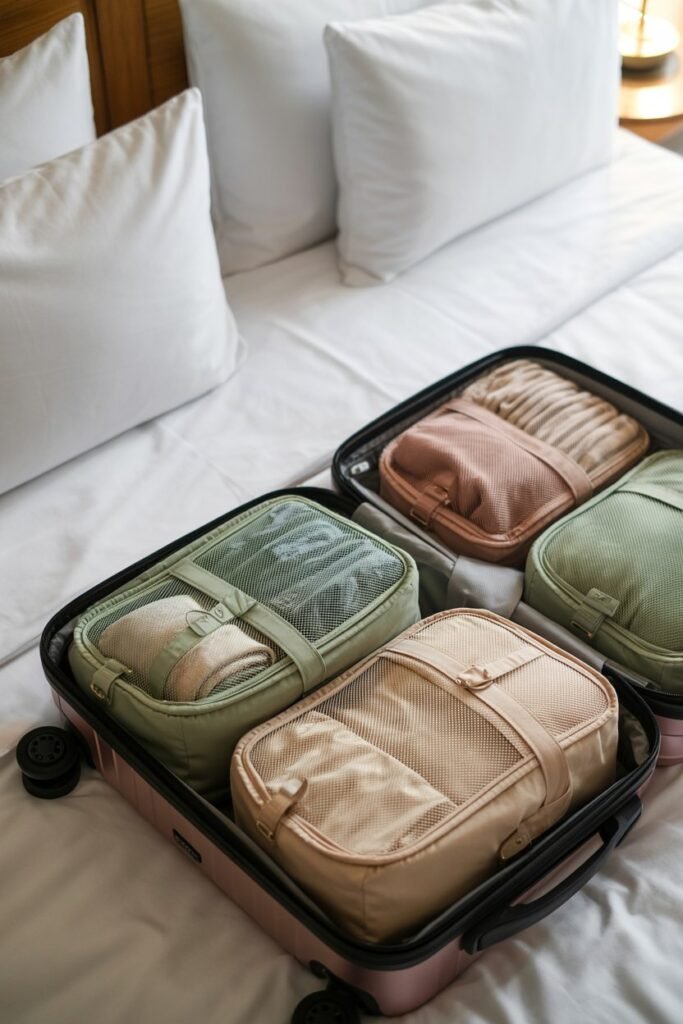
Packing cubes completely changed how I organize my suitcase because they keep everything neat, separated, and easy to find without making a mess.
- I use different cubes for each category (tops, bottoms, underwear, etc.)
- I roll clothes inside the cubes to save space and reduce wrinkles
- I pack one cube per outfit type for quick access
- I use a small cube for underwear and sleepwear
- I keep a separate cube for clean vs. worn items
- I label or remember cube placement so I can unpack fast without digging
This simple system keeps my suitcase clean, organized, and stress-free the entire trip.
My Step-by-Step Method for Packing Light
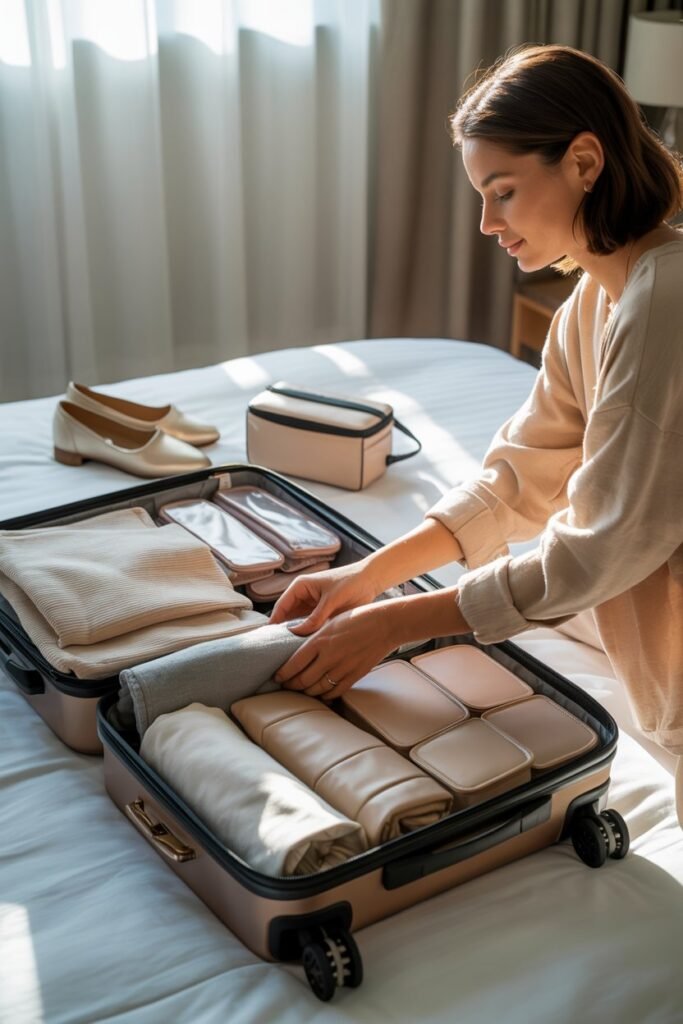
I don’t just throw things into my suitcase—I follow a simple system that helps me pack light without forgetting anything important.
- I start by planning outfits for each day, focusing on pieces I can mix and match
- I choose a neutral color palette so everything works together
- I lay everything out first and then remove anything I don’t absolutely need
- I pack clothes using packing cubes to stay organized and save space
- I roll my clothes instead of folding to fit more in less space
- I pack shoes and heavier items first to maximize suitcase structure
- I do a final check to make sure everything fits in my carry-on without forcing it
This step-by-step method keeps my packing simple, efficient, and stress-free every time.
The Things I Leave Out Every Time I Pack Now
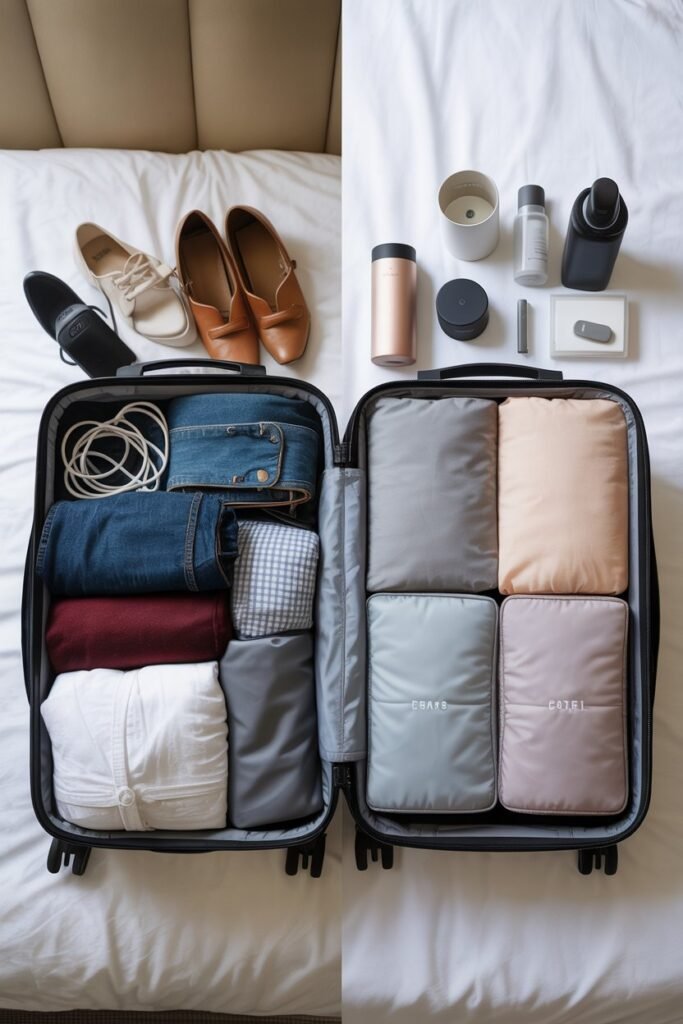
Over time, I realized that packing light isn’t just about what I bring—it’s also about what I confidently leave behind.
These are the things I no longer pack because I rarely use them or they just add unnecessary weight.
- “Just in case” outfits I never end up wearing
- Extra shoes beyond my 2–3 essential pairs
- Full-size toiletries instead of travel sizes
- Heavy makeup products or full palettes
- Too many accessories that don’t match multiple outfits
- Bulky towels or items hotels usually provide
- Duplicate clothing items that serve the same purpose
Letting go of these extras makes my suitcase lighter, more organized, and much easier to travel with.
My Simple Winter Packing Strategy for Europe
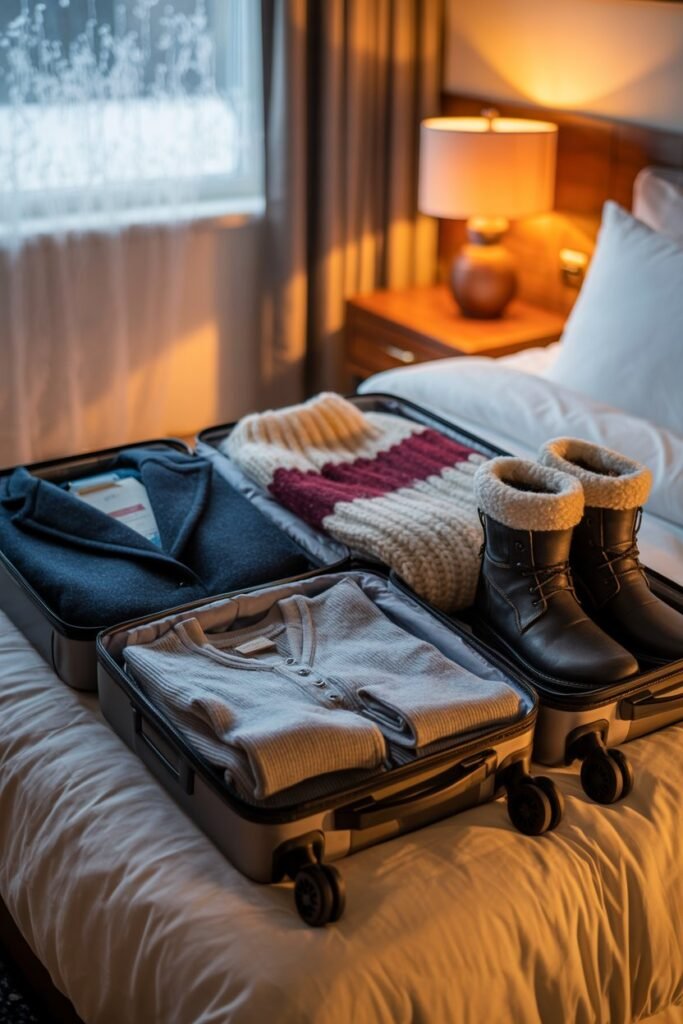
When I travel to Europe in winter, I don’t overpack heavy clothes—I focus on warmth, layering, and smart outfit choices so everything still fits in a carry-on.
- I pack thermal base layers that I can wear under outfits
- I choose warm, lightweight sweaters instead of bulky ones
- I stick to one heavy coat or jacket that matches everything
- I use layering pieces so I can adjust to different temperatures
- I pack warm accessories like a scarf, gloves, and beanie
- I wear my bulkiest shoes on travel days to save space
This simple winter strategy keeps me warm, comfortable, and still traveling light without a heavy suitcase.
FAQ: Packing for 10 Days in Europe (Carry-On Only)
- Can I really pack for 10 days in a carry-on?
Yes, if you choose versatile outfits and avoid overpacking “just in case” items. - How many outfits should I pack?
Around 5–7 mix-and-match outfits is usually enough for 10 days. - What’s the best way to save space?
Roll clothes, use packing cubes, and stick to a neutral color palette. - How many shoes should I bring?
2–3 pairs max: comfortable walking shoes, one dressy pair, and one casual option. - Do I need travel-size toiletries?
Yes, they help you save space and meet airline liquid rules. - What’s the biggest packing mistake?
Overpacking items you don’t end up wearing or using.
Final Thought
Packing for 10 days in Europe with a carry-on becomes easy once you stop overthinking and start focusing on what you’ll actually use.
The goal isn’t to bring everything—it’s to bring the right essentials that work together.
When you pack light, travel feels smoother, more flexible, and a lot more enjoyable.