San Francisco has always felt like a food lover’s paradise to me.
From iconic restaurants in San Francisco to cozy neighborhood cafés, every corner of the city seems to hide a culinary gem.
Over the years, I’ve explored San Francisco’s best eateries, local food markets, and hidden dining spots, sampling everything from fresh seafood by the bay to authentic international cuisine.
Whether you’re craving sourdough bread, clam chowder in a bread bowl, dim sum in Chinatown, or artisanal coffee, San Francisco offers something for every taste.
In this guide, I’ll share my favorite restaurants, food trucks, and must-try local dishes, highlighting spots that are perfect for foodies, families, or casual diners looking for the best food experiences in the city.
Disclaimer: This post contains affiliate links. If you make a purchase through these links, we may earn a small commission at no extra cost to you.
Amazon Shopping List: Places to Eat in San Francisco
- Travel Guidebook for San Francisco
Helps you discover top restaurants, hidden gems, and must-visit food spots.
BUY NOW ON AMAZON - Portable Phone Charger (Power Bank)
Keeps your phone charged for maps, reservations, and food photos while exploring the city.
BUY NOW ON AMAZON - Lightweight Crossbody Travel Bag
Perfect for carrying essentials safely while hopping between restaurants.
BUY NOW ON AMAZON - Comfortable Walking Shoes
Essential for exploring different neighborhoods like Mission District, Chinatown, and Fisherman’s Wharf.
BUY NOW ON AMAZON - Reusable Water Bottle
Keeps you hydrated during long food tours and city walks.
BUY NOW ON AMAZON
Quick Food Guide for San Francisco
Before you start exploring individual restaurants, it helps to know what makes San Francisco special for food lovers.
The city is known for fresh seafood, sourdough bread, Mexican-inspired street food, and high-quality coffee culture.
You’ll find everything from casual grab-and-go spots to world-famous dining experiences, often within the same neighborhood.
This guide will help you easily find the best places to eat without overthinking, so you can enjoy the city one bite at a time.
1. Boudin Bakery – Iconic Sourdough and Comfort Food
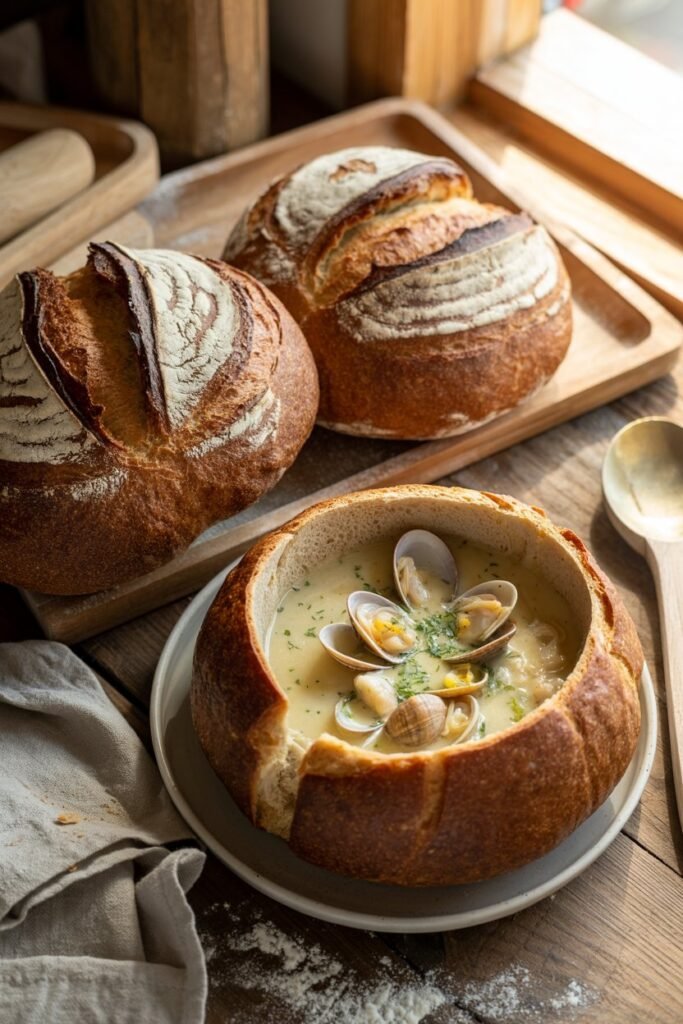
Every time I’m in San Francisco, I can’t skip Boudin Bakery. There’s just something magical about walking into a place that’s been serving the city since 1849.
The moment I step inside, I’m hit with the warm, comforting smell of freshly baked sourdough bread, and I can’t help but pause to watch the bakers at work.
It’s almost like a little theater — dough being shaped, loaves sliding into the oven, and that satisfying golden crust forming right before your eyes.
Why I love it:
- The sourdough bread is unlike anything else — tangy, chewy, and just perfect with a hot bowl of soup.
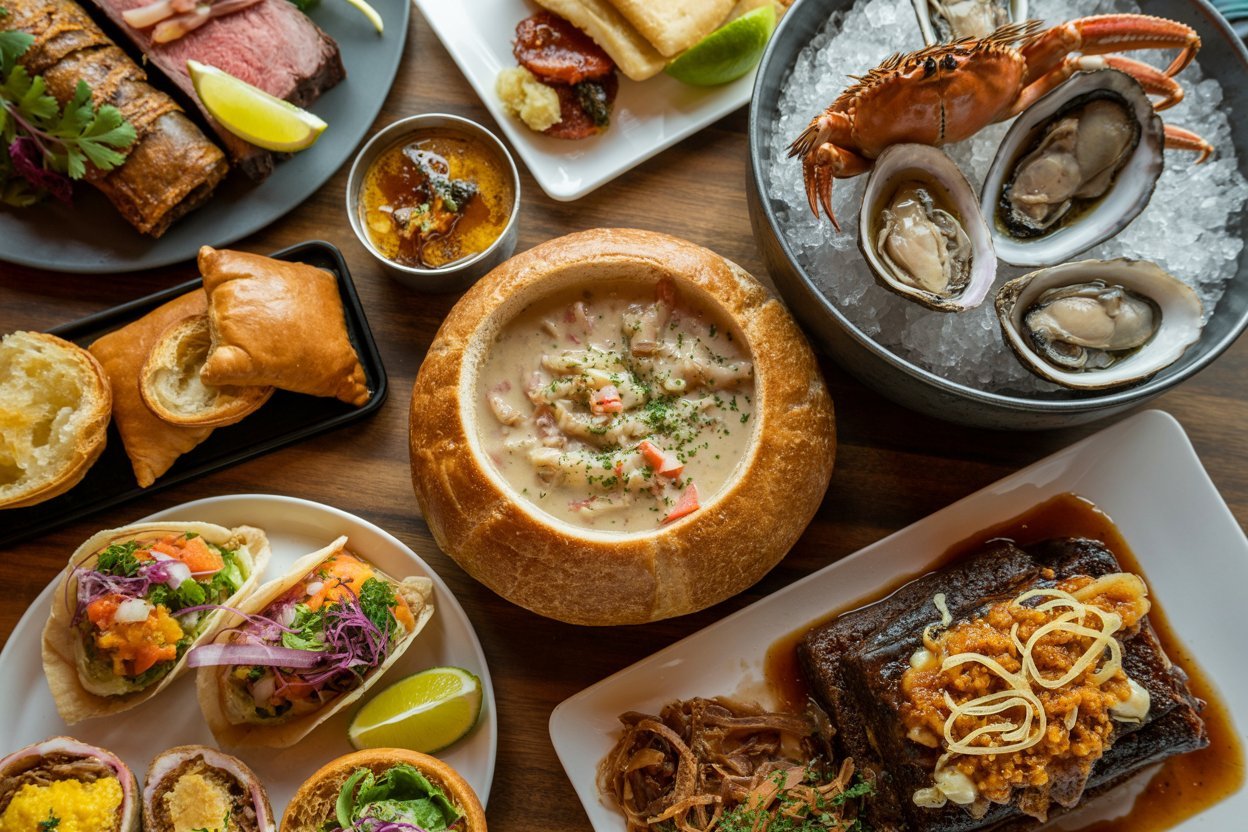
- The bakery has a casual café area, so I can grab a clam chowder in a sourdough bread bowl and watch the world go by. It’s one of those meals that feels both historic and comforting at the same time.
- I also enjoy picking up a loaf to take home. There’s nothing better than toasting a slice and smelling that iconic sourdough aroma fill my kitchen.
What I always order:
- Clam chowder in a sourdough bread bowl — it’s rich, creamy, and perfect for a Bay Area day.
- Classic sourdough loaf — I usually bring one home; it’s perfect for sandwiches or just buttered on its own.
- Seasonal pastries — they change from time to time, and I love trying new flavors.
My tips for visiting:
- Go early in the day if you want a seat and to avoid the crowds.
- Take a moment to watch the bakers — it’s strangely satisfying and makes the experience feel special.
- Don’t forget to check out the gift shop; I always end up buying a small sourdough souvenir or gift.
For me, Boudin Bakery isn’t just a meal — it’s a taste of San Francisco history.
Every bite of bread or chowder feels like a little connection to the city, and it’s a place I always make sure to include in my food adventures.
2. Swan Oyster Depot – Fresh Seafood by the Bay
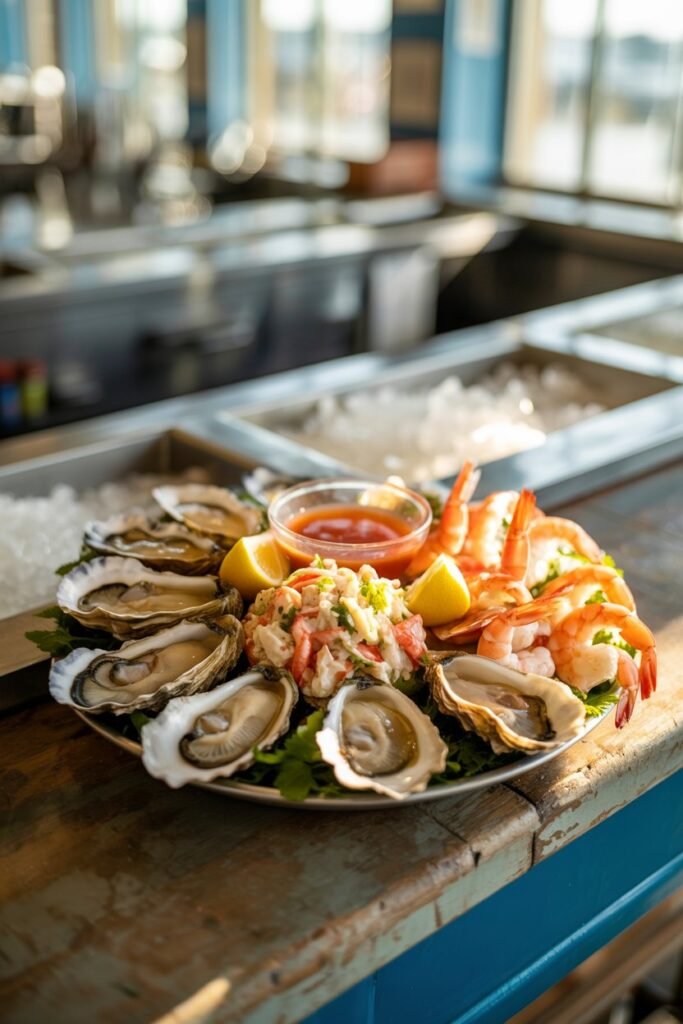
If you know me, you know I cannot resist fresh seafood, and Swan Oyster Depot has quickly become one of my favorite spots in San Francisco.
Tucked away on Polk Street, this little seafood counter has been a city staple since 1912, and walking in feels like stepping into a place where tradition meets exceptional quality.
Why I love it:
- The seafood is incredibly fresh, delivered daily, and you can really taste the difference.
- It has a classic, no-frills vibe — a long counter, friendly staff, and a bustling energy that makes you feel like part of a local community.
- Sitting at the counter and watching the staff shuck oysters or plate up crab is half the fun; it’s like being part of the action.
What I always order:
- Fresh oysters – briny, cold, and perfectly paired with a squeeze of lemon.
- Crab salad – sweet, light, and absolutely addictive.
- Shrimp cocktail or clam chowder – simple but outstanding.
- Seasonal specials – I always ask the staff what’s freshest that day; they never disappoint.
My tips for visiting:
- Be prepared for a line, especially on weekends — it’s a small place and very popular.
- Sit at the counter if you can; it’s part of the experience.
- Bring cash, as Swan Oyster Depot still operates mostly as a cash-based spot, and tipping is appreciated.
Every time I leave Swan Oyster Depot, I feel refreshed and satisfied, not just because of the food, but because of the experience.
Eating here is authentic San Francisco seafood at its finest, and I always make it a point to stop by whenever I’m in the city.
3. Tartine Bakery – Breakfast, Pastries, and Coffee
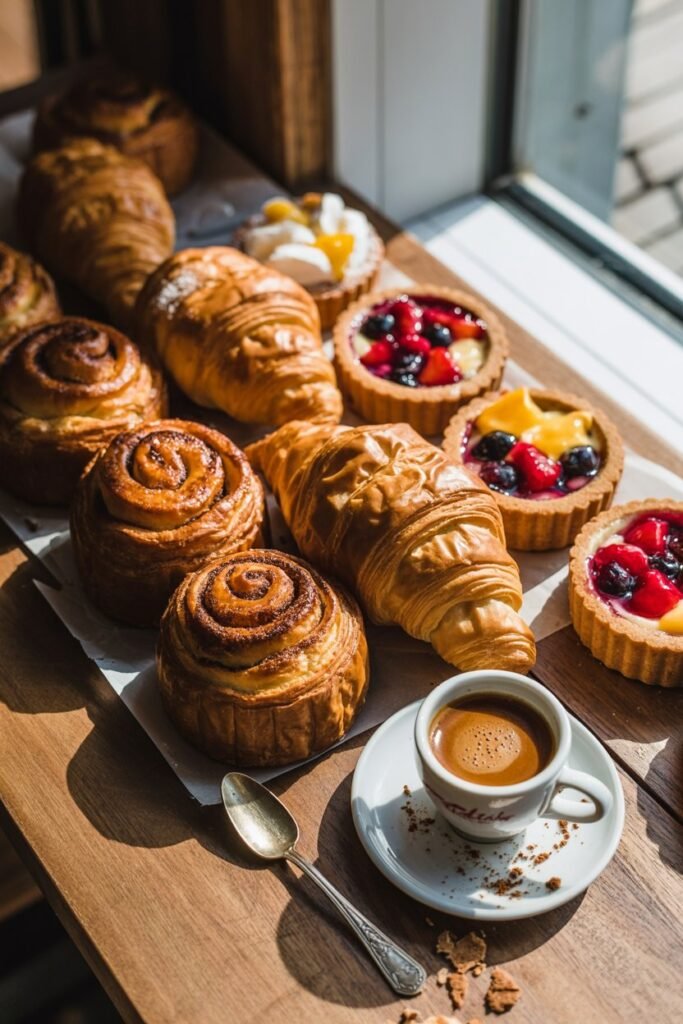
Whenever I’m in San Francisco, Tartine Bakery is one of those spots I never skip, especially for breakfast or a mid-morning treat.
There’s just something magical about stepping inside and being greeted by the aroma of freshly baked bread and pastries.
This bakery has earned its legendary status for a reason — every bite feels meticulously crafted and full of flavor.
Why I love it:
- Their pastries and bread are always fresh, flaky, and buttery — it’s the kind of quality you can taste in every bite.
- The bakery has a warm, inviting vibe, with natural light pouring in and a soft hum of chatter that makes it perfect for a relaxed morning.
- Watching the bakers at work through the open kitchen area adds a personal, artisanal touch to the experience.
What I always order:
- Morning buns and croissants – perfectly flaky with just the right amount of sweetness.
- Sourdough bread – soft on the inside, crusty on the outside; ideal for sandwiches or just toasted with butter.
- Seasonal tarts and quiches – every visit, there’s something new, and I love trying the special creations.
- Coffee – their espresso pairs beautifully with any pastry and always keeps me energized for a morning of exploring the city.
My tips for visiting:
- Go early, especially on weekends, if you want to grab a seat and avoid the long lines.
- Don’t rush — part of the charm is sitting down, enjoying your pastry, and watching the bakery in action.
- Take some fresh bread or pastries to go; they make for a perfect picnic later in the day.
Tartine Bakery is more than just a breakfast spot for me — it’s a ritual and a true taste of San Francisco’s artisanal food scene. Every visit reminds me why this city is such a haven for food lovers.
4. La Taqueria – Legendary Mission District Tacos
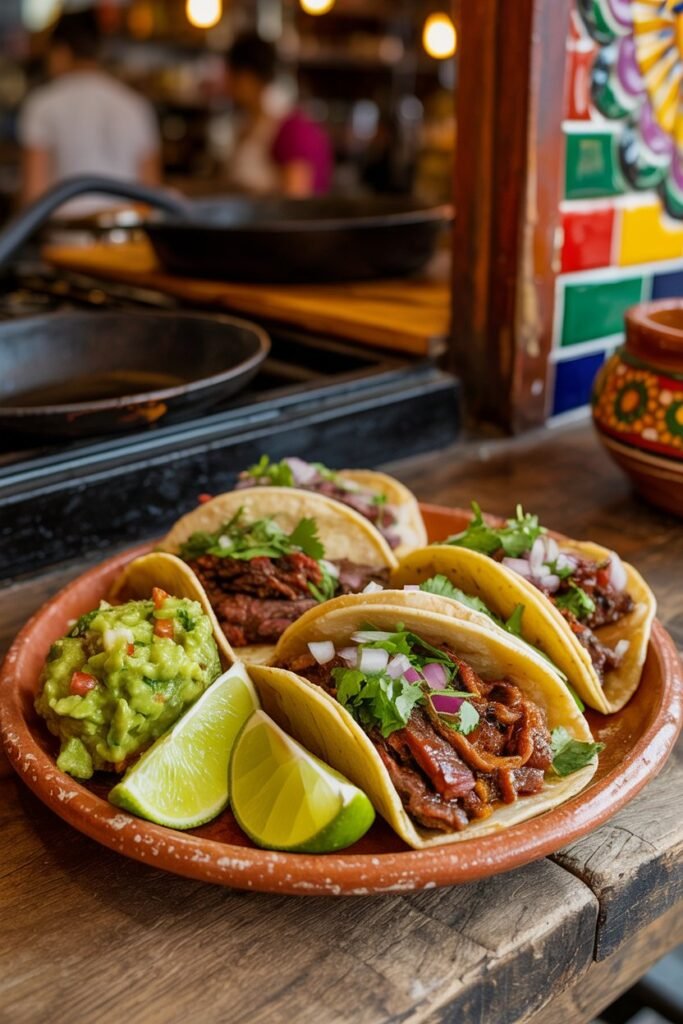
If there’s one spot in San Francisco that always pulls me back for tacos, it’s La Taqueria in the Mission District.
I still remember the first time I walked in — the smell of freshly grilled meats, warm tortillas, and sizzling toppings hit me instantly.
It’s casual, unpretentious, and completely focused on serving some of the best Mexican food in the city.
Why I love it:
- The tacos are authentic, flavorful, and made with fresh ingredients.
- It has a classic Mission District vibe — simple décor, bustling energy, and locals who clearly know this place is special.
- Every bite feels balanced and satisfying, from the seasoned meats to the crisp vegetables and perfectly wrapped tortillas.
What I always order:
- Carne asada tacos – tender, flavorful beef with just the right amount of spice.
- Carnitas tacos – juicy, slow-cooked pork that melts in your mouth.
- Chips and guacamole – fresh, creamy, and perfectly seasoned.
- Optional hot sauce – they have some seriously good sauces that kick the flavor up a notch.
My tips for visiting:
- Expect a line, especially around lunch — it’s part of the experience.
- Go cash-preferred; some locations may not take cards.
- Try standing at the counter or grabbing a small table if possible; it gives you that full local taco joint vibe.
Every time I leave La Taqueria, I feel like I’ve experienced the heart of San Francisco’s Mission District food scene.
It’s casual, authentic, and utterly delicious — a must-visit for anyone craving tacos done right.
5. Gary Danko – Fine Dining and Special Occasions
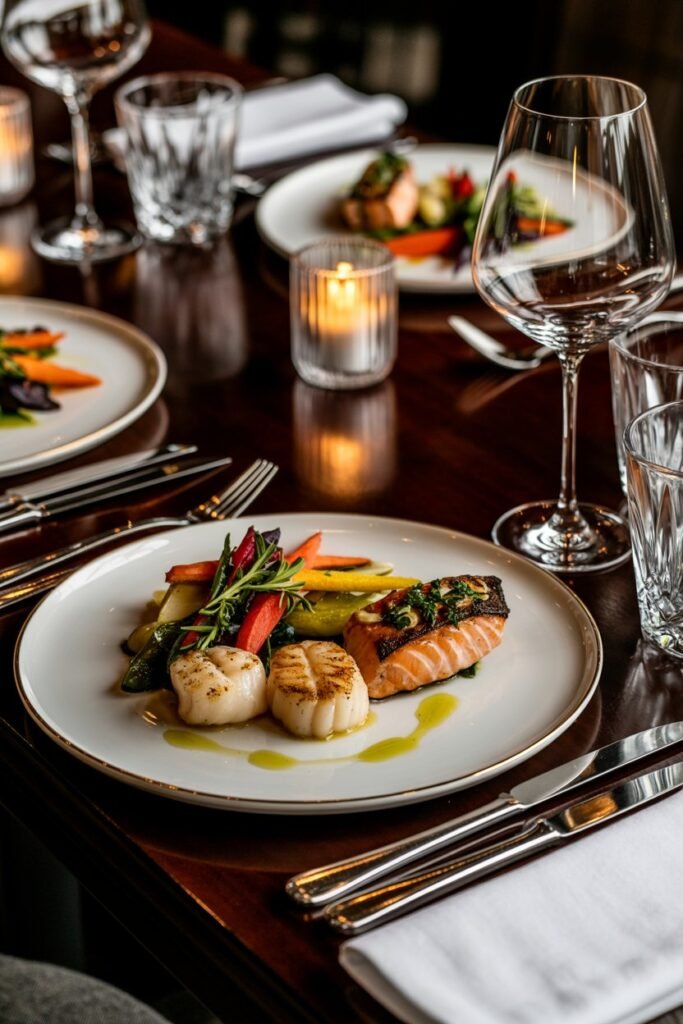
For those moments when I want to celebrate or indulge in a truly memorable meal, Gary Danko is my go-to spot in San Francisco.
Located near the waterfront, this Michelin-starred restaurant delivers an experience that combines elegance, impeccable service, and creative cuisine.
It’s perfect for a special night out or when I want to treat myself to something extraordinary.
Why I love it:
- Every dish is beautifully presented and bursting with flavor, showcasing seasonal and local ingredients.
- The staff is attentive without being intrusive, making the dining experience feel personal and luxurious.
- The restaurant has a warm, sophisticated ambiance, ideal for date nights, celebrations, or just a memorable evening.
What I always order:
- Signature tasting menu – it’s a journey through multiple courses, each crafted to highlight unique flavors and textures.
- Fresh seafood or seasonal meat dishes – the quality and execution are always exceptional.
- Decadent desserts – I can’t resist finishing with one of their delicate, creative desserts paired with coffee or dessert wine.
My tips for visiting:
- Make a reservation well in advance, especially on weekends or during peak seasons.
- Dress smart casual; it’s elegant but not overly formal.
- Take your time and enjoy each course — it’s meant to be savored, not rushed.
Dining at Gary Danko always feels like a special occasion, even if it’s just a quiet night of treating myself.
It’s one of those rare spots where every detail, from plating to service, is meticulously crafted, leaving me with a lasting impression of San Francisco’s fine dining scene.
6. House of Prime Rib – Classic Comfort and Hearty Meals
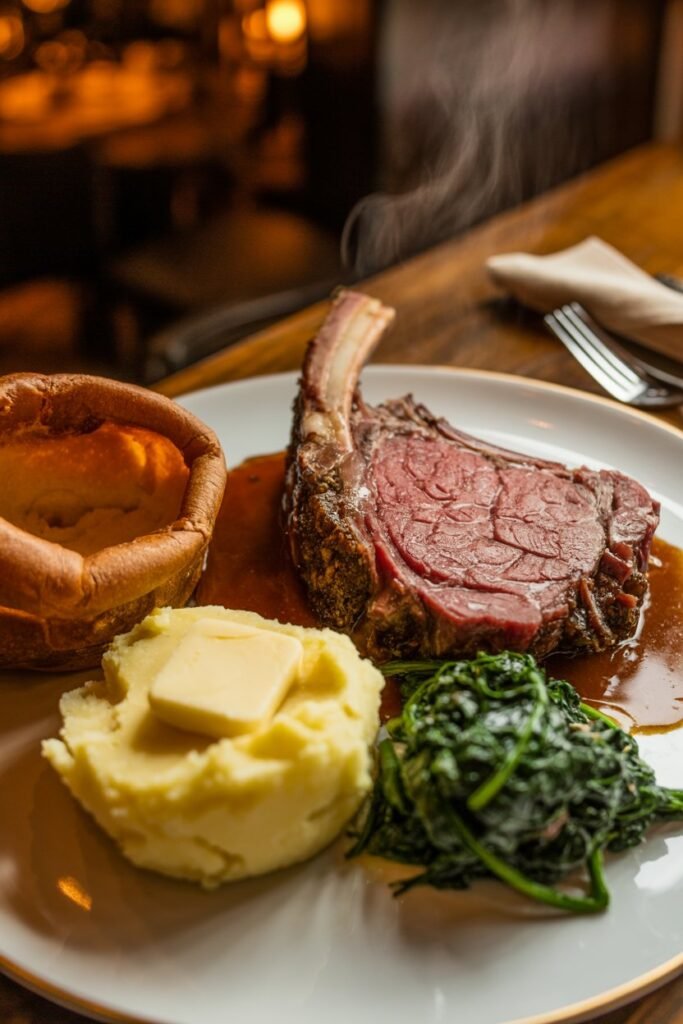
Whenever I crave a hearty, comforting meal in San Francisco, House of Prime Rib is my go-to.
From the moment I step inside, I’m transported to a place that feels timeless — classic décor, warm lighting, and the unmistakable aroma of roasting prime rib filling the air.
It’s the kind of restaurant that makes you feel like you’re part of a tradition that’s been cherished for decades.
Why I love it:
- Their prime rib is cooked to perfection, juicy, flavorful, and served with all the classic accompaniments.
- The atmosphere is elegant yet welcoming, making it perfect for family dinners or special occasions.
- The staff is attentive and knowledgeable, always ready to recommend the perfect cut or pairing.
What I always order:
- Prime rib – slow-roasted, tender, and served with au jus; I usually go for medium-rare.
- Yorkshire pudding – the perfect, light, and airy side to complement the richness of the meat.
- Creamed spinach and mashed potatoes – classic sides that make the meal feel complete.
- House salad with their famous dressing – fresh and crisp, a nice balance to the hearty main course.
My tips for visiting:
- Make a reservation; it’s very popular, especially on weekends.
- Consider arriving a bit early to soak in the old-school ambiance.
- Bring an appetite — the portions are generous, and every bite is worth it.
For me, House of Prime Rib is more than a meal — it’s a comforting, indulgent experience that combines quality, tradition, and a sense of occasion.
Every time I visit, I leave feeling satisfied, happy, and connected to a piece of San Francisco’s culinary history.
7. The Slanted Door – Modern Vietnamese Cuisine by the Bay
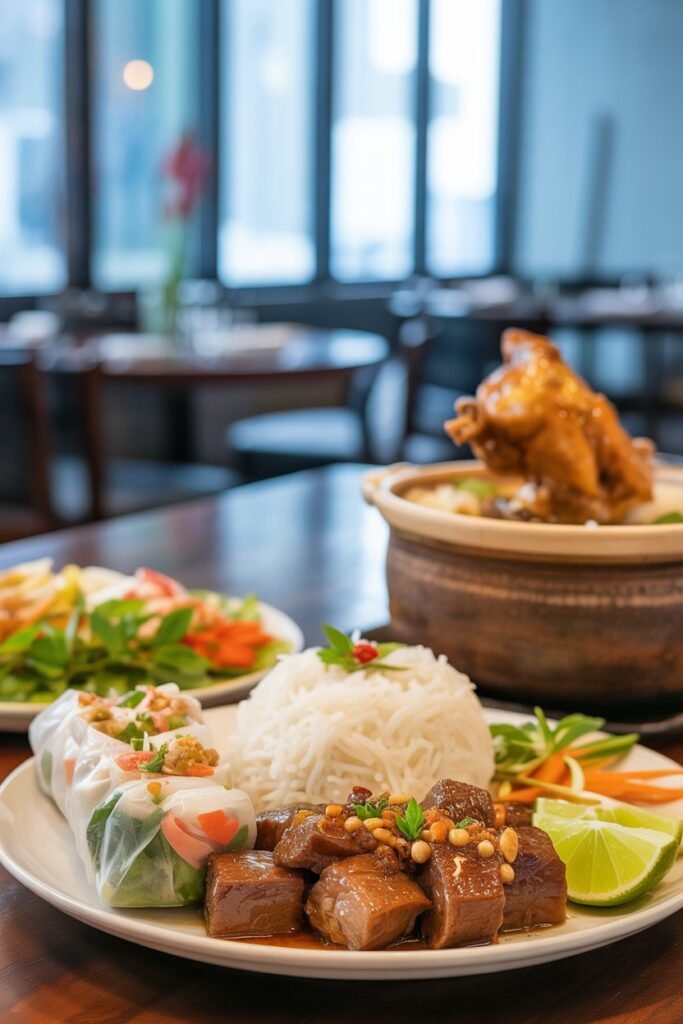
If I’m in the mood for something fresh, vibrant, and full of flavor, The Slanted Door in the Ferry Building is always at the top of my list.
This modern Vietnamese restaurant combines innovative techniques with traditional flavors, and the view of the Bay adds a perfect backdrop for a memorable meal.
Why I love it:
- The ingredients are always fresh and seasonal, making each dish feel light yet satisfying.
- The restaurant has a modern, airy vibe, with large windows and natural light that make dining here feel bright and inviting.
- The service is friendly and attentive, which makes the whole experience relaxing and enjoyable.
What I always order:
- Shaking Beef (Bo Luc Lac) – tender cubes of beef with a savory, slightly tangy sauce that’s simply irresistible.
- Spring rolls – crisp, fresh, and full of flavor; I usually dip them in their signature sauce.
- Caramelized claypot chicken – rich, comforting, and perfectly balanced with jasmine rice.
- Vietnamese iced coffee – strong, sweet, and energizing; it’s the perfect way to end a meal.
My tips for visiting:
- Make a reservation, especially for dinner, as it’s a popular spot with locals and tourists alike.
- Try to sit by the windows if you want that iconic view of the Bay.
- Don’t rush — part of the charm is savoring the flavors slowly and enjoying the atmosphere.
For me, The Slanted Door represents everything I love about San Francisco dining — fresh, inventive, and unforgettable.
Every visit leaves me inspired by the flavors and the creativity, making it a must-try spot for anyone exploring the city’s food scene.
Final Thought
Exploring the best places to eat in San Francisco is more than just a culinary adventure — it’s a way to experience the city’s culture, history, and creativity through food.
From the iconic sourdough at Boudin Bakery to the fresh seafood at Swan Oyster Depot, the pastries at Tartine, and the vibrant flavors at The Slanted Door, every meal tells a story.
For me, what makes San Francisco’s food scene so special is how it blends tradition with innovation.
Whether you’re indulging in hearty prime rib, authentic tacos, or modern Vietnamese cuisine, each bite leaves a lasting impression and keeps me coming back for more.
Visiting these spots isn’t just about satisfying hunger — it’s about creating memories, discovering local gems, and truly savoring every flavor the city has to offer.
Every time I dine in San Francisco, I’m reminded why it’s one of the most exciting and delicious food destinations in the world.