There’s a moment that happens on almost every big trip. You round a corner, or step off a boat, or open the curtains in a new hotel room, and the view just stops you.
I’ve had that moment in a handful of places around the world, and every time it happens, I think the same thing: everyone needs to see this at least once.
What started as a simple list of the most beautiful places on Earth has grown into something more useful over time, not just a collection of pretty photos, but a real planning guide built from figuring out how to actually get to each of these places, where to stay on different budgets, and what to watch out for once you’re there.
This list is my personal collection of those moments, some of these places I’ve visited myself, others are firmly on my own travel bucket list after hearing from friends and fellow travelers who couldn’t stop talking about them.
If you want more inspiration once you finish this one, our dream vacations bucket list and 10 special places couples should experience together are good places to keep exploring, and our travel checklist is worth reading before you book any of the trips covered below.
Either way, these are the destinations that consistently show up when people ask, “where in the world should I actually go?” and now, hopefully, this list gets you a little closer to actually going.
What Makes a Place Bucket List Worthy
Not every pretty photo makes the cut here. I looked for places with a few specific qualities, and I’ve refined this list further now that it includes real planning detail rather than just inspiration:
- A view or landscape that feels genuinely one of a kind, something you can’t reasonably replicate somewhere closer to home
- Something worth doing once you arrive, not just a photo stop, real activities, hikes, cultural sites, or experiences that justify the trip on their own
- A reasonable way to actually visit, even if it takes some planning, meaning real flights exist, accommodation options span different budgets, and the destination isn’t so remote or restricted that most travelers genuinely can’t get there
- A mix of well known icons and lesser known gems worth the extra effort, so this list isn’t just the eleven places everyone already has saved on Pinterest
- Enough practical infrastructure that a bucket list trip doesn’t become an unnecessarily difficult one, since even wild, remote destinations on this list, like Torres del Paine or the Faroe Islands, have real towns, real transport options, and real places to stay once you’re there
With that out of the way, here are the eleven places I think belong on everyone’s list.
1. Santorini, Greece
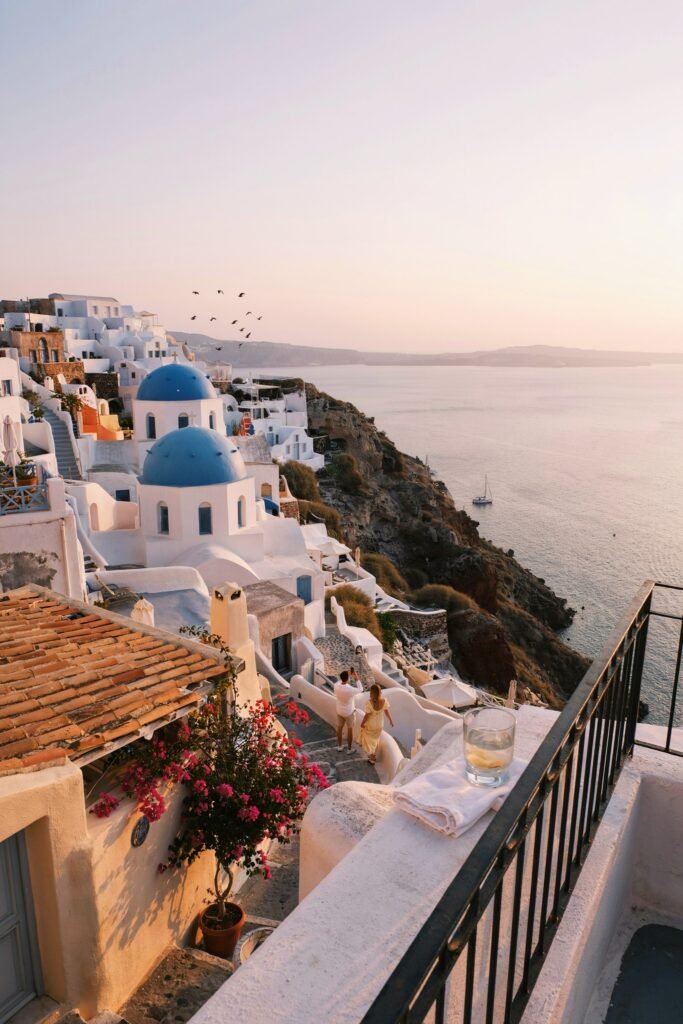
Santorini is one of those places that looks almost too perfect to be real, and then you get there and realize the photos barely do it justice.
The whitewashed buildings, blue domed churches, and cliffside views over the caldera create a kind of beauty that feels designed rather than natural, even though it’s the result of a volcanic eruption thousands of years ago.
What makes it special The island sits on the rim of a caldera formed by one of the largest volcanic eruptions in recorded history.
That dramatic geography is why the views feel so cinematic. Towns like Oia and Fira are built right into the cliffs, so nearly every street offers a different angle of the sea below.
How to get there Santorini has its own airport (Santorini National Airport, JTR), with direct flights from Athens taking about 45 minutes, and seasonal direct flights from several other European cities during summer.
If you’re not flying, high-speed ferries connect Santorini to Athens’ port of Piraeus in about 5 to 8 hours depending on the route, or you can island-hop from nearby islands like Mykonos or Naxos in a couple of hours.
Where to stay
- Budget: Guesthouses and smaller hotels in Fira or Karterados, a short bus ride from the caldera views, run considerably cheaper than anything with a direct caldera view, often half the price for a comparable room.
- Mid-range: A mid-tier hotel or boutique guesthouse in Imerovigli or the outskirts of Oia gives you partial caldera views and easy walking access to the main path without the highest-end price tag.
- Luxury: A cave-style suite with a private plunge pool in Oia is the classic Santorini splurge, and it’s genuinely worth the cost for at least one or two nights if the budget allows. If you’re chasing this kind of luxury island stay elsewhere too, our overwater bungalows in Bora Bora guide covers a similarly indulgent option on the other side of the world.
How to navigate the island Renting a small car or ATV is genuinely the easiest way to get around Santorini, since the island is larger than most visitors expect and buses, while functional, run on a limited schedule between towns.
Book through a local agency rather than a big international chain, since prices are often lower and pickup is more flexible for a small island.
A local bus network connects Fira, Oia, and the airport reasonably well if you’d rather not drive, and taxis are available but limited in number, so don’t count on hailing one quickly during peak sunset hours.
Best things to do
- Watch the sunset in Oia, but arrive at least an hour early for a good spot
- Take a catamaran cruise around the caldera, which usually includes swimming near the hot springs
- Visit Akrotiri, an ancient Minoan site sometimes called the “Greek Pompeii”
- Spend an afternoon in Pyrgos, a quieter hilltop village with fewer crowds and better views of the sunset over Oia itself
Why you’ll love it Santorini rewards slow travel. You don’t need a packed itinerary here. Some of my favorite afternoons on similar Greek islands have just been wandering narrow streets, stopping for coffee, and letting the views do the entertaining.
Personal tip Skip the crowded main viewpoints in Oia and walk five minutes further along the caldera path. You’ll get nearly the same view with a fraction of the people, and it makes a huge difference for photos and for actually enjoying the moment.
Safety and etiquette tips The caldera-facing paths in Oia and Imerovigli have unprotected cliff edges in several spots, so keep a safe distance, especially when the paths get crowded during sunset.
If you’re renting an ATV, know that Greek traffic law requires a helmet at all times, and Santorini’s roads have looser lane discipline than many visitors expect, so ride defensively.
Also keep in mind that some churches and monasteries on the island expect covered shoulders and knees, so it’s worth having a light scarf on hand even in peak summer heat.
2. Banff National Park, Canada
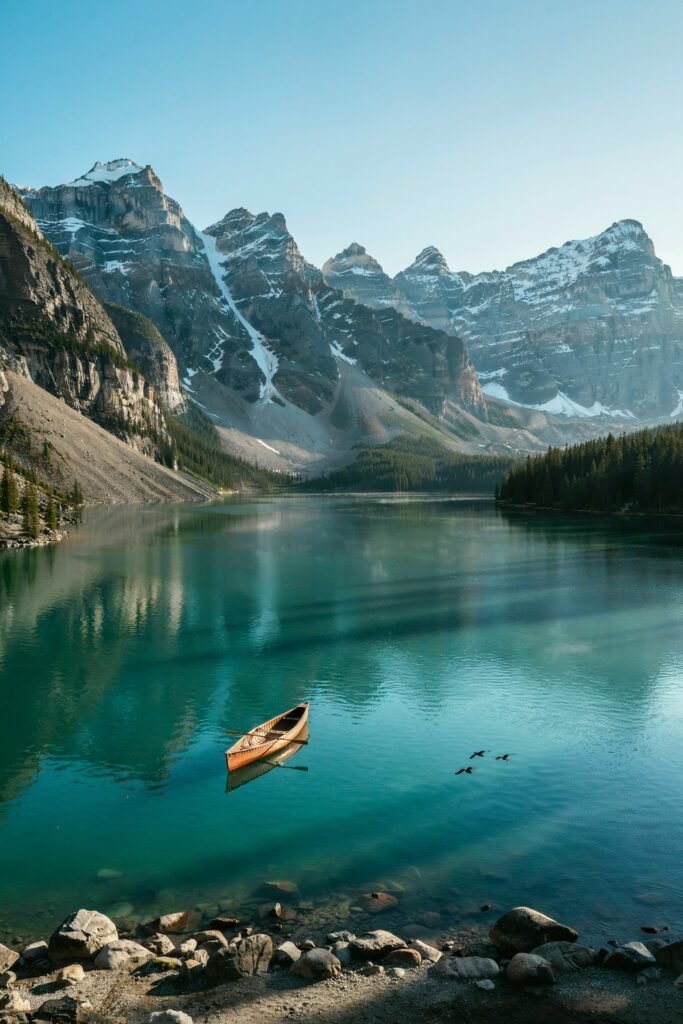
Banff has a way of making you feel small in the best possible sense. Turquoise lakes, snow capped peaks, and wildlife that casually wanders through town make this one of the most complete natural destinations on this list.
What makes it special The color of the water here isn’t a filter. Lakes like Moraine and Louise get their striking blue-green shade from glacial rock flour suspended in the water, which reflects light in a way that looks almost unreal in person.
How to get there The nearest major airport is Calgary International Airport (YYC), about an hour and 30 minutes from Banff townsite by road.
There’s no train service directly into Banff for regular passenger travel, so most visitors either rent a car at the Calgary airport or book a shuttle service, several of which run scheduled routes directly from arrivals to Banff and Lake Louise.
If you’re not driving, Banff’s local Roam Transit buses connect the townsite to some nearby attractions, though they don’t cover the whole park.
Where to stay
- Budget: Hostels and budget motels in Canmore, about 20 minutes outside Banff townsite, offer noticeably lower rates than anything inside the park boundary itself, with an easy shuttle or short drive into Banff.
- Mid-range: A standard hotel or lodge in Banff townsite puts you within walking distance of restaurants and the Banff Gondola, with rates that sit comfortably between Canmore’s budget options and the park’s luxury resorts.
- Luxury: The Fairmont Chateau Lake Louise or Fairmont Banff Springs are the two classic splurges here, both offering direct or near-direct access to some of the park’s most photographed views right outside your window.
How to navigate the park A rental car is genuinely the most practical way to see Banff properly, since Moraine Lake, Lake Louise, and the Icefields Parkway are all spread out and not fully covered by public transit.
Book your rental at the Calgary airport rather than in Banff itself, since selection and pricing are both better there.
Note that Moraine Lake’s parking lot fills by early morning in peak summer and the park now runs a dedicated shuttle system for that specific lake, so check current shuttle booking requirements before planning a sunrise visit, since regular vehicle access has been restricted there in recent years.
Best things to do
- Canoe on Lake Louise or Moraine Lake early in the morning before the wind picks up
- Hike the Plain of Six Glaciers trail for sweeping alpine views
- Ride the Banff Gondola up Sulphur Mountain for a panoramic look at the Rockies
- Soak in the Banff Upper Hot Springs after a day of hiking
Why you’ll love it This is a destination for people who want their bucket list trip to also feel active. You’re not just looking at beauty, you’re hiking through it, paddling across it, and waking up early to catch it in perfect light. If multi-day hikes like this appeal to you, our 10 incredible hiking trips in the USA has more trail ideas worth exploring beyond Banff.
Personal tip Visit Moraine Lake at sunrise if you can manage it. Parking fills up fast in peak season, and the light hitting the peaks in the early morning is dramatically different from the midday crowds and haze.
Safety and etiquette tips Banff is genuinely bear country, both black bears and grizzlies are active in the park, so carry bear spray on any hike and know how to use it before you set out.
Make noise on trails with limited visibility to avoid surprising wildlife, and never approach animals for a photo, no matter how close they wander to the road or town.
Mountain weather changes fast even in summer, so pack layers regardless of how warm the morning looks, and check trail conditions at a park visitor center before any longer hike, since sections can close for wildlife activity or weather with little notice.
3. Ha Long Bay, Vietnam
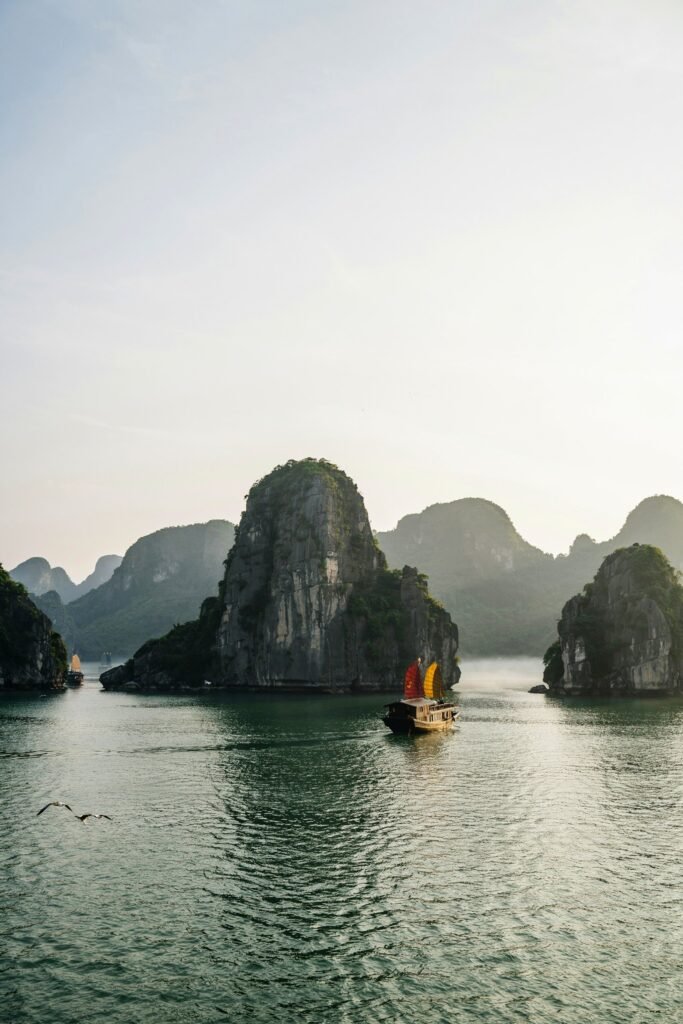
Ha Long Bay looks like something out of a painting, with thousands of limestone karsts rising straight out of emerald green water. It’s the kind of landscape that makes you understand why so many legends and folk tales have been built around it.
What makes it special The bay contains nearly 2,000 limestone islands and islets, many topped with dense jungle vegetation.
The formations were shaped over millions of years, and the result is a landscape that feels both ancient and otherworldly.
How to get there The nearest major airport is Hanoi’s Noi Bai International Airport (HAN), about a three to four hour drive or bus ride to Ha Long City, where most bay cruises depart.
Several bus and shuttle companies run direct routes from central Hanoi to Ha Long City, which tend to be cheaper and simpler than arranging a private transfer.
A newer option is flying directly into Van Don International Airport, closer to the bay itself, though flight options there are more limited than Hanoi.
Where to stay
- Budget: A shared-cabin overnight cruise or a budget guesthouse in Ha Long City keeps costs low, with basic cabins on older boats running a fraction of the price of newer vessels.
- Mid-range: A private cabin on a well-reviewed overnight or two-night cruise boat, the standard way most travelers experience the bay properly, balances comfort and cost well, usually including meals and a few included activities like kayaking.
- Luxury: A higher-end cruise operator with a smaller passenger count, private balcony cabins, and included excursions to quieter parts of the bay costs significantly more but delivers a noticeably calmer, less crowded experience.
How to navigate the bay You don’t rent a car for Ha Long Bay itself, since the entire point of a visit is experiencing it by boat.
Book your cruise through a reputable operator in advance rather than same-day in Ha Long City, since quality and safety standards vary significantly between companies, and reviews matter a lot here.
Most cruises are sold as full packages including hotel pickup from Hanoi, so you generally won’t need to arrange separate transport once you’ve booked.
If you want to explore Ha Long City itself before or after your cruise, it’s walkable in the central areas, with taxis and ride-hailing apps like Grab readily available for anything further.
Best things to do
- Take an overnight cruise through the bay, which is the best way to see it without rushing
- Kayak through hidden lagoons and caves that boats can’t reach
- Visit Sung Sot Cave, one of the largest and most impressive caves in the area
- Try Lan Ha Bay for a quieter, less crowded alternative with equally stunning scenery
Why you’ll love it There’s something deeply calming about drifting past these towering formations, especially early in the morning when mist settles over the water. It’s a slower kind of beautiful, one that builds the longer you’re out on the water.
Southeast Asia is also kinder to your wallet than most people expect, and our 12 cheapest islands to visit in 2026 covers more destinations like this one, including Vietnam’s Phu Quoc island.
Personal tip Book a smaller boat with fewer cabins if possible. The bay gets busy with large tour groups, and a smaller vessel usually means better access to quieter coves and a more personal experience.
Safety and etiquette tips Cruise boat safety standards in Vietnam have improved significantly but still vary between operators, so check for basic safety equipment, life jackets, fire extinguishers, and a valid operating license, before booking, and be wary of unusually cheap last-minute deals sold on the street in Ha Long City.
If you’re kayaking, wear the provided life jacket at all times, even in calm-looking water, since currents near the limestone formations can be stronger than they appear.
Modest dress isn’t strictly required on the boats themselves, but is appreciated if you stop at any local fishing villages within the bay, where the resident communities live and work.
4. Plitvice Lakes National Park, Croatia
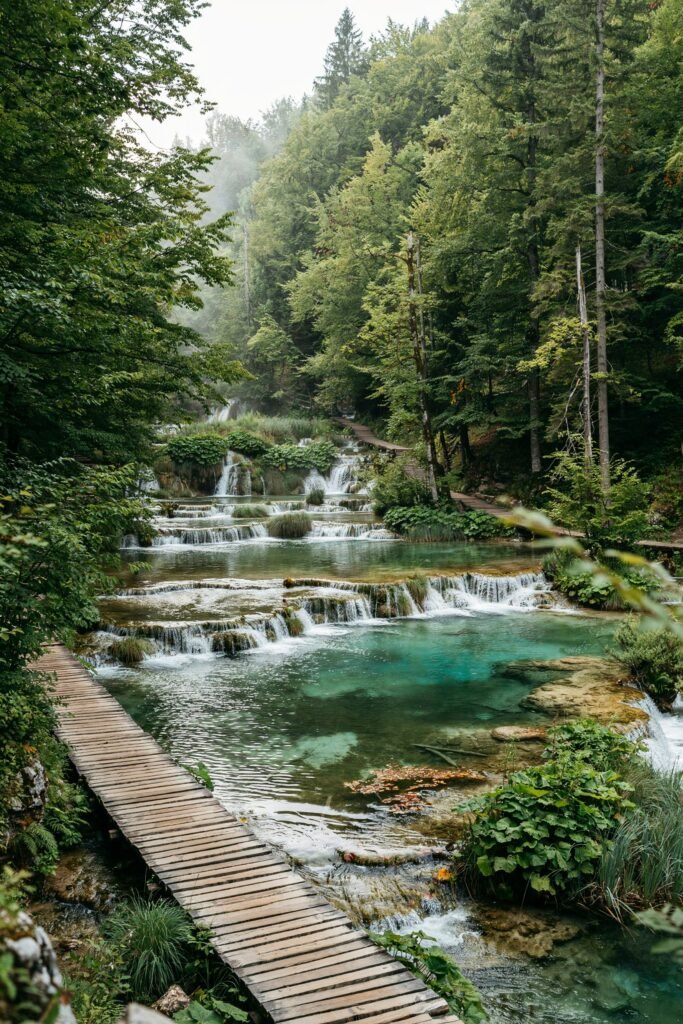
Plitvice feels like walking through a fairy tale. Sixteen terraced lakes connected by waterfalls and wooden boardwalks wind through dense forest, and the water shifts between shades of turquoise, green, and deep blue depending on the mineral content and the angle of the light.
What makes it special The lakes are formed by natural dams of travertine, a type of limestone that builds up over time from moss, algae, and bacteria.
This process is still happening today, which means the park is technically still forming itself, one slow layer at a time.
How to get there Plitvice sits roughly midway between Zagreb and Zadar, about a two hour drive from either city, making both viable airport options. Zagreb tends to have more international flight connections, while Zadar can work well if you’re combining this trip with the Dalmatian coast.
Regular bus service runs from both Zagreb and Zadar directly to the park entrance, a solid option if you’d rather not drive, though buses run on a more limited schedule than a rental car allows.
Where to stay
- Budget: Guesthouses and private rooms in the small villages surrounding the park, rather than inside the park boundary itself, offer noticeably lower rates and are usually a short drive or even walk from an entrance.
- Mid-range: Mid-tier hotels just outside the park entrances balance convenience and cost well, putting you close enough to arrive early before tour bus crowds without paying premium in-park pricing.
- Luxury: A handful of higher-end hotels sit closer to the park’s main entrances with better amenities and shorter walks to the boardwalks, worth the upgrade if you want to minimize any early morning travel time before the crowds arrive.
How to navigate the park If you’re combining Plitvice with other stops in Croatia, a rental car is genuinely the easiest way to manage the whole trip, and it’s simple to book at either Zagreb or Zadar airport before heading to the park.
Inside the park itself, you don’t need a car at all, entry tickets include the shuttle boats and buses that move you between the Upper and Lower Lakes sections, and the boardwalk trails are all walked on foot.
Buy your park entry tickets online in advance during peak season, since daily visitor numbers are capped and walk-up tickets can sell out by midday in summer.
Best things to do
- Walk the wooden boardwalks that pass directly over and beside the waterfalls
- Take the electric boat across the largest lake, Kozjak, which is included with entry
- Hike the Upper Lakes trail for higher viewpoints and fewer crowds
- Ride the park shuttle between sections if you want to cover more ground without exhausting yourself
Why you’ll love it This is a park you can genuinely spend a full day in without getting bored. The trails loop past waterfall after waterfall, and just when you think you’ve seen the best view, another one appears around the bend.
Personal tip Visit in late spring or early autumn if you can. The waterfalls are fuller after spring rain, and the crowds thin out significantly once summer ends, making it much easier to enjoy the boardwalks at your own pace.
Safety and etiquette tips Swimming is strictly prohibited throughout the entire park, both to protect the fragile travertine formations and because the water can be deeper and colder than it looks, so don’t be tempted even on a hot day.
The wooden boardwalks get slippery when wet, especially near the waterfalls where spray drifts onto the path, so wear shoes with real grip rather than sandals.
Stick to marked trails at all times, since venturing off the boardwalk damages the same slow mineral-building process that created the lakes in the first place, and rangers do enforce this.
5. Bora Bora, French Polynesia
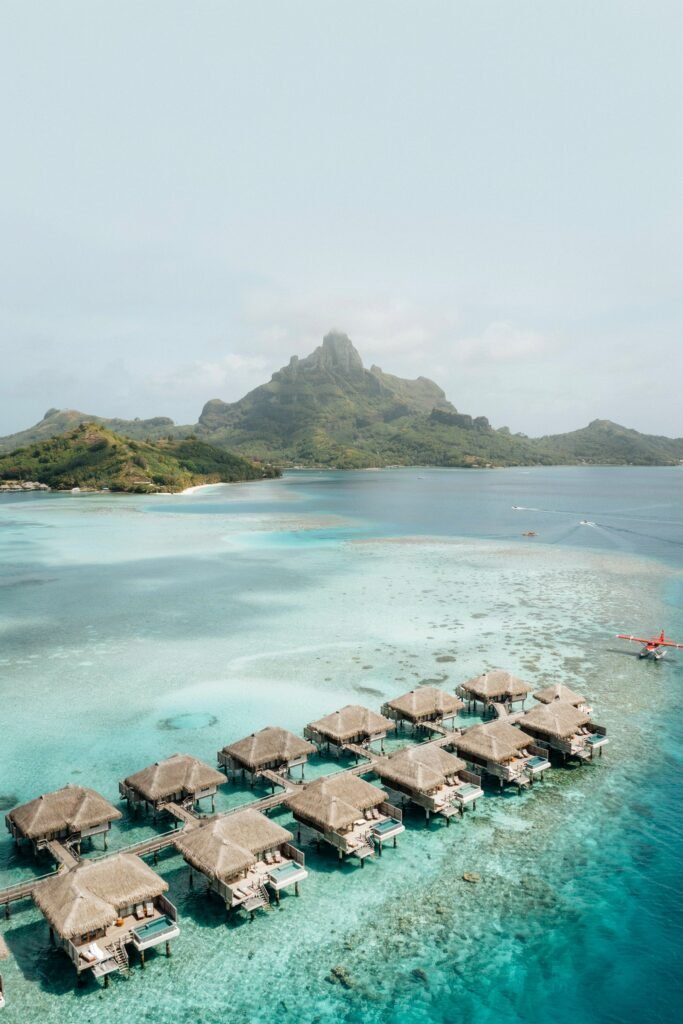
Bora Bora is the postcard image most people picture when they think of a tropical paradise. Overwater bungalows, a lagoon in every shade of blue, and a dramatic volcanic peak rising from the center of the island make it feel like it was designed purely for beauty.
What makes it special The island is surrounded by a coral reef that creates one of the calmest, clearest lagoons in the world. Mount Otemanu, an extinct volcano, sits at the heart of the island and gives every view a dramatic backdrop.
How to get there Bora Bora has its own small airport (BOB), accessible almost exclusively via a connecting flight through Tahiti’s Faa’a International Airport (PPT) in Papeete, which itself is reached by longer international flights from cities like Los Angeles, Auckland, or Tokyo.
The flight from Tahiti to Bora Bora takes about 50 minutes. Once you land, most resorts arrange boat transfers directly from the airport, since Bora Bora’s airport actually sits on its own small motu, or islet, separate from the main island.
Where to stay
- Budget: Small family-run guesthouses (pensions) on the main island offer a genuinely more affordable way to experience Bora Bora, often including simple meals and a much more local feel than the resort side of the island.
- Mid-range: A garden or beach bungalow at a mid-tier resort gets you real island access and reef proximity without the overwater bungalow price tag, and it’s a smart way to stretch a Bora Bora budget further. For more on what these iconic rooms are actually like, our overwater bungalows in Bora Bora guide breaks down specific properties worth considering.
- Luxury: An overwater bungalow with direct lagoon access is the classic Bora Bora splurge, and for a milestone trip, it’s genuinely worth the cost at least once.
How to navigate the island You generally don’t need a rental car for a Bora Bora trip centered around a resort stay, since most resorts are self-contained and arrange boat transfers, excursions, and activities directly.
If you’re staying at a pension on the main island and want more independence, small scooters and bikes are available to rent locally and are the easiest way to explore the limited road network that circles the island.
A 4×4 tour, usually booked through your accommodation, is the best way to see the island’s interior and viewpoints, since the terrain isn’t suited to a standard rental car.
Best things to do
- Snorkel in the lagoon, where you can often spot reef sharks and stingrays in shallow water
- Book a sunset lagoon cruise, quieter and more intimate than the daytime boat tours
- Take a 4×4 tour into the interior of the island for views from higher ground
- Go on a sunset lagoon cruise, which tends to be quieter than daytime boat tours
Why you’ll love it This is the kind of place that lives up to the hype. Even with high expectations going in, the color of the water and the stillness of the lagoon tend to surprise people.
Personal tip If the overwater bungalow experience is out of budget, look at nearby Taha’a or Moorea for similar lagoon views at a lower price, then take a day trip over to Bora Bora itself.
Safety and etiquette tips Sun exposure is intense this close to the equator, so reef-safe sunscreen matters both for your skin and for protecting the coral, since regular sunscreen chemicals contribute to reef damage.
If you’re snorkeling near reef sharks or rays, keep a respectful distance and never attempt to touch or feed them, even if a tour guide seems relaxed about it.
French Polynesia is French territory, so basic French phrases go further here than English in smaller, family-run pensions, and it’s worth learning a few before you arrive.
6. Zhangjiajie National Forest Park, China
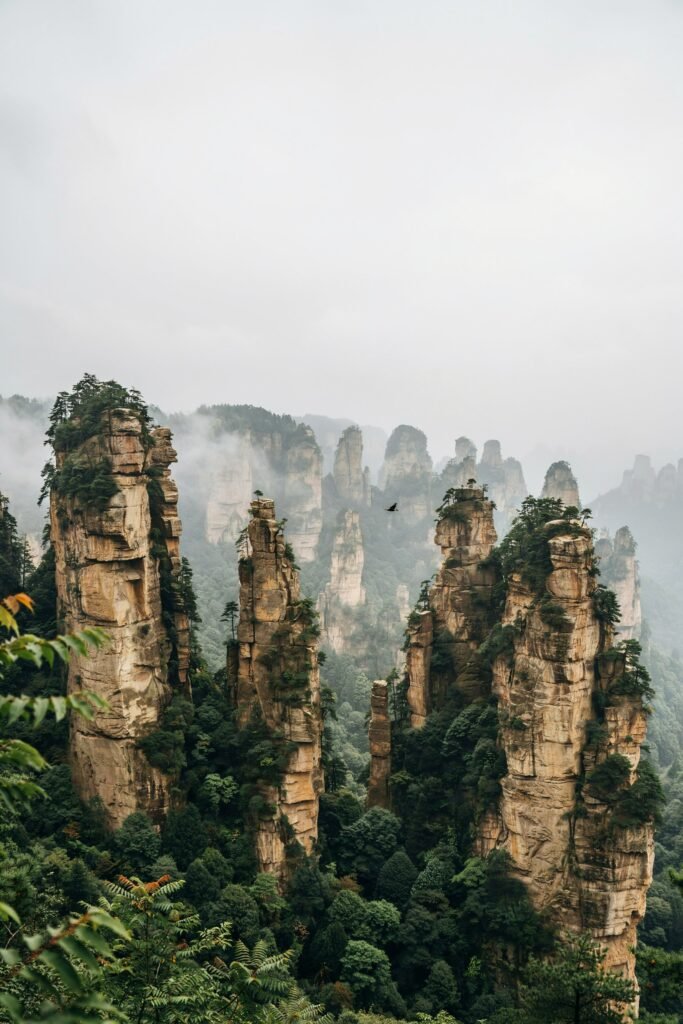
Zhangjiajie is famous for its towering sandstone pillars that rise straight up out of the forest, some reaching over 1,000 feet. It’s the kind of landscape that looks almost impossible until you’re standing in front of it.
What makes it special These quartzite sandstone formations were shaped over 300 million years through erosion, and they inspired the floating mountains in the film Avatar. Walking among them feels like stepping into another world entirely.
How to get there The nearest airport is Zhangjiajie Hehua International Airport (DYG), with domestic connections from major Chinese cities like Beijing, Shanghai, and Guangzhou, and a limited number of direct international routes depending on the season.
Alternatively, high-speed rail connects Zhangjiajie to cities like Changsha in around two and a half hours, a good option if you’re already traveling through central China by train.
From the airport or train station, taxis and pre-arranged hotel shuttles are the easiest way to reach the park entrance, roughly 30 to 40 minutes away.
Where to stay
- Budget: Guesthouses and hostels in Zhangjiajie City offer the lowest rates, though you’ll need to factor in transport time to and from the park entrance each day.
- Mid-range: Hotels closer to the park’s main entrances, particularly near Wulingyuan, cut down on daily travel time significantly and sit in a comfortable middle price range.
- Luxury: A small number of higher-end resort-style hotels near the park offer better amenities and, in some cases, views toward the park’s dramatic terrain, worth the upgrade if you want a more comfortable base for multiple days of hiking.
How to navigate the park You won’t need or want a rental car inside Zhangjiajie itself, since the park is built around an extensive internal shuttle bus system connecting the different scenic areas, and driving isn’t really an option within the park boundaries.
Buy your park entry ticket, which typically covers multiple days and includes the internal shuttle network, at the main entrance or in advance online.
The Bailong Elevator and cable cars handle most of the elevation change for you, so you don’t need to hike the entire ascent, though there’s plenty of walking regardless once you’re up among the pillars.
Best things to do
- Ride the Bailong Elevator, the tallest outdoor elevator in the world, up the side of a cliff
- Walk across the Zhangjiajie Glass Bridge for sweeping views over the canyon
- Hike through the Avatar Hallelujah Mountain area for the most iconic pillar views
- Visit Tianmen Mountain nearby for the famous cliffside walkway and Heaven’s Gate cave
Why you’ll love it The scale of this place is hard to process until you’re there in person. Photos genuinely undersell how massive and otherworldly these pillars feel up close.
Personal tip Wear comfortable shoes with good grip. The park involves a lot of walking and stairs, and the paths can get slippery after rain, which is common in this region.
Safety and etiquette tips The Zhangjiajie Glass Bridge and similar glass-floored walkways enforce shoe cover requirements, sometimes provided on-site, sometimes requiring your own clean socks or covers, so check current rules before you go.
Steps and walkways throughout the park can be steep and uneven, and with the region’s frequent rain and mist, wet stone surfaces are a genuine slip risk, so pace yourself and use handrails where available.
Crowds can be significant during Chinese national holidays specifically, so if possible, plan your visit outside those periods for a noticeably calmer experience on the walkways and viewpoints.
7. The Faroe Islands
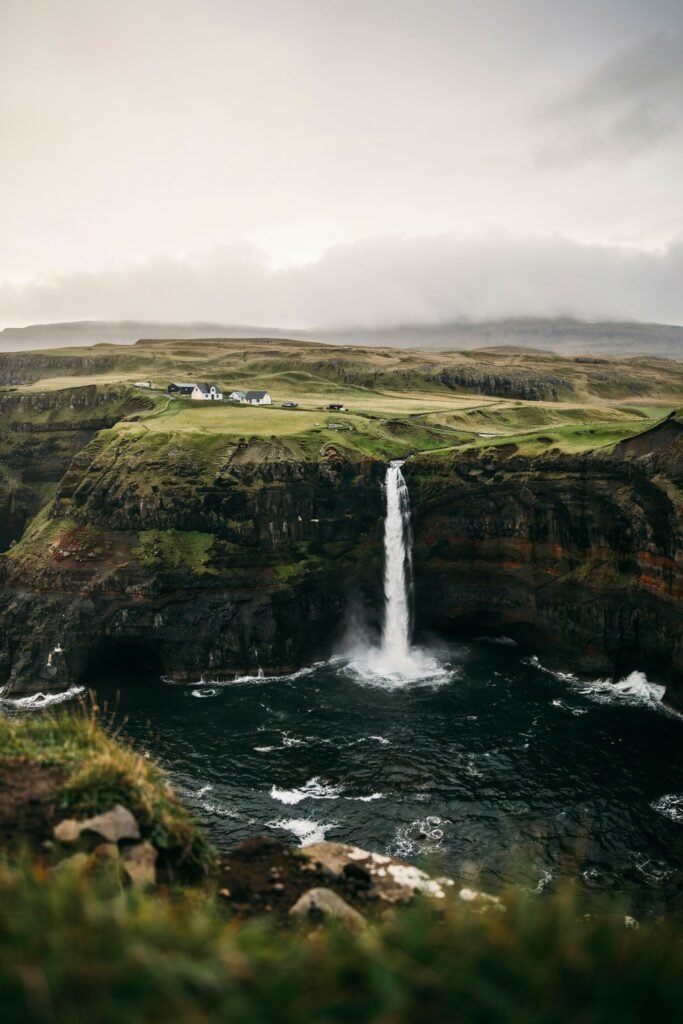
The Faroe Islands feel like a secret that’s slowly getting out. Steep green cliffs, dramatic waterfalls that drop straight into the ocean, and tiny villages tucked into fjords make this one of the most striking landscapes in the North Atlantic.
What makes it special Eighteen volcanic islands make up this self governing territory of Denmark, and the terrain is shaped by centuries of wind, rain, and ocean erosion. The weather changes constantly, which means the light and mood of the landscape can shift dramatically within a single hour.
How to get there Vágar Airport (FAE), the only airport in the Faroe Islands, has direct flights from Copenhagen, along with seasonal routes from a handful of other cities like Reykjavik and Edinburgh.
Most visitors connect through Copenhagen regardless of their starting point, since it has the most consistent year-round service. The airport sits about 45 minutes from the capital, Tórshavn, connected by a well-maintained road and regular airport bus service.
Where to stay
- Budget: Guesthouses and a small number of hostels in Tórshavn offer the most affordable base, with easy access to buses covering much of the main island.
- Mid-range: A mid-tier hotel in Tórshavn or a well-reviewed guesthouse in a smaller village like Gásadalur or Saksun puts you closer to the more dramatic landscapes without the highest price tag, though options are genuinely limited given how small the islands are.
- Luxury: A small number of higher-end hotels in Tórshavn, along with a handful of design-forward boutique stays scattered across the islands, offer the most comfort, though “luxury” here means more understated Scandinavian quality than large-scale resort amenities.
How to navigate the islands Renting a car is genuinely the best way to see the Faroe Islands properly, since public transport, while functional between larger towns, doesn’t reach many of the more remote and dramatic viewpoints this list is built around.
Book your rental at Vágar Airport, and note that many of the islands are connected by an impressive network of tunnels and bridges, including a striking underwater roundabout tunnel, so island-hopping by car is more seamless than it sounds.
Some of the more remote villages, like Gásadalur, were only connected by tunnel in the last couple of decades, so older travel information may be outdated regarding accessibility.
Best things to do
- Visit Mulafossur Waterfall in Gásadalur, where the water drops directly into the sea beside a small village
- Hike to Lake Sørvágsvatn, which appears to float above the ocean from certain angles
- Take a boat trip to see the sea stacks near Vagar
- Explore Tórshavn, the capital, with its turf roofed houses and small harbor
Why you’ll love it This is a destination for travelers who want dramatic scenery without massive crowds. Many of the best viewpoints require a short hike, which keeps them peaceful even in summer.
Personal tip Pack layers no matter what season you visit. The weather can shift from sun to fog to rain within the same afternoon, and having a waterproof jacket on hand will save your trip more than once.
Safety and etiquette tips Some of the most photographed hikes, including the trail to Lake Sørvágsvatn’s dramatic cliffside viewpoint, cross private land and require a small paid permit, purchased locally or online, so check current requirements before setting out rather than assuming open access.
Weather here changes fast and fog can roll in with little warning, so tell someone your hiking plan and turn back if visibility drops suddenly on cliffside trails.
Coastal winds are strong enough to be genuinely dangerous near unprotected cliff edges, so keep well back from the edge, especially at popular viewpoints like Mulafossur, where the drop is steep and largely unfenced.
8. Cappadocia, Turkey
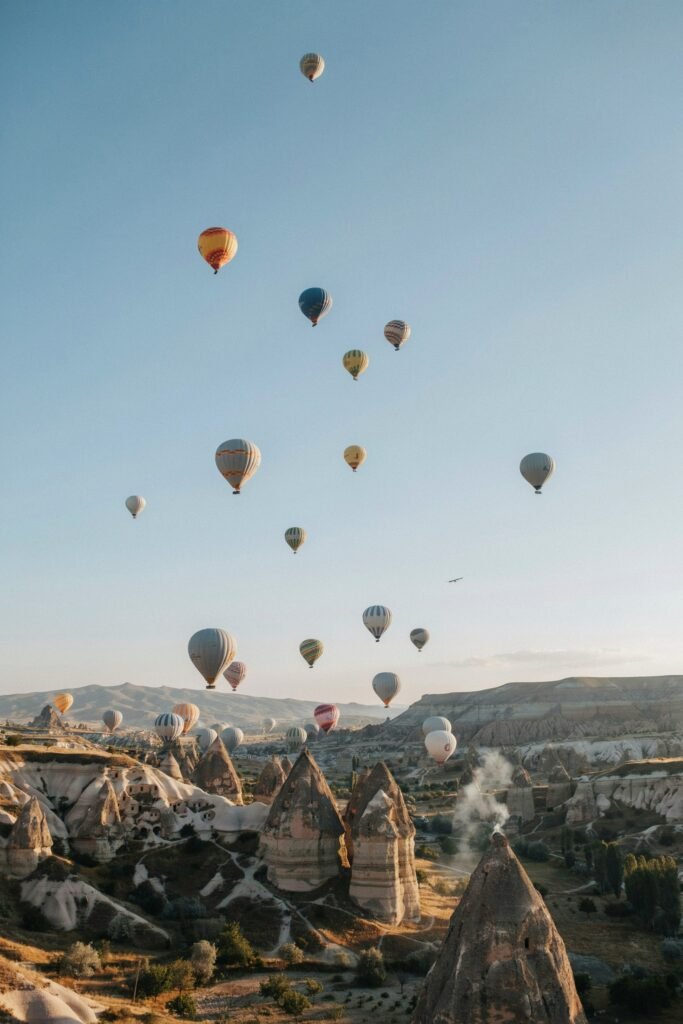
Cappadocia is best known for its hot air balloons drifting over a landscape of cone shaped rock formations, but there’s far more to it than that one iconic photo.
The region has a strange, almost lunar quality that makes it feel unlike anywhere else on this list.
What makes it special The unusual rock formations, called fairy chimneys, formed from volcanic ash that eroded unevenly over millions of years. People have carved homes, churches, and even entire underground cities into this soft rock for centuries.
How to get there The two closest airports are Nevşehir Kapadokya Airport (NAV) and Kayseri Erkilet Airport (ASR), both with regular domestic flights from Istanbul, roughly an hour and a half in the air.
From either airport, shuttle buses and pre-arranged hotel transfers cover the remaining 30 to 45 minute drive into the main towns of Göreme or Ürgüp.
If you’re combining Cappadocia with a longer Turkey trip, overnight buses also run from Istanbul, though the roughly 11-hour journey makes flying the more practical option for most visitors.
Where to stay
- Budget: Standard guesthouses and hostels in Göreme offer the most affordable base, with easy walking access to the town center and several viewpoints.
- Mid-range: A smaller cave hotel, carved directly into the rock but without the highest-end finishes, gives you the classic Cappadocia experience at a noticeably lower price than the top luxury properties.
- Luxury: A higher-end cave suite with a private terrace, often with balloon views directly from your room, is the signature Cappadocia splurge, and it’s genuinely worth booking at least one night if the budget allows.
How to navigate the region Renting a car gives you the most flexibility for exploring Cappadocia’s valleys and viewpoints at your own pace, and it’s simple to arrange at either regional airport.
That said, many visitors get by without one, since Göreme and Ürgüp are both walkable, and local dolmuş minibuses connect the main towns cheaply and regularly.
For visiting the underground cities and more spread-out valleys, a guided day tour is often more practical than self-driving, since some sites are easy to miss without local knowledge of where to park and enter.
Best things to do
- Take a sunrise hot air balloon ride over the valleys, ideally booked in advance since spots fill quickly
- Explore the Göreme Open Air Museum, home to rock cut churches with preserved frescoes
- Visit Derinkuyu, an underground city that once sheltered thousands of people
- Hike through Rose Valley in the late afternoon when the light turns the rock formations pink and orange
Why you’ll love it Few places combine natural wonder with human history this seamlessly. You’re looking at a landscape shaped by volcanoes, then shaped again by people who carved entire communities into it.
If sunrise balloon rides and dramatic aerial views are part of what draws you here, our 11 epic Tanzania travel experiences guide covers a similarly unforgettable balloon ride over the Serengeti worth comparing.
Personal tip Even if you don’t book a balloon ride, wake up early anyway. Watching the balloons rise over the valley from a hillside viewpoint is nearly as memorable, and it costs nothing.
Safety and etiquette tips Balloon operators vary in safety standards, so book through a well-reviewed, licensed company rather than the cheapest option you find, and know that flights are frequently canceled or delayed due to wind, which is a safety measure worth respecting rather than being frustrated by.
Underground cities like Derinkuyu involve low ceilings, narrow passages, and uneven steps, so anyone with claustrophobia or mobility concerns should ask staff about accessible sections before descending.
Turkey is a Muslim-majority country, and while Cappadocia’s tourist areas are relaxed about dress, modest clothing is expected and often required at mosques and some historic religious sites throughout the region.
9. Torres del Paine, Chilean Patagonia
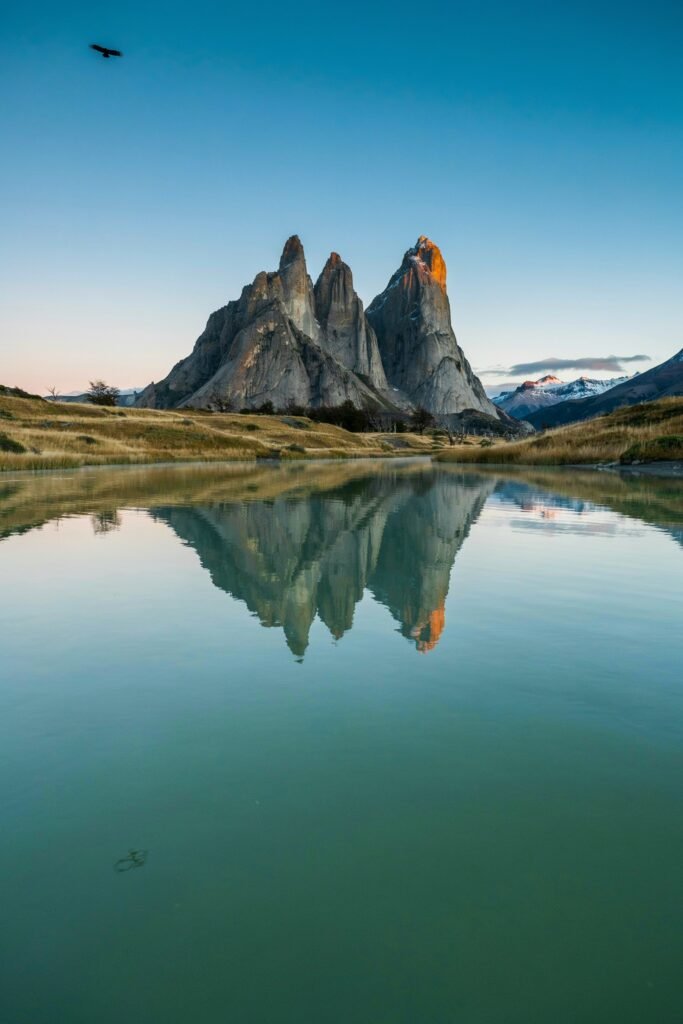
Torres del Paine is raw, dramatic, and largely untouched. Jagged granite towers, glacial lakes, and windswept plains make this one of the most rugged and rewarding landscapes for anyone who loves the outdoors.
What makes it special The park’s namesake towers were formed by granite pushing up through older rock, which has since eroded away to reveal the sharp spires seen today. The surrounding terrain includes glaciers, turquoise lakes, and pampas where guanacos roam freely.
How to get there The nearest airport is Puerto Natales’ Teniente Julio Gallardo Airport (PNT), with connections mostly routed through Santiago and Punta Arenas’ larger airport, roughly a two and a half hour drive further south.
Most travelers fly into Punta Arenas, then take a bus or transfer roughly three hours to Puerto Natales, the main gateway town to the park, followed by another hour or two to reach the park entrance itself.
Regular shuttle buses run daily between Puerto Natales and the park during peak season, a simpler option than arranging a rental car for the full journey.
Where to stay
- Budget: Campgrounds and basic refugios (mountain shelters) inside the park offer the cheapest way to stay close to the trails, though they require advance booking and a willingness to rough it.
- Mid-range: More comfortable refugios with private rooms, or a mid-tier hotel in Puerto Natales for those doing day excursions rather than a multi-day trek, balance cost and comfort well.
- Luxury: A small number of high-end eco-lodges just outside or within the park boundary offer genuinely excellent service and views, a strong option if a multi-day backcountry trek isn’t the goal for this trip.
How to navigate the park Renting a car in Puerto Natales gives you the most flexibility for day-tripping to viewpoints like Lake Pehoé without committing to a multi-day trek, and it’s a reasonably straightforward drive on well-maintained roads.
If you’re hiking the W Trek or the full Circuit, you won’t need a car at all once you’re in the park, since the trail system and refugio network are designed around foot travel, with a boat crossing on Lake Pehoé forming one link in the classic W route.
Book refugios and campsite permits well in advance, since space is limited and the park caps overnight numbers during peak season.
Best things to do
- Hike the W Trek, a multi day route that passes the park’s most famous viewpoints
- Visit Grey Glacier, either by boat or on foot, to see the ice up close
- Look for wildlife such as guanacos, condors, and if you’re lucky, a puma
- Take in the classic view of the towers from Lake Pehoé, especially at sunrise
Why you’ll love it This is a place for travelers who want their bucket list trip to involve real effort. The views here feel earned, especially after a long day of hiking through changing weather and terrain.
Personal tip Patagonian weather is famously unpredictable, sometimes shifting from sun to sleet within the same hike. Pack windproof layers even in summer, and build extra days into your itinerary in case weather delays a trail.
Safety and etiquette tips Patagonia’s wind is genuinely strong enough to knock hikers off balance on exposed ridgelines, so check forecasts before committing to the more exposed sections of the trek and be willing to turn back if conditions worsen.
The park has strict fire regulations after past wildfires caused significant damage, so cooking is only permitted in designated areas with proper equipment, never open flames on the trail.
Wildlife here, particularly guanacos and the occasional puma, should be observed from a distance, and rangers ask that hikers stay on marked trails both for personal safety and to protect the fragile alpine terrain from erosion.
10. Amalfi Coast, Italy
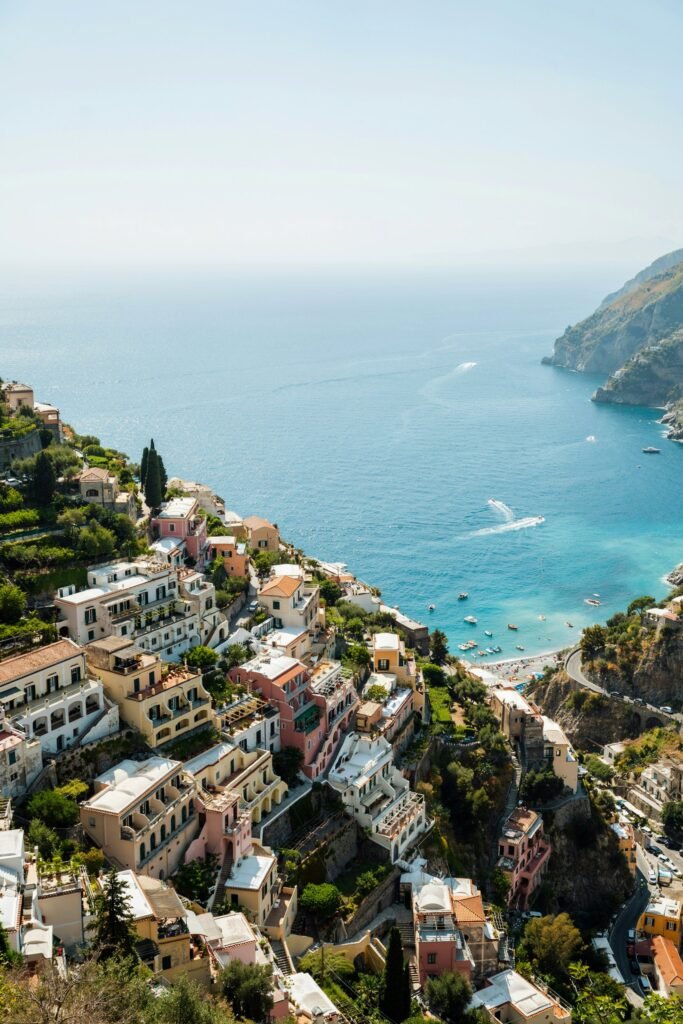
The Amalfi Coast is proof that a coastline can be just as breathtaking as any mountain range or tropical lagoon.
Pastel colored towns cling to cliffs above the Tyrrhenian Sea, connected by a winding coastal road that offers a new postcard view around every curve.
What makes it special The dramatic terrain here forced towns like Positano and Amalfi to build vertically, stacking colorful buildings up steep hillsides instead of spreading out. That vertical growth is exactly what gives the coast its unmistakable look.
How to get there The nearest major airport is Naples International Airport (NAP), about an hour and a half to two hours by car or transfer to towns like Positano or Amalfi, depending on traffic.
From Naples, you can also take a train to Sorrento, then continue by ferry or SITA bus along the coast.
Ferries running between Naples, Sorrento, Positano, and Amalfi during the warmer months are often faster and less stressful than the coastal road, especially in peak summer traffic.
Where to stay
- Budget: Guesthouses and smaller B&Bs in Praiano or Minori, both quieter towns along the coast, offer significantly lower rates than Positano while remaining a short bus or ferry ride from the busier spots.
- Mid-range: A mid-tier hotel in Amalfi town or Sorrento gives you good access to the whole coast without Positano’s premium pricing, and both make solid bases for day-tripping.
- Luxury: A cliffside hotel in Positano or Ravello with a private sea-view terrace is the classic Amalfi Coast splurge, and it’s genuinely one of the more memorable luxury stays covered anywhere on this list, similar in spirit to the Italy village hotel stays we’ve covered in Ireland’s counterpart guide if you enjoy that kind of estate-style luxury elsewhere too.
How to navigate the coast Driving the Amalfi Coast road yourself is possible but genuinely stressful for first-time visitors, narrow lanes, sharp blind curves, and heavy summer traffic make it one of the more demanding drives in Europe.
Most experienced travelers recommend taking the SITA bus, ferries, or hiring a private driver instead, especially between Sorrento, Positano, and Amalfi, since parking in these towns is also extremely limited and expensive.
If you do rent a car, book it in Naples or Sorrento rather than attempting to navigate straight off a flight, and expect to park outside the historic centers and walk in.
Best things to do
- Take the coastal drive between Sorrento and Amalfi, ideally with someone else behind the wheel so you can enjoy the views
- Wander the cathedral square in Amalfi town, home to the striking Duomo di Sant’Andrea
- Hike the Path of the Gods, a scenic trail connecting Bomerano to Positano with sweeping sea views
- Take a boat trip to Capri for the day, including a stop at the Blue Grotto if the weather allows
Why you’ll love it This is a coastline that rewards both planners and wanderers. You can structure your days around famous viewpoints, or simply get a little lost in the narrow streets and stumble onto something just as memorable.
Personal tip Base yourself in a smaller town like Praiano or Minori instead of Positano. You’ll get similar views at a lower cost, with easy access to the more famous towns by local bus or ferry.
Safety and etiquette tips The coastal road has minimal shoulder space and sharp curves with limited visibility, so if you’re driving, use pull-offs for photos rather than stopping on the road, and expect local drivers to move faster and more assertively than you might be used to.
The Path of the Gods and other coastal hikes involve exposed, sometimes narrow sections, so proper footwear matters and it’s worth checking trail conditions after heavy rain.
Many of the coast’s churches, including the Duomo in Amalfi, expect covered shoulders and knees, so pack a light layer even in peak summer heat if you plan to visit any religious sites.
11. Milford Sound, New Zealand
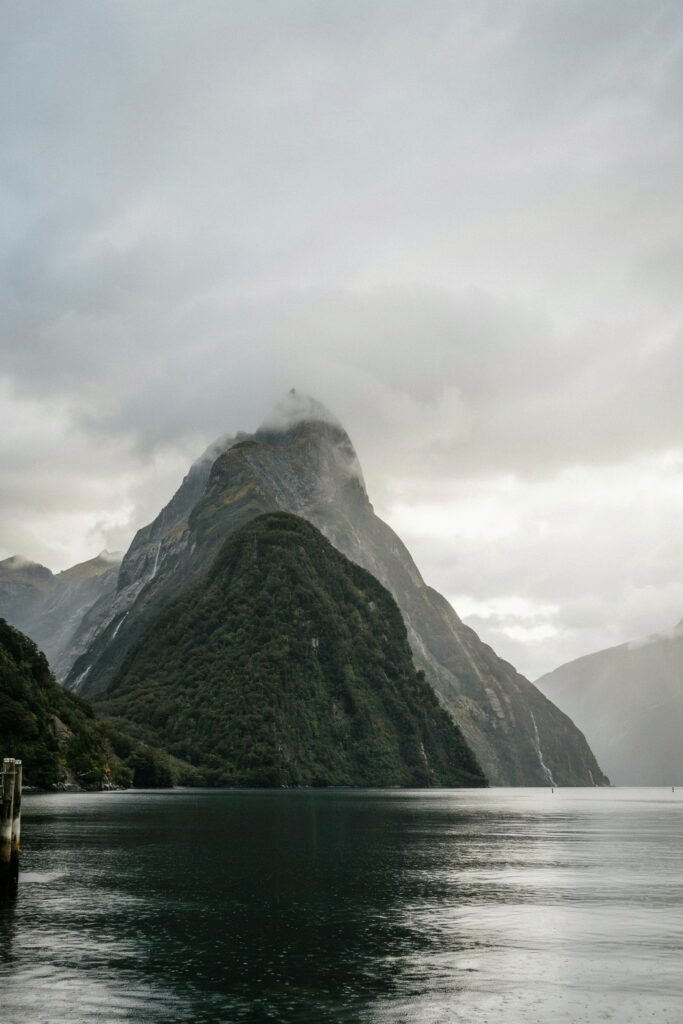
Milford Sound feels like the edge of the earth. Towering cliffs, cascading waterfalls, and dark green water combine to create one of the most dramatic fjords on the planet, tucked into a remote corner of New Zealand’s South Island.
What makes it special Despite the name, Milford Sound is technically a fjord, carved by glaciers over thousands of years. The result is sheer rock walls rising directly out of the water, with Mitre Peak standing as the most iconic landmark in the whole area.
How to get there The nearest airports with regular commercial service are Queenstown Airport (ZQN) and, to a lesser extent, Te Anau’s small airfield.
From Queenstown, Milford Sound is roughly a four to five hour drive along one of the most scenic routes in the country, or about a two hour drive from the smaller town of Te Anau, which most visitors use as a closer base.
Scenic flights and coach tours also run directly from Queenstown, a good option if you’d rather skip the long drive or the road is affected by seasonal weather closures.
Where to stay
- Budget: Hostels and budget motels in Te Anau offer the most affordable base, with regular shuttle and tour options running from there directly to Milford Sound.
- Mid-range: A mid-tier hotel or lodge in Te Anau, or a standard room at Milford Sound’s single lodge if available, balances cost and proximity well, since accommodation directly at Milford Sound itself is extremely limited.
- Luxury: An overnight cruise on the fjord itself, sleeping aboard the boat, is the standout luxury experience here, offering sunset and sunrise views over the water that day-trippers never get to see. It’s a genuinely different kind of overwater experience from more tropical settings, closer in spirit to a slow, scenic version of what makes a stay like our overwater bungalows in Bora Bora so memorable, even though the climate and scenery couldn’t be more different.
How to navigate the area Renting a car in Queenstown or Te Anau gives you the most flexibility, and the drive itself, through Fiordland National Park, is considered one of the most scenic in New Zealand, so don’t rush it.
That said, the road can close temporarily due to avalanche risk or snow in winter and shoulder season, so check current conditions before setting out, and have a backup plan if you’re on a tight schedule.
Once you’re at Milford Sound itself, boat cruises are the primary way to actually experience the fjord, since very little of it is accessible on foot beyond the small visitor area.
Best things to do
- Take a boat cruise through the fjord, which gets you up close to waterfalls and resident seal colonies
- Kayak along the calmer edges of the fjord for a quieter, more immersive perspective
- Hike part of the Milford Track, often called one of the finest walks in the world
- Fly in by scenic plane or helicopter for aerial views of the surrounding mountains and fjords
Why you’ll love it Few places make you feel this small in such a good way. The scale of the cliffs against the water creates a sense of awe that’s hard to match anywhere else on this list.
Personal tip Milford Sound gets over six meters of rain a year, and locals often say it looks even better in the rain because of the hundreds of temporary waterfalls that appear on the cliffs. Don’t let a forecast of rain change your plans.
Safety and etiquette tips Sandflies are a genuine nuisance around Milford Sound, especially near the visitor area and calmer water, so pack insect repellent regardless of season. The drive in involves single-lane sections and, in winter, chain requirements on the road, so check conditions and carry chains if you’re driving between May and October.
If you’re hiking any part of the Milford Track, note that it’s a managed, permit-based trail with a strict daily hiker limit and a required direction of travel, so book well in advance and follow the Department of Conservation’s booking rules rather than assuming you can walk on without a permit.
More Tips Before You Book Any of These Trips

A few things I wish someone had told me before I started chasing this list myself:
- Build in buffer days. Places like Patagonia and the Faroe Islands run on weather, not schedules. A flexible itinerary saves you from missing the one clear day you needed for a hike or a boat trip.
- Book sunrise and sunset activities well in advance. Hot air balloons in Cappadocia and boat tours in Ha Long Bay fill up fast, especially during peak months, and last minute availability is rarely good.
- Mix iconic stops with quieter ones. Alternating a famous, busier destination like Santorini with a slower one like Plitvice keeps a longer trip from feeling exhausting.
- Pack for weather swings, not just the season. Coastal and mountain destinations in particular can shift from sun to rain to wind within hours, and layers matter more than a heavy suitcase full of specific outfits.
- Check entry requirements early. Visa rules, park permits, and seasonal closures vary a lot between these destinations, and some, like certain Patagonia trails, require permits booked months ahead.
- Travel light where you can. A well packed carry on makes multi stop trips far less stressful, and our airport carry on essentials guide is a good starting point if you’re prone to overpacking like I am.
FAQ
Which of these eleven destinations is the most beginner-friendly for a first big international trip?
Santorini and the Amalfi Coast are both strong starting points, since both have well-developed tourist infrastructure, reliable transport options, and don’t require extensive advance planning or permits the way somewhere like Torres del Paine or the Milford Track does.
Do I need to rent a car for all of these destinations?
No. Ha Long Bay, Zhangjiajie, and Milford Sound are all better experienced without a car, since boats, internal shuttles, and cruises do most of the work.
Santorini, Banff, the Faroe Islands, Cappadocia, and the Amalfi Coast all benefit from a rental car, though the Amalfi Coast specifically is easier by bus, ferry, or private driver given how stressful the coastal road can be for first-time visitors.
Which of these trips requires the most advance booking?
Torres del Paine and Milford Sound’s Milford Track both require booking refugios or trail permits months ahead due to strict daily capacity limits.
Santorini’s luxury cave suites, Bora Bora’s overwater bungalows, and Cappadocia’s balloon rides during peak season also fill up quickly and are worth booking as early as possible.
How much does a trip like this typically cost compared to a standard vacation?
It varies enormously by destination and stay category. Ha Long Bay, Cappadocia, and Zhangjiajie can all be done affordably even at a mid-range level, while Bora Bora, Santorini’s luxury suites, and Milford Sound’s overnight cruise sit at the higher end of typical travel budgets regardless of how you approach them.
Final Thoughts
Eleven places, eleven completely different reasons to pack a bag. What ties this list together isn’t really the scenery, even though that’s what pulls you in first.
It’s the feeling each of these places gives you once you’re standing there in person, whether that’s the quiet of a Patagonian trail or the hush that falls over a boat gliding through Milford Sound.
A bucket list like this isn’t meant to be checked off in a single year, or even a decade.
Pick the one that speaks to you most right now, start researching flights, and let the rest wait for whenever you’re ready.
If you’re mapping out where to go next, our guide to the best places to travel this year is a great next stop. The world tends to reward the traveler who finally books the trip they’ve been putting off.