
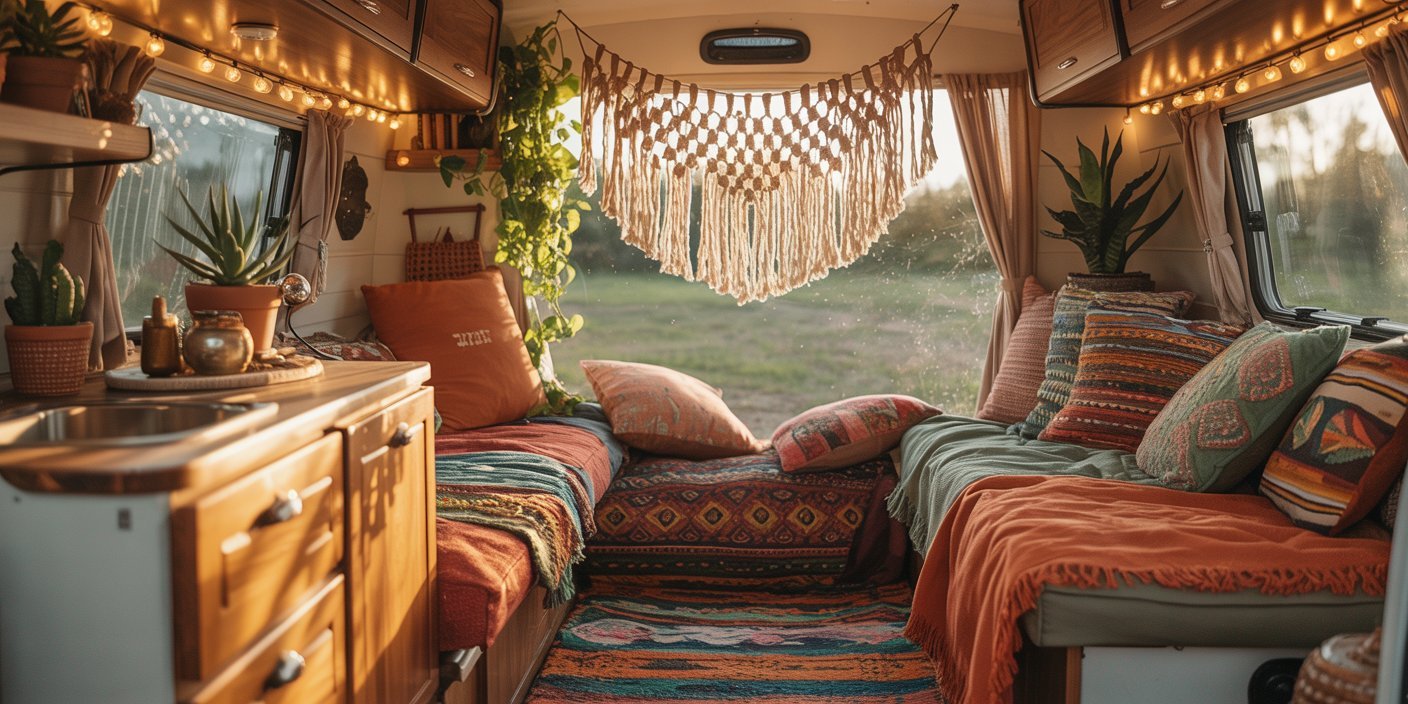
There’s something about stepping into a camper that should feel freeing—but if I’m being honest, most of them don’t feel that way at first.
When I started paying attention to our space, it felt more practical than peaceful.
It did the job, but it didn’t invite you to slow down, breathe, or actually enjoy being in it.
And with everything else going on in daily life—home routines, quick meals, trying to keep things organized—I realized I wanted this small space to feel different.
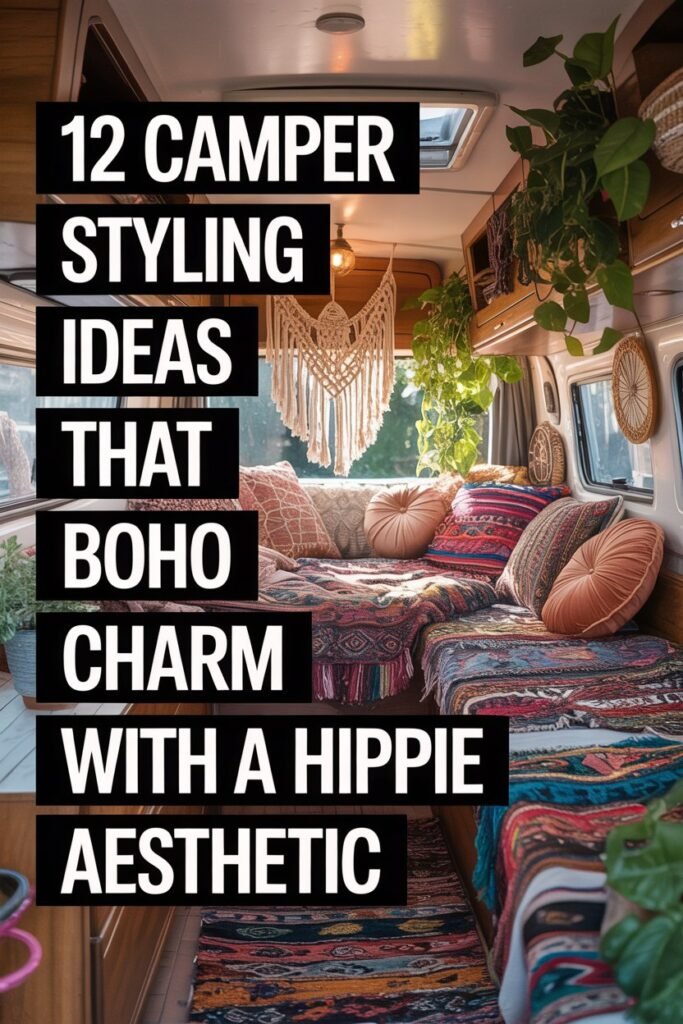
I didn’t want perfect. I wanted warm, relaxed, and a little expressive.
That’s what drew me to blending boho charm with a hippie aesthetic—a style that feels layered but not cluttered, creative but still calming, and personal without trying too hard.
In this post, I’m sharing the exact styling ideas that helped me turn a simple camper into a space that feels cozy, lived-in, and genuinely mine—without overwhelming the space or overcomplicating the process.
How I Turned a Plain Camper Into a Cozy Boho-Hippie Escape
The first time I really looked around our camper, I remember thinking, this doesn’t feel like a place I’d want to unwind in.
Everything was fine on the surface—the cushions were clean, the layout worked, and it had all the basics—but it felt flat.
There was no warmth, no personality, nothing that made you want to sit down with a cup of tea and just exist for a moment.
So I didn’t start with a big makeover. I started small.
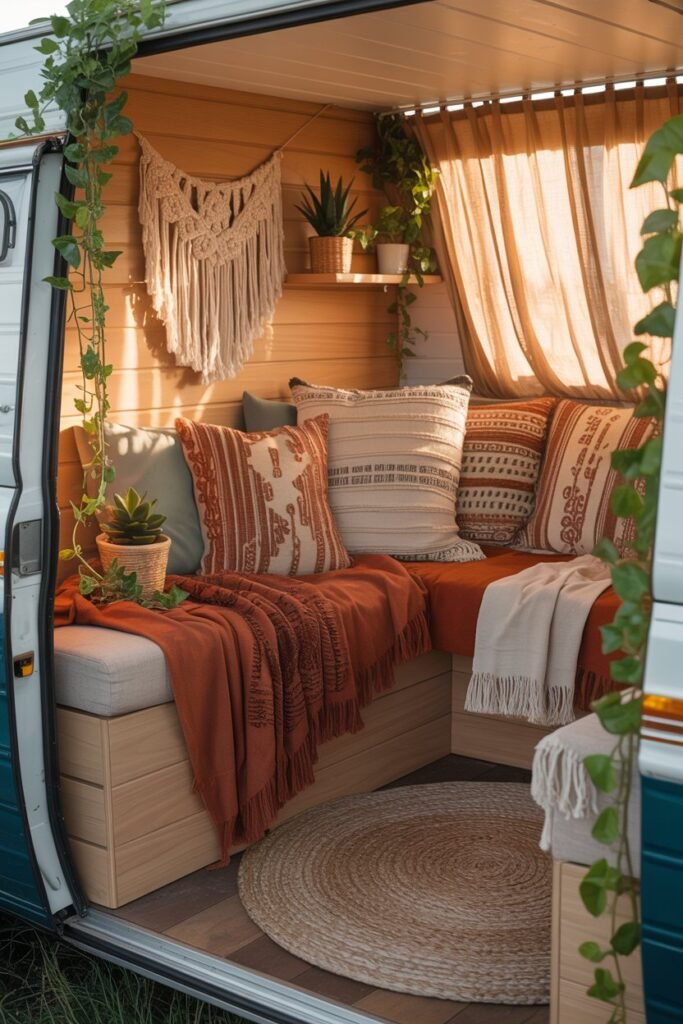
One afternoon, after finishing up things at home and finally having a quiet moment, I swapped out the plain cushion covers for something softer and warmer.
That one change made the space feel different instantly. Not finished—but closer.
From there, I paid attention to how I wanted the space to feel, not just how it looked.
I added textures I could actually enjoy—throws, soft fabrics, little details that made sitting down feel comfortable instead of temporary.
I brought in pieces that felt a bit imperfect, a bit handmade, and a little collected over time.
It wasn’t about decorating all at once. It was about layering slowly:
- Adding something soft here
- Something meaningful there
- Removing anything that felt too stiff or unnecessary
And over time, the camper started to shift. It became quieter, warmer, more personal.
Now, it feels like a place I can step into and instantly relax—not because it’s styled perfectly, but because it reflects how I actually want to live in it.
1. Start With a Warm, Earthy Color Palette
Before I added decor, I focused on the one thing that changes a space the fastest—color.
At first, the camper had that typical neutral look. It wasn’t bad, but it leaned a little too cool and lifeless for the kind of atmosphere I wanted.
I needed it to feel warmer without making it feel crowded.
So I started swapping in earthy tones, little by little.
I leaned into colors like:
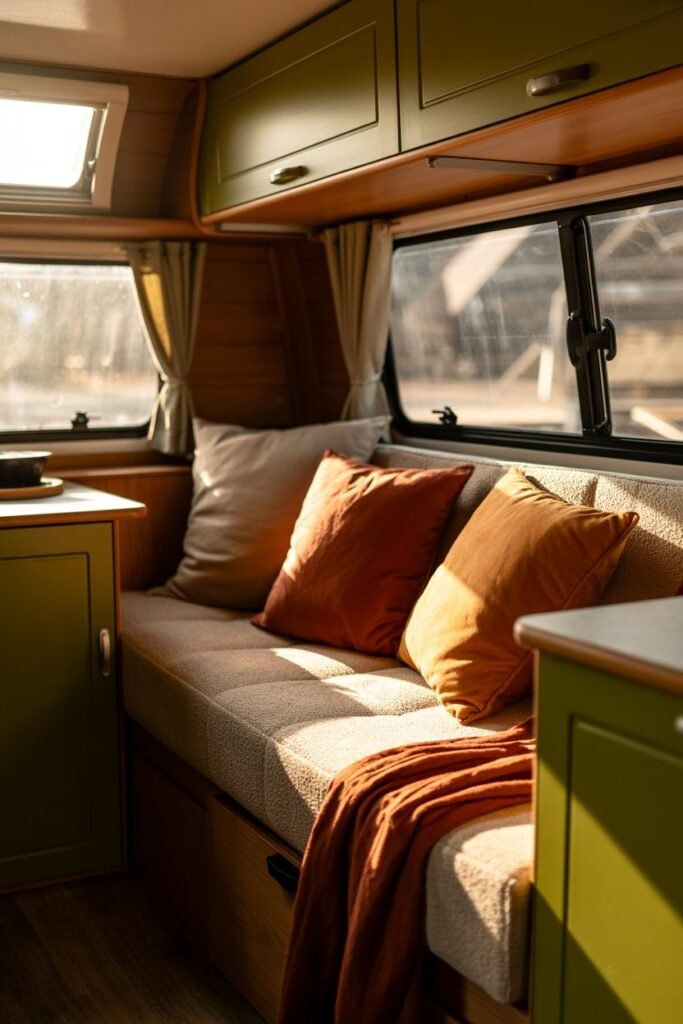
- Soft beige and sand
- Muted terracotta
- Olive green
- Warm rust tones
Nothing too bold—just shades that naturally feel calming and grounded.
The easiest place to start was with fabrics. I changed out cushion covers and added a throw in a warmer tone, and suddenly the whole space felt softer.
Even in a small camper, color has a way of wrapping everything together when you keep it consistent.
What helped me most was keeping it simple. I didn’t try to mix too many shades or patterns at once.
A few warm tones, repeated in small ways, made the space feel intentional instead of busy.
If you’re starting from scratch, focus on color first—it sets the tone for everything else you’ll add later.
2. Layer Textiles to Instantly Add Warmth
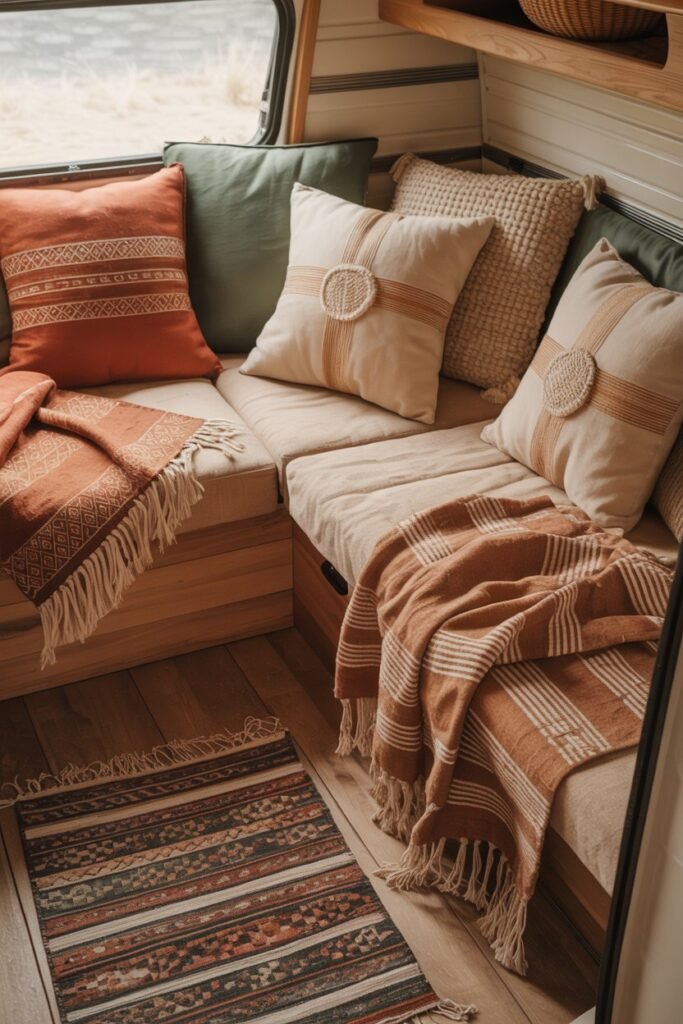
Once I got the color palette right, the space still felt like it needed something more—this is where layering really changed everything.
I started thinking about how the camper felt, not just how it looked.
At home, the coziest spots always have layers—something soft under your feet, something comfortable behind your back, something you can reach for when you want to relax. So I brought that same idea into the camper.
I added:
- A small woven rug near the entry
- A soft throw over the նստing area
- A couple of textured pillows in warm tones
None of it was bulky or overwhelming, but together, it made the space feel lived-in instead of temporary.
The difference was immediate. Sitting down didn’t feel like I was just using the space—it felt like I could actually settle into it.
One thing I kept in mind: in a small camper, every layer should have a purpose. If it doesn’t add comfort or warmth, it’s just taking up space.
So instead of overdoing it, I focused on a few pieces that made a real difference.
3. Add Macramé for That Effortless Boho Touch
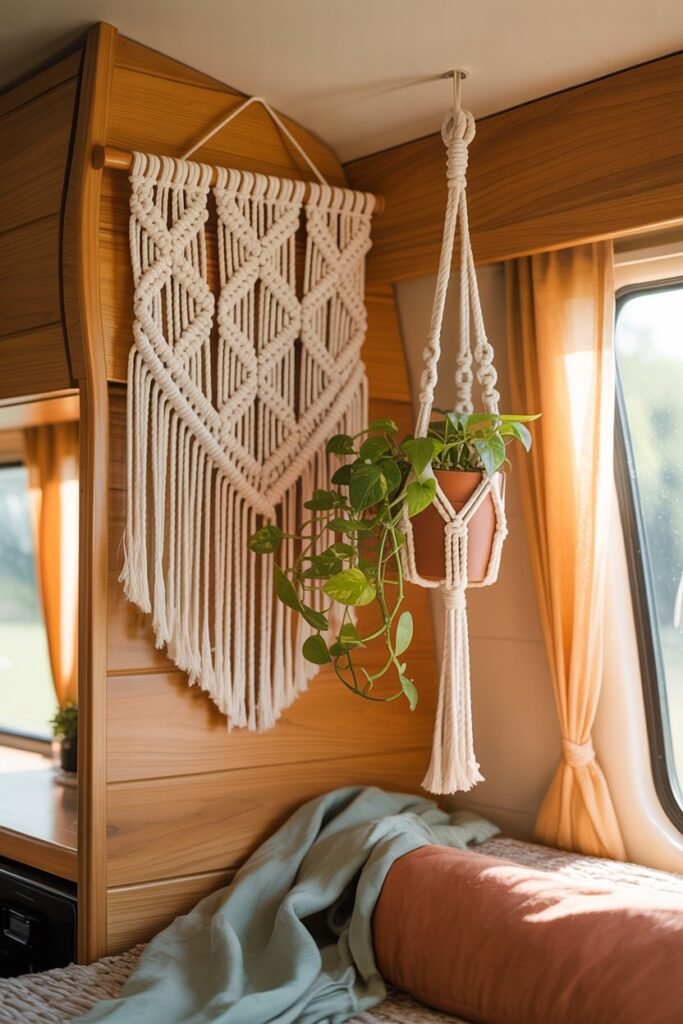
This was one of the simplest changes, but it added so much personality.
I remember hanging a small macramé piece on the wall and stepping back for a second—it instantly softened the space.
It brought in that handcrafted, slightly artistic feel that ties the whole boho-hippie look together.
What I love about macramé is that it adds texture without feeling heavy.
In a camper, that matters a lot.
You don’t want walls that feel crowded or busy, so I kept it minimal:
- One small wall hanging
- Or a macramé plant holder near the window
That was enough to shift the entire vibe.
It made the space feel more relaxed, a little creative, and less structured—like it didn’t have to be perfect to feel beautiful.
And honestly, that’s the energy I wanted the whole camper to have.
4. Use Plants to Bring Life Into the Space
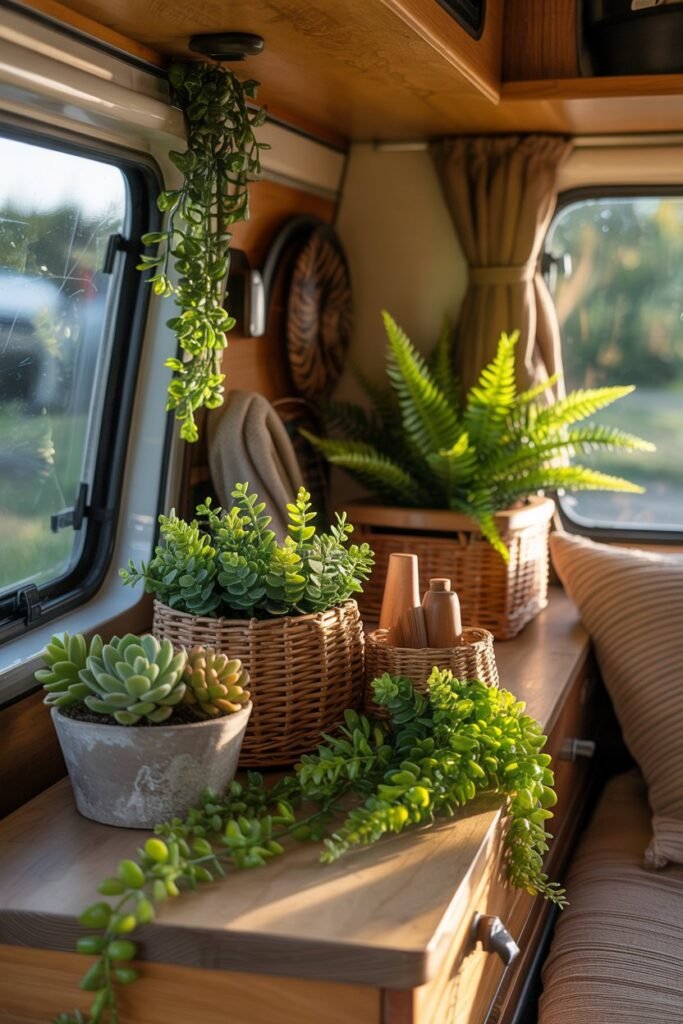
After adding texture and warmth, I noticed the camper still needed one thing—life.
Everything looked better, but it didn’t feel alive yet.
So I started adding a bit of greenery.
At first, I was worried about maintenance, especially being on the move, so I kept it simple.
I mixed one or two real, low-maintenance plants with a few realistic faux ones, and honestly, that balance worked perfectly.
I placed them where they’d naturally catch light:
- Near the window
- On a small shelf
- Tucked into a corner that felt a little empty
It didn’t take much, but it made the space feel fresher and more relaxed instantly.
Plants have a way of softening everything without trying too hard.
My approach was simple: don’t overcrowd the space—just add small touches of green where it feels natural.
5. Switch to Soft, Ambient Lighting
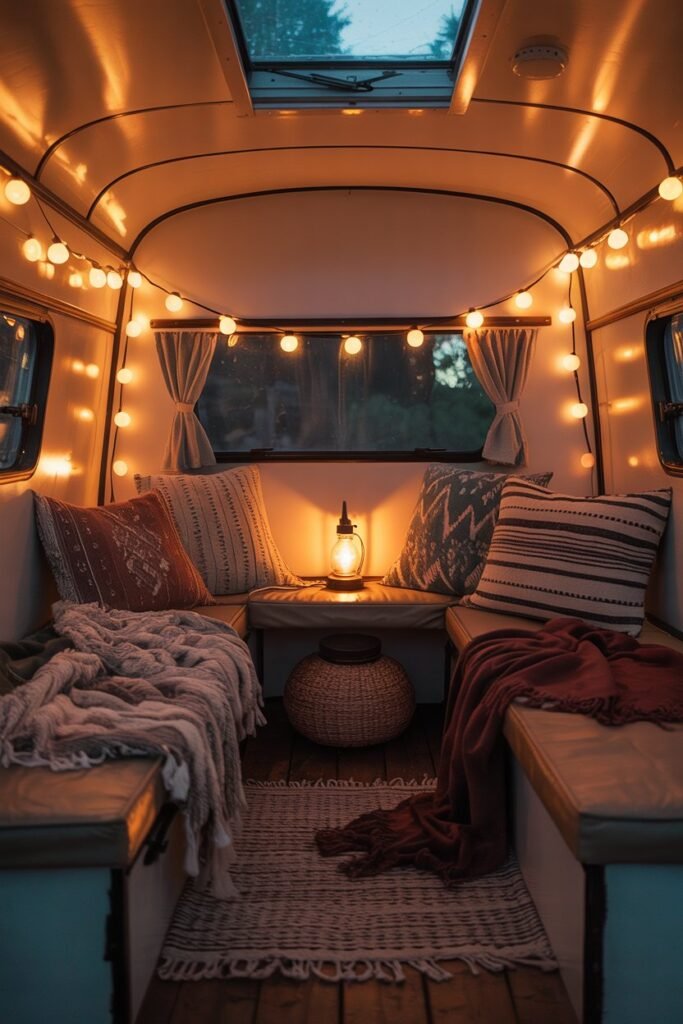
Lighting was one of those things I didn’t think about at first—but once I changed it, I couldn’t believe the difference.
The original camper lights were bright and practical, but at night, they made the space feel harsh and almost clinical. It wasn’t the kind of environment you’d want to wind down in.
So I started replacing that harsh light with softer options.
I added:
- Warm string lights along the edges
- A small lamp for evenings
- Battery-powered candles for a subtle glow
And just like that, the entire mood shifted.
Evenings in the camper started to feel slower, calmer, and a lot more inviting.
Instead of one bright overhead light, I created small pockets of light that made the space feel cozy and relaxed.
If there’s one change that instantly transforms the atmosphere, it’s this. Soft lighting makes everything feel warmer, no matter how small the space is.
6. Incorporate Vintage or Thrifted Pieces
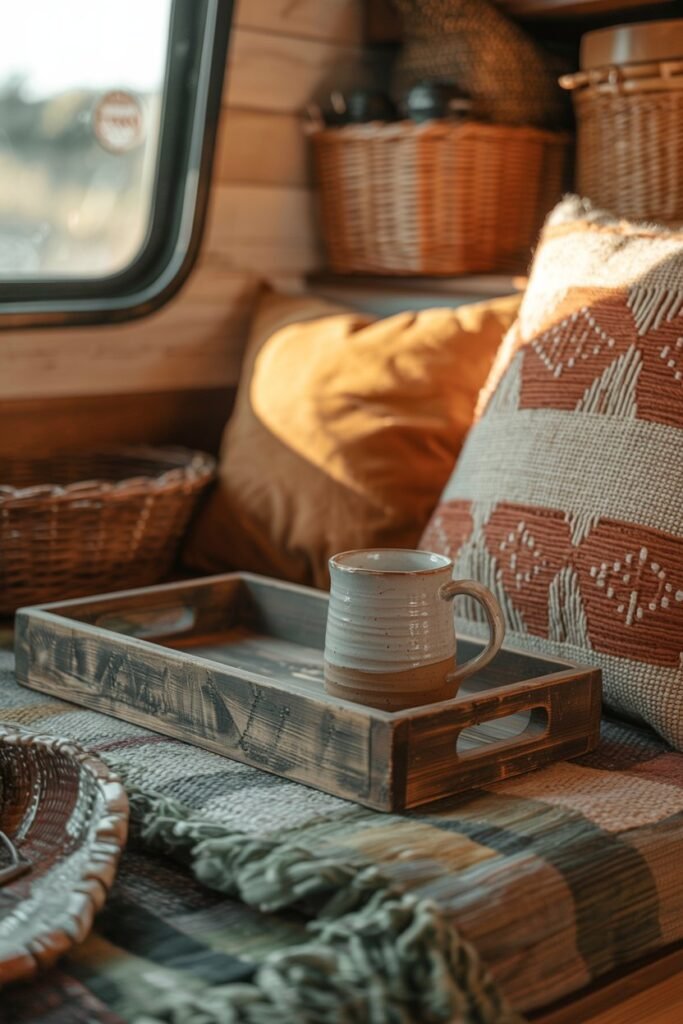
This is where the camper really started to feel like mine.
Up until this point, everything looked nice—but it still felt a little too “put together,” like it could belong to anyone. I wanted pieces that told a story, even in a small way.
So I started adding a few vintage and thrifted items.
Nothing big or space-consuming—just small details like:
- A slightly worn wooden tray
- A handmade ceramic mug I actually use every morning
- A patterned pillow that didn’t look brand new
These pieces brought in that lived-in, collected feel that’s such a big part of both boho and hippie styling.
What I love most is that they don’t feel staged.
They feel real, a little imperfect, and personal in a way that brand-new decor sometimes doesn’t.
My rule here was simple: if it feels unique and useful, it stays. If it’s just decorative with no meaning, it doesn’t make the cut.
7. Create a Relaxed, Floor-Friendly Seating Spot
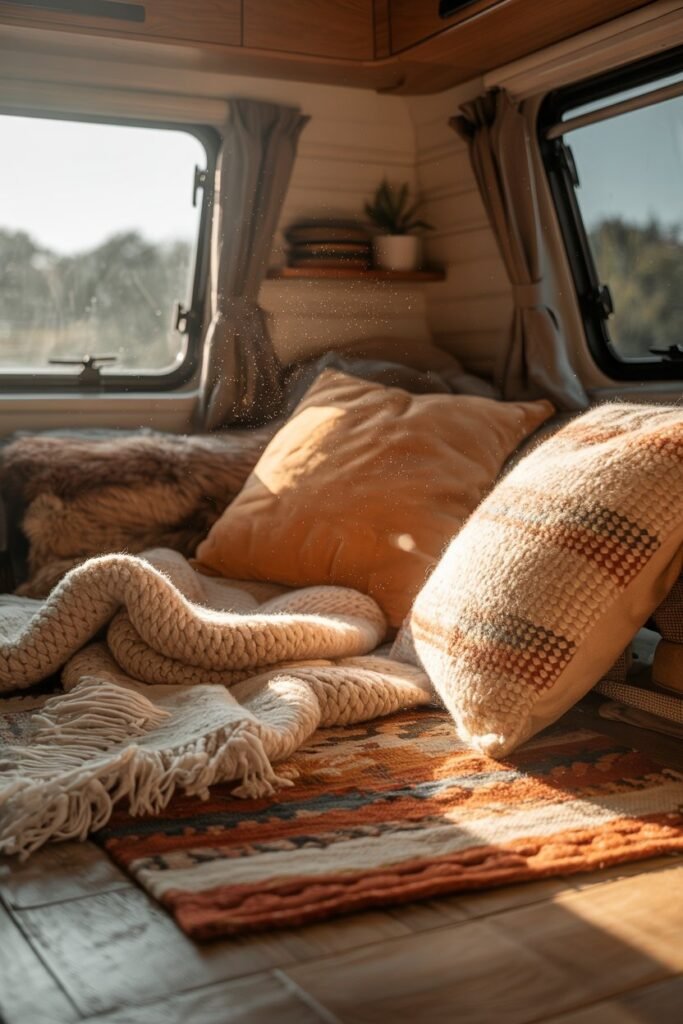
At some point, I realized I didn’t always want to sit in the same structured spots.
Sometimes, I just wanted a softer, more relaxed place to land—somewhere I could stretch out, sit comfortably, or just slow down for a bit.
So I created a small floor-friendly corner.
Nothing complicated. I added:
- A floor cushion
- A soft throw layered underneath or nearby
That was it.
But it completely changed how I used the space.
It gave the camper a more laid-back, free-spirited feel—less structured, more flexible. And on quiet evenings, it became one of my favorite spots to just sit and unwind.
What made this work was keeping it minimal. In a small camper, even one extra piece matters, so I made sure everything in that corner served a purpose.
It doesn’t take much to create a space that feels different—you just have to think beyond the usual setup.
8. Use Natural Materials Wherever You Can
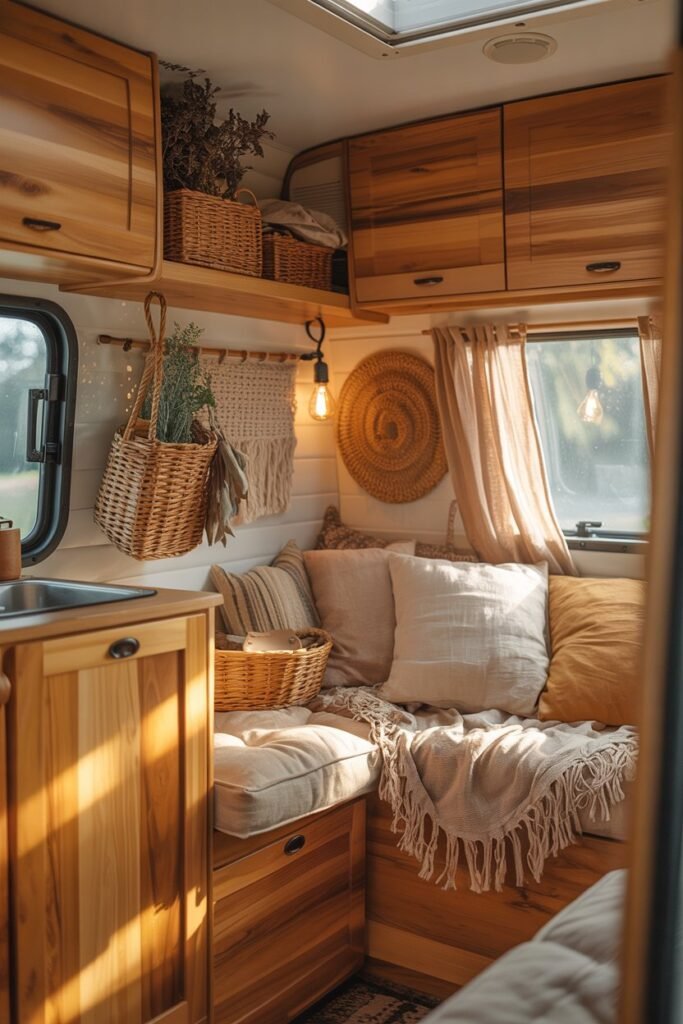
As I kept styling the camper, I started noticing how certain finishes made the space feel a bit off.
Anything too shiny or synthetic stood out in a way that didn’t match the calm, grounded feel I was going for. So I slowly began swapping those pieces out for more natural materials.
I leaned into:
- Wood
- Rattan
- Cotton
- Linen
Even the smallest changes made a difference. A woven basket instead of a plastic bin, a wooden tray instead of something glossy—those little swaps added warmth without taking up extra space.
What I liked most was how everything started to feel softer and more cohesive.
Nothing looked overly styled. It just felt… easy.
I didn’t replace everything at once. I changed things gradually, only when it made sense, and that helped the space evolve naturally instead of feeling forced.
9. Hang Light, Airy Curtains to Open Up the Space
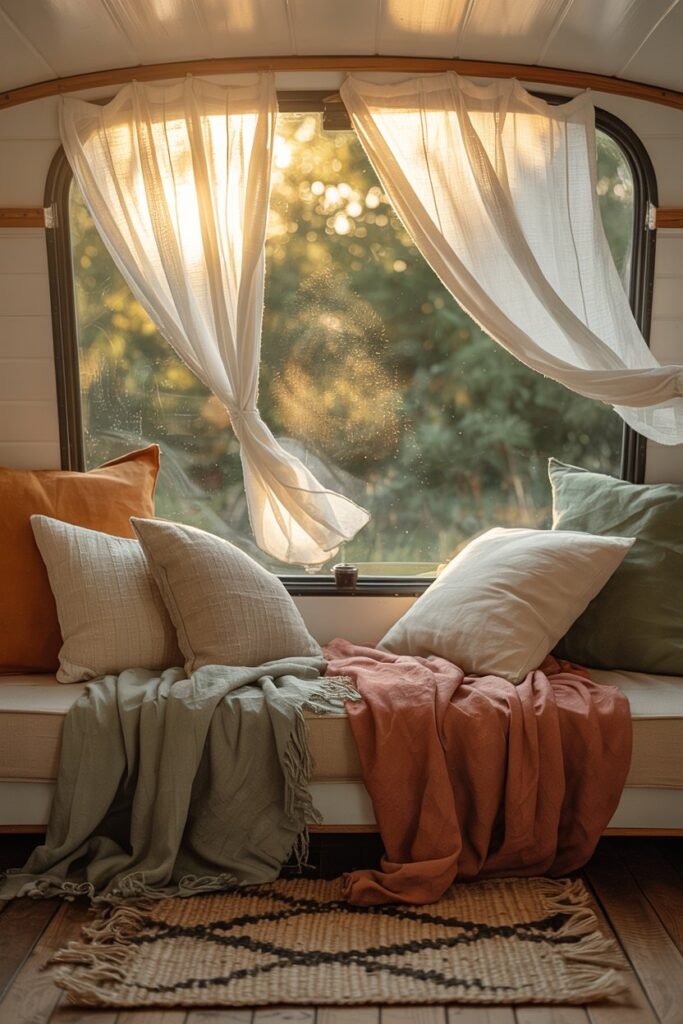
Curtains were one of those things I almost overlooked—but changing them completely shifted how the camper felt.
The original ones were heavier and made the space feel a bit closed in, especially during the day.
I didn’t realize how much that affected the overall atmosphere until I switched them out.
I chose light, breathable fabric in a soft neutral tone.
And instantly:
- More natural light came through
- The space felt bigger
- Everything looked softer and more relaxed
It’s such a simple change, but in a small space, light makes a huge difference.
Now, during the day, the camper feels open and calm instead of dim and enclosed.
If you want your space to feel bigger without adding anything new, this is one of the easiest ways to do it.
10. Add Personal, Meaningful Decor
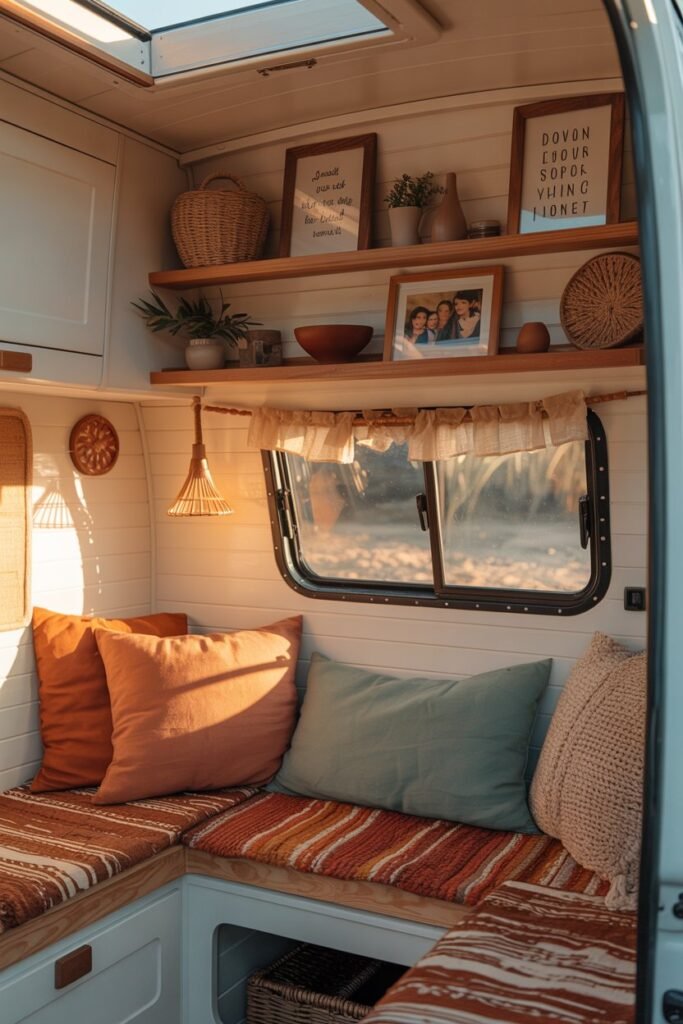
This is the part that truly made the camper feel like my space, not just a styled one.
Up until now, everything focused on comfort and aesthetics—but it still needed that personal layer.
The kind of details that make a space feel familiar the moment you step in.
I didn’t go overboard. I just added a few meaningful pieces:
- A small framed quote I love
- A photo from a simple day that meant something to me
- A handmade item that reminded me of home
These weren’t big or attention-grabbing, but they grounded the space in a quiet way.
Every time I noticed them, it felt less like a temporary setup and more like a place I actually belong in.
That’s what makes the difference. Not how much you add, but what it means to you.
11. Keep It Minimal but Intentional
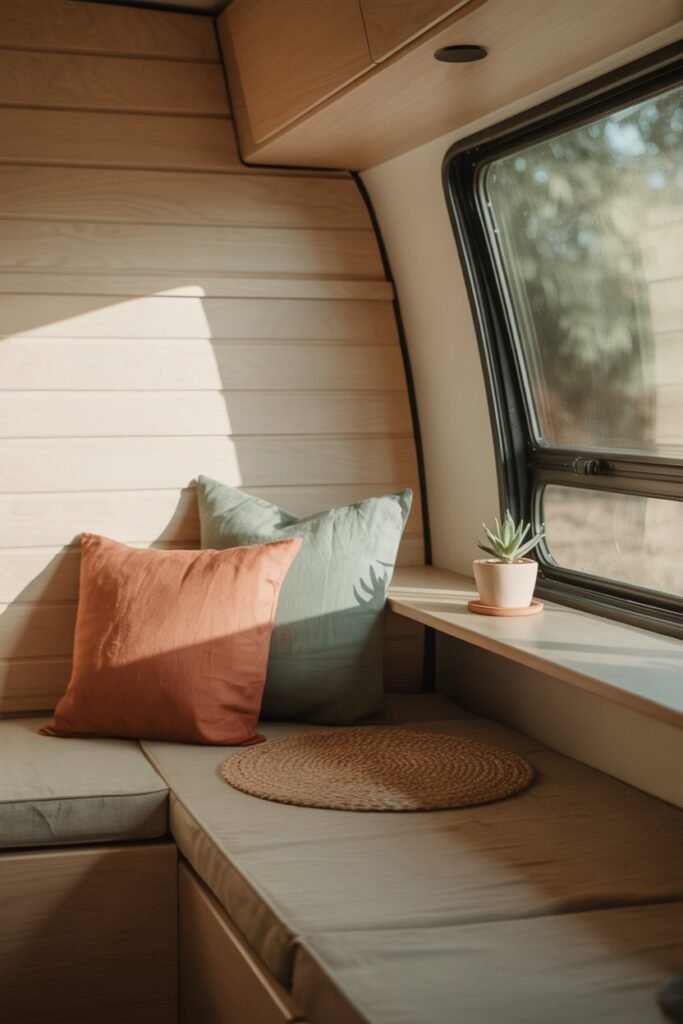
This was probably the hardest lesson for me.
Once I started enjoying the process, it was tempting to keep adding more—more textures, more decor, more little pieces that fit the aesthetic.
But in a small camper, that can quickly turn into clutter.
So I had to step back and be more intentional.
I started asking myself one simple question:
Does this add comfort, warmth, or meaning to the space?
If the answer was no, I didn’t keep it.
That mindset changed everything.
Instead of trying to fill every corner, I let the space breathe. I allowed each piece to stand out without competing with everything else.
And honestly, that’s what made the camper feel calm instead of overwhelming.
In a space this small, less isn’t empty—it’s peaceful.
12. Let the Space Evolve Naturally
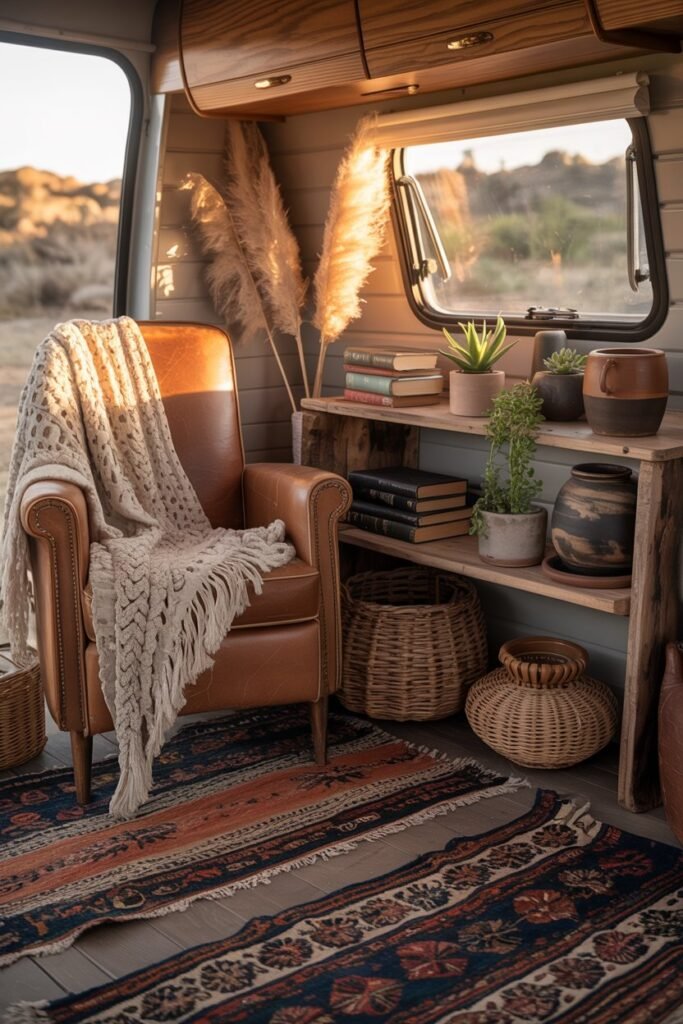
One of the most valuable lessons I learned while styling our camper is that it doesn’t need to be perfect all at once.
I started with small changes—a throw here, a cushion there—and over time I noticed which areas felt empty or needed a little extra warmth.
Some corners got a small plant, a woven basket, or a handmade piece, while others stayed simple and open.
By allowing the space to evolve naturally, I could experiment, move things around, and make adjustments without stress.
This gradual approach made the camper feel cozy, personal, and truly lived-in, rather than staged.
It also gave me the freedom to add pieces that really mattered, embrace imperfect or slightly worn items, and create a boho-hippie retreat that reflects how I actually use and enjoy the space.
The camper became more than just a vehicle—it became a small, inviting home where every detail has a purpose and personality.
Final Thoughts:
Styling a camper with boho and hippie charm isn’t about perfection—it’s about creating a space that feels warm, personal, and inviting.
From earthy tones and layered textiles to small vintage treasures, every detail adds up to a space that’s uniquely yours.
And the best part? You don’t need a big budget or a lot of space.
With intention, a few natural materials, and personal touches, you can turn any plain camper into a retreat that inspires calm, creativity, and joy.
If you’re starting your own boho-hippie camper journey, remember: focus on feeling over perfection, add meaningful details, and let it evolve naturally. That’s what makes a camper feel truly like home on the road.