25 Incredible Irish Villages You Need to Visit Once in a Lifetime

We didn’t set out to find 25 villages. It started with one wrong turn outside Ennis, a shopkeeper’s offhand comment about a harbor worth seeing, and by the time we got home, the trip had quietly become less about castles and cities and almost entirely about the small stops in between.

Ireland’s villages don’t perform for visitors the way its bigger destinations sometimes do. A fisherman in Kilrush keeps mending nets whether a boat tour is watching or not.

A weaver in Ardara works the same loom her family has used for generations, tourism or none. That’s the pull. You’re not stepping into something built for you, you’re briefly stepping into something that was already there.

This guide covers 25 villages worth building a real trip around, along with the practical details that actually matter, how to get there, where to stay by budget, and how long each one is worth your time.

If you’ve already read our 15 fairytale villages in Ireland or the best restaurants in Irish villages, this one fills in the rest of the map, and our Ireland and Scotland itinerary is a good next stop if you’re building a longer trip around it.

Amazon Shopping List You Need

Why Visit Irish Villages

Ireland’s cities get the guidebook attention, but its villages are where the country actually shows itself.

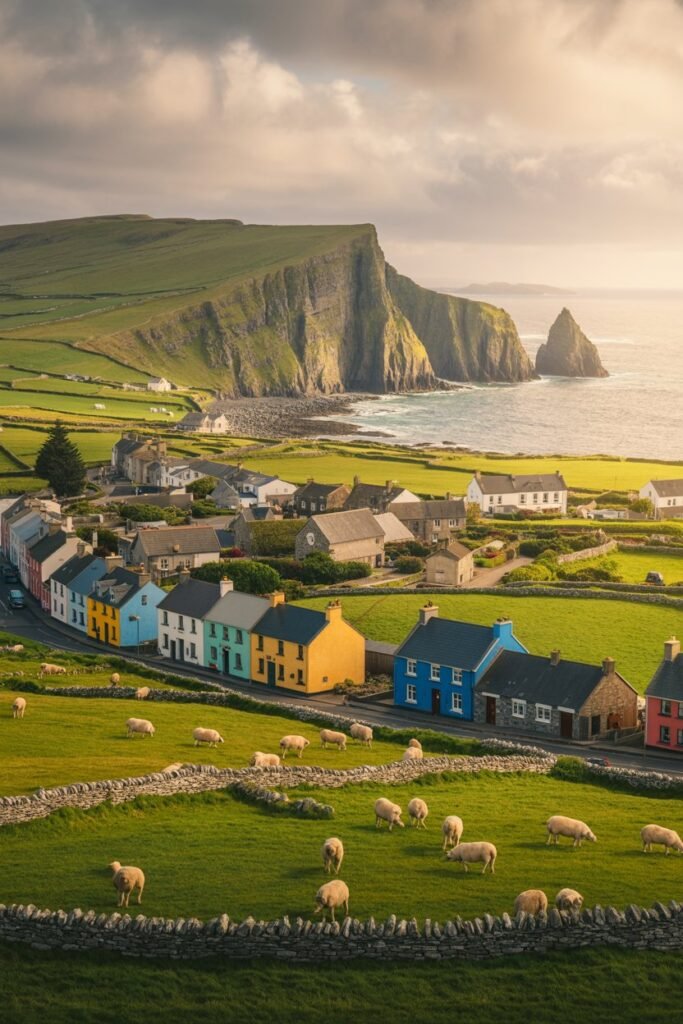
These are places small enough that a shopkeeper knows your name by the second day, where a pub conversation can rearrange your entire itinerary, and where the scenery, coastal cliffs, stone harbors, colorful main streets, feels earned rather than staged for visitors.

Villages also tend to sit closer to Ireland’s best natural attractions than its cities do, making them a smarter base for exploring than they first appear.

Discover more: 11 Irish Villages That Look Straight Out of a Movie

Best Time to Visit

Spring (March to May): Wildflowers and lambing season bring the countryside to life, with thinner crowds than summer and reliably green landscapes, though weather stays unpredictable.

Summer (June to August): The busiest and most festival-heavy season, with the longest daylight hours, best for coastal villages and outdoor activity, but also the most expensive and crowded.

Autumn (September to October): A strong middle ground, mild weather, harvest festivals, and noticeably thinner crowds than summer, especially into October.

Winter (November to February): Quiet, atmospheric, and considerably cheaper, though many small cafés, guesthouses, and attractions in the smallest villages reduce hours or close entirely.

How to Plan an Irish Village Road Trip

A car is close to essential for most of this list. Ireland’s train and bus network connects larger towns reasonably well, but the villages that make a trip memorable tend to sit down narrow roads well outside that network.

Renting a car from Dublin, Shannon, or Cork airport and building a loop, rather than a straight line, is the most efficient way to cover multiple regions without backtracking.

Group villages by region rather than treating this list as a single route.

The west coast (Clare, Galway, Kerry), the southeast (Waterford, Wexford, Kilkenny), Donegal, and the Antrim coast in Northern Ireland each cluster naturally and are better treated as separate legs of a longer trip, or separate trips entirely.

1. Kinvara, County Galway

A fiddle player setting up outside a pub on the harbor mentioned that Kinvara hosts one of Ireland’s most famous traditional music festivals every May, and that the whole village essentially turns into one continuous session for a weekend, pubs, streets, and doorways all playing at once.

Why You’ll Love It

Kinvara sits on the edge of Galway Bay with a working harbor, colorful shopfronts, and a genuine traditional music scene that draws musicians from across the country.

It’s small enough to see in an afternoon but has enough pubs and character to fill a full evening easily.

Top Things to Do

  • Walk the harbor and visit Dunguaire Castle, just outside the village
  • Catch a traditional music session in one of the village pubs
  • Browse the small independent shops along the main street
  • Time a visit around the Cuckoo Fleadh music festival in May

How to Get There

Kinvara sits about 30 minutes south of Galway city and just under an hour from Shannon Airport.

There’s no train station, so a car or the Galway to Kinvara bus route is necessary. Renting a car gives the most flexibility for continuing on toward the Burren or the Cliffs of Moher.

Best Time to Visit

May for the Cuckoo Fleadh music festival, or June to September for the mildest weather and longest days along the harbor.

How Long to Stay

Half a day covers the village itself comfortably, though an overnight stay is worth it if visiting during a music festival weekend.

Where to Stay

  • Luxury: Countryside manor houses just outside the village
  • Mid-range: Family-run guesthouses along the harbor
  • Budget: B&Bs and self-catering cottages a short drive from the center

Nearby Attractions

Dunguaire Castle, the Burren, and the Cliffs of Moher are all within an hour’s drive, making Kinvara a solid base for a day or two exploring County Clare and Galway.

Local Travel Tips

Parking fills up quickly during festival weekends, so arrive early or park slightly outside the village center. Cash is useful for smaller shops and pub sessions.

Quick Visitor Information

Best ForMusic lovers, couples, coastal walks
Time NeededHalf day
Best SeasonMay, or June to September
Nearest AirportShannon Airport
Car RecommendedYes
Overnight StayRecommended during festivals

Learn more: 10 Magical Irish Villages That Feel Like a Fairytale

2. Ardmore, County Waterford

A local historian pointed out that Ardmore’s round tower has stood since the 12th century and marks one of the earliest Christian settlements in Ireland, older than most of the cathedrals tourists travel much further to see.

Why You’ll Love It

Ardmore pairs a genuine sandy beach with real early Christian history, a round tower, monastic ruins, and a cliff walk that takes in both.

It’s a quieter alternative to Ireland’s more crowded coastal villages, with the kind of pace that rewards a slow weekend rather than a rushed stop.

Top Things to Do

  • Walk the Ardmore Cliff Walk, taking in the round tower and coastal views
  • Visit St. Declan’s Well and the ruins of the early monastic settlement
  • Spend an afternoon on Ardmore’s Blue Flag beach
  • Browse the village’s small cafés and craft shops

How to Get There

Ardmore sits in County Waterford, about an hour from Waterford city and just over two hours from Cork Airport.

There’s no train station, so a car is the most practical way in, with limited bus service connecting to nearby towns.

Best Time to Visit

June to September for beach weather, or April to May for the cliff walk without summer crowds.

How Long to Stay

A half day covers the main sights, though an overnight stay allows time for both the beach and the cliff walk without rushing.

Where to Stay

  • Luxury: Coastal guesthouses with sea views just above the village
  • Mid-range: Family-run B&Bs within walking distance of the beach
  • Budget: Campgrounds and self-catering cottages nearby

Nearby Attractions

Dungarvan and the Copper Coast are both a short drive away, offering more coastal scenery and small towns worth pairing with an Ardmore stop.

Local Travel Tips

The cliff walk can be exposed and windy, so check weather before setting out. Many small cafés close earlier than expected outside peak summer months.

Quick Visitor Information

Best ForHistory lovers, beach days, quiet coastal walks
Time NeededHalf day to overnight
Best SeasonJune to September
Nearest AirportCork Airport
Car RecommendedYes
Overnight StayRecommended

3. Ballyvaughan, County Clare

A boat operator running trips out of the harbor mentioned that Ballyvaughan sits right at the edge of the Burren’s lunar-like limestone landscape, close enough that the bare grey hills are visible from the village pier itself.

Why You’ll Love It

Ballyvaughan sits where Galway Bay meets the Burren, giving it both a working harbor and immediate access to one of Ireland’s strangest and most striking landscapes.

It’s a natural base for exploring the Burren without staying somewhere more remote.

Top Things to Do

  • Walk the harbor and take in views across Galway Bay
  • Drive or hike into the Burren National Park nearby
  • Visit Aillwee Cave, just outside the village
  • Stop into a local pub for traditional music, common on summer evenings

How to Get There

Ballyvaughan sits in County Clare, about an hour from Galway city and just under an hour from Shannon Airport. A car is necessary, since public transport options are limited in this part of the Burren.

Best Time to Visit

April to June for wildflowers across the Burren, or September to October for mild weather and thinner crowds.

How Long to Stay

A half day for the village itself, though a full day or overnight works better if pairing it with Burren hiking.

Where to Stay

  • Luxury: Countryside lodges with Burren views
  • Mid-range: Guesthouses within the village center
  • Budget: B&Bs and hostels nearby

Nearby Attractions

The Burren National Park, Aillwee Cave, and the Cliffs of Moher are all within a reasonable drive, making Ballyvaughan a strong base for a few days in County Clare.

Local Travel Tips

Burren terrain is rocky and uneven, so proper footwear matters more here than in most villages on this list.

Bring a paper map or downloaded offline map, since signal can be patchy in the more remote stretches.

Quick Visitor Information

Best ForHikers, nature lovers, road trippers
Time NeededHalf day to full day
Best SeasonApril to June, or September to October
Nearest AirportShannon Airport
Car RecommendedYes
Overnight StayRecommended if hiking the Burren

Read more: How to Pack for a 7-Day Irish Village Trip

4. Dunmore East, County Waterford

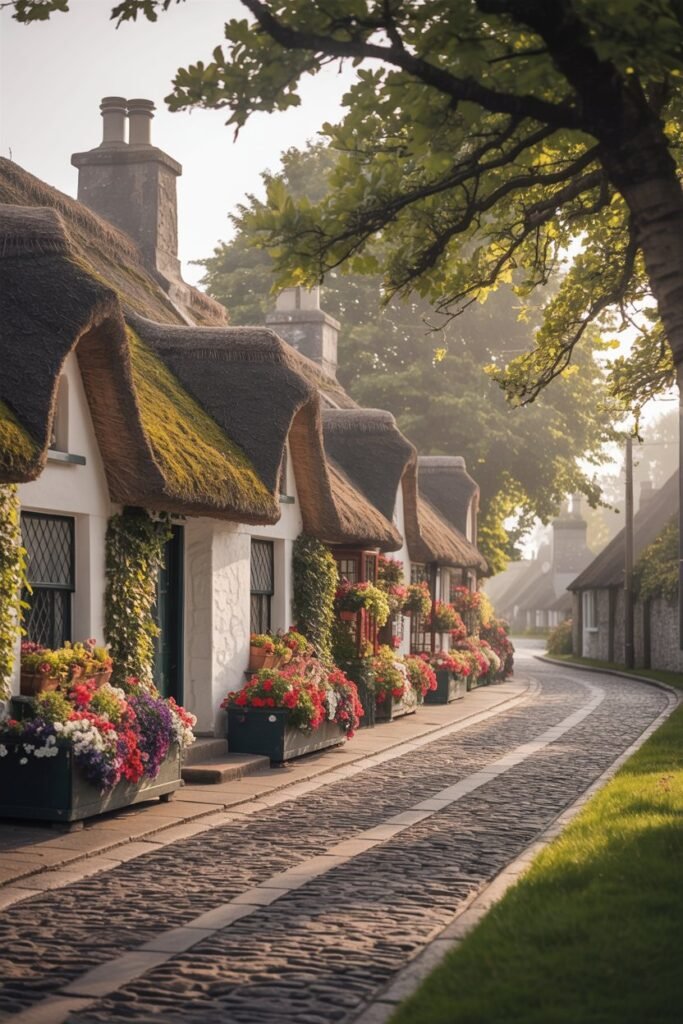
A fisherman unloading the morning catch mentioned that Dunmore East is still a genuine working fishing harbor, not a preserved version of one, and that the thatched cottages lining the upper village were built for the fishing families who’ve lived here for generations.

Why You’ll Love It

Dunmore East combines a working fishing harbor with a cluster of well-preserved thatched cottages and cliffside walks along Ireland’s southeast coast.

It’s less polished than some of the country’s more famous coastal villages, and that working-harbor character is exactly what makes it worth the stop.

Top Things to Do

  • Walk the harbor and watch the fishing boats come in
  • Take the cliff walk along the coast for sea views
  • Visit the village’s small beach for a swim in summer
  • Browse the thatched cottage cluster in the upper village

How to Get There

Dunmore East sits about 15 minutes from Waterford city, making it one of the more accessible villages on this list.

Waterford has its own regional airport with limited service, though most visitors drive in from Waterford city or fly into Cork or Dublin and drive from there.

Best Time to Visit

June to September for beach and harbor weather, or May for milder temperatures with fewer crowds.

How Long to Stay

Half a day covers the village comfortably, with an overnight stay a good option if combining it with more of the Waterford coast.

Where to Stay

  • Luxury: Coastal hotels with harbor or sea views
  • Mid-range: Guesthouses near the thatched cottage cluster
  • Budget: B&Bs and campgrounds a short drive away

Nearby Attractions

Waterford city, the Copper Coast, and Tramore’s beaches are all within a short drive, making this an easy add-on to a broader southeast Ireland itinerary.

Local Travel Tips

Parking near the harbor fills up quickly in summer, so arrive early or expect to walk in from a bit further out. The cliff walk can be windy, so dress accordingly.

Quick Visitor Information

Best ForCoastal walks, seafood lovers, easy day trips
Time NeededHalf day
Best SeasonJune to September
Nearest AirportWaterford Airport (limited) or Cork Airport
Car RecommendedYes
Overnight StayOptional

5. Schull, County Cork

A sailor prepping a boat at the harbor mentioned that Schull sits at the start of the Mizen Peninsula, one of the least visited stretches of the Wild Atlantic Way, and that most travelers driving the Ring of Kerry never make it this far south at all.

Why You’ll Love It

Schull combines a lively harbor village with access to some of West Cork’s quietest, most dramatic coastal scenery.

It has a stronger food and arts scene than its small size suggests, without losing the relaxed, unhurried pace typical of the Mizen Peninsula.

Top Things to Do

  • Walk the harbor and browse the village’s shops and galleries
  • Take a boat trip out to Fastnet Rock and its lighthouse
  • Drive the Mizen Peninsula loop for coastal views
  • Visit the Sunday farmers market, a local institution

How to Get There

Schull sits in West Cork, about an hour and 15 minutes from Cork city and just under two hours from Cork Airport. A car is necessary, since the Mizen Peninsula has limited public transport.

Best Time to Visit

June to September for the mildest weather and boat trip availability, or May for quieter crowds.

How Long to Stay

A full day for the village and a peninsula drive, or overnight if combining it with more of West Cork.

Where to Stay

  • Luxury: Coastal guesthouses with harbor or sea views
  • Mid-range: Village hotels and inns within walking distance of the harbor
  • Budget: B&Bs and self-catering cottages nearby

Nearby Attractions

Mizen Head, Barleycove Beach, and the wider West Cork coastline are all within easy reach, making Schull a strong base for a few days exploring the peninsula.

Local Travel Tips

Boat trips to Fastnet Rock are weather dependent, so build flexibility into your schedule if that’s a priority. The Sunday market draws crowds, so arrive early for the best selection.

Quick Visitor Information

Best ForFood lovers, boat trips, peninsula road trips
Time NeededFull day
Best SeasonJune to September
Nearest AirportCork Airport
Car RecommendedYes
Overnight StayRecommended

6. Castletownbere, County Cork

A trawler captain tying up at the pier mentioned that Castletownbere is Ireland’s largest whitefish port, and that the harbor here handles more fish by weight than most people would guess from a village this size, tucked at the far end of the Beara Peninsula.

Why You’ll Love It

Castletownbere pairs a genuine, working fishing port with some of the most dramatic and least crowded scenery on the Beara Peninsula.

It’s a rougher, more authentic stop than the Ring of Kerry’s busier villages, with real maritime character rather than a tourist-facing version of it.

Top Things to Do

  • Walk the harbor and watch the fishing fleet at work
  • Drive or hike part of the Beara Way for coastal and mountain views
  • Take a short ferry to Bere Island, just offshore
  • Visit Dunboy Castle ruins on the edge of town

How to Get There

Castletownbere sits on the Beara Peninsula in West Cork, about two hours from Cork city and just over two and a half hours from Cork Airport. A car is essential, since the peninsula has minimal public transport.

Best Time to Visit

May to September for the mildest weather and full access to hiking trails and the Bere Island ferry.

How Long to Stay

A full day for the village and a short peninsula drive, or overnight if exploring more of the Beara Way.

Where to Stay

  • Luxury: A handful of countryside guesthouses with peninsula views
  • Mid-range: Village hotels and inns near the harbor
  • Budget: B&Bs and self-catering cottages nearby

Nearby Attractions

Bere Island, the Healy Pass, and the wider Beara Peninsula loop are all within easy reach, making this a strong base for a couple of days off the more crowded Ring of Kerry route.

Local Travel Tips

Roads on the Beara Peninsula are narrow and winding, so budget extra driving time. The Bere Island ferry runs on a set schedule, so check times in advance.

Quick Visitor Information

Best ForOff the beaten path travelers, hikers, fishing village character
Time NeededFull day
Best SeasonMay to September
Nearest AirportCork Airport
Car RecommendedYes
Overnight StayRecommended

7. Ballintoy, County Antrim

A local mentioned that the small harbor here doubled as a filming location for Game of Thrones, standing in for the Iron Islands, and that fans still turn up asking directions to a beach that was never actually the beach shown on screen.

Why You’ll Love It

Ballintoy is a tiny harbor village on the Causeway Coast, known for its dramatic rock formations, turquoise water, and proximity to the Carrick-a-Rede rope bridge.

It’s compact enough to see in an hour but sits right in the middle of Northern Ireland’s most scenic coastal drive.

Top Things to Do

  • Walk down to Ballintoy Harbour and its unusual limestone rock formations
  • Cross the Carrick-a-Rede rope bridge, a short drive away
  • Visit nearby Whitepark Bay for a quieter beach walk
  • Continue along the Causeway Coastal Route toward the Giant’s Causeway

How to Get There

Ballintoy sits on the Causeway Coast in County Antrim, about an hour and 15 minutes from Belfast.

A car is the most practical way in, though the Causeway Rambler bus connects several coastal stops in summer months.

Best Time to Visit

May to September for the best weather along the coast, though the rope bridge and harbor are striking in most conditions.

How Long to Stay

An hour or two covers the harbor itself, best paired with a half or full day exploring the wider Causeway Coast.

Where to Stay

  • Luxury: Coastal hotels further along the Causeway Coast
  • Mid-range: Guesthouses in nearby Ballycastle or Bushmills
  • Budget: B&Bs and campgrounds along the coast road

Nearby Attractions

The Giant’s Causeway, Carrick-a-Rede rope bridge, and Dunluce Castle are all within a short drive, making Ballintoy a natural stop on a longer Causeway Coast route.

Local Travel Tips

Parking at the harbor is limited, so arrive early in peak season. The rope bridge requires advance booking in summer months.

Quick Visitor Information

Best ForPhotographers, coastal drives, film location fans
Time Needed1-2 hours
Best SeasonMay to September
Nearest AirportBelfast International Airport
Car RecommendedYes
Overnight StayOptional

8. Cushendun, County Antrim

A National Trust volunteer mentioned that this entire village was designed by the same architect behind the Italianate village of Portmeirion in Wales, and that the Cornish-style cottages here were built as a personal favor for a local family rather than any wider development plan.

Why You’ll Love It

Cushendun is a small, architecturally unusual village on the Antrim coast, its cottages built in a distinctly Cornish style that stands out from typical Irish coastal architecture.

Paired with sea caves, a quiet beach, and glen scenery just inland, it rewards a slow wander more than a quick photo stop.

Top Things to Do

  • Walk the beach and explore the sea caves at its northern end
  • Wander the village’s Cornish-style cottage streets, a National Trust property
  • Hike into Glendun, one of the Antrim Glens, just inland
  • Stop into the village’s small pub for a quiet drink by the water

How to Get There

Cushendun sits on the Antrim coast, about an hour and a half from Belfast. A car is necessary, since public transport to this stretch of coast is limited.

Best Time to Visit

May to September for the mildest weather and best access to the beach and caves.

How Long to Stay

An hour or two for the village and caves, or a half day if combining it with a glen hike.

Where to Stay

  • Luxury: Coastal guesthouses with sea views
  • Mid-range: Village inns and B&Bs
  • Budget: Campgrounds and self-catering cottages nearby

Nearby Attractions

Glendun and the wider Antrim Glens, along with Cushendall a short drive south, both pair well with a Cushendun stop.

Local Travel Tips

The sea caves are best visited at low tide, so check tide times before heading down to the beach. Roads into the glens are narrow, so drive cautiously.

Quick Visitor Information

Best ForQuiet coastal walks, architecture, glen hikes
Time Needed1-2 hours
Best SeasonMay to September
Nearest AirportBelfast International Airport
Car RecommendedYes
Overnight StayOptional

9. Portmagee, County Kerry

A boatman loading gear for a Skellig Michael crossing mentioned that Portmagee is the main departure point for the island, and that the tiny, colorful harbor village barely hints at the scale of what sits just off its coast, an ancient monastic site now famous for a very different reason.

Why You’ll Love It

Portmagee is a small, brightly painted harbor village on the Ring of Kerry, best known as the launch point for boat trips to Skellig Michael.

Even without the island crossing, its harbor and pub scene make it worth a stop on its own.

Top Things to Do

  • Book a boat trip to Skellig Michael, weather and booking permitting
  • Walk the harbor and browse the village’s colorful shopfronts
  • Cross the bridge to Valentia Island, just offshore
  • Stop into a harborside pub for fresh seafood

How to Get There

Portmagee sits on the Ring of Kerry, about two and a half hours from Cork Airport or three hours from Shannon Airport. A car is essential, since public transport to this part of Kerry is minimal.

Best Time to Visit

May to September, when Skellig Michael boat trips run and weather is most reliable.

How Long to Stay

A half day for the village, or a full day if booking a Skellig Michael crossing.

Where to Stay

  • Luxury: A handful of boutique guesthouses with harbor views
  • Mid-range: Village inns and B&Bs near the pier
  • Budget: Hostels and self-catering cottages nearby

Nearby Attractions

Valentia Island, the Skellig Ring scenic drive, and the wider Ring of Kerry route are all easily paired with a Portmagee stop.

Local Travel Tips

Skellig Michael trips book out months in advance and are frequently cancelled for weather, so build flexibility into your plans if that’s the priority. Bring cash for smaller shops and the pier ticket booth.

Quick Visitor Information

Best ForBoat trips, history lovers, Ring of Kerry road trips
Time NeededHalf day to full day
Best SeasonMay to September
Nearest AirportCork or Shannon Airport
Car RecommendedYes
Overnight StayRecommended if booking Skellig Michael

10. Recess, County Galway

A fishing guide working the lakes near the village mentioned that Recess sits at the heart of Connemara’s least developed stretch, mountains on every side and barely a building in sight beyond the village itself, which is exactly why anglers and hikers have quietly kept coming back for generations.

Why You’ll Love It

Recess is less a village in the traditional sense and more a small crossroads deep in Connemara, surrounded by mountains, lakes, and bog land largely untouched by tourism development.

It’s a stop for travelers wanting genuine wilderness rather than a polished village center.

Top Things to Do

  • Fish the surrounding lakes, some of Ireland’s best for trout and salmon
  • Hike into the Twelve Bens mountain range nearby
  • Drive the scenic road toward Kylemore Abbey
  • Stop at the local Connemara marble workshop

How to Get There

Recess sits in Connemara, about an hour and 15 minutes from Galway city. A car is essential, since this is one of the more remote stops on this list with minimal public transport.

Best Time to Visit

April to September for hiking and fishing, with June to August offering the longest daylight for exploring the surrounding mountains.

How Long to Stay

An hour or two if just passing through, or a full day if hiking or fishing.

Where to Stay

  • Luxury: A well-known countryside lodge just outside the village
  • Mid-range: Guesthouses scattered through the wider Connemara area
  • Budget: Hostels and campgrounds nearby

Nearby Attractions

Kylemore Abbey, the Twelve Bens, and Connemara National Park are all within a short drive, making Recess a strong base for exploring the wider region.

Local Travel Tips

Signal is limited throughout this stretch of Connemara, so download offline maps before setting out. Weather in the mountains shifts quickly, so pack layers even in summer.

Quick Visitor Information

Best ForAnglers, hikers, wilderness seekers
Time NeededHalf day to full day
Best SeasonApril to September
Nearest AirportShannon or Galway Airport
Car RecommendedYes
Overnight StayRecommended if hiking or fishing

11. Oughterard, County Galway

A fishing guide setting off from the pier mentioned that Oughterard has been known as the gateway to Connemara for well over a century, and that anglers have been coming to fish Lough Corrib here since long before the road out to Connemara National Park was ever paved.

Why You’ll Love It

Oughterard sits right at the edge of Connemara, combining an active fishing village on Lough Corrib with easy access to the wilder scenery further west.

It’s a practical, welcoming base rather than a postcard stop, the kind of place that works well as a first or last night in the region.

Top Things to Do

  • Fish or take a boat trip on Lough Corrib
  • Visit Aughnanure Castle, just outside the village
  • Walk or cycle sections of the Western Way
  • Browse the village’s shops and pubs along the main street

How to Get There

Oughterard sits about 30 minutes from Galway city and just over an hour from Shannon Airport. A car is the most practical way in, though a limited bus service connects to Galway.

Best Time to Visit

April to September for fishing season and the mildest weather for exploring nearby Connemara.

How Long to Stay

A half day for the village, or overnight if using it as a base for Connemara.

Where to Stay

  • Luxury: Lakeside lodges just outside the village
  • Mid-range: Family-run hotels and guesthouses on the main street
  • Budget: B&Bs and hostels nearby

Nearby Attractions

Aughnanure Castle, Lough Corrib, and Connemara National Park are all within easy reach, making Oughterard a solid base for a few days in the region.

Local Travel Tips

Fishing permits are required on Lough Corrib, so arrange these in advance through a local guide or tackle shop. Roads west toward Connemara narrow quickly, so budget extra driving time.

Quick Visitor Information

Best ForAnglers, Connemara road trips, families
Time NeededHalf day
Best SeasonApril to September
Nearest AirportShannon or Galway Airport
Car RecommendedYes
Overnight StayRecommended as a Connemara base

12. Ardara, County Donegal

A weaver working a loom in her shop window mentioned that Ardara has been a center for Donegal tweed production for generations, and that several families in the village still weave by hand using techniques passed down rather than taught in any formal way.

Why You’ll Love It

Ardara is a small heritage town built around Donegal’s tweed and wool weaving tradition, with working looms still visible in shop windows along the main street.

It sits close to some of Donegal’s most dramatic and least visited coastal scenery, making it both a craft destination and a good base for exploring further out.

Top Things to Do

  • Watch weavers at work and browse tweed shops along the main street
  • Drive the Glengesh Pass, a dramatic mountain road just outside town
  • Visit nearby Assaranca Waterfall
  • Stop into a local pub for traditional music, common on weekend evenings

How to Get There

Ardara sits in southwest Donegal, about two and a half hours from Sligo or three hours from Belfast. A car is essential, since Donegal has limited public transport outside its main towns.

Best Time to Visit

May to September for the mildest weather and best conditions for the Glengesh Pass drive.

How Long to Stay

A half day for the town, or overnight if using it as a base for the surrounding coastline.

Where to Stay

  • Luxury: A handful of countryside guesthouses nearby
  • Mid-range: Family-run hotels and B&Bs in the town center
  • Budget: Hostels and self-catering cottages

Nearby Attractions

The Glengesh Pass, Assaranca Waterfall, and Glencolmcille further along the coast all pair well with an Ardara stop.

Local Travel Tips

The Glengesh Pass is narrow and winding, so drive cautiously, especially in wet or foggy conditions. Shops selling handmade tweed are often cash-friendly for better pricing.

Quick Visitor Information

Best ForCraft lovers, scenic drives, quiet heritage towns
Time NeededHalf day
Best SeasonMay to September
Nearest AirportDonegal Airport or Belfast
Car RecommendedYes
Overnight StayRecommended

13. Glencolmcille, County Donegal

A local guide leading a walk through the folk village mentioned that this remote valley has been continuously settled since prehistoric times, and that the surrounding hillsides are still dotted with megalithic tombs older than most of what tourists travel to see elsewhere in Ireland.

Why You’ll Love It

Glencolmcille sits at the end of a remote valley on Donegal’s far west coast, combining genuine early history with dramatic, largely untouched coastal scenery.

It’s one of the more isolated stops on this list, and that isolation is exactly what has kept its character intact.

Top Things to Do

  • Visit the Glencolmcille Folk Village Museum
  • Walk the coastal cliffs near Glen Head
  • Explore the area’s scattered megalithic tombs and early Christian sites
  • Take in Silver Strand, a sheltered beach just outside the village

How to Get There

Glencolmcille sits at the far western edge of Donegal, about three hours from Sligo or three and a half hours from Belfast. A car is essential, since this is one of the most remote villages on this list.

Best Time to Visit

May to September, for the mildest weather and best conditions for coastal walking.

How Long to Stay

A half day for the folk village and coastal walk, or overnight given how far the drive in tends to be.

Where to Stay

  • Luxury: Limited, with a small number of upscale guesthouses in the area
  • Mid-range: Family-run B&Bs in the village
  • Budget: Hostels and self-catering cottages

Nearby Attractions

Silver Strand, Glen Head, and the Slieve League cliffs, some of the highest sea cliffs in Europe, are all within a reasonable drive.

Local Travel Tips

Mobile signal is limited throughout the valley, so download offline maps before setting out. The drive in is long, so plan for a full day if coming from anywhere outside Donegal.

Quick Visitor Information

Best ForHistory lovers, remote coastal scenery, quiet travel
Time NeededHalf day to overnight
Best SeasonMay to September
Nearest AirportDonegal Airport
Car RecommendedYes
Overnight StayRecommended

14. Inistioge, County Kilkenny

A local mentioned that this village’s tree-lined square and stone bridge over the River Nore have shown up in several film productions over the years, and that very little about the village has needed to change to make that work, it already looked the part.

Why You’ll Love It

Inistioge is a quiet riverside village in County Kilkenny, built around a tree-lined square and a ten-arch stone bridge over the River Nore.

It’s understated rather than dramatic, the kind of place that rewards an unhurried afternoon over a quick photo stop.

Top Things to Do

  • Walk across the stone bridge and along the riverbank
  • Explore Woodstock Gardens and Forest Park, just above the village
  • Sit in the tree-lined square with a coffee from a local café
  • Walk part of the South Leinster Way, which passes near the village

How to Get There

Inistioge sits about 20 minutes from Kilkenny city and just under two hours from Dublin. A car is the most practical way in, since public transport to this part of Kilkenny is limited.

Best Time to Visit

April to September for the mildest weather and full access to Woodstock Gardens.

How Long to Stay

An hour or two for the village, or a half day if including Woodstock Gardens and Forest Park.

Where to Stay

  • Luxury: A handful of countryside guesthouses nearby
  • Mid-range: Small inns within the village
  • Budget: B&Bs and self-catering cottages

Nearby Attractions

Woodstock Gardens, Kilkenny city, and Graiguenamanagh a short drive south all pair well with a visit here.

Local Travel Tips

Woodstock Gardens close earlier than expected outside summer months, so check opening times before planning your visit. Parking in the village square is limited during busy weekends.

Quick Visitor Information

Best ForQuiet riverside walks, gardens, photography
Time Needed1-2 hours
Best SeasonApril to September
Nearest AirportDublin Airport
Car RecommendedYes
Overnight StayOptional

15. Graiguenamanagh, County Kilkenny

A shop owner near the abbey mentioned that Graiguenamanagh’s name translates roughly to “village of the monks,” and that Duiske Abbey at its center has stood, in some form, since the 13th century, making it one of the oldest continuously significant sites in this part of the country.

Why You’ll Love It

Graiguenamanagh sits on the River Barrow, built around the medieval Duiske Abbey and a set of locks still used by boats traveling the river today.

It combines genuine monastic history with an active waterway, giving it more going on than its small size suggests.

Top Things to Do

  • Visit Duiske Abbey, one of Ireland’s largest medieval abbeys
  • Walk or cycle along the River Barrow towpath
  • Watch boats pass through the village’s working lock system
  • Browse the town’s independent bookshop and cafés

How to Get There

Graiguenamanagh sits about 30 minutes from Kilkenny city and just under two hours from Dublin. A car is the most practical way in, with limited bus service connecting to Kilkenny.

Best Time to Visit

April to September for the mildest weather and best conditions for walking the Barrow towpath.

How Long to Stay

A half day for the village and abbey, or longer if walking a longer stretch of the towpath.

Where to Stay

  • Luxury: A handful of countryside guesthouses nearby
  • Mid-range: Small inns within the village
  • Budget: B&Bs and self-catering cottages

Nearby Attractions

Inistioge, Woodstock Gardens, and Brandon Hill, a popular local hike, are all within a short drive or walk.

Local Travel Tips

The abbey has specific visiting hours, so check ahead if a tour or interior visit is the priority. The towpath is flat and easy walking, suitable for most fitness levels.

Quick Visitor Information

Best ForHistory lovers, riverside walks, quiet towns
Time NeededHalf day
Best SeasonApril to September
Nearest AirportDublin Airport
Car RecommendedYes
Overnight StayOptional

16. Kilfenora, County Clare

A local historian at the small cathedral mentioned that Kilfenora holds one of the highest concentrations of high crosses anywhere in Ireland, and that the village earned an unofficial nickname, the City of the Crosses, despite being one of the smallest settlements to carry that kind of title.

Why You’ll Love It

Kilfenora sits at the edge of the Burren, home to a cluster of ornately carved medieval high crosses and a small cathedral with real historical weight for a village this size. It’s also known locally for traditional music, with a strong session scene given its size.

Top Things to Do

  • Visit the high crosses at Kilfenora Cathedral
  • Stop into the Burren Centre for context on the surrounding landscape
  • Catch a traditional music session at a local pub
  • Use the village as a base for exploring the southern Burren

How to Get There

Kilfenora sits in County Clare, about 40 minutes from Ennis and just under an hour from Shannon Airport. A car is necessary, since public transport to this part of the Burren is minimal.

Best Time to Visit

April to September for the mildest weather and best access to nearby Burren hiking trails.

How Long to Stay

An hour or two for the village, or a half day if combining it with Burren exploration.

Where to Stay

  • Luxury: Countryside guesthouses nearby
  • Mid-range: Small inns within the village
  • Budget: B&Bs and hostels in the wider area

Nearby Attractions

The Burren National Park, the Cliffs of Moher, and Ballyvaughan are all within a reasonable drive, making Kilfenora a workable base for the region.

Local Travel Tips

Traditional music sessions tend to happen spontaneously rather than on a fixed schedule, so ask locally about the best night to visit. Bring cash for smaller shops and the cathedral’s donation box.

Quick Visitor Information

Best ForHistory lovers, traditional music, Burren road trips
Time Needed1-2 hours
Best SeasonApril to September
Nearest AirportShannon Airport
Car RecommendedYes
Overnight StayOptional

17. Lismore, County Waterford

A tour guide outside Lismore Castle mentioned that the estate has been owned by the same family, the Cavendishes, since the 1750s, and that the castle gardens have remained largely unchanged in layout for centuries, a rare thing even by Irish standards.

Why You’ll Love It

Lismore combines a genuinely well-preserved heritage town with one of Ireland’s most striking castles, set above the Blackwater River in a valley locals sometimes call the Irish Rhine.

It’s a village with real architectural weight, without the crowds of Ireland’s more famous castle towns.

Top Things to Do

  • Walk the grounds of Lismore Castle and its gardens
  • Visit the Lismore Heritage Centre for local history
  • Walk or cycle along the Blackwater River
  • Explore St. Carthage’s Cathedral in the village center

How to Get There

Lismore sits in West Waterford, about 45 minutes from Waterford city and just over an hour from Cork Airport. A car is the most practical way in, with limited bus service connecting to nearby towns.

Best Time to Visit

April to September for the mildest weather and full access to the castle gardens.

How Long to Stay

A half day for the village and castle grounds, or longer if walking further along the Blackwater.

Where to Stay

  • Luxury: Historic hotels within the village
  • Mid-range: Guesthouses and B&Bs nearby
  • Budget: Self-catering cottages in the surrounding countryside

Nearby Attractions

The Vee Gap scenic drive, Cappoquin, and the wider Blackwater Valley are all within easy reach of Lismore.

Local Travel Tips

Lismore Castle gardens have set opening months, so check ahead before visiting outside peak season. The heritage centre offers useful context before exploring the town on foot.

Quick Visitor Information

Best ForHistory lovers, architecture, quiet river walks
Time NeededHalf day
Best SeasonApril to September
Nearest AirportCork Airport
Car RecommendedYes
Overnight StayOptional

18. Cahersiveen, County Kerry

A local fisherman near the old barracks mentioned that Cahersiveen was the birthplace of Daniel O’Connell, one of Irish history’s most significant political figures, and that the town’s ringforts, some of the best preserved in the country, predate him by well over a thousand years.

Why You’ll Love It

Cahersiveen pairs real political history with some of the Ring of Kerry’s most significant ancient sites, including two of Ireland’s best preserved stone ringforts just outside town.

It’s a working market town rather than a polished tourist stop, giving it a grounded feel compared to some of its neighbors on the Ring.

Top Things to Do

  • Visit the ruins of the Old Barracks, now a heritage center
  • Walk out to Cahergal and Leacanabuaile stone forts
  • Browse the town’s Friday market, a long-running local tradition
  • Use the town as a base for the Skellig Ring scenic drive

How to Get There

Cahersiveen sits on the Ring of Kerry, about two and a half hours from Cork Airport or three hours from Shannon Airport. A car is essential for reaching both the town and its surrounding sites.

Best Time to Visit

May to September for the mildest weather and best conditions for visiting the stone forts.

How Long to Stay

A half day for the town and forts, or longer if using it as a Ring of Kerry base.

Where to Stay

  • Luxury: A handful of countryside guesthouses nearby
  • Mid-range: Family-run hotels in the town center
  • Budget: Hostels and B&Bs

Nearby Attractions

The Skellig Ring, Portmagee, and Valentia Island are all within a short drive of Cahersiveen.

Local Travel Tips

The stone forts have no formal visitor center, so bring water and proper footwear for the walk in. The Friday market is the best time to experience the town at its liveliest.

Quick Visitor Information

Best ForHistory lovers, Ring of Kerry road trips, ancient sites
Time NeededHalf day
Best SeasonMay to September
Nearest AirportCork or Shannon Airport
Car RecommendedYes
Overnight StayOptional

19. Enniskerry, County Wicklow

A guide leading a walk through the estate mentioned that Powerscourt’s gardens took over a century to reach their current form, several generations of the same family adding to the design bit by bit, which explains why the layout feels less like a single plan and more like an evolving story.

Why You’ll Love It

Enniskerry sits at the edge of the Wicklow Mountains, best known as the gateway to Powerscourt Estate and its widely regarded gardens and waterfall.

The village itself is small and tidy, easily paired with a day spent largely outdoors in the surrounding hills.

Top Things to Do

  • Walk the gardens at Powerscourt Estate
  • Visit Powerscourt Waterfall, Ireland’s tallest, a short drive from the village
  • Hike into the Wicklow Mountains, easily accessible from the village
  • Browse the small shops and cafés on the main square

How to Get There

Enniskerry sits about 30 minutes from Dublin city center, making it one of the more accessible villages on this list. A car is the most convenient option, though bus service from Dublin runs regularly.

Best Time to Visit

April to September for the fullest gardens at Powerscourt, or December for the estate’s seasonal lighting.

How Long to Stay

A half day for the village and gardens, or a full day if including the waterfall and a mountain hike.

Where to Stay

  • Luxury: A well-known hotel on the Powerscourt Estate itself
  • Mid-range: Guesthouses within the village
  • Budget: B&Bs and Dublin-based day trip options

Nearby Attractions

The Wicklow Mountains National Park, Glendalough, and Powerscourt Waterfall are all within a short drive of Enniskerry.

Local Travel Tips

Powerscourt Gardens get busy on weekends, so arrive early for a quieter visit. The waterfall closes earlier than the main estate, so check separate opening hours.

Quick Visitor Information

Best ForGarden lovers, day trips from Dublin, families
Time NeededHalf day to full day
Best SeasonApril to September
Nearest AirportDublin Airport
Car RecommendedOptional, bus available from Dublin
Overnight StayOptional

20. Avoca, County Wicklow

A weaver at the old mill mentioned that Avoca is home to Ireland’s oldest surviving handweaving mill, in continuous operation since the 18th century, and that the village later found a second wave of fame as the filming location for a long-running Irish television series.

Why You’ll Love It

Avoca sits in the Wicklow countryside, known both for its historic handweaving mill and for the Meetings of the Waters, where two rivers converge just outside the village.

It’s a quiet, scenic stop with genuine craft heritage rather than a manufactured tourist angle.

Top Things to Do

  • Tour the historic Avoca Handweavers mill
  • Walk to the Meetings of the Waters viewpoint
  • Browse the village’s craft shops and café
  • Hike short trails through the surrounding Vale of Avoca

How to Get There

Avoca sits about an hour south of Dublin. A car is the most practical way in, though limited bus service connects to nearby towns.

Best Time to Visit

April to September for the mildest weather and fullest greenery through the valley.

How Long to Stay

An hour or two for the village and mill, or a half day with a short valley walk included.

Where to Stay

  • Luxury: Countryside guesthouses nearby
  • Mid-range: Small inns within the village
  • Budget: B&Bs and self-catering cottages

Nearby Attractions

Glendalough, the Wicklow Mountains, and Enniskerry are all within a reasonable drive of Avoca.

Local Travel Tips

The mill shop can get busy with coach tours midday, so visit early or late for a quieter experience. Trails through the valley are generally easy, suitable for most fitness levels.

Quick Visitor Information

Best ForCraft lovers, easy walks, quiet countryside
Time Needed1-2 hours
Best SeasonApril to September
Nearest AirportDublin Airport
Car RecommendedYes
Overnight StayOptional

21. Killorglin, County Kerry

A stallholder near the bridge mentioned that Killorglin’s Puck Fair is one of the oldest surviving festivals in Ireland, dating back centuries, and that the tradition of crowning a wild mountain goat as “king” for three days has never really been explained to anyone’s full satisfaction, it’s simply always been done.

Why You’ll Love It

Killorglin sits on the Ring of Kerry at the mouth of the River Laune, best known for Puck Fair, one of Ireland’s oldest and strangest surviving festivals.

Outside festival season, it’s a solid, unpretentious stop with river views and easy access to the wider Ring.

Top Things to Do

  • Time a visit around Puck Fair in August, if the timing works
  • Walk along the River Laune and its bridge
  • Browse the town’s shops and pubs
  • Use the town as a base for the Ring of Kerry or Skellig Ring

How to Get There

Killorglin sits on the Ring of Kerry, about an hour from Kerry Airport and just over two hours from Cork Airport. A car is the most practical way in, though the town has better bus connections than some of its neighbors.

Best Time to Visit

Mid-August for Puck Fair, or May to September generally for the mildest Ring of Kerry weather.

How Long to Stay

An hour or two outside festival season, or a full weekend if visiting during Puck Fair.

Where to Stay

  • Luxury: Countryside hotels just outside town
  • Mid-range: Family-run hotels in the town center
  • Budget: Hostels and B&Bs

Nearby Attractions

The Gap of Dunloe, Killarney National Park, and the wider Ring of Kerry route are all within easy reach of Killorglin.

Local Travel Tips

Book accommodation well ahead if visiting during Puck Fair, since the town fills up completely for the festival. Outside the festival, the town is considerably quieter and easier to navigate.

Quick Visitor Information

Best ForFestival travelers, Ring of Kerry road trips
Time Needed1-2 hours, or a weekend during Puck Fair
Best SeasonMid-August, or May to September
Nearest AirportKerry Airport
Car RecommendedYes
Overnight StayRecommended during Puck Fair

22. Kilrush, County Clare

A dolphin-watching boat captain mentioned that the Shannon Estuary just off Kilrush is home to Ireland’s largest resident group of bottlenose dolphins, and that sightings are common enough on the regular boat tours that guides rarely need to promise anything, the dolphins simply tend to show up.

Why You’ll Love It

Kilrush sits on the Shannon Estuary in County Clare, a working harbor town best known for dolphin-watching tours and its well-preserved Georgian streetscape.

It’s a practical, lived-in town rather than a manicured village, with genuine maritime character.

Top Things to Do

  • Take a Shannon Estuary dolphin-watching boat tour
  • Walk the town’s Georgian streets and marina
  • Visit nearby Scattery Island by boat, home to monastic ruins
  • Browse the Vandeleur Walled Garden just outside town

How to Get There

Kilrush sits in County Clare, about an hour from Ennis and just over an hour from Shannon Airport. A car is the most practical way in, though a regional bus service connects to Ennis.

Best Time to Visit

May to September for the best dolphin-watching conditions and mildest weather.

How Long to Stay

A half day for the town and a boat tour, or a full day including Scattery Island.

Where to Stay

  • Luxury: A handful of countryside guesthouses nearby
  • Mid-range: Hotels and B&Bs in the town center
  • Budget: Hostels and self-catering cottages

Nearby Attractions

Scattery Island, the Loop Head Peninsula, and Vandeleur Walled Garden are all within easy reach of Kilrush.

Local Travel Tips

Book dolphin tours ahead in peak summer months, since boats fill up quickly on clear days. Scattery Island access depends on tide and weather, so check with the boat operator in advance.

Quick Visitor Information

Best ForWildlife lovers, boat tours, Georgian architecture
Time NeededHalf day
Best SeasonMay to September
Nearest AirportShannon Airport
Car RecommendedYes
Overnight StayOptional

23. Ring (An Rinn), County Waterford

A local schoolteacher mentioned that this small peninsula is one of the last Irish-speaking communities, or Gaeltacht areas, in County Waterford, and that the local language college here has been drawing students from across the country for generations to learn Irish in a genuinely spoken, everyday setting.

Why You’ll Love It

Ring, or An Rinn, is a small Irish-speaking peninsula village near Dungarvan, offering a quieter, more culturally distinct stop than most of the southeast coast.

It’s less about individual sights and more about experiencing a genuinely Irish-speaking community still going about daily life.

Top Things to Do

  • Walk the coastal roads around the peninsula for sea views
  • Visit the local Irish language college, if timing allows
  • Stop into the village pub, a hub for local life
  • Continue on to nearby Helvick Head for a short coastal walk

How to Get There

Ring sits just outside Dungarvan in County Waterford, about an hour from Waterford city and just over two hours from Cork Airport. A car is necessary, since public transport to the peninsula is minimal.

Best Time to Visit

May to September for the mildest weather and best conditions for coastal walking.

How Long to Stay

An hour or two for the peninsula drive, or longer if combining it with Dungarvan and Helvick Head.

Where to Stay

  • Luxury: Coastal guesthouses in nearby Dungarvan
  • Mid-range: B&Bs within the Ring peninsula itself
  • Budget: Self-catering cottages and campgrounds nearby

Nearby Attractions

Dungarvan, Helvick Head, and the wider Copper Coast are all within a short drive of Ring.

Local Travel Tips

Road signage throughout the peninsula is primarily in Irish, so a translation app or basic phrase familiarity helps with navigation. Cash is useful for the smaller local shops and pub.

Quick Visitor Information

Best ForCultural travelers, quiet coastal drives
Time Needed1-2 hours
Best SeasonMay to September
Nearest AirportCork Airport
Car RecommendedYes
Overnight StayOptional

24. Roundwood, County Wicklow

A hiker resting at the village pub mentioned that Roundwood sits at the highest elevation of any village in Ireland, and that its position deep in the Wicklow Mountains makes it a natural stopping point for anyone walking the Wicklow Way, which passes close by.

Why You’ll Love It

Roundwood is a small mountain village in County Wicklow, known locally as Ireland’s highest village and positioned right in the middle of some of the country’s best hiking terrain.

It’s a practical, unpretentious base for exploring the Wicklow Mountains rather than a destination in its own right.

Top Things to Do

  • Walk sections of the Wicklow Way, which passes near the village
  • Visit nearby Lough Dan or Vartry Reservoir
  • Browse the village’s Sunday market, when running
  • Use the village as a base for Glendalough, a short drive away

How to Get There

Roundwood sits about an hour from Dublin city center. A car is the most practical way in, with limited bus service connecting to nearby towns.

Best Time to Visit

April to September for the mildest weather and best hiking conditions in the surrounding mountains.

How Long to Stay

An hour or two for the village, or a full day if hiking the Wicklow Way or visiting Glendalough.

Where to Stay

  • Luxury: Countryside guesthouses nearby
  • Mid-range: The village pub and inn offer simple, comfortable rooms
  • Budget: Hostels and campgrounds nearby

Nearby Attractions

Glendalough, Lough Dan, and the wider Wicklow Mountains National Park are all within easy reach of Roundwood.

Local Travel Tips

Weather in the Wicklow Mountains shifts quickly, so pack layers even in summer. The village has limited dining options, so plan meals around its opening hours.

Quick Visitor Information

Best ForHikers, mountain scenery, Wicklow Way travelers
Time Needed1-2 hours, longer for hiking
Best SeasonApril to September
Nearest AirportDublin Airport
Car RecommendedYes
Overnight StayOptional

25. Kilmore Quay, County Wexford

A fisherman mending nets by the harbor mentioned that Kilmore Quay’s thatched cottages are some of the last working examples left in this part of Ireland, and that the harbor still runs on the same rhythm it always has, boats out early, back by afternoon, regardless of how many visitors happen to be watching.

Why You’ll Love It

Kilmore Quay is a small fishing village on the Wexford coast, known for its thatched cottages and as the departure point for boat trips to the Saltee Islands, one of Ireland’s most important seabird sanctuaries.

It’s a genuine working harbor village with real character rather than a preserved façade.

Top Things to Do

  • Take a boat trip to the Saltee Islands for seabird watching
  • Walk the harbor and take in the thatched cottage cluster
  • Visit the Guillemot Lightship Museum, moored at the harbor
  • Browse the village’s small seafood restaurants

How to Get There

Kilmore Quay sits in County Wexford, about 25 minutes from Wexford town and just under two hours from Dublin.

A car is the most practical way in, since public transport to this stretch of coast is limited.

Best Time to Visit

April to July for the best Saltee Islands seabird activity, or June to September for the mildest general weather.

How Long to Stay

A half day for the village, or a full day if including a Saltee Islands boat trip.

Where to Stay

  • Luxury: A handful of coastal guesthouses nearby
  • Mid-range: Family-run hotels and B&Bs in the village
  • Budget: Campgrounds and self-catering cottages

Nearby Attractions

Hook Head Lighthouse, the Wexford coastline, and Wexford town are all within a reasonable drive of Kilmore Quay.

Local Travel Tips

Saltee Islands boat trips depend on weather and tide, so build flexibility into your schedule. The village’s seafood restaurants can fill up quickly in summer, so book ahead where possible.

Quick Visitor Information

Best ForWildlife lovers, boat trips, coastal villages
Time NeededHalf day to full day
Best SeasonApril to September
Nearest AirportDublin Airport
Car RecommendedYes
Overnight StayOptional

Suggested Itineraries

3-Day Itinerary: Southeast Ireland Loop

A tight, manageable loop for a short trip, ideal flying into Dublin.

Day 1: Drive from Dublin to Enniskerry, spend the morning at Powerscourt Estate, then continue to Avoca for the afternoon and an overnight in the Wicklow area.

Day 2: Drive south to Inistioge for a slow riverside morning, then Graiguenamanagh for lunch and a walk along the Barrow towpath. Overnight in Kilkenny city or Graiguenamanagh itself.

Day 3: Continue to Kilmore Quay for a coastal morning and, tide permitting, a Saltee Islands boat trip, before heading back to Dublin in the afternoon.

7-Day Itinerary: The West Coast

Best suited to flying into Shannon and returning from Shannon or Galway.

Day 1-2: Base in Ballyvaughan, exploring the Burren, Kilfenora, and the Cliffs of Moher.

Day 3: Drive to Kilrush for a dolphin-watching tour, then continue up toward Galway.

Day 4: Base in Oughterard, with a stop in Kinvara along the way for an afternoon and evening of music.

Day 5: Drive into Connemara, stopping in Recess before continuing toward the coast.

Day 6-7: Continue north into Donegal, basing in Ardara and taking a day trip out to Glencolmcille before flying home from Donegal, Belfast, or driving back to Shannon.

10-Day Itinerary: The Full Loop

A longer trip combining the west coast, southeast, and a detour into Northern Ireland’s Causeway Coast.

Days 1-3: Southeast loop, Dublin to Enniskerry, Avoca, Inistioge, Graiguenamanagh, and Kilmore Quay.

Days 4-5: West Cork and Kerry, Schull, Castletownbere, and Portmagee, with time for a Skellig Michael crossing if booked in advance.

Days 6-7: Clare and Galway, Ballyvaughan, Kilfenora, Kilrush, and Kinvara.

Days 8-9: Donegal, Ardara and Glencolmcille, with a scenic drive over the Glengesh Pass.

Day 10: Cross into Northern Ireland for a final day along the Causeway Coast, taking in Ballintoy and Cushendun before flying home from Belfast.

Essential Travel Tips

Rent a car for this trip. Nearly every village on this list sits down roads that trains and buses don’t reach, and the flexibility to stop on a whim is where most of the best moments come from anyway.

Book accommodation further ahead in summer, especially around festivals like Puck Fair in Killorglin or the Cuckoo Fleadh in Kinvara, when small villages fill up completely.

Carry cash for smaller villages. Card readers aren’t always reliable in the smallest shops, pubs, and market stalls covered in this list.

Pack for layers and rain regardless of season. Irish weather shifts quickly, especially in the mountains and along the coast, and a good waterproof layer gets more use than almost anything else.

Build slack into your schedule. Boat trips, ferry crossings, and Skellig Michael bookings are all weather dependent, and the villages on this list reward lingering more than rushing between stops.

What I Usually Pack for an Irish Village Trip

When visiting Irish villages, I like to keep my packing simple but practical because the weather can change quickly and most days involve walking and exploring.

  • Comfortable walking shoes for village streets and coastal paths
  • Light jacket or waterproof coat for changing weather
  • Warm layers like sweaters or hoodies
  • Basic outfits that are easy to mix and match
  • A small backpack for day trips and essentials
  • Phone charger or power bank for photos and navigation
  • Travel documents and any needed reservations
  • Toiletries and basic personal care items
  • A reusable water bottle for long walks

Keeping things simple makes traveling between villages easier and more comfortable.

FAQ

Do I need a car to visit these villages?

Yes, for nearly all of them. A handful, like Enniskerry, have reasonable bus service from Dublin, but the majority sit well outside train and bus networks.

How many villages can I realistically visit in one trip?

Five to eight villages over a week works well if grouped by region. Trying to cover all 25 in a single trip means far too much driving and too little time in any one place.

Which villages are best for a first-time visitor to Ireland?

Enniskerry, Avoca, Kinvara, and Ballyvaughan are all relatively accessible and forgiving for a first trip, combining easy logistics with strong scenery and history.

Are these villages child-friendly?

Most are, though a few, like Glencolmcille and Recess, involve longer drives and more remote settings that suit older kids or adults better than very young children.

What’s the best time of year to visit?

May through September covers nearly all of these villages well, with June through August being busiest and most expensive. Shoulder months, April, May, September, offer a strong balance of good weather and thinner crowds.

Final Thought

What ties these 25 villages together isn’t any single look or region, it’s that almost none of them were built with visitors in mind. Kilrush’s dolphins were there long before the boat tours.

Ardara’s weavers were working looms generations before tweed became a souvenir. Ring’s Irish-speaking community carries on exactly as it would with or without anyone stopping to notice.

That’s the real reason to seek out villages over cities on a trip like this. You’re not visiting a version of Ireland built for you, you’re stepping briefly into one that was already there.

Pick a region, build in time to slow down, and let the rest of the trip fill in around whatever you happen to find along the way.

Clara Mike
Clara Mike
Articles: 206

Leave a Reply

Your email address will not be published. Required fields are marked *