
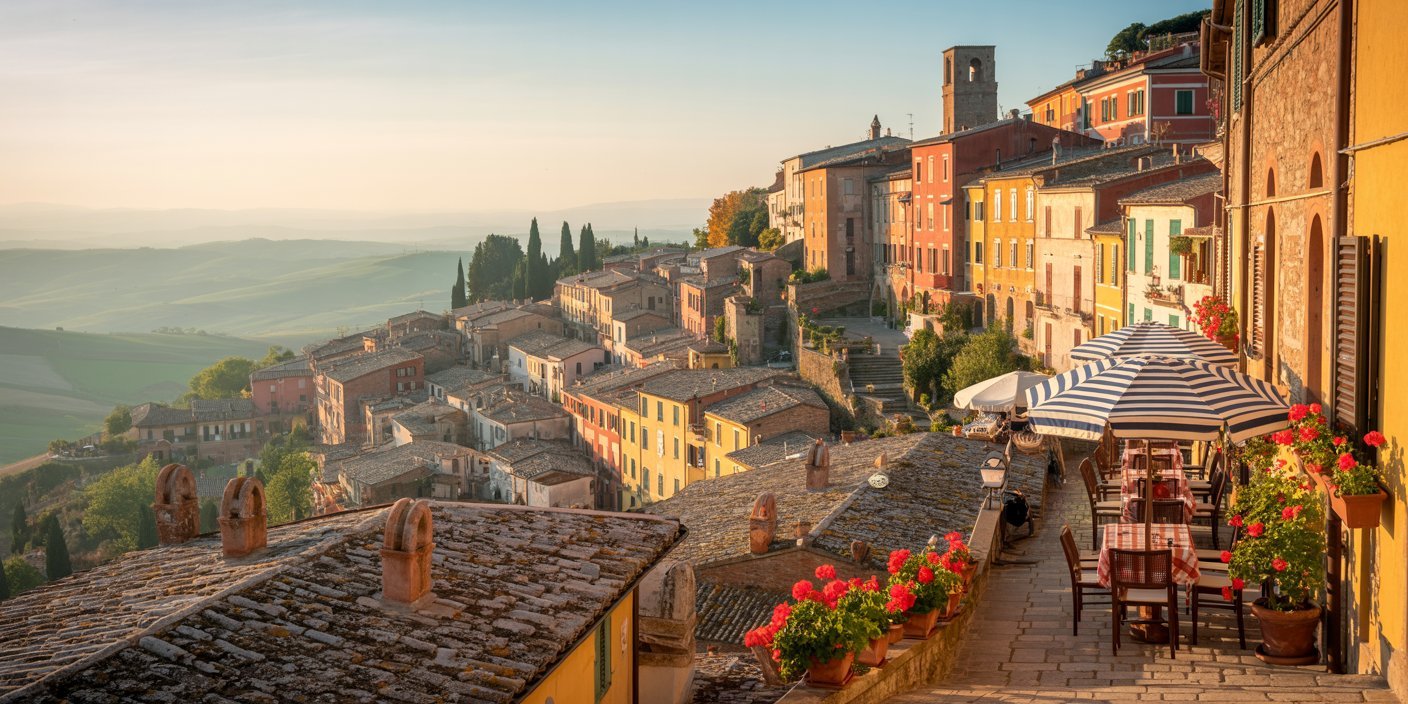
Italy is full of iconic cities that everyone dreams of visiting—Rome, Venice, Florence—but some of the most magical experiences happen off the beaten path, in the small towns that feel like stepping into a storybook.
On my first trip, I thought I’d only stick to the big cities, but once I started exploring tiny villages tucked into rolling hills, along quiet coastlines, or hidden in mountain valleys, I was hooked.
These small towns have a charm that the big cities simply can’t match: colorful streets that look straight out of a postcard, family-run trattorias serving food passed down through generations, local festivals that feel intimate and authentic, and views that stop you in your tracks.
Wandering through them feels like discovering Italy the way locals live it, full of culture, warmth, and surprises at every turn.
In this post, I’m sharing 10 small towns in Italy you absolutely need to see. Each one has its own personality, history, and unforgettable experiences, from serene lakeside villages to hilltop gems with panoramic views.
Whether you’re a first-time visitor or a seasoned traveler, these towns will give you a side of Italy that few guidebooks fully capture—and trust me, once you visit them, they’ll stay in your heart forever.
Disclaimer: This post contains affiliate links. If you make a purchase through these links, we may earn a small commission at no extra cost to you.
Amazon Shopping List For 10 Small Towns in Italy You Need to See: Hidden Gems for First-Time Visitors
- Lightweight Carry-On Luggage
Perfect for quick trips to charming Italian towns.
BUY NOW ON AMAZON - Sun Hat (Wide-Brim)
Protects you from the warm Italian sun while exploring outdoors.
BUY NOW ON AMAZON - Travel Packing Cubes Set
Keeps clothes and essentials organized for smooth travel.
BUY NOW ON AMAZON - Comfortable Walking Shoes
Ideal for strolling through historic streets, piazzas, and scenic alleys.
BUY NOW ON AMAZON - Lightweight Summer Dress
Keeps you cool and stylish while exploring quaint Italian villages.
BUY NOW ON AMAZON
#1: Civita di Bagnoregio – The Dying Town
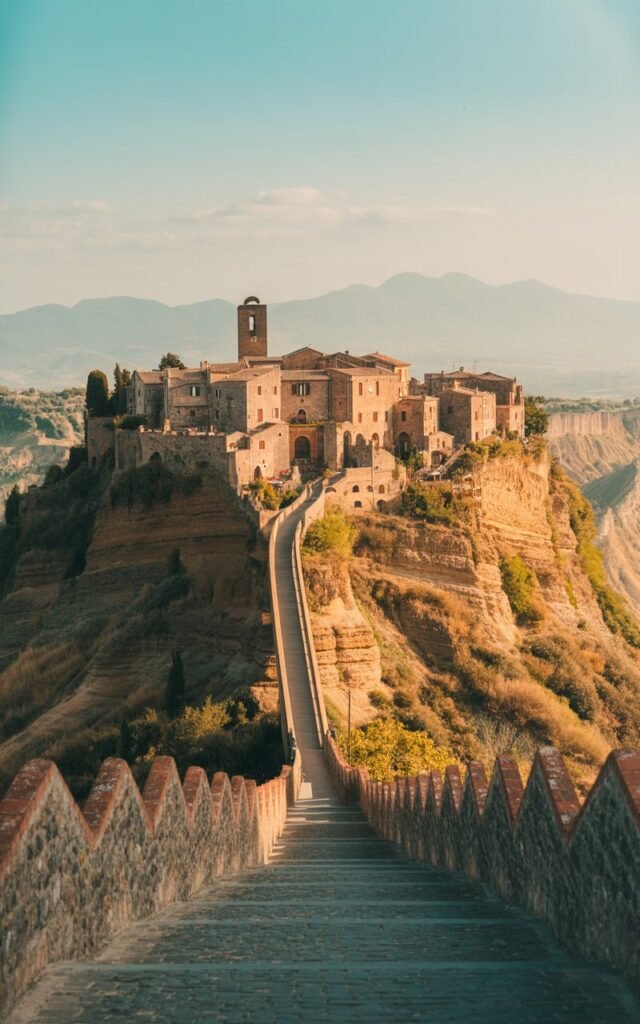
If you’ve never heard of Civita di Bagnoregio, you’re in for a treat.
I first stumbled across photos of this town online and couldn’t believe it actually existed—a tiny medieval village perched atop a hill, connected to the mainland by a narrow pedestrian bridge.
The nickname “The Dying Town” sounds dramatic, but it just adds to its mystique: erosion has slowly shrunk it over the centuries, making it feel like a secret place frozen in time.
For new visitors, Civita di Bagnoregio is surprisingly easy to navigate.
You park at the base, cross the bridge, and suddenly you’re transported to cobblestone streets lined with charming stone houses, small artisan shops, and cozy cafés.
The town is tiny, so walking is the only option, which makes it perfect for a leisurely day trip.
Don’t rush—take your time to explore its quiet piazzas, enjoy the sweeping views of the surrounding valleys, and snap photos without the crowds of bigger cities.
Pro tip for first-timers: Try to visit early in the morning or later in the afternoon to avoid tour groups.
Stop at a café for a cappuccino and soak in the peaceful atmosphere—it feels like stepping back hundreds of years.
Even if you only spend a few hours here, the experience of wandering through this magical village will stick with you long after your trip.
#2: Montepulciano – Tuscany’s Hilltop Gem
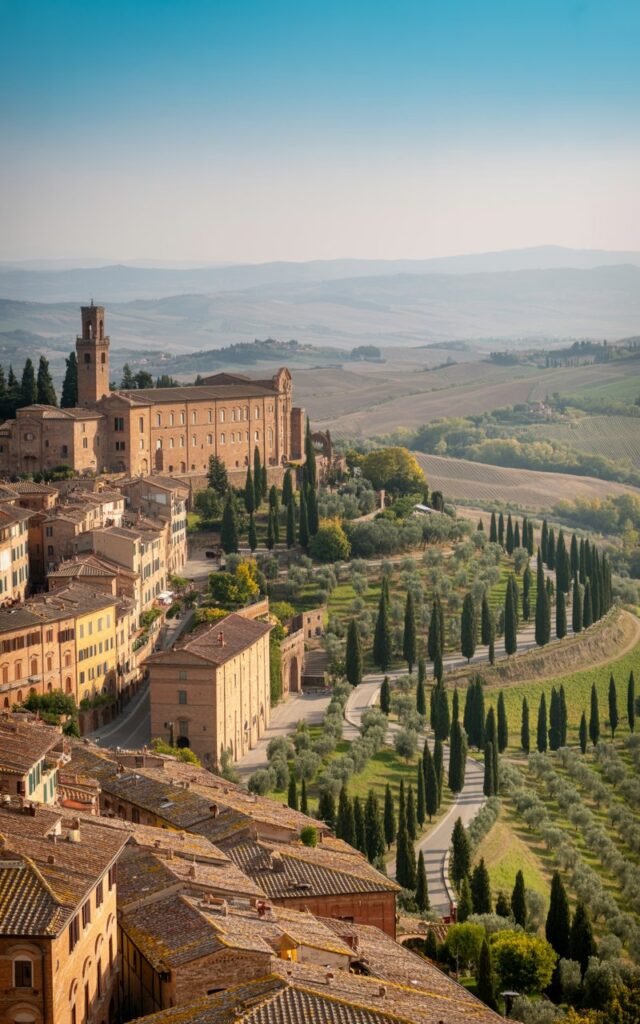
Montepulciano is one of those towns that instantly makes you feel like you’re living in a postcard.
Nestled in the rolling hills of Tuscany, it’s famous for its Renaissance architecture, cobblestone streets, and, of course, its world-class Vino Nobile wine.
On my first visit, I remember stepping out of the car and being completely charmed by the combination of historic buildings, scenic terraces, and the quiet buzz of local life.
For new visitors, Montepulciano is incredibly approachable. The town is compact, so you can wander from piazza to piazza without ever needing a map.
Don’t miss the Piazza Grande, where you’ll find the stunning Palazzo Comunale—you can even climb the tower for sweeping views of the Tuscan countryside.
The streets are lined with family-run wine shops and trattorias, perfect for tasting local cheeses, cured meats, and the signature red wine.
Pro tip for first-timers: Plan a wine tasting at one of the small cellars—many offer tours and explain the history of their vineyards.
Pair your wine with a fresh plate of pecorino cheese, and take a slow stroll along the medieval streets as the sun sets over the hills.
Montepulciano feels like a town made for savoring every moment, especially for visitors who want an authentic taste of Tuscany without the crowds of Florence or Siena.
#3: San Gimignano – The Town of Towers
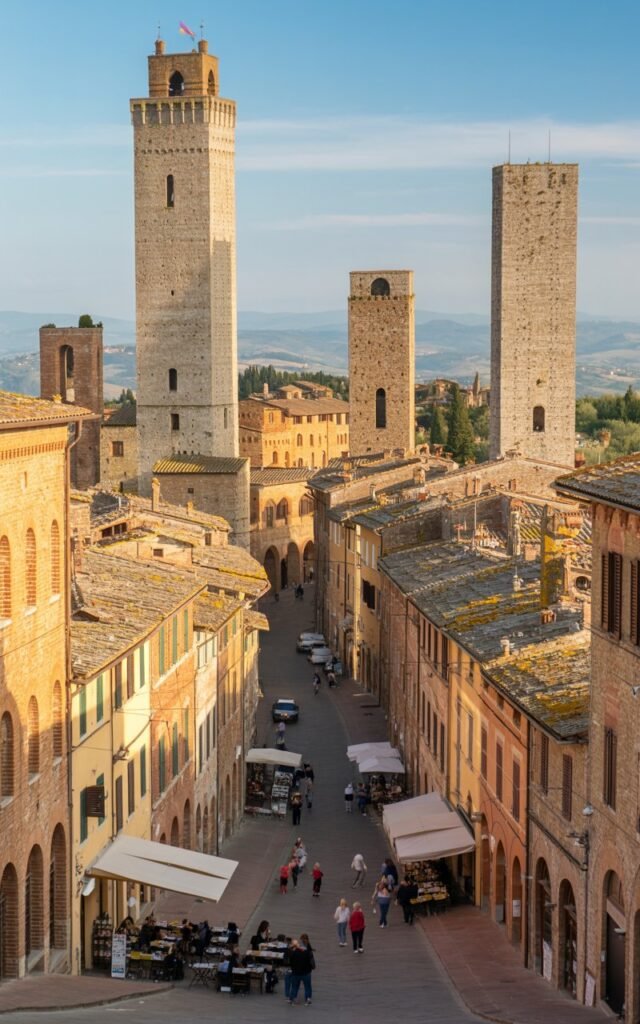
San Gimignano is one of those towns that immediately makes you feel like you’ve stepped into medieval Italy.
Known as the “Town of Towers,” it’s famous for its skyline of medieval stone towers that rise above the Tuscan countryside.
On my first visit, I was completely mesmerized—not just by the towers, but by the charming narrow streets, bustling piazzas, and the aroma of fresh gelato wafting through the air.
For new visitors, San Gimignano is easy to explore on foot. The town isn’t huge, so you can wander freely and soak up the medieval atmosphere without feeling rushed.
Piazza della Cisterna is a must-see, with its beautiful well and surrounding cafés—the perfect spot to rest and people-watch.
Don’t miss climbing the Torre Grossa, the tallest tower, for panoramic views of the surrounding vineyards and hills.
Pro tip for first-timers: Treat yourself to some authentic gelato at Gelateria Dondoli, which has won multiple awards.
Go early in the morning or later in the afternoon to avoid the biggest crowds, especially during peak tourist season.
San Gimignano is ideal for visitors who want to combine history, breathtaking views, and a taste of real Tuscan life in one charming package.
#4: Alberobello – The Land of Trulli
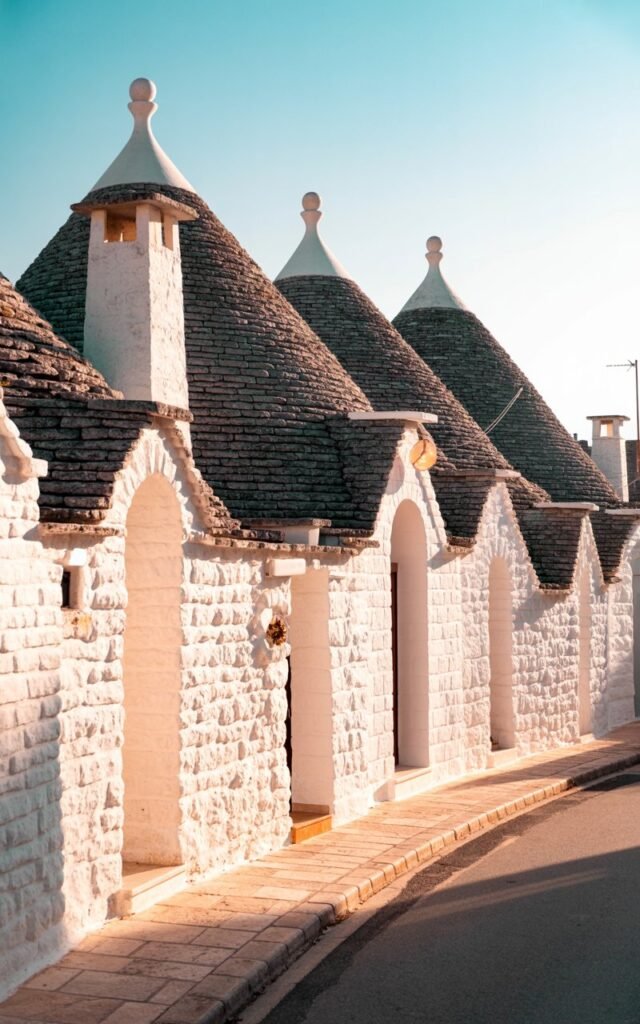
Alberobello is one of Italy’s most unique towns, and the first time I saw it, I felt like I had stepped into a fairytale.
The town is famous for its trulli—distinctive white stone houses with conical roofs that are unlike anything else in the world.
Walking through the winding streets, it feels magical, almost like the houses are straight out of a storybook.
For new visitors, Alberobello is very easy to explore. Most of the town is pedestrian-friendly, so you can wander freely, admire the trulli, and pop into small artisan shops selling handmade souvenirs.
Rione Monti and Aia Piccola are the two main trulli districts, and each has its own charm. The architecture is so unique that even a simple stroll becomes a memorable experience.
Pro tip for first-timers: Visit early in the morning or later in the afternoon to avoid large tour groups.
Don’t forget your camera—every corner is picture-perfect! And if you have time, try a local specialty at a small trattoria: the food here is just as charming as the buildings.
Alberobello is perfect for visitors looking for a whimsical, unforgettable Italian experience that feels far removed from the typical tourist trail.
#5: Orvieto – The Hilltop Marvel
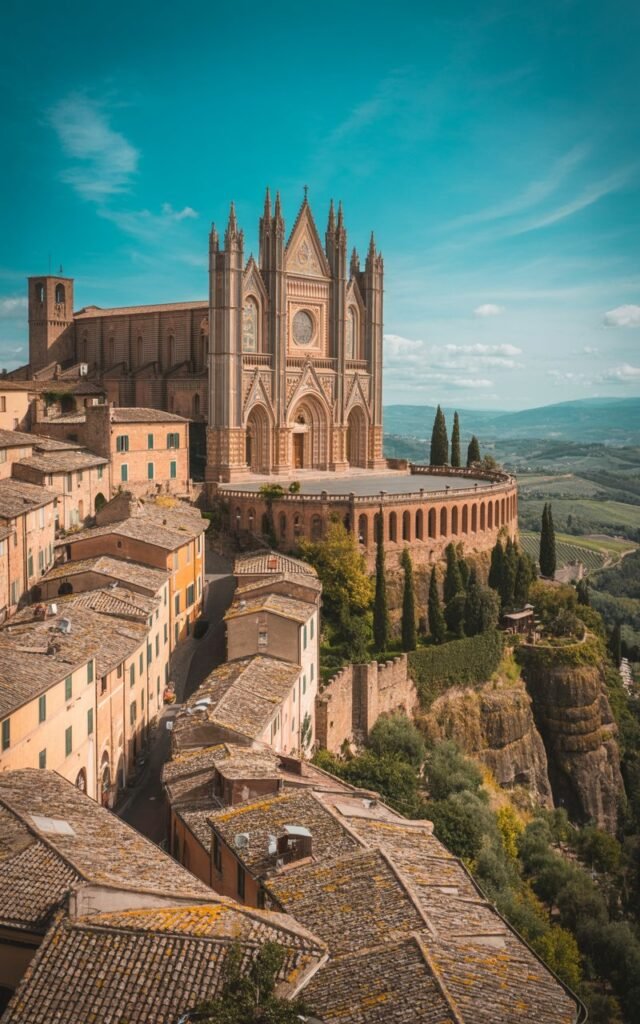
Orvieto is a town that instantly captures your imagination. Perched high on a volcanic rock cliff in Umbria, it feels like a secret waiting to be discovered.
On my first visit, I was blown away by the view as I approached—the town seemed to float above the surrounding valley, and every corner held another historic surprise.
For new visitors, Orvieto is surprisingly easy to explore. You can reach the town via a funicular from the train station, which is both convenient and scenic.
Once inside, wander through its medieval streets, admire the impressive Orvieto Cathedral with its colorful facade, and explore charming piazzas filled with cafés and artisan shops.
Even a simple stroll along the cliff edge provides breathtaking views of the valley below.
Pro tip for first-timers: Don’t leave without tasting Orvieto’s famous white wine at a local enoteca—it’s crisp, refreshing, and pairs perfectly with the regional cuisine.
Take your time to explore the underground tunnels beneath the town, a unique glimpse into Orvieto’s history.
For visitors, Orvieto combines history, stunning views, and a welcoming, walkable town that’s easy to enjoy, even if it’s your first time in Italy.
#6: Portovenere – A Colorful Seaside Escape
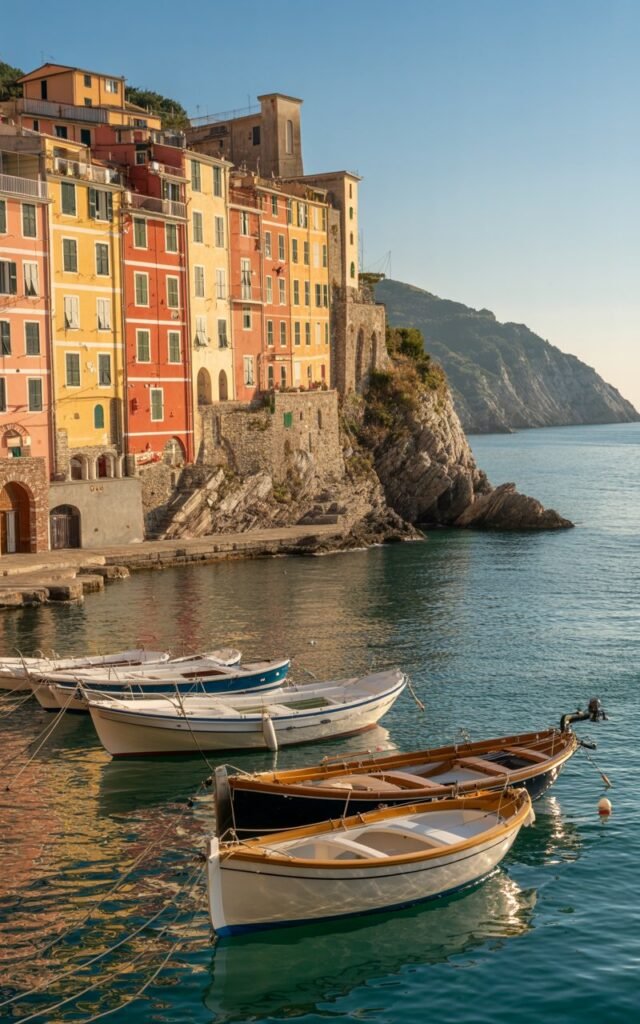
Portovenere is one of those towns that instantly makes you feel like you’ve stepped into a postcard.
Located on the Ligurian coast near the Cinque Terre, it’s famous for its colorful houses perched on cliffs, charming harbor, and crystal-clear waters.
On my first visit, I couldn’t stop staring at the pastel buildings reflecting in the sea—it was pure magic.
For new visitors, Portovenere is very easy to explore. The town is small, so you can wander along the harbor, climb the narrow streets lined with boutiques and cafés, and discover hidden corners overlooking the sea.
Don’t miss the medieval Church of St. Peter, perched dramatically at the tip of the peninsula, offering breathtaking views of the coastline.
Pro tip for first-timers: Take a short boat ride to the nearby Palmaria Island for a peaceful escape and incredible views of Portovenere from the water.
Go early in the morning or late afternoon to enjoy the town without the crowds.
Portovenere is ideal for visitors looking for a romantic, relaxing seaside experience, combining stunning scenery with the charm of a small Italian coastal town.
#7: Pienza – Tuscany’s Renaissance Gem
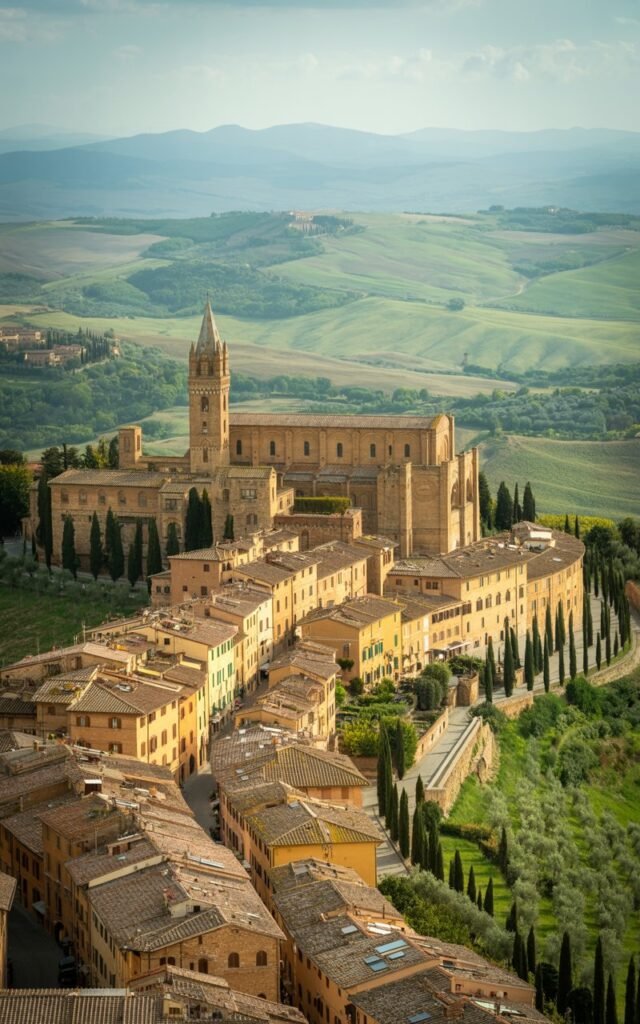
Pienza is one of those towns that immediately makes you appreciate the beauty of thoughtful design.
Known as the “ideal Renaissance town,” it sits atop a hill in Tuscany with breathtaking views of the Val d’Orcia countryside.
On my first visit, I was enchanted by the perfectly planned streets, charming piazzas, and the soft golden light that seemed to glow off the stone buildings.
For new visitors, Pienza is incredibly walkable. The town is small, so you can wander through its streets at a leisurely pace, pop into artisan shops, and stop for a cappuccino in a quiet piazza.
Don’t miss trying the famous local pecorino cheese—many small shops offer tastings that feel like a true taste of Tuscany.
Pro tip for first-timers: Take a stroll along the town walls for panoramic views of the rolling hills and vineyards.
Visit in the late afternoon to enjoy the soft light and fewer tourists—it makes the experience even more magical.
Pienza is perfect for visitors who want to soak in the essence of Tuscany in a charming, quiet setting, far from the hustle of larger cities.
#8: Tropea – Calabria’s Cliffside Paradise
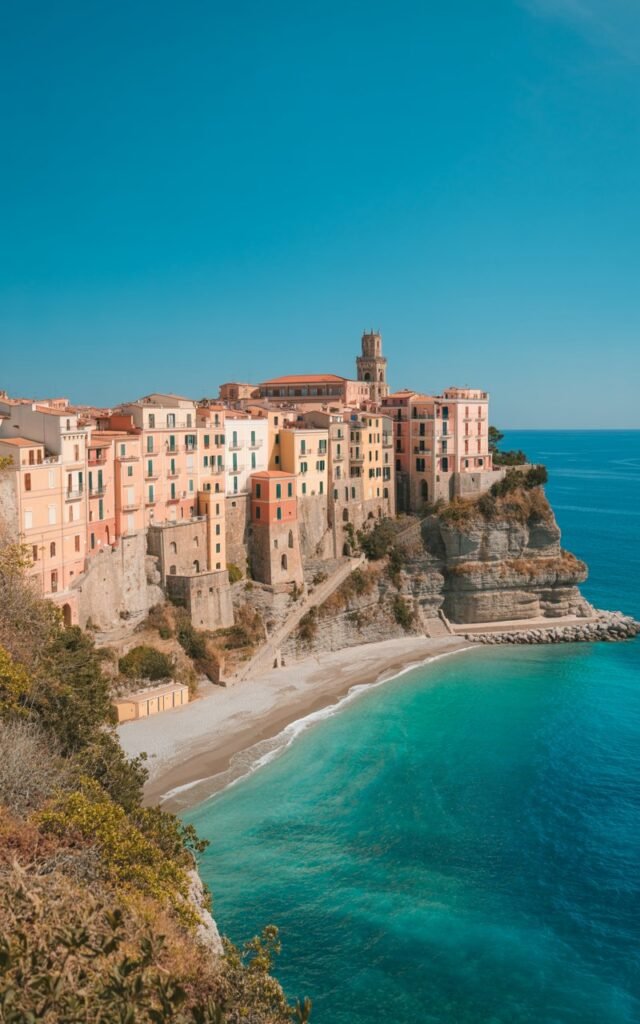
Tropea is one of Italy’s hidden coastal gems, and the first time I saw it, I felt like I had discovered a secret world.
Perched dramatically on cliffs overlooking the Tyrrhenian Sea, the town is famous for its colorful historic center, crystal-clear waters, and stunning beaches.
Walking through its narrow streets, you can feel the charm of old Italy combined with a vibrant seaside atmosphere.
For new visitors, Tropea is easy to explore on foot.
You can stroll from the central piazza to the beach in minutes, wander through the ancient alleys lined with cafes and gelaterias, and admire the majestic
Santa Maria dell’Isola church perched on a rocky outcrop.
Every corner offers a perfect photo opportunity, from the pastel-colored buildings to the sparkling coastline.
Pro tip for first-timers: Try Tropea’s famous red onions—they’re a local delicacy! And plan some time to relax on the beaches or take a short boat ride along the coast.
Visit during early morning or late afternoon to avoid the peak summer crowds.
Tropea is ideal for visitors looking for a breathtaking seaside escape that combines history, culture, and unforgettable views.
#9: Matera – The Cave City
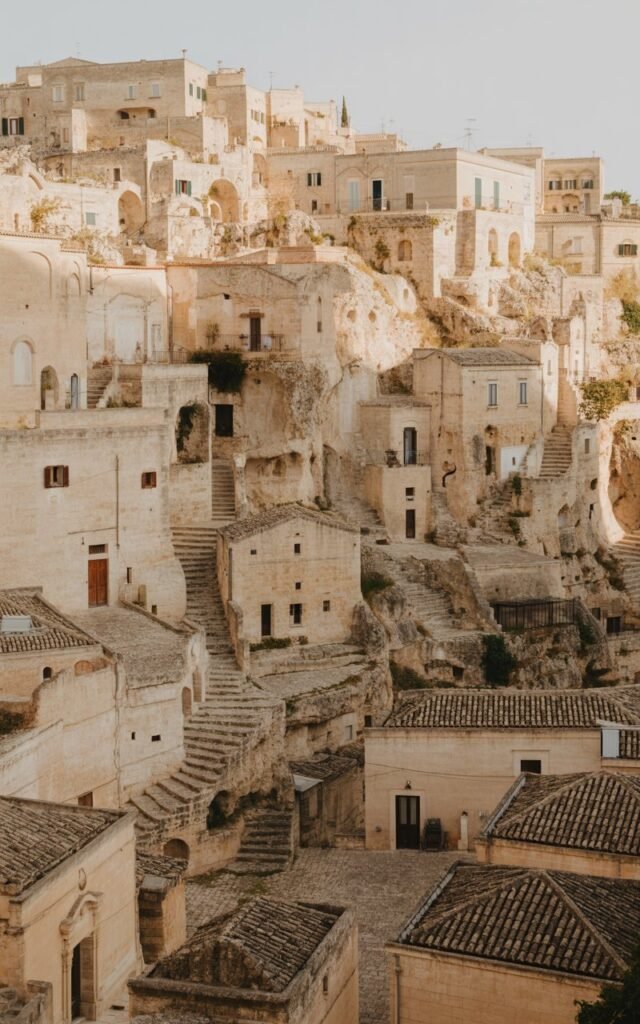
Matera is one of Italy’s most unique and unforgettable towns.
Famous for its Sassi—ancient cave dwellings carved into the limestone cliffs—it feels like stepping back thousands of years while still being part of a living town.
On my first visit, I was completely mesmerized by the labyrinth of caves, narrow alleys, and stone stairways winding through the historic center. It’s unlike anywhere else in Italy.
For new visitors, Matera is surprisingly easy to explore on foot. You can wander through the Sassi districts, peek inside the cave churches, and enjoy panoramic views of the town from viewpoints along the cliff edges.
Many cave dwellings have been converted into boutique hotels and restaurants, giving visitors a chance to experience the town’s history firsthand.
Pro tip for first-timers: Visit early in the morning to watch the sunlight illuminate the stone buildings—it’s magical.
Don’t miss trying local cuisine in a cave restaurant for a truly authentic experience. Matera is perfect for visitors who want history, culture, and stunning architecture all in one extraordinary package.
#10: Civita di Castellana – Lazio’s Hidden Gem
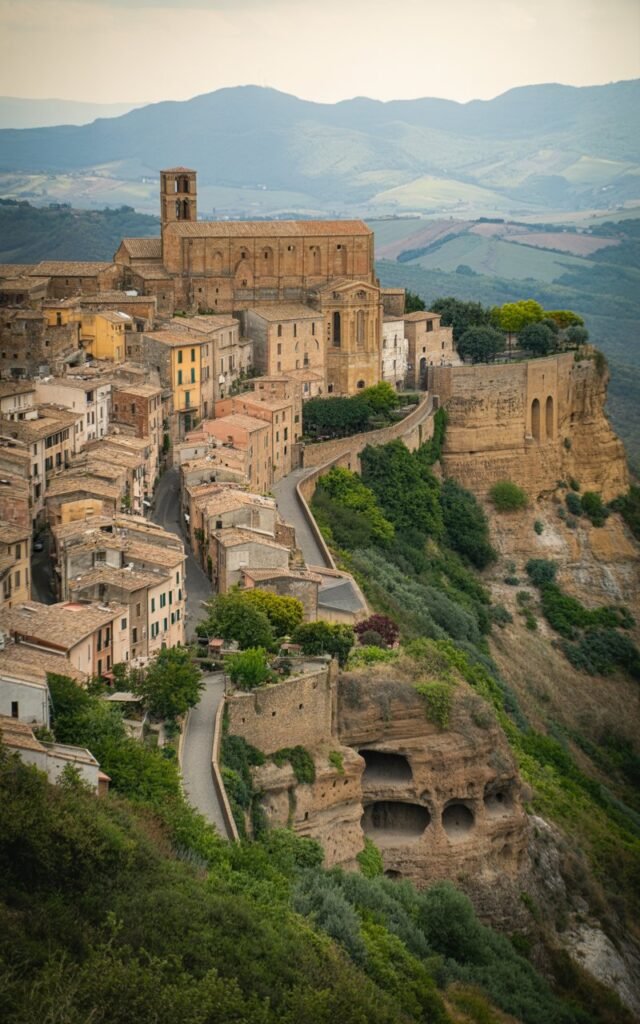
Civita di Castellana is a charming town in the Lazio region that often flies under the radar—but it’s absolutely worth visiting.
Perched on a hill, it’s famous for its medieval streets, ancient churches, and the dramatic Grotte di Castellana caves nearby.
On my first visit, I was enchanted by the quiet streets, the friendly locals, and the feeling that this town had been untouched by the rush of modern tourism.
For new visitors, Civita di Castellana is very approachable. The historic center is small and walkable, making it easy to explore at your own pace.
Wander through the narrow alleys, stop at a café for a coffee, and enjoy the views over the surrounding countryside.
The nearby caves are a must-see—they offer a spectacular underground adventure that adds a sense of wonder to the trip.
Pro tip for first-timers: Visit the caves with a guided tour to fully appreciate the formations and history.
Explore the town’s piazzas and local shops, and don’t be afraid to chat with locals—they’re welcoming and full of tips for making the most of your visit.
Civita di Castellana is perfect for visitors who want a mix of history, adventure, and authentic Italian charm in one serene town.
Conclusion: Discover Italy Beyond the Big Cities
Italy is famous for Rome, Florence, and Venice—but the small towns are where the heart of the country truly shines.
From hilltop gems and medieval streets to cliffside villages and cave cities, each town offers a unique experience that’s perfect for first-time visitors.
Taking the time to explore these towns means slower days, richer experiences, and memories you won’t get in the crowded tourist hubs.
Whether you’re wandering through narrow alleys, tasting local cuisine, or simply soaking in breathtaking views, these towns show Italy at its most authentic and magical.
Plan your trip with these hidden gems in mind, and you’ll discover a side of Italy that stays with you long after you leave.
Share this guide with fellow travelers—everyone deserves to experience the charm of Italy’s small towns!